
19 Best Yoga Books
The best yoga books, ranked by how many expert sources recommend each one, with notes on physical practice, philosophy, anatomy, inclusion and where to start.
Our take
Yoga books serve very different purposes. A pose reference can explain physical forms, an anatomy guide can help you understand movement, and a philosophical text can explore the intentions behind practice. Other books concentrate on language, personal reflection, history or the experience of feeling welcome on the mat. Choosing among them starts with deciding which part of yoga you want to understand more fully.
Every Body Yoga and Yoga for Everyone offer inclusive approaches to beginning physical practice. The Heart of Yoga connects practice with the individual, while Light on Yoga provides a much more extensive posture reference. Yoga Anatomy offers a structural perspective. For philosophy, The Yoga Sutras of Patanjali, The Bhagavad Gita and The Yamas & Niyamas address different questions and traditions. Yoga Body supplies historical context, and the reflection collections invite shorter reading sessions. Start with an accessible introduction that matches your interest, then use the specialist books to deepen one aspect at a time.
19 books · 8 sources · Last updated
As an Amazon Associate, we earn from qualifying purchases (at no extra cost to you).
How to choose from this list
Skip to the full rankingIf you're beginning physical practice: Every Body Yoga → Yoga for Everyone
If you want a more individualized understanding: The Heart of Yoga → Yoga Anatomy
If you're ready for an extensive posture reference: Light on Yoga
If you want ethics and philosophy: The Yamas & Niyamas → The Yoga Sutras of Patanjali → The Bhagavad Gita
If you prefer short reflective sessions: Meditations from the Mat → Living the Sutras
If you want historical and personal perspectives: Yoga Body → Autobiography of a Yogi
The 19 books, ranked
Ranked by how many expert sources name each book. Ties go to the book more people recommend.

For readers who want to understand practice as something adapted to the individual. Desikachar connects movement, breath and philosophy more coherently than a pose catalog, though developing that understanding takes reflection beyond following a ready-made routine.
What it's about
T. K. V. Desikachar presents yoga as a practice adapted to the individual, drawing on the teachings of his father, Krishnamacharya. He combines postures, counterposes, breathing, meditation, and philosophy with guidance on developing a personal routine.
Also recommended by
1 person Naval Ravikant recommended this book
Naval Ravikant
Naval Ravikant tweeted about this book.
Naval Ravikant's recommendation of this book

For practitioners who want an extensive reference to Iyengar's postures and approach. The photographs and detailed descriptions reward continued study, though the demanding poses and idealized demonstrations make it less suitable as a beginner's only source of instruction.
What it's about
B. K. S. Iyengar introduces yoga philosophy alongside detailed explanations of postures and breathing practices. Photographs support the instructions, presenting a structured reference to the physical techniques and underlying principles of his approach to yoga.

The Yoga Sutras of Patanjali
For readers who want sustained study of classical yoga philosophy rather than a posture manual. Satchidananda's translation and commentary provide a clear interpretive voice, though that voice represents one spiritual perspective rather than the range of scholarly approaches.
What it's about
Swami Satchidananda translates and comments on Patanjali’s Yoga Sutras, presenting their teachings alongside the original Sanskrit and transliteration. His explanations connect Raja Yoga with disciplined practice, the workings of the mind, and the pursuit of spiritual understanding.
Also recommended by
3 people Jack Dorsey recommended this book
Jack Dorsey
"[One] of my favorite books." - Jack Dorsey
Jack Dorsey's recommendation of this book - Naval Ravikant recommended this book
Naval Ravikant
One of Naval Ravikant's answers to "you don't read the Indian epics?"
Naval Ravikant's recommendation of this book  Wim Hof recommended this book
Wim Hof
"Yoga is the silencing of the modifications of our brain. Then the seer appears the way he is, the expression of the soul in consciousness." - Wim Hof
Wim Hof's recommendation of this book

Autobiography of a Yogi
For readers drawn to yoga through spiritual biography and encounters with teachers. Yogananda offers a personal devotional perspective on his tradition, though the extraordinary experiences belong to that faith-based narrative rather than an independently verified history or practice manual.
What it's about
Paramahansa Yogananda recounts his spiritual life and introduces the traditions of yoga to a broader audience. His account connects personal experiences with Indian spiritual teachers, the pursuit of realization, and the spread of yoga to the West.
Also recommended by
8 people Steve Jobs recommended this book
Steve Jobs
Marc Benioff said everyone at Steve Jobs' memorial service got a copy of this book.
Steve Jobs's recommendation of this book  Marc Benioff recommended this book
Marc Benioff
"If you haven't read it, and if you want to understand Steve Jobs, it's a goood idea to dip into [this book]." - Marc Benioff
Marc Benioff's recommendation of this book  Dan Engle recommended this book
Dan Engle
"One of the more impactful books for me when I was living down in the jungle and experiencing more of the deeper reflections through the medicine space." - Dan Engle
Dan Engle's recommendation of this book  Richa Chadha recommended this book
Richa Chadha
"Reminded me to have faith at a low point in my life, hence I share it as widely as possible to pull others out of their misery." - Richa Chadha
Richa Chadha's recommendation of this book  Travis Brewer recommended this book
Travis Brewer
One of Travis Brewer's answers to "what is the book (or books) you’ve given most as a gift?"
Travis Brewer's recommendation of this book  Sahil Lavingia recommended this book
Sahil Lavingia
Sahil Lavingia recommended this book on Notion.
Sahil Lavingia's recommendation of this book +2
More recommendations
- Phil Jackson
Phil Jackson recommended this book on Twitter.
- Virat Kohli
"I love this book. A must read for all those who are brave enough to let their thoughts and ideologies be challenged." - Virat Kohli
- Phil Jackson

For readers interested in yoga's questions about action, duty and spiritual understanding. The dialogue gives practice a wider philosophical setting, though its battlefield context and religious ideas require interpretation, and different translations can produce quite different reading experiences.
What it's about
On the eve of battle, Prince Arjuna turns to Krishna for guidance about action and his own nature. Their dialogue explores spiritual understanding and moral responsibility within the larger story of the Mahabharata.
Also recommended by
5 people Alexandria Ocasio-Cortez recommended this book
Alexandria Ocasio-Cortez
Alexandria Ocasio-Cortez recommended this book on Twitter.
Alexandria Ocasio-Cortez's recommendation of this book - Wim Hof recommended this book
Wim Hof
Wim Hof's answer to "What do you give to people as gifts?"
Wim Hof's recommendation of this book - Naval Ravikant recommended this book
Naval Ravikant
Naval Ravikant tweeted about this book.
Naval Ravikant's recommendation of this book  Mahatma Gandhi recommended this book
Mahatma Gandhi
"[This book] became an infallible guide of conduct. It became my dictionary of daily reference." - Mahatma Gandhi
Mahatma Gandhi's recommendation of this book  Paulo Coelho recommended this book
Paulo Coelho
"A book that everybody should read." - Paulo Coelho
Paulo Coelho's recommendation of this book
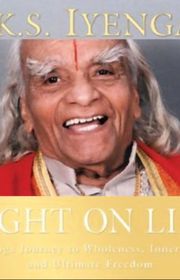
Light on Life
For readers who want Iyengar's understanding of yoga beyond the visible postures. Personal stories connect practice with emotional, mental and spiritual questions, though the traditional vocabulary and devotional perspective require more contemplation than a straightforward introductory handbook.
What it's about
Iyengar reflects on yoga as a path involving body, emotions, mind and spiritual life. Personal stories and explanations connect posture and breathing practices with inner obstacles, self-understanding and his account of a more integrated way of living.

Yoga Anatomy
For practitioners and teachers who want to visualize the structures involved in movement and breathing. The anatomical illustrations explain poses from a different angle than photographs, though it is a technical reference rather than a personalized sequence of instruction.
What it's about
Leslie Kaminoff and Amy Matthews examine the anatomical principles behind yoga movements. Illustrated explanations explore the skeletal, muscular, and nervous systems, breathing, and the spine, with guidance for understanding and teaching individual poses.

For readers interested in a spiritual interpretation of personal growth through the chakra system. Judith's synthesis links several psychological traditions with bodily symbolism, though it is a particular interpretive framework rather than a clinical psychology textbook.
What it's about
Anodea Judith interprets the chakra system through Western psychological frameworks, including Jungian thought and childhood development. Organized around individual chakras, the book explores relationships, family dynamics, personal growth, and the author's approach to emotional patterns.

For newcomers who feel excluded by yoga's familiar body stereotypes. Stanley combines practical introduction with a candid, inclusive voice, though the personal emphasis offers less detailed anatomical reference than the books aimed at teachers or experienced practitioners.
What it's about
Jessamyn Stanley presents an approach to yoga centered on body acceptance and inclusion. The book addresses stereotypes and the fears that can discourage participation, exploring how readers of different shapes and sizes can bring practice into their lives.

For readers who prefer a small daily prompt connecting yoga with ordinary decisions. The year of reflections supports gradual contemplation, though the essay format offers neither a systematic philosophy course nor detailed instruction in physical practice.
What it's about
Rolf Gates and Katrina Kenison offer 365 reflections on yoga and mindfulness in everyday life. The entries provide material for contemplation before, during, or after practice, considering yoga as a discipline of both body and mind.

The Secret Power of Yoga
A Woman's Guide to the Heart and Spirit of the Yoga Sutras
For readers seeking an intuitive interpretation of the Yoga Sutras centered on emotional and spiritual experience. Devi's personal approach gives familiar teachings a distinctive emphasis, though readers wanting a historical or comparative commentary should choose another companion.
What it's about
Nischala Joy Devi interprets Patanjali's Yoga Sutras from an intuitive, heart-centered perspective intended for women. Personal commentary and suggested practices explore yoga's emotional and spiritual dimensions and ways to bring its philosophy into daily life.
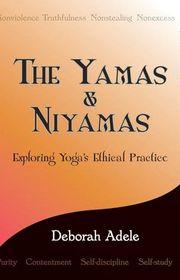
The Yamas & Niyamas
For readers who want yoga's ethical ideas connected with everyday choices. Adele's stories and self-study questions provide a practical way into the first two limbs, though the accessible interpretation offers less historical detail than an academic treatment.
What it's about
Deborah Adele explores the yamas and niyamas, the ethical restraints and observances within classical yoga's eightfold path. Stories, explanations and questions for self-study connect principles such as nonviolence, contentment and self-discipline with decisions in daily life.
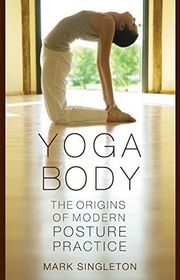
Yoga Body
For readers curious about how modern posture-centered yoga developed. Singleton places familiar practices within historical movements and cultural exchange, though the academic argument and documentation offer context for practice rather than instruction in doing yoga.
What it's about
Mark Singleton investigates the development of modern postural yoga through early twentieth-century physical culture, nationalism and exchanges between India and the West. His historical argument questions simple accounts of contemporary fitness-oriented yoga as an unchanged ancient practice.

For readers who want to see variations demonstrated across different bodies and abilities. Bondy's photographs make adaptation a central part of the instruction, though choosing useful variations still depends on the individual rather than simply copying a pictured pose.
What it's about
Dianne Bondy presents fifty yoga poses with variations for different bodies and abilities. Photographs, modifications, and ten practice sequences offer ways to adapt familiar postures, emphasizing an individualized approach rather than a single physical ideal.

For readers who want to reflect actively on the Yoga Sutras through writing. The short explanations and prompts make philosophy approachable in small sessions, though the selective format gives less textual depth than a full commentary.
What it's about
Kelly DiNardo and Amy Pearce-Hayden introduce the Yoga Sutras through themed passages, brief commentary, and writing prompts. The guide invites personal reflection on classical yoga philosophy and ways to apply its ideas beyond physical practice.

Meditations on Intention and Being
Daily Reflections on the Path of Yoga, Mindfulness, and Compassion
For readers who want reflective material on intention, compassion and everyday awareness. Gates's themed entries offer a gentle companion to practice, though their personal, contemplative style is less structured than a workbook or a commentary on classical texts.
What it's about
Rolf Gates presents daily reflections connecting yoga and mindfulness with ordinary life. Seven themed chapters explore nonviolence, compassion, effortlessness, equanimity, joy, and intention, combining personal experience with questions about practice and self-awareness.

The Language of Yoga
Complete A-to-Y Guide to Asana Names, Sanskrit Terms, and Chants
For students and teachers who want to understand the Sanskrit terms they hear in class. Bachman's language-focused reference adds pronunciation and context missing from most pose guides, though it complements rather than replaces instruction in physical practice or philosophy.
What it's about
Nicolai Bachman explains Sanskrit posture names, terms, and chants used in yoga. Illustrated entries provide translations, pronunciation guidance, and cultural context, connecting the language of physical practice with the philosophy and traditions behind it.

Yoga Body and Mind Handbook
Easy Poses, Guided Meditations, Perfect Peace Wherever You Are
For beginners and returning practitioners who want a compact introduction combining movement, breathing and meditation. The accessible routines give several entry points, though the broad handbook format provides less detail than books devoted to anatomy or philosophy.
What it's about
Jasmine Tarkeshi introduces yoga through illustrated poses, breathing techniques, and guided meditations. Step-by-step routines are designed for beginners and returning practitioners, presenting ways to incorporate physical practice and mindful reflection into a busy day.

For readers who want personal accounts that challenge exclusion within yoga culture. The range of contributors broadens whose experiences are visible, though the essay collection offers varied perspectives rather than a continuous course or detailed posture guide.
What it's about
Melanie Klein gathers personal essays exploring yoga, body image, and self-acceptance across diverse experiences. Contributors consider identity, ability, age, size, and social circumstances, with attention to building community and challenging exclusion within yoga culture.
Sources
- 1
Asana and Beyond: 16 of the Best Yoga Books for Beginners
bookriot.com
- 2
26 Best Yoga Books Recommended by the Top Yoga Teachers
seattleyoganews.com
- 3
Yoga Books
goodreads.com
- 4
What books on yoga have you been reading lately?
reddit.com
- 5
Recommended Readings
yogaeducation.org
- 6
The 9 Best Yoga Books
verywellfit.com
- 7
What’s a good moderately easy book to read / listen to about yoga?
reddit.com
- 8
Adriene's Yoga Book List I - essentials.
yogawithadriene.com




Edited by
Software engineer whose passion for tracking book recommendations from podcasts inspired the creation of MRB.
Lead investor at 3one4 Capital whose startup expertise and love for books helped shape MRB and its growth.
Comments
Spotted a missing book, a wrong order or a mistake? Tell us and we'll fix this page.
We're a reading guide, not the author or publisher, so we can't send books or pass on messages.