
26 Best India History Books
The best India history books, ranked by how many expert sources recommend each one, with notes for beginners and readers exploring a region, theme, or period.
Our take
India's history includes many regions, languages, religious traditions, and political worlds. A single survey can provide a map, but it cannot give equal attention to ancient societies, medieval kingdoms, colonial expansion, and the republic. The books here also differ in form: scholarly histories sit beside essays, participant accounts, memoirs, and a political novel that needs to be read as fiction.
John Keay's India offers a broad starting point. The Penguin History of Early India and A History of Ancient and Early Medieval India support a closer look at earlier periods, while Rebel Sultans and A History of South India shift the regional focus. The Anarchy examines Company power, The Great Partition follows the costs of division, and India After Gandhi continues into the republic.
Start with the period you know least about, then pair a broad account with a focused study or firsthand perspective.
26 books · 10 sources · Last updated
As an Amazon Associate, we earn from qualifying purchases (at no extra cost to you).
How to choose from this list
Skip to the full rankingIf you want a broad starting point with John Keay: India
If you want to study ancient India: The Penguin History of Early India → A History of Ancient and Early Medieval India
If you want southern and Deccan histories: A History of South India → Rebel Sultans
If you want colonialism and independence: The Anarchy → India's Struggle for Independence
If you want Partition and the republic: The Great Partition → India After Gandhi
If you want social and intellectual debates: Annihilation of Caste → History of Doing → The Argumentative Indian
The 26 books, ranked
Ranked by how many expert sources name each book. Ties go to the book more people recommend.

For readers who want a broad chronological map before choosing a period or region. Its long sweep makes it a useful orientation, though thousands of years in one volume inevitably compress local histories and scholarly debates.
What it's about
John Keay surveys five thousand years of the Indian subcontinent's history, beginning with the Indus civilization and following changing peoples, states, and religions. His narrative brings together archaeological and historical scholarship to explain the diverse societies behind modern South Asia.

Choose this for a substantial narrative of the republic rather than another account ending at independence. Its breadth connects institutions, leaders, and social conflicts, though the length and many overlapping political developments reward patient reading.
What it's about
Ramachandra Guha follows India after independence, examining how a country divided by caste, language, class, and religion built and sustained democratic institutions. Political biographies and historical episodes illuminate the conflicts, achievements, and pressures shaping the republic's development.

The Wonder That Was India
Choose this for a broad introduction to ancient Indian cultural and social life alongside political history. Its range remains useful for orientation, though its older scholarship and period framing should be compared with more recent studies.
What it's about
A. L. Basham surveys the history and culture of ancient India, examining civilization before the period of Muslim rule. His introduction brings together political and social life, religion, literature, and artistic traditions to describe the foundations of the subcontinent's cultural inheritance.

The Discovery of India
For readers interested in how an independence leader understood India's past and national identity. Its mixture of reflection and history makes it a valuable intellectual document, though it is a participant's interpretation rather than a current academic survey.
What it's about
Written during imprisonment, Jawaharlal Nehru’s account explores India’s history from its early civilizations to British colonial rule. It brings together reflections on religion, philosophy, culture, and political change as he considers the country’s identity and struggle for independence.
Also recommended by
1 person Noam Chomsky recommended this book
Noam Chomsky
On the "Top 100 Books Referenced by Noam Chomsky" list.
Noam Chomsky's recommendation of this book

India's Struggle for Independence
Choose this for a sustained account of nationalist organizing and the independence movement's wider social base. Its thematic detail offers more than a sequence of leaders, though its interpretive framework and textbook density require a patient reading.
What it's about
Bipan Chandra and fellow historians trace India's independence movement from 1857 to 1947, examining nationalist politics alongside wider popular resistance. The study covers movements involving peasants and tribal communities, economic criticism of colonialism, and campaigns that shaped the struggle against British rule.

Choose this for essays connecting historical traditions of debate with identity, pluralism, and democracy. Its intellectual focus complements chronological surveys, though the selective arguments and philosophical references make it a different kind of introduction from a textbook.
What it's about
Amartya Sen explores Indian history and culture through a tradition of debate, dissent, and intellectual exchange. The essays connect religious and philosophical diversity with contemporary questions of democracy, identity, and inequality, arguing for a broader understanding of India's past.
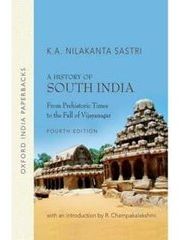
A History of South India
For readers who want southern dynasties, commerce, religion, and culture given sustained attention. Its regional focus corrects the northern emphasis of many surveys, though the original scholarship is older and should be supplemented with newer research.
What it's about
Sastri surveys South Indian history from prehistoric beginnings through the era of Vijayanagar and its aftermath. Political developments are considered alongside commerce, social life, religion, philosophy, literature, and the arts within a broad regional framework.

Freedom at Midnight
For readers who prefer a dramatic narrative of independence and Partition centered on prominent participants. Its scene-driven pace makes complex events approachable, though its older, leadership-focused perspective needs complementing with social histories and accounts of displacement.
What it's about
Larry Collins and Dominique Lapierre reconstruct the events surrounding Indian independence and Partition in 1947 and 1948. Interviews inform their account of political leaders, princely states, communal violence, and Gandhi's final months as British rule ends and new nations emerge.

For readers who want a concentrated narrative of Delhi, its last Mughal court, and the upheaval of 1857. Its use of local accounts gives events texture, though its narrow setting cannot stand in for the wider rebellion.
What it's about
Dalrymple reconstructs the final years of emperor Bahadur Shah Zafar and the catastrophe that struck Delhi during the 1857 uprising. Urdu and Persian records bring Indian eyewitnesses into his account of the dynasty's fall and the city's destruction.
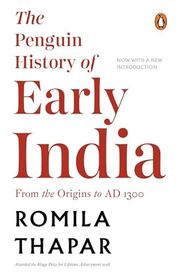
The Penguin History of Early India
Choose this for an early history that makes interpretation and social change part of the narrative. Its range goes beyond dynastic succession, though the debates and conceptual detail make it slower reading than a popular overview.
What it's about
Thapar traces the subcontinent's history from its beginnings to around 1300, examining states, social structures, religions, and regional cultures. This rewritten account of her earlier survey also considers the evidence and assumptions behind historical interpretations.

The Anarchy
The East India Company, Corporate Violence, and the Pillage of an Empire
Choose this for a narrative of corporate power and conquest centered on the East India Company. Its focused argument and storytelling make imperial expansion tangible, though the eighteenth-century emphasis leaves later colonial rule to other books.
What it's about
William Dalrymple traces how the East India Company expanded from a trading enterprise into a colonial power as the Mughal Empire fragmented. Using historical sources, he examines corporate ambition, violence, and the extraction of India's wealth.
Also recommended by
1 person Barack Obama recommended this book
Barack Obama
Barack Obama's favorite books of 2019 list.
Barack Obama's recommendation of this book
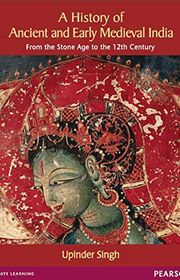
A History of Ancient and Early Medieval India
For readers who want to see how ancient history is constructed from texts, objects, inscriptions, and coins. Its detailed evidence and debates support serious study, though the textbook scale and density make a substantial commitment.
What it's about
Singh surveys ancient and early medieval India while introducing the sources historians use to reconstruct its past. Archaeology, written records, material objects, and competing interpretations connect historical developments with the process of evaluating evidence.

Choose this for a forcefully argued critique of British imperial rule and its economic legacy. Its direct style makes the case accessible, though its prosecutorial purpose calls for comparison with more detailed studies of particular policies and periods.
What it's about
Shashi Tharoor argues that British imperial rule impoverished India and damaged its society, examining colonial policies and their consequences. His account challenges favorable portrayals of empire, connecting economic exploitation with political domination, violence, and disputes over the colonial legacy.
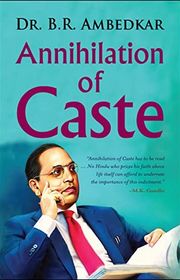
Annihilation of Caste
For readers who want a foundational political argument against caste in its author's own words. Its direct challenge brings a crucial perspective to broader histories, though it is an intervention in debate rather than a detached survey.
What it's about
Written as a speech that was never delivered to its intended audience, Ambedkar's text argues for the destruction of caste. It examines the relationship between social hierarchy, religious authority, equality, and the possibility of meaningful reform.
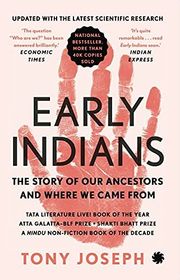
Early Indians
Choose this for a readable introduction to debates about ancestry, migration, and the subcontinent's early populations. Its combination of genetics and other disciplines is the attraction, though research changes quickly and broad identity claims need careful interpretation.
What it's about
Joseph explores the ancestry of people in the Indian subcontinent by bringing genetic research into conversation with archaeology, linguistics, and history. The narrative examines migration and population mixing while addressing debates about early communities and cultural origins.
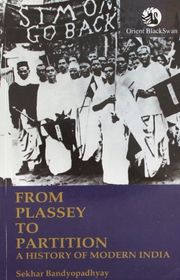
From Plassey to Partition
Choose this for a substantial study of colonial rule and the competing voices within Indian nationalism. Its attention to political and social complexity rewards students beyond an overview, though the dense scholarship and older edition require sustained reading.
What it's about
Bandyopadhyay examines roughly two centuries of colonial Indian history, following political and socioeconomic change from Company expansion to independence. Nationalist movements, dissent, and Partition form part of an account attentive to competing experiences and political voices.
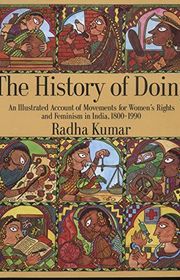
History of Doing
Choose this to put women's organizing and feminist debate into the historical picture. Its combination of images and documents broadens conventional political narratives, though the historical endpoint means later movements and arguments need additional reading.
What it's about
Kumar traces movements for women's rights and feminism in India from the nineteenth century through 1990. Photographs, documents, and personal writings accompany discussion of social reform, nationalism, organizations, and the reemergence of feminist activism after independence.
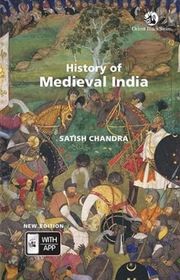
History of Medieval India
For readers who need a structured medieval survey before exploring individual courts or regional powers. Its attention to political, social, and cultural developments provides a framework, though the textbook presentation can feel compressed and demanding.
What it's about
Chandra surveys medieval Indian history through changing states, institutions, and social and cultural developments. The book connects political transitions with broader structures, providing a chronological and thematic foundation for studying the subcontinent before British dominance.
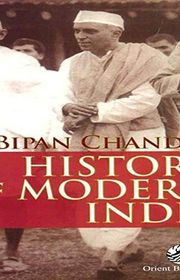
History of Modern India
For students who want a compact thematic foundation in colonial India's political economy and social change. Its course-like organization supports systematic study, though its interpretive emphasis and compressed exposition offer less narrative immediacy than the popular histories.
What it's about
Chandra surveys British India through colonialism, economic change, society, religion, and nationalism. Thematically organized discussion connects the conditions that enabled Company rule with the structures of imperial power and the development of resistance to it.
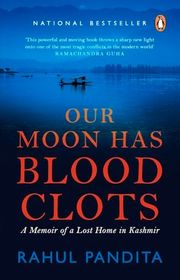
Our Moon Has Blood Clots
For readers who want a personal account of Kashmiri Pandit displacement and its lasting emotional consequences. Its memoir form gives historical upheaval an intimate scale, though one community's experience cannot substitute for a comprehensive history of Kashmir.
What it's about
Pandita recalls his family's departure from Kashmir during the upheaval around 1990 and the experience of life in exile. Personal memory and the experiences of Kashmiri Pandits connect questions of home, violence, identity, and lasting displacement.
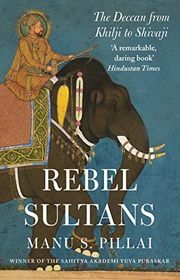
Rebel Sultans
Choose this for a lively regional narrative that shifts attention toward the Deccan's courts and competing powers. Its personalities make an unfamiliar setting approachable, though the compressed sweep leaves less room for sustained social or economic analysis.
What it's about
Pillai follows the Deccan from the late thirteenth century to the rise of Shivaji. Changing dynasties, courtly rivalries, warfare, and cultural exchange connect the Bahmani kingdoms, Vijayanagar, and other powers within a regional historical narrative.

Story of the Integration of the Indian States
Choose this for an insider's account of incorporating princely states into the new Indian union. Its administrative detail offers a different perspective from a general independence narrative, though the participant's official viewpoint needs comparison with other accounts.
What it's about
Menon recounts the political and administrative process of integrating princely states into independent India. Negotiations, decisions, and institutional changes are described by an official directly involved in shaping the new union and its constitutional framework.

The Great Indian Novel
For readers already familiar with Indian politics who want an irreverent literary companion to the histories here. Its epic allusions and satire reward recognition, though it is a novel and should not be used as a factual account.
What it's about
Shashi Tharoor recasts the Mahabharata as a satire of twentieth-century Indian politics. Characters drawn from the epic acquire recognizable modern counterparts, allowing struggles over independence and democracy to unfold through family rivalries, political ambition, and the narrator's irreverent storytelling.
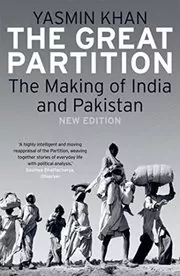
Choose this for Partition understood through implementation, displacement, and ordinary lives as well as political decisions. Its social emphasis complements leadership-centered narratives, though the violence and upheaval make this an emotionally difficult subject.
What it's about
Yasmin Khan examines the creation of India and Pakistan in 1947 through political decisions and ordinary people’s experiences. Using interviews, newspapers, and archives, she traces the division’s implementation, violence, displacement, and lasting social consequences.
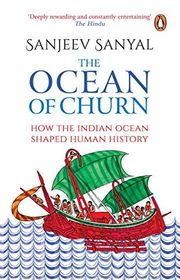
The Ocean of Churn
Choose this for a maritime perspective connecting India with a much wider Indian Ocean world. Its narrative range helps shift attention away from land empires, though ambitious reinterpretations and a broad geographical sweep call for critical comparison.
What it's about
Sanyal follows the Indian Ocean's role in connecting peoples, trading networks, cities, and political powers from East Africa to Australia. Archaeological sites, maritime encounters, and historical narratives provide a wider geographical setting for India's past.
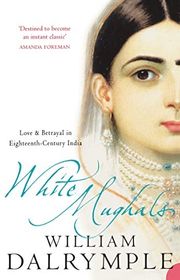
White Mughals
For readers drawn to intimate cultural encounters rather than a broad history of colonial policy. Its personal focus makes boundaries between British and Indian worlds less abstract, though one relationship and social circle cannot represent the entire period.
What it's about
Dalrymple examines British and Indian relationships in the early colonial period through a story of love, cultural crossing, and political pressure. The account explores people who adopted Indian customs and the changing boundaries around their lives.
Sources
- 1
10 must-read books on Indian History
thebetterindia.com
- 2
Top 10 Indian History Books That Every History Buff Parent Should Read
getlitt.co
- 3
Indian History Books
goodreads.com
- 4
Suggest some books on Indian History
reddit.com
- 5
The History of India
shelleyschanfield.com
- 6
9 Best Books on Ancient Indian History
historyrise.com
- 7
14 Must-Read Indian History Books
bookriot.com
- 8
Best Books on Indian History | A List of 53 Must-Read Indian History Books
bookgeeks.in
- 9
The best books on India
fivebooks.com
- 10
Ramachandra Guha: 50 books that tell the story of 75 years of Indian independence
scroll.in





Edited by
Software engineer whose passion for tracking book recommendations from podcasts inspired the creation of MRB.
Lead investor at 3one4 Capital whose startup expertise and love for books helped shape MRB and its growth.
Comments
Did we miss something? Have feedback?
Help us improve this page by sharing your thoughts