
27 Best Ancient History Books
The best ancient history books, ranked by expert source recommendations, with notes to help you choose broad introductions, regional histories, and ancient texts.
Our take
Ancient history covers societies separated by thousands of miles and many centuries. A broad introduction can establish a timeline, but regional histories show how differently cities, empires, and religious traditions developed. Archaeological studies, translated ancient texts, and modern narratives also answer different questions, so it helps to choose both a place and a type of evidence before building a reading list.
The History of the Ancient World offers a broad chronological starting point. From there, Babylon explores Mesopotamia, The Rise and Fall of Ancient Egypt follows the pharaohs, and SPQR examines Roman history and its evidence. Mexico extends the geographical range, while The Celts introduces questions about cultural identity. For direct encounters with ancient writing, try The Landmark Herodotus or Myths from Mesopotamia. The novels I, Claudius and Fire from Heaven offer imaginative reconstructions, which work differently from historical evidence. Start with a survey if the chronology is unfamiliar, then follow the region that catches your interest.
27 books · 8 sources · Last updated
As an Amazon Associate, we earn from qualifying purchases (at no extra cost to you).
How to choose from this list
Skip to the full rankingIf you want a broad first timeline: The History of the Ancient World
If you want Mesopotamia and the Bronze Age: Babylon → 1177 B.C.
If you want Egyptian history and ideas: The Rise and Fall of Ancient Egypt → The Mind of Egypt
If you want Rome’s Republic: SPQR → The Storm Before the Storm → Rubicon
If you want ancient voices with supporting notes: The Landmark Herodotus → Myths from Mesopotamia
If you want the archaeology of pre-conquest Mexico: Mexico
The 27 books, ranked
Ranked by how many expert sources name each book. Ties go to the book more people recommend.

For readers who want an approachable narrative of Mesopotamia’s cities and changing powers. Its long sweep connects political events with cultural invention, though the breadth leaves less space for detailed debate over individual archaeological interpretations.
What it's about
Kriwaczek traces Mesopotamia from its earliest settlements to Babylon's eclipse in the sixth century BCE. The history examines shifting power, urban societies, political systems, and cultural and technical innovations, with particular attention to Babylon's enduring importance.

For readers who want a broad Roman history that questions familiar stories. Beard explains how evidence shapes what can be known, though the thematic discussions are less straightforward than a simple sequence of emperors and battles.
What it's about
Mary Beard traces Rome's development from a small settlement into a Mediterranean empire. Political conflict, citizenship, conquest, slavery, and ordinary lives shape her account, which questions familiar stories and examines the evidence behind them.

For readers who want a vivid narrative of the Republic’s final political struggles. The focus on ambition and rivalry gives events momentum, though dramatic storytelling offers less sustained attention to scholarly disagreements than a more academic history.
What it's about
Tom Holland follows the generation of Julius Caesar through the Roman Republic's final years and its transformation into empire. Political rivalry, ambition and civil war unfold alongside a portrait of the social world inhabited by Rome's leading figures.
Also recommended by
1 person Matt Ridley recommended this book
Matt Ridley
"Outstanding." - Matt Ridley
Matt Ridley's recommendation of this book

For readers who want to understand the connected societies of the Late Bronze Age and their breakdown. Its attention to interacting pressures challenges a single-cause explanation, though the many kingdoms and competing hypotheses need careful tracking.
What it's about
Eric Cline examines the collapse of interconnected Late Bronze Age civilizations around the eastern Mediterranean. He considers invasion, revolt, earthquakes, drought, and disrupted trade, arguing that multiple interacting failures contributed to the breakdown.

For readers curious about the relationship between Greek legend and evidence from the Eurasian steppe. The combination of stories and archaeology opens a wider geographical view, though reconstructing lives from varied evidence necessarily involves interpretation.
What it's about
Adrienne Mayor investigates the warrior women behind Greek Amazon legends, drawing on archaeological discoveries and ancient accounts from across Eurasia. She compares myth with evidence about women's weapons, riding, warfare, and lives among the peoples Greeks encountered.
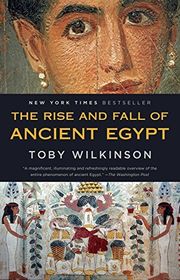
The Rise and Fall of Ancient Egypt
For readers who want a sustained narrative of pharaonic Egypt before exploring specialized studies. Its long chronological span gives dynastic change a clear framework, though the emphasis on rulers and power leaves less room for ordinary people’s experiences.
What it's about
Toby Wilkinson traces ancient Egypt across three millennia of pharaonic rule, following the formation of the state, royal power, and the changes that reshaped the civilization. Political narrative and archaeological evidence connect monumental achievements with the coercion behind them.

For readers who want a short introduction that questions the idea of a single Celtic people. Its focus on evidence and changing identities provides useful orientation, though the compressed format cannot offer a full regional or chronological history.
What it's about
Barry Cunliffe traces how migration, exchange, and changing cultural traditions shaped the peoples called Celts. This introduction examines the evidence for their history and questions familiar stereotypes about a single, uniform Celtic identity.

For readers who want a sustained argument about the western empire’s collapse and its external pressures. The focus on Rome’s changing neighbors gives the narrative direction, though it represents an interpretation to compare with accounts emphasizing other causes.
What it's about
Peter Heather reinterprets the collapse of the western Roman Empire through its changing relationships with neighboring peoples. He examines imperial expansion, the arrival of the Huns, and conflicts involving Goths and Vandals as pressures on Roman power.

For beginners who want a chronological framework across several ancient civilizations. Short narrative sections make a long span easier to enter, though the emphasis on rulers and events leaves less room for archaeology and sustained analysis of social structures.
What it's about
Susan Wise Bauer surveys ancient civilizations from their earliest accounts through Rome's decline. Maps, timelines, and narratives connect events across Europe, the Middle East, and China while bringing rulers and ordinary people's experiences into the history.

The Twelve Caesars
For readers interested in ancient biographies of Rome’s rulers. The combination of public acts and personal anecdotes makes imperial personalities vivid, though gossip, authorial judgment, and uneven evidence require a more critical approach than a modern narrative.
What it's about
Suetonius recounts the public careers and private lives of twelve Roman rulers, beginning with Julius Caesar. Drawing on records, testimony, and anecdotes, his biographies explore imperial habits, ambitions, scandals, and the exercise of power.

For readers interested in how Egyptians understood meaning, memory, and political order. Its interpretation of texts and symbols offers a different perspective from a dynastic narrative, though the conceptual language makes it demanding without some background.
What it's about
Jan Assmann explores how ancient Egyptians understood their history, society, and place in the world. Literary, visual, and archaeological evidence illuminate ideas about kingship, ritual, justice, time, and immortality across the age of the pharaohs.

The Iliad
For readers interested in how the ancient Greeks imagined war, honor, and loss. The epic offers a powerful encounter with ancient literature, though it is poetry rather than a reliable factual account of the Trojan War.
What it's about
Set during the siege of Troy, Homer's epic follows warriors caught in the conflict between Greeks and Trojans. Achilles stands at the center of a world of fierce battles and divine intervention, where human lives are shaped by war.
Also recommended by
4 people Paul Graham recommended this book
Paul Graham
Paul Graham's (funny) answer to "what are your favourite books with a politics very different to your own?"
Paul Graham's recommendation of this book  J.K. Rowling recommended this book
J.K. Rowling
"I was thinking of [this book] when Harry saved Cedric’s body." - J.K. Rowling
J.K. Rowling's recommendation of this book  Stewart Brand recommended this book
Stewart Brand
Stewart Brand recommended this book on his "Selected Books for the Manual for Civilization" blog post.
Stewart Brand's recommendation of this book  Elon Musk recommended this book
Elon Musk
"Best story ever." - Elon Musk
Elon Musk's recommendation of this book

For readers interested in how modern scholarship has framed Greece’s connections with Egypt and the Near East. Its challenge to inherited assumptions is historically significant, though the contested thesis needs comparison with other scholarship rather than acceptance as consensus.
What it's about
In this first volume of Black Athena, Martin Bernal examines how European scholars reinterpreted ancient Greece between 1785 and 1985. He argues that racism and intellectual fashion helped marginalize accounts of Egyptian and Phoenician influence on Greek civilization.
Also recommended by
1 person Dan Carlin recommended this book
Dan Carlin
"Tries to suggest that Greeks as we know them now were not the people that existed in Plato, and Artistophenes, and Socrates' times, but that those folks had a Black African component to them." - Dan Carlin
Dan Carlin's recommendation of this book
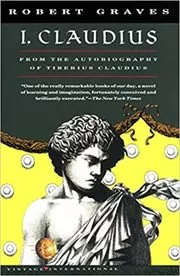
For readers who want imperial Rome approached through historical fiction. The invented memoir gives court politics a personal voice, though Graves’s narrative choices and dramatic reconstruction should be distinguished from what surviving evidence establishes.
What it's about
Dismissed by his powerful relatives because of his physical difficulties, Claudius observes the dangerous workings of Rome’s imperial household. His fictional memoir recounts family rivalries and political conspiracies during the reigns of Augustus, Tiberius, and Caligula.
Also recommended by
1 person Jordan Peterson recommended this book
Jordan Peterson
Recommended on Jordan Peterson's website.
Jordan Peterson's recommendation of this book

Death in Ancient Rome
For readers who want a thematic study of Roman culture rather than a political survey. The focus on death connects literature, public spectacle, and moral ideals, though the disturbing subject matter and interpretive detail make it specialized reading.
What it's about
Edwards explores what dying meant in Roman society through the writings of historians, poets, and philosophers. Accounts of warfare, gladiatorial combat, execution, suicide, and Christian martyrdom reveal how death became a spectacle and a test of character.
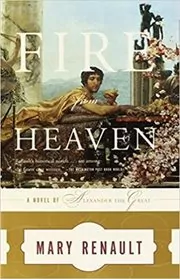
For readers who prefer to approach Alexander’s early world through a novel. The personal relationships make the setting immediate, though imagined psychology and reconstructed scenes mean it should accompany historical study rather than stand in for it.
What it's about
This novel follows Alexander from boyhood to the moment he takes the throne, shaped by Philip, Olympias, Aristotle, and Hephaistion. It is both a coming-of-age story and a study of how power starts early.

For readers who want a broad archaeological introduction to pre-conquest Mexico. Its attention to art and material evidence gives the civilizations a concrete setting, though covering many societies across a long period limits depth in any one.
What it's about
Coe, Urcid, and Koontz introduce the civilizations of Mexico before the Spanish conquest, from the Olmecs to the Aztecs. Archaeological research, art, and architecture inform the account, while an epilogue considers the survival of Indigenous peoples into later centuries.

For readers interested in how images communicated power in imperial Rome. The close study of Livia’s portraits reveals questions a general narrative can miss, though the narrow subject and art-historical detail make it better after some Augustan background.
What it's about
Bartman examines portraits of Livia, wife of Augustus, within Roman politics and ideas of gender. Surviving images and inscriptions reveal how her public representation communicated imperial status, supported dynastic succession, and influenced the visual language of women in power.

The Age of the Parthians
For readers who want to look beyond Rome at a major Iranian empire. The collected studies bring several kinds of evidence together, though the specialist chapters are less accessible than a continuous introductory narrative.
What it's about
Curtis and Stewart bring together scholarly studies of the Parthians and their Iranian empire. Contributions examine origins, political history, religion, culture, and coinage, while considering how neighboring Rome and China perceived a power that left relatively few written records.

The Greeks and Greek Love
For readers interested in how ancient Greek relationships have been interpreted from literary evidence. Davidson’s close attention to sources challenges familiar models, though the detailed, argumentative treatment requires more patience than a general cultural introduction.
What it's about
James Davidson reexamines love and sexuality in ancient Greece through poetry, drama, satire, novels, and court records. His account explores the lives and relationships behind the evidence while challenging influential interpretations of Greek homosexuality.

For readers who want the Republic’s earlier political breakdown before turning to Caesar. Its accessible narrative links social pressures with escalating conflict, though the tighter period means it cannot replace a broader account of Roman institutions.
What it's about
Mike Duncan examines the decades in which the Roman Republic's success began to undermine its political order. Conflicts over inequality, citizenship, and power expose the social strains and political violence preceding the republic's final collapse.

The Symposium
For readers who want an ancient philosophical conversation about love, beauty, and desire. The competing speeches offer a direct encounter with Greek intellectual life, though this is a crafted dialogue rather than a neutral description of everyday relationships.
What it's about
At an Athenian drinking party, Socrates and other guests offer different accounts of love and desire. Their discussion explores beauty, human relationships, and spiritual aspiration, placing contrasting perspectives alongside one another in a philosophical examination of eros.

Women in Ancient Greece
For readers who want women’s lives placed at the center of Greek social history. Its use of varied evidence helps counter a focus on male political elites, though the surviving sources impose limits and often reflect male viewpoints.
What it's about
Sue Blundell reconstructs women's lives in archaic and classical Greece from literature, art, and legal evidence. She examines marriage, household life, religion, and women's economic and legal position while considering how male authors shaped the surviving record.

For readers ready to encounter Herodotus with maps and explanatory support close at hand. The apparatus makes unfamiliar places and peoples easier to follow, though ancient reports and stories still require interpretation rather than unquestioning acceptance.
What it's about
Andrea Purvis's translation presents Herodotus's account of the Persian Wars alongside his investigations of peoples and customs. Edited by Robert Strassler, this edition supplies maps, annotations, and scholarly appendices to help readers navigate the ancient world.
Also recommended by
1 person- Stewart Brand recommended this book
Stewart Brand
Stewart Brand recommended this book on his "Selected Books for the Manual for Civilization" blog post.
Stewart Brand's recommendation of this book

For readers who want translated Mesopotamian stories alongside a modern history. The range of myths makes comparison possible within one volume, though unfamiliar divine names and the fragmentary nature of ancient texts reward slow reading and use of the notes.
What it's about
Dalley translates ancient Mesopotamian myths originally preserved in cuneiform on clay tablets. The collection includes creation and flood narratives, the Epic of Gilgamesh, and stories of gods and heroes, accompanied by an introduction, explanatory notes, and a glossary.

For readers who want to explore early imperial China through a major archaeological site. The photographs give the soldiers and funerary setting a strong visual presence, though a site-centered illustrated volume cannot supply a broad history of ancient China.
What it's about
Roberto Ciarla explores Qin Shi Huang's terracotta army and the funerary complex built for China's first emperor. Historical and archaeological discussion, accompanied by Araldo De Luca's photography, places the soldiers within the emperor's campaign of unification.

The Penguin Historical Atlas of Ancient Civilizations
For readers who need maps and timelines beside a narrative history. The visual format helps place civilizations and developments in relation to one another, though its short entries work better for orientation than for following a complex historical argument.
What it's about
John Haywood surveys ancient civilizations through maps, timelines, photographs, and illustrations. The atlas follows early settlements and the development of societies in Mesopotamia, Egypt, Greece, Rome, Asia, Europe, and the Americas, connecting political change with technology and daily life.
Sources
- 1
The Best Ancient History Books That Aren’t Just About Greece and Rome
explorethearchive.com
- 2
The 20 Best Books to Learn About Ancient History
bookscrolling.com
- 3
Best Books About Ancient History
goodreads.com
- 4
I don’t know where to even start with ancient history
reddit.com
- 5
History, Reading Lists: Ancient History
guides.pnw.edu
- 6
100 Must-Read Books about Ancient History
bookriot.com
- 7
Ancient History Reading List
balliol.ox.ac.uk
- 8
Ancient History Books
fivebooks.com




Edited by
Software engineer whose passion for tracking book recommendations from podcasts inspired the creation of MRB.
Lead investor at 3one4 Capital whose startup expertise and love for books helped shape MRB and its growth.
Comments
Did we miss something? Have feedback?
Help us improve this page by sharing your thoughts