
12 Best Game Design Books
The best game design books, ranked by how many expert sources recommend each one, with notes on exercises, theory, player experience and where to start.
Our take
Game design is the work of shaping rules, choices and feedback into an experience people want to play. It includes deciding what players can do, how systems interact, and what happens when someone misunderstands or surprises the design. These books help aspiring designers, working developers and teachers approach that work through theory, practical exercises and close attention to player experience.
Game Design Workshop offers a structured route through making and testing prototypes. The Art of Game Design supplies questions you can return to throughout a project, while A Theory of Fun for Game Design presents a shorter argument about learning and enjoyment. For more focused questions, Game Feel examines controls and response, The Gamer's Brain connects design with player psychology, and Advanced Game Design: A Systems Approach explores interactions between systems. Start with a practical introduction, build something small, then use the more specialized books to investigate problems your playtests reveal.
12 books · 9 sources · Last updated
As an Amazon Associate, we earn from qualifying purchases (at no extra cost to you).
How to choose from this list
Skip to the full rankingIf you're designing your first game: Game Design Workshop → The Art of Game Design
If you want a brief introduction to theory: A Theory of Fun for Game Design → Rules of Play
If you want hands-on exercises: Challenges for Games Designers → Game Design Workshop
If you want stronger player experiences: Designing Games → Game Feel → The Gamer's Brain
If you're designing interacting systems: Advanced Game Design → Uncertainty in Games
If you also write the code: Game Programming Patterns
The 12 books, ranked
Ranked by how many expert sources name each book. Ties go to the book more people recommend.

For designers who want a broad set of questions to apply to their own games. Schell's lenses make it easy to revisit a design from different angles, though the breadth works best alongside regular prototyping and testing.
What it's about
Jesse Schell introduces game design through a collection of lenses, each offering questions that reveal a different perspective on a game. He connects principles from board games, sports, and video games with practical guidance on creating, testing, and improving player experiences.
Also recommended by
1 person Ryan Hoover recommended this book
Ryan Hoover
"Although it's about gaming, the learnings and tactics in the book can be applied to any product. It's really about psychology and how people think." - Ryan Hoover
Ryan Hoover's recommendation of this book

For designers focused on how movement, controls and responses feel moment to moment. Swink makes subtle interaction qualities easier to analyze, though the older examples and narrow emphasis provide little guidance on narrative or production planning.
What it's about
Steve Swink examines the sensations produced when players interact with virtual worlds, treating control and response as design elements. Explanations and exercises explore how changing a game's variables affects the experience of movement, interaction, and physical presence.

A Theory of Fun for Game Design
For readers who want a short, illustrated argument about why games engage people. Koster connects fun with learning and pattern recognition, though the compact thesis is a perspective to test rather than a complete design method.
What it's about
Raph Koster examines why games are enjoyable through ideas about learning, pattern recognition, and human behavior. Illustrated arguments connect game design with broader questions about meaning and creativity, with this second edition updating research and reflecting on the medium's development.

For beginners who want to learn design by making and testing prototypes. Fullerton's exercises provide a more structured course than a collection of principles, though the value comes from doing the work rather than reading straight through.
What it's about
Tracy Fullerton presents game design as an iterative process centered on players, using exercises that require no programming or artistic expertise. This fourth edition examines game systems and the creative methods used to develop, test, and refine ideas.

For readers who want a shared vocabulary for analyzing games as systems, play and culture. Salen and Zimmerman connect digital and traditional examples, though the substantial theoretical treatment is slower to work through than an exercise-led introduction.
What it's about
Katie Salen and Eric Zimmerman develop a framework for understanding game design through rules, play, and culture. Concepts and examples span digital and traditional games, examining how systems, player choices, and social contexts create meaningful experiences.
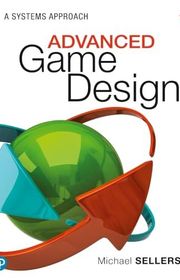
Advanced Game Design: A Systems Approach
For designers past the basics who want to reason about interacting systems. Sellers provides a framework for understanding how behaviors emerge from connected parts, though the conceptual density makes it a demanding choice for a first design book.
What it's about
Sellers applies systems thinking to game design, examining how interacting elements produce behavior and player experiences. The book connects theoretical models with practical design methods, helping readers reason about complexity, relationships and the consequences of design decisions.

For aspiring designers and teachers who want practical exercises without waiting for programming skills. The non-digital challenges make experimentation quick and inexpensive, though translating the results into a polished video game requires additional technical and production work.
What it's about
Brenda Brathwaite and Ian Schreiber develop game design skills through non digital exercises and creative challenges. Activities encourage brainstorming and practical experimentation, giving aspiring designers, professionals, and teachers opportunities to practise concepts without building complete electronic games.
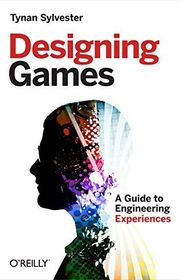
Designing Games
For designers trying to connect mechanics with the experiences and emotions players actually have. Sylvester combines design reasoning with practical creative process, though readers wanting a step-by-step engine tutorial will need a different companion.
What it's about
Tynan Sylvester examines game design as the work of shaping player experiences. Discussions of mechanics, emotion, decision making, and development processes connect abstract principles with the practical choices involved in building, evaluating, and improving a game.

Game Programming Patterns
For designers who also program and need a growing game's code to stay manageable. Nystrom explains reusable architectural choices and their tradeoffs, though the focus is software structure rather than player research, balancing or creative direction.
What it's about
Robert Nystrom presents reusable programming patterns for managing the complexity of game software. Independent chapters cover game loops, components, scripting behavior, spatial organization, and performance, explaining how architectural choices can make code easier to maintain and optimize.

For newcomers who prefer an illustrated, approachable tour of video game design tasks. Rogers makes concepts such as enemies, controls and level planning concrete, though the broad overview offers less theoretical depth than the larger textbooks.
What it's about
Scott Rogers guides readers from initial game ideas to production through illustrated explanations of levels, controls, enemies, and design documents. This second edition expands coverage of mobile and console games, monetization, and challenges across stages of development.

The Gamer's Brain
For designers who want a clearer account of perception, attention and learning in player experience. Hodent connects psychology with practical UX questions, though the research-oriented framework complements playtesting rather than predicting exactly how every player will respond.
What it's about
Hodent introduces cognitive science and user experience principles relevant to video games. Discussions of perception, memory, attention, motivation and learning show how understanding players can inform development decisions and help teams identify obstacles in a game's experience.
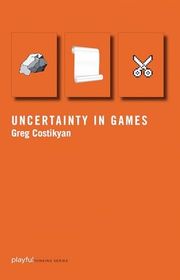
Uncertainty in Games
For designers asking what keeps players interested when outcomes are uncertain. Costikyan offers a concise framework that distinguishes several sources of unpredictability, though the focused argument works better as a supplement than a complete design course.
What it's about
Costikyan examines uncertainty as a central feature of games, distinguishing sources such as chance, hidden information and players' skills or decisions. Examples across different kinds of games show how uncertainty shapes engagement and can guide design choices.
Sources
- 1
10 Essential Video Game Design Books
gamedesigning.org
- 2
The Very Best Game Design Books (Beginner to Advanced)
gameindustrycareerguide.com
- 3
Game Design Library
lizengland.com
- 4
Books – Game Lab
openlab.citytech.cuny.edu
- 5
The Best Books on Video Games
fivebooks.com
- 6
Game Design Books
goodreads.com
- 7
Gamedevs, what literature do you actually recommend?
reddit.com
- 8
Game Design Books: A Reading List Organised by the Problem You’re Trying to Solve
8bitplay.com
- 9
Books for Game Designers
playtank.io



Edited by
Software engineer whose passion for tracking book recommendations from podcasts inspired the creation of MRB.
Lead investor at 3one4 Capital whose startup expertise and love for books helped shape MRB and its growth.
Comments
Spotted a missing book, a wrong order or a mistake? Tell us and we'll fix this page.
We're a reading guide, not the author or publisher, so we can't send books or pass on messages.