
22 Best Video Game Books
The best video game books, ranked by how many expert sources recommend each one, with notes for players, aspiring designers, and readers of industry history.
Our take
Books about video games can explain the decisions hidden behind a finished screen. Some follow developers through creative setbacks and deadlines. Others examine businesses, describe design principles, or ask what playing does to our emotions and memories. Gaming fiction offers another route, using virtual worlds and competitions to tell stories about identity, friendship, and power.
Masters of Doom is a focused introduction to the people behind influential games, while Replay gives a broader historical view. Blood, Sweat, and Pixels shows how development unfolds across several studios; Press Reset follows the costs of an unstable industry beyond individual releases. If you want to make games, Spelunky provides a concrete creator's account and The Art of Game Design supplies questions to use in your own work. Start with a development story if you're curious about the people, a survey if you want context, or a design book when you're ready to experiment.
22 books · 11 sources · Last updated
As an Amazon Associate, we earn from qualifying purchases (at no extra cost to you).
How to choose from this list
Skip to the full rankingIf you're new to game-industry stories: Masters of Doom → Blood, Sweat, and Pixels
If you want a wider historical view: Replay → The Ultimate History of Video Games
If you're considering a development career: Significant Zero → Press Reset
If you want to design games: Theory of Fun for Game Design → Spelunky → The Art of Game Design
If you're interested in players' experiences: Extra Lives → How Games Move Us
If you prefer fiction: Ready Player One
The 22 books, ranked
Ranked by how many expert sources name each book. Ties go to the book more people recommend.

For readers who want a focused story of creative partnership and business ambition. Kushner makes the people behind influential technology accessible, though the attention to two founders offers a narrow slice of the wider industry.
What it's about
David Kushner chronicles John Carmack and John Romero's partnership, the creation of Doom and Quake, and their eventual split. Their story connects creative ambition, entrepreneurship, friendship, and the cultural influence of video games.
Also recommended by
7 people Patrick Collison recommended this book
Patrick Collison
"One of my favorite books about building software." - Patrick Collison
Patrick Collison's recommendation of this book  Alexis Ohanian recommended this book
Alexis Ohanian
"[This book] convinced me to start a company. Thanks for helping create Reddit." - Alexis Ohanian
Alexis Ohanian's recommendation of this book  Jeff Atwood recommended this book
Jeff Atwood
"Please read [this book]. It's such a great book." - Jeff Atwood
Jeff Atwood's recommendation of this book  Tobi Lütke recommended this book
Tobi Lütke
"Wonderful." - Tobi Lütke
Tobi Lütke's recommendation of this book  Austen Allred recommended this book
Austen Allred
"Amazing book." - Austen Allred
Austen Allred's recommendation of this book  Elon Musk recommended this book
Elon Musk
"A great book." - Elon Musk
Elon Musk's recommendation of this book +1
More recommendations
- Trung Phan
"About the PC Gaming industry." - Trung Phan
- Trung Phan

Blood, Sweat, and Pixels
The Triumphant, Turbulent Stories Behind How Video Games Are Made
For players curious about how difficult it is to finish a game. Schreier's varied case studies reveal production pressures across different studios, though the chapter-by-chapter format gives less sustained depth than a single-company history.
What it's about
Jason Schreier investigates the difficult development of games including Stardew Valley, Destiny, and Dragon Age: Inquisition. Interviews and reporting reveal how creative ambitions collide with technical problems, deadlines, corporate decisions, and the personal costs of prolonged production.

For readers who enjoy a corporate rivalry with a strong narrative drive. Harris makes marketing and management central to the console battle, though the dramatized scenes and dialogue deserve more caution than straightforward interview transcripts.
What it's about
Blake Harris follows Sega's challenge to Nintendo's dominance during the 1990s, centered on Tom Kalinske's leadership of Sega of America. Interviews inform a dramatic account of marketing battles, corporate rivalries, and the decisions behind a pivotal period in video games.
Also recommended by
1 person Brian Dean recommended this book
Brian Dean
"The extremely detailed inside story of how Sega almost dethroned Nintendo." - Brian Dean
Brian Dean's recommendation of this book

For readers who want criticism grounded in the act of playing. Bissell connects games' artistic possibilities to his own experience, though the personal, essayistic approach offers neither a broad history nor practical development instruction.
What it's about
Tom Bissell combines memoir, criticism, and reporting to explore the appeal and artistic possibilities of video games. His account examines how games work, what playing them feels like, and his own complicated relationship with the medium.

For fiction readers who enjoy puzzles, virtual worlds, and recognizable gaming references. Cline keeps the contest moving quickly, though the dense nostalgia and repeated cultural callbacks may appeal less to readers outside that frame.
What it's about
In 2045, Wade Watts lives for the OASIS, a vast virtual world where a dead creator's hidden contest promises a fortune and total control. When Wade finds the first clue, he becomes a target in a race that turns deadly.
Also recommended by
9 people Steve Jurvetson recommended this book
Steve Jurvetson
"A gift to all of my Apple II programming buddies from high school and Dungeons & Dragons comrades." - Steve Jurvetson
Steve Jurvetson's recommendation of this book  Brian Armstrong recommended this book
Brian Armstrong
"A compelling picture of how VR might play out." - Brian Armstrong
Brian Armstrong's recommendation of this book  Astro Teller recommended this book
Astro Teller
"So much fun." - Astro Teller
Astro Teller's recommendation of this book  Bill Gurley recommended this book
Bill Gurley
"Spectacular." - Bill Gurley
Bill Gurley's recommendation of this book - Austen Allred recommended this book
Austen Allred
"Ok writing but a page turner." - Austen Allred
Austen Allred's recommendation of this book  Jenn Im recommended this book
Jenn Im
"One of my favorites now." - Jenn Im
Jenn Im's recommendation of this book +3
More recommendations
- George R. R. Martin
"A tremendous amount of fun." - George R. R. Martin
- Mark Zuckerberg
"Anyone interested in [virtual reality] would read [this book]." - Mark Zuckerberg
- Barry Ritholtz
"So great!" - Barry Ritholtz
- George R. R. Martin

For readers who want an industry overview built around companies, consoles, and influential personalities. Kent's many interviews provide a useful historical foundation, though the original volume stops before much of today's gaming landscape.
What it's about
Steven Kent chronicles the growth of video games from arcade novelties into a major entertainment industry. Interviews with industry figures illuminate influential games, the rise and fall of companies, and the competition surrounding home consoles.

For aspiring designers who want questions they can apply while testing an idea. Schell's many perspectives make it a flexible working reference, though its breadth and length demand practice rather than a quick cover-to-cover read.
What it's about
Jesse Schell introduces game design through a collection of lenses, each offering questions that reveal a different perspective on a game. He connects principles from board games, sports, and video games with practical guidance on creating, testing, and improving player experiences.
Also recommended by
1 person Ryan Hoover recommended this book
Ryan Hoover
"Although it's about gaming, the learnings and tactics in the book can be applied to any product. It's really about psychology and how people think." - Ryan Hoover
Ryan Hoover's recommendation of this book

The Making of Prince of Persia
For aspiring developers who want to see uncertainty recorded while a game is being made. Mechner's journals preserve small decisions and setbacks directly, though the diary format provides less retrospective explanation than a reported history.
What it's about
Jordan Mechner’s journals chronicle the creation of the original Prince of Persia computer game. They record technical problems, creative decisions, and personal struggles, offering a firsthand view of independent game development during the expanding industry of the 1980s.
Also recommended by
1 person- Tobi Lütke recommended this book
Tobi Lütke
"Loved [this book]." - Tobi Lütke
Tobi Lütke's recommendation of this book

A Theory of Fun for Game Design
For readers who want a short, illustrated argument about why games engage us. Koster connects fun with learning and pattern recognition, though the broad theory simplifies experiences that a more detailed design study would separate.
What it's about
Raph Koster examines why games are enjoyable through ideas about learning, pattern recognition, and human behavior. Illustrated arguments connect game design with broader questions about meaning and creativity, with this second edition updating research and reflecting on the medium's development.
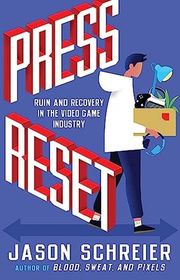
Press Reset
For readers who want to understand the careers behind studio closures. Schreier follows workers beyond the release of a game, though the focus on instability makes this a difficult counterweight to success-focused industry histories.
What it's about
Jason Schreier investigates the people affected by video-game studio shutdowns. Interviews trace the development of familiar titles, corporate decisions, job losses, and the different ways developers rebuild their careers or decide to leave the industry.

For readers interested in applying game-design ideas beyond entertainment. McGonigal makes cooperation and motivation central to an optimistic argument, though the broad claims and selective examples invite more scrutiny than a practical design manual.
What it's about
Jane McGonigal explores why games motivate people and fulfill needs that everyday life often leaves unmet. She argues that game design can support cooperation and meaningful action, examining examples from business, education, and efforts to address wider social problems.

For readers who want a historical survey that looks beyond the best-known American console battles. Donovan follows creators across countries and platforms, though the breadth means individual games and recent industry changes receive limited space.
What it's about
Tristan Donovan traces video-game history from early research laboratories through arcades, home computers, and consoles. Drawing on extensive interviews, he examines the designers, technological shifts, and business fortunes behind gaming's growth across different countries.

For readers curious about writing and narrative work inside large studios. Williams's personal account makes creative compromises tangible, though its forceful voice and focus on his own career limit its value as a balanced industry survey.
What it's about
Walt Williams recounts his unexpected career as a video-game writer and narrative designer. His memoir examines creative work inside large gaming companies, the tension between innovation and commercial demands, and the industry's recurring reliance on violence.

For readers who want one creator's explanation of concrete design decisions. Yu connects difficulty, procedural levels, and player feedback to development experience, though the narrow case study won't cover every genre or production model.
What it's about
Derek Yu tells the story of creating Spelunky and developing its later remake. Using his game as a case study, he discusses random level generation, difficulty, player feedback, collaboration, and the practical challenge of finishing a game.

For readers who prefer creator stories to a purely technical chronology. Goldberg uses interviews to connect influential games with personalities and business pressures, though the selective anecdotes don't provide a comprehensive account of every period.
What it's about
Harold Goldberg traces video games' rise into a major form of popular entertainment through interviews with their creators. Stories behind titles such as Pong, Tetris, Myst, and Grand Theft Auto reveal the innovations, personalities, and business pressures shaping the industry.
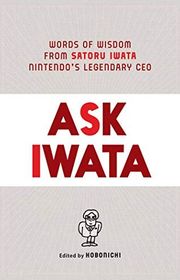
Ask Iwata
For Nintendo fans and creative leaders who want an approachable account of Iwata's thinking. The short reflections emphasize people and problem-solving, though the curated, affectionate collection offers less critical distance than an independent biography.
What it's about
This collection draws together Satoru Iwata's reflections on programming, leadership, and game development, with conversations and recollections from colleagues. It offers a view of the working ideas and personal approach behind Nintendo's former president and CEO.
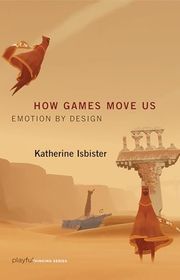
How Games Move Us
For players and designers interested in emotion beyond scripted stories. Isbister shows how choices, movement, and social interaction shape feeling, though the concise analytical approach offers selected examples rather than a comprehensive development toolkit.
What it's about
Katherine Isbister examines how game design creates emotional experiences through choice, characters, movement, and interaction with other players. Examples from commercial, independent, and experimental games explain how playing can foster connection and different kinds of feeling.

The Games That Weren't
For readers curious about the projects missing from familiar gaming histories. Gasking's research recovers abandoned designs through interviews and images, though the many separate entries make it better for browsing than a continuous narrative.
What it's about
Frank Gasking investigates more than 80 unreleased video games from 1975 to 2015. Interviews, development recollections, screenshots, and artwork reconstruct abandoned projects across numerous platforms, exploring the circumstances that prevented players from seeing them as originally intended.

For designers and curious players interested in imagination and shared play. De Koven offers a wider frame than screen-based games alone, though the reflective exercises and general play theory aren't a guide to video-game production.
What it's about
Bernard De Koven explores imagination as a space for play, learning, and shared experience. Observations, techniques, and games move from private imagination to collective possibilities, with contributions from other designers and scholars of play.

For readers interested in Japanese games as a cultural and creative force. Kohler gives developers' ideas more room than a hardware-centered history, though the selection and publication period leave many later developments outside its scope.
What it's about
Chris Kohler examines how Japanese video games became a global cultural force. Interviews and accounts from developers, including Shigeru Miyamoto and Hideo Kojima, explore creative decisions behind influential games and the industry's impact beyond gaming.

For readers who want a compact history of a familiar game's global spread. Ackerman connects creation with licensing and international business, though the rights negotiations take more space than a detailed analysis of Tetris's design.
What it's about
Dan Ackerman recounts the creation of Tetris by Soviet programmer Alexey Pajitnov and its spread beyond the Iron Curtain. The narrative follows the game's growing popularity and the international struggle among companies and officials over its commercial rights.

For readers interested in how childhood gaming changes perception and memory. Clune's personal account gives solitary play unusual emotional attention, though its literary, introspective approach offers little practical advice or general industry history.
What it's about
Michael Clune recounts his childhood in 1980s suburban Illinois through seven computer games. He connects solitary play with school relationships, bullying, and his parents' divorce, examining how virtual worlds shaped his understanding of the world around him.
Sources
- 1
Why do video games matter? 20 books every player should read | Games | The Guardian
theguardian.com
- 2
The best videogame books | PC Gamer
pcgamer.com
- 3
20 of the Best Video Game Books: Fiction And Nonfiction | Book Riot
bookriot.com
- 4
Non-Fiction Books About Video Games (225 books)
goodreads.com
- 5
Please recommend channels/books that cover videogame history : r/retrogaming
reddit.com
- 6
The Best Books for Gamers (Twelve for the Player Who Actually Reads) — Adam Eccles
adamecclesbooks.com
- 7
100 Best Video Games Books of All Time (Updated for 2026)
shortform.com
- 8
The best gaming books - Wargamer
wargamer.com
- 9
What are some of the best books you've ever read on games? : r/gamedev
reddit.com
- 10
The Best Books on Video Games - Five Books Expert Recommendations
fivebooks.com
- 11
The 10 best video game books of 2020
polygon.com








Edited by
Software engineer whose passion for tracking book recommendations from podcasts inspired the creation of MRB.
Lead investor at 3one4 Capital whose startup expertise and love for books helped shape MRB and its growth.
Comments
Spotted a missing book, a wrong order or a mistake? Tell us and we'll fix this page.
We're a reading guide, not the author or publisher, so we can't send books or pass on messages.