
14 Best Franchise Books
Explore the best franchise books, ranked by expert sources, with choices for prospective buyers, current franchisees, and owners planning a franchise system.
Our take
Franchising involves at least two different decisions: whether to join someone else’s business system, and whether to build a system that others can operate. Books for prospective buyers emphasize personal fit, research, and the questions to ask. Books for franchisors and existing operators focus more on support, consistency, and the relationships that keep a network functioning.
The Educated Franchisee and The Franchise MBA offer frameworks for investigating ownership, while Brick & Mortar Franchise Success concentrates on opening a physical location. Franchise Your Business takes the other side of the relationship, helping established owners examine expansion through franchising. Profitable Partnerships addresses how the parties work together, and The E-Myth Revisited considers the systems that reduce a business’s dependence on its owner. Read these as ways to organize questions and thinking, alongside current information about the specific business and market. Start with a buyer guide if you are exploring ownership, or a franchisor guide if you already have a business to expand.
14 books · 10 sources · Last updated
As an Amazon Associate, we earn from qualifying purchases (at no extra cost to you).
How to choose from this list
Skip to the full rankingIf you are exploring franchise ownership: The Educated Franchisee → The Franchise MBA
If you want questions for your research: 101 Questions To Ask Before You Invest In A Franchise → Become a Franchise Owner!
If you plan to open physical premises: Brick & Mortar Franchise Success
If you want to franchise an existing business: Franchise Your Business → Franchise Bible
If you want stronger operations and relationships: The E-Myth Revisited → Profitable Partnerships → The Wealthy Franchisee
If you prefer a business-building memoir: Grinding It Out
The 14 books, ranked
Ranked by how many expert sources name each book. Ties go to the book more people recommend.

For readers comparing buying a franchise with franchising their own business, this guide brings both perspectives together. Its checklists support orientation and planning, but legal details and sample materials need checking for your location and circumstances.
What it's about
Rick Grossmann and Michael Katz explain buying a franchise and developing an existing business into a franchise system. Tutorials, sample documents, checklists, and questionnaires address the practical and legal considerations involved in getting an operation started and supporting its success.

Franchising For Dummies
For newcomers who want franchising explained in plain language, Seid and Thomas provide a broad introduction to the model and its demands. The accessible format builds vocabulary, but an older edition needs supplementing with current local information.
What it's about
Michael Seid and Dave Thomas introduce the process of researching, buying, and running a franchise. Explanations, examples, and sample forms address evaluating opportunities, agreements, customers, and operations, helping prospective owners understand both the business model and its demands.

The E-Myth Revisited
Why Most Small Businesses Don't Work and What to Do About It
For owners whose business depends too heavily on their personal effort, Gerber offers a memorable case for repeatable systems. The operating perspective complements franchise-selection books, but it is a general small-business argument rather than a franchise buying manual.
What it's about
Michael Gerber argues that technical expertise does not automatically equip someone to run a small business. He distinguishes entrepreneurial, managerial, and technical responsibilities, outlining a systems-based approach designed to reduce a company’s dependence on its owner.
Also recommended by
7 people Tim Ferriss recommended this book
Tim Ferriss
"If you’re stuck in your own business, this book can help you get unstuck." - Tim Ferriss
Tim Ferriss's recommendation of this book  Dave Ramsey recommended this book
Dave Ramsey
Recommended on Dave Ramsey's website.
Dave Ramsey's recommendation of this book  Derek Sivers recommended this book
Derek Sivers
"Absolutely everyone who is an entrepreneur or wants to be one needs to read this book." - Derek Sivers
Derek Sivers's recommendation of this book  Dave Camarillo recommended this book
Dave Camarillo
"Was huge." - Dave Camarillo
Dave Camarillo's recommendation of this book  Tom Bilyeu recommended this book
Tom Bilyeu
Tom Bilyeu recommended this book on his website.
Tom Bilyeu's recommendation of this book  Michael Hyatt recommended this book
Michael Hyatt
Michael Hyatt recommended this book on his website.
Michael Hyatt's recommendation of this book +1
More recommendations
- Patrick Bet-David
Patrick Bet-David recommended this book on his website.
- Patrick Bet-David

Become a Franchise Owner!
The Start-Up Guide to Lowering Risk, Making Money, and Owning What you Do
For readers who want a sequential guide to exploring ownership, Libava ties opportunity research to personal suitability. The step-by-step structure is approachable, but it does not remove the uncertainty or individual financial demands of running a business.
What it's about
Joel Libava guides prospective franchise owners through evaluating themselves, researching opportunities, and choosing a business that fits their circumstances. Step-by-step discussions address questions for existing franchisees, financing, legal considerations, and the decision to commit to ownership.

For first-time buyers who want a methodical way to compare opportunities, Bisio emphasizes fit and conversations with existing owners. The accessible process supports careful inquiry, but readers still need to verify the facts of each particular offer.
What it's about
Rick Bisio guides readers through selecting a franchise suited to their goals and circumstances. Discussions of researching franchisors, speaking with existing owners, assessing financial prospects, and choosing advisers emphasize gathering the information needed for a considered ownership decision.

For prospective buyers who want a clear research structure, Neonakis organizes the decision around personal fit and investigation. The framework helps prevent scattered research, but it cannot replace current financial information or independent professional review.
What it's about
Nick Neonakis and his coauthors organize franchise selection into four areas: self-assessment, the franchisor, existing franchisees, and legal and financial review. Their framework combines industry experience with questions and investigation aimed at matching a prospective owner with an appropriate business.

For readers who prefer learning through a founder’s experience, Kroc offers an inside account of franchise expansion and operating discipline. The story makes business choices tangible, but it remains one participant’s perspective from a particular historical setting.
What it's about
Ray Kroc recounts the experiences and decisions behind his expansion of McDonald's. His account examines franchising, food-service systems, employee training and advertising, offering a personal view of how he built a large business after opening his first franchise at fifty-two.
Also recommended by
2 people Tai Lopez recommended this book
Tai Lopez
Tai Lopez recommended this book on Twitter.
Tai Lopez's recommendation of this book  Jason Calacanis recommended this book
Jason Calacanis
"It was great." - Jason Calacanis
Jason Calacanis's recommendation of this book

For readers considering a franchise with physical premises, Miller makes development costs and site decisions more visible. Its focused treatment fills a gap in general buyer guides, but it is less relevant to businesses without a storefront.
What it's about
Carolyn Miller examines the work and costs involved in opening a physical franchise location. Drawing on development experience, she discusses selecting sites, leasing space, and building premises, explaining how overlooked details can create expensive problems before a business opens.
Profitable Partnerships
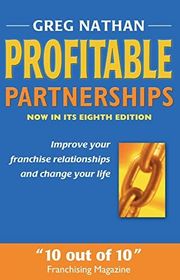
For franchisees and franchisors trying to improve how they work together, Nathan focuses on the relationship behind the operating system. The behavioral perspective adds something buyer guides often miss, but it is not a contract or financial reference.
What it's about
Greg Nathan examines the relationship between franchisors and franchisees, drawing on psychology and franchise experience. The book explores communication, expectations, conflict, and cooperation, offering a framework for understanding the human dynamics within a franchise system.

Street Smart Franchising
For readers who want expectations tested against owners’ experiences, Mathews and his coauthors connect research with the realities of participation in a system. The stories add texture, but individual examples cannot establish how another franchise will perform.
What it's about
Joe Mathews and his coauthors examine what prospective franchisees should expect before buying and operating a franchise. Stories from owners and franchisors illuminate personal suitability, due diligence, business challenges, and the evolving relationship between a franchisee and the franchise system.

For prospective franchisees who want to understand the application and working relationship, Reader explains what both sides expect. Its practical perspective is useful, but legal arrangements and business conditions require checking in the relevant market.
What it's about
Carl Reader explains the distinct process of choosing, securing, and running a franchise. Advice addresses what franchisors expect, which terms may be negotiated, and how applicants can present themselves, preparing prospective franchisees for this two-way business relationship.

101 Questions To Ask Before You Invest In A Franchise
For prospective buyers who need a starting checklist, Hayes turns a large decision into specific questions to investigate. The format encourages active inquiry, but collecting answers is only useful if their quality and relevance are independently assessed.
What it's about
John Hayes organizes franchise research around questions prospective buyers should ask before investing. The checklist covers personal suitability, financing, franchise arrangements, and investigating an opportunity, helping readers identify information they need from franchisors, existing owners, and professional advisers.
Franchise Your Business
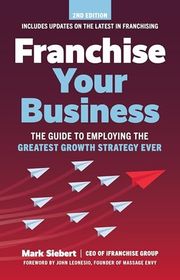
For owners considering expansion through franchising, Siebert explains the work involved in creating and supporting a system. The franchisor perspective complements buyer-focused books, but its planning framework requires current professional input and business-specific analysis.
What it's about
Mark Siebert explains the process of turning an established business into a franchise system. Topics include evaluating suitability, planning expansion, developing operations and support, attracting franchisees, and understanding the legal and organizational work involved in sustaining growth.
The Wealthy Franchisee
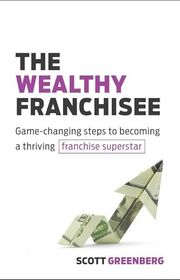
For existing franchisees who want to examine how they manage themselves and their teams, Greenberg emphasizes behavior and operating habits. The practical perspective can prompt reflection, but successful examples do not guarantee comparable financial results.
What it's about
Scott Greenberg explores the habits, attitudes, and decisions of franchise owners through interviews and his own operating experience. The book connects personal effectiveness with leadership, customer service, and daily business practices, examining how owners approach the demands of their work.
Sources
- 1
Franchising Books
goodreads.com
- 2
15 Reads for Franchising Professionals
tour.franchisebusinessreview.com
- 3
The Top 10 Franchising Books
franchising.eu
- 4
10 Must-Read Books About Franchising
franchisedirectcanada.com
- 5
Franchising: Books & Periodicals
libguides.nypl.org
- 6
The 10 Best Books About Franchising (Written by Franchisors)
pointfranchise.co.uk
- 7
Franchise Books
franchise-chat.com
- 8
Anyone have suggestions on resources or books on building a franchise?
reddit.com
- 9
Top 8 Books to Read for Franchising
franchisegator.com
- 10
Seeking Recommendations for websites, books, podcasts, etc
reddit.com




Edited by
Software engineer whose passion for tracking book recommendations from podcasts inspired the creation of MRB.
Lead investor at 3one4 Capital whose startup expertise and love for books helped shape MRB and its growth.
Comments
Spotted a missing book, a wrong order or a mistake? Tell us and we'll fix this page.
We're a reading guide, not the author or publisher, so we can't send books or pass on messages.