
14 Best Focus Books
The best books on focus, ranked by how many expert sources recommend each one, with notes on who each book suits and where to start improving attention.
Our take
Focus can break down for different reasons. You might have too many commitments, keep checking a device without deciding to, or find it hard to stay with demanding work once you begin. These books approach those problems from different angles. Some offer routines and exercises; others examine why attention matters or how the surrounding culture competes for it.
Deep Work is useful when you need to protect time for difficult thinking. Getting Things Done addresses unfinished commitments, while Essentialism asks which commitments deserve a place at all. Hyperfocus offers smaller experiments with attention, including deliberate time for ideas to wander. For a broader view, Flow explores absorption and satisfaction, and Stolen Focus looks beyond individual habits. You don’t need to adopt every system. Start with the book that matches the interruption you notice most often, then use a second only if it answers a different question.
14 books · 7 sources · Last updated
As an Amazon Associate, we earn from qualifying purchases (at no extra cost to you).
How to choose from this list
Skip to the full rankingIf you need uninterrupted work time: Deep Work → Hyperfocus
If unfinished tasks distract you: Getting Things Done
If you have too many commitments: Essentialism → The ONE Thing
If your phone keeps winning: Indistractable → Digital Minimalism
If you want the bigger picture: The Shallows → Stolen Focus
If productivity itself feels exhausting: Four Thousand Weeks
The 14 books, ranked
Ranked by how many expert sources name each book. Ties go to the book more people recommend.
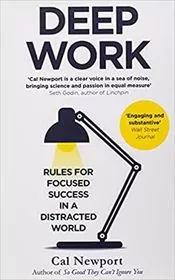
For people whose work needs long stretches of uninterrupted thinking. Its routines make concentration a scheduling decision rather than a vague intention, though the advice is harder to apply in highly reactive jobs.
What it's about
Newport makes the case that focused, distraction-free work is a rare and valuable skill. He explains why shallow busyness takes over and offers rules for building routines that protect serious thinking.
Also recommended by
1 person Tai Lopez recommended this book
Tai Lopez
"Great book on how to focus the mind. Read this if you need to be more productive." - Tai Lopez
Tai Lopez's recommendation of this book
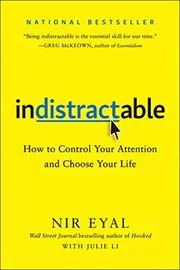
For readers who keep returning to distractions even after silencing notifications. Its attention to internal triggers complements environmental changes, though the emphasis on personal control leaves some workplace and structural constraints unresolved.
What it's about
Nir Eyal examines the internal discomfort and external cues that pull attention away from intended activities. He offers methods for planning time, managing interruptions, and making commitments that support focused work, relationships, and other personal priorities.
Also recommended by
3 people Alexis Ohanian recommended this book
Alexis Ohanian
"A great foundation for bringing intention and focus to your work- and home-life." - Alexis Ohanian
Alexis Ohanian's recommendation of this book  Ryan Hoover recommended this book
Ryan Hoover
Ryan Hoover mentioned this book on Twitter.
Ryan Hoover's recommendation of this book  Balaji Srinivasan recommended this book
Balaji Srinivasan
"Tackles the problem of modern distraction by empowering us to break the bad habits at the root of the issue." - Balaji Srinivasan
Balaji Srinivasan's recommendation of this book
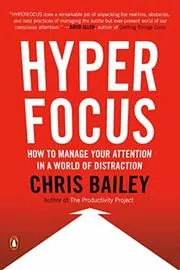
For readers who want practical attention exercises without treating every wandering thought as a failure. Its distinction between concentration and creative mind wandering is useful, though the many tactics require selecting and practicing a few.
What it's about
Chris Bailey explores two ways of directing attention: sustained concentration for completing tasks and deliberate mind wandering for creative connections. He offers practical methods for reducing distractions, shaping work environments, and choosing when to focus or take a break.
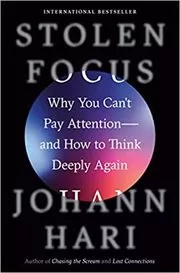
For readers who want the wider social context behind distraction. Its reporting connects attention with technology and working conditions, though some broad causal claims are contested and it provides less of a daily practice system.
What it's about
Johann Hari investigates why sustained attention has become difficult, drawing on interviews and experiments in changing his own habits. He argues that broader technological and social forces affect concentration and considers individual and collective responses.
Also recommended by
6 people Adam Grant recommended this book
Adam Grant
"A gripping analysis of why we’ve lost the capacity to concentrate, and how we might find it again." - Adam Grant
Adam Grant's recommendation of this book  Arianna Huffington recommended this book
Arianna Huffington
"If you want to get your attention and focus back, you need to read this remarkable book." - Arianna Huffington
Arianna Huffington's recommendation of this book  Hillary Clinton recommended this book
Hillary Clinton
"Rings the alarm bell for what all of us must do to protect ourselves, our children, and our democracies." - Hillary Clinton
Hillary Clinton's recommendation of this book  Mark Manson recommended this book
Mark Manson
Mark Manson recommended this book on his website.
Mark Manson's recommendation of this book  Stephen Fry recommended this book
Stephen Fry
"A beautifully researched and argued exploration of the breakdown of humankind’s ability to pay attention." - Stephen Fry
Stephen Fry's recommendation of this book  Susan Cain recommended this book
Susan Cain
"Read this book to save your mind." - Susan Cain
Susan Cain's recommendation of this book
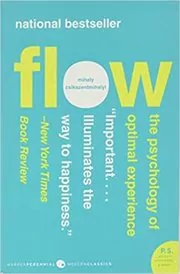
For readers interested in why sustained attention can feel rewarding. Its broader account of absorption connects work with leisure and meaning, though it is more explanatory than a step-by-step plan for tomorrow’s schedule.
What it's about
Psychologist Mihaly Csikszentmihalyi explores flow, the state of deep absorption in an activity that challenges one's abilities. Drawing on research into optimal experience, he examines how attention, clear goals, and meaningful engagement can contribute to satisfaction in daily life.
Also recommended by
3 people Kishore Biyani recommended this book
Kishore Biyani
"Taught me one of the best values in life — achieving a state of flow." - Kishore Biyani
Kishore Biyani's recommendation of this book  Raoul Pal recommended this book
Raoul Pal
"A great book." - Raoul Pal
Raoul Pal's recommendation of this book  Pavel Durov recommended this book
Pavel Durov
Pavel Durov recommended this book in an interview.
Pavel Durov's recommendation of this book
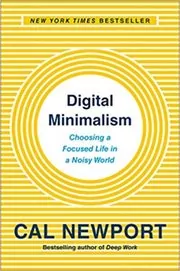
For readers whose leisure and work are crowded by habitual device use. Its values-based approach helps decide which tools deserve a place, though the proposed reset can be demanding for people with unavoidable online obligations.
What it's about
Newport argues for a more intentional relationship with technology: keep the tools that support what you value, and strip away the rest. The book centers on a 30-day digital declutter and better offline leisure.
Also recommended by
2 people Jodie Cook recommended this book
Jodie Cook
"[Looks] into lifestyle design and lifestyle habits to ensure that you’re making intentional choices about how you spend your limited time on this planet." - Jodie Cook
Jodie Cook's recommendation of this book  Danny Miranda recommended this book
Danny Miranda
"An interesting perspective on how to live a focused life in a world full of noise." - Danny Miranda
Danny Miranda's recommendation of this book
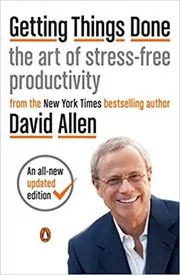
For readers distracted by unfinished commitments and fear of forgetting something. Its capture-and-review system clears practical mental clutter, though maintaining the system takes effort and does not automatically create time for deep work.
What it's about
David Allen presents a system for managing personal and professional commitments without relying on memory alone. He explains how capturing tasks, clarifying next actions, organizing information, and reviewing commitments can help people approach their work with greater focus.
Also recommended by
6 people Ev Williams recommended this book
Ev Williams
"Still the best advice on getting your life in order and freeing up your brain to be creative." - Ev Williams
Ev Williams's recommendation of this book  Dustin Moskovitz recommended this book
Dustin Moskovitz
"Put first things first." - Dustin Moskovitz
Dustin Moskovitz's recommendation of this book  Tony Hsieh recommended this book
Tony Hsieh
One of 4 books Tony Hsieh recommended in Inc.com
Tony Hsieh's recommendation of this book  Michael McCullough recommended this book
Michael McCullough
"Helps you actually to action." - Michael McCullough
Michael McCullough's recommendation of this book  Howard Stern recommended this book
Howard Stern
"A game changer. I’ve read it maybe 20 times." - Howard Stern
Howard Stern's recommendation of this book  Michael Hyatt recommended this book
Michael Hyatt
Michael Hyatt recommended this book on his website.
Michael Hyatt's recommendation of this book
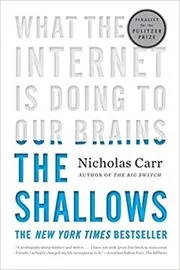
For readers who want a sustained argument about how internet use changes reading and thought. Its history of media gives distraction a wider frame, though it offers fewer practical exercises and predates today’s platforms.
What it's about
Nicholas Carr investigates how internet use may shape attention, reading, and thought. Combining personal observations with research and a history of communication technologies, he examines the trade-offs between convenient access to information and sustained concentration.
Also recommended by
3 people Barack Obama recommended this book
Barack Obama
Barack Obama's favorite books of 2019 list.
Barack Obama's recommendation of this book  Tara Brach recommended this book
Tara Brach
"It's really describing how technology actually shapes and changes our brain." - Tara Brach
Tara Brach's recommendation of this book  Ezra Klein recommended this book
Ezra Klein
"One of the most prescient books of the digital age." - Ezra Klein
Ezra Klein's recommendation of this book
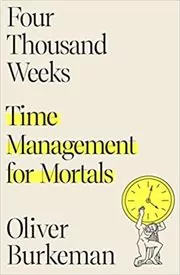
For readers who have improved their systems but still feel permanently behind. Its acceptance of limits makes choosing what deserves attention the central task, though readers seeking concentration drills will find more reflection than technique.
What it's about
Oliver Burkeman explores how to live meaningfully within a finite lifespan. Drawing on philosophy and psychology, he questions the drive to accomplish everything and offers ways to accept limits, choose commitments, and relate differently to time.
Also recommended by
1 person Tim Ferriss recommended this book
Tim Ferriss
"Quite unlike anything I’ve ever read." - Tim Ferriss
Tim Ferriss's recommendation of this book
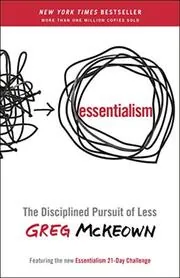
For readers whose attention is scattered because they have agreed to too much. Its emphasis on refusing commitments addresses the workload before the work session, though it offers fewer techniques for handling immediate distractions.
What it's about
Greg McKeown argues for deliberately identifying what matters most and eliminating commitments that distract from it. Using examples and practical methods, he explores prioritization, trade-offs, boundaries, and creating routines that support a smaller number of meaningful pursuits.
Also recommended by
7 people Noah Kagan recommended this book
Noah Kagan
Noah Kagan recommended this book in the "Tools of Titans" book.
Noah Kagan's recommendation of this book  Kevin Rose recommended this book
Kevin Rose
"Really resonated with me, and I will certainly incorporate many of these principles into my work and personal life." - Kevin Rose
Kevin Rose's recommendation of this book  Reid Hoffman recommended this book
Reid Hoffman
"Offers concise and eloquent advice on how to determine what you care about most, and how to apply your energies in ways that ultimately bring you the greatest rewards." - Reid Hoffman
Reid Hoffman's recommendation of this book  Austen Allred recommended this book
Austen Allred
Austen Allred recommended this book on his website.
Austen Allred's recommendation of this book  Steve Harvey recommended this book
Steve Harvey
"This book changed my life." - Steve Harvey
Steve Harvey's recommendation of this book - Jodie Cook recommended this book
Jodie Cook
"Do less but do it better. Wise words with application across life and business." - Jodie Cook
Jodie Cook's recommendation of this book +1
More recommendations
- Michael Hyatt
Michael Hyatt recommended this book on his website.
- Michael Hyatt
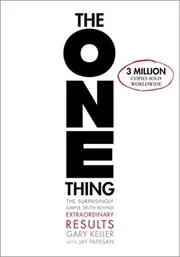
For readers who struggle to choose between competing priorities. The central question makes it easier to identify a next step, though its single-priority approach needs adapting when several responsibilities genuinely cannot wait.
What it's about
Gary Keller and Jay Papasan argue that concentrating on the most important priority can improve results. They examine habits and distractions that consume time and explain how a clearer focus can guide everyday choices.
Also recommended by
4 people Charles Poliquin recommended this book
Charles Poliquin
Charles Poliquin recommended this book in the "Tools of Titans" book.
Charles Poliquin's recommendation of this book  Maria Sharapova recommended this book
Maria Sharapova
"It kind of hit home for me [...] that when you wake up in the morning, you put your focus on this one thing of what you want to accomplish during the day, which seems like a no-brainer." - Maria Sharapova
Maria Sharapova's recommendation of this book - Alexis Ohanian recommended this book
Alexis Ohanian
"Makes a strong case for tossing out my daily Todo list in favor of focusing just One Thing every day." - Alexis Ohanian
Alexis Ohanian's recommendation of this book  Kat Cole recommended this book
Kat Cole
"Big fan of this book." - Kat Cole
Kat Cole's recommendation of this book
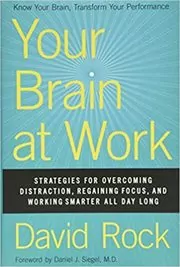
Your Brain at Work
Strategies for Overcoming Distraction, Regaining Focus, and Working Smarter All Day Long
For readers who learn through recognizable workplace situations. The fictional working day makes competing mental demands concrete, though the simplified neuroscience should be treated as an explanatory model rather than a complete account.
What it's about
David Rock uses the working lives of Emily and Paul to explore attention, distraction, emotion, and collaboration. Drawing on neuroscience, he suggests strategies for managing mental demands, finding insights, giving feedback, and making decisions.
Also recommended by
1 person- Noah Kagan recommended this book
Noah Kagan
"Different ways to organize and prioritize your day to maximize productivity." - Noah Kagan
Noah Kagan's recommendation of this book
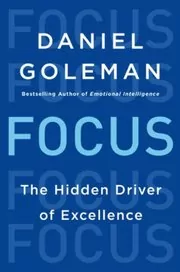
For readers who want attention connected with self-awareness, relationships, and leadership. Its broader lens goes beyond blocking interruptions, though the range of examples makes it less focused on a single daily routine.
What it's about
Daniel Goleman explores attention as a foundation for performance and effective leadership. Distinguishing focus on oneself, other people, and the wider world, he examines how these forms of awareness shape decisions, relationships, and responses to complex systems.
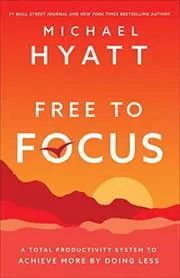
For managers and independent professionals who can change their workload. Its combination of elimination, delegation, and planning addresses several sources of overload, though readers with little control over assignments may find parts difficult to use.
What it's about
Michael Hyatt presents a productivity system centered on clarifying priorities and reducing unnecessary work. Strategies for evaluating goals, managing energy, and focusing attention aim to create room for meaningful accomplishments alongside health, relationships, and life beyond work.
Sources
- 1
12 Best Focus Books to Read
teambuilding.com
- 2
Best Books on Focus & Deep Concentration
readingandthinking.com
- 3
Best Books on Focus and Deep Work: 8 Ranked
nextbooklist.com
- 4
The 7 Best Books on Focus and Attention
distilshelf.com
- 5
Best Books on Focus, Productivity & Mindfulness
goodreads.com
- 6
Self help book recommendations that focus on concentration and organisation??
reddit.com
- 7
Best Books for Focus
hourlife.com
Edited by
Software engineer whose passion for tracking book recommendations from podcasts inspired the creation of MRB.
Lead investor at 3one4 Capital whose startup expertise and love for books helped shape MRB and its growth.
Comments
Did we miss something? Have feedback?
Help us improve this page by sharing your thoughts