
14 Best Figure Drawing Books
The best figure drawing books, ranked by how many expert sources recommend each one, with notes on gesture, anatomy, observation and where to start.
Our take
Figure drawing combines several skills that do not always develop at the same pace. You might understand anatomy but struggle to capture movement, or draw a lively gesture that falls apart when you add volume. These books address different parts of that process: observing proportions, constructing forms, understanding the body and turning a pose into an expressive drawing. Most become more useful when you work through them beside a model or a varied set of references.
Figure Drawing for All It's Worth gives a broad introduction, while Figure Drawing: Design and Invention emphasizes simplified construction. Figure Drawing for Artists connects gesture and structure, and FORCE: Dynamic Life Drawing concentrates on movement and rhythm. For slower observational work, The Artist's Complete Guide to Figure Drawing offers a contrasting approach. Anatomical references such as Atlas of Human Anatomy for the Artist support those drawing methods rather than replace them. Start with one general course, then choose a specialist book for the weakness you notice in your own drawings.
14 books · 9 sources · Last updated
As an Amazon Associate, we earn from qualifying purchases (at no extra cost to you).
How to choose from this list
Skip to the full rankingIf you're building a general foundation: Figure Drawing for All It's Worth → Figure Drawing: Design and Invention
If your figures look stiff: Figure Drawing for Artists → FORCE: Dynamic Life Drawing
If you want anatomical reference: Anatomy for the Artist → Atlas of Human Anatomy for the Artist
If you want careful observational drawings: The Artist's Complete Guide to Figure Drawing
If you're studying complex constructed poses: Dynamic Figure Drawing → Bridgman's Complete Guide to Drawing From Life
If you need quick help with individual features: Drawing the Head and Figure
The 14 books, ranked
Ranked by how many expert sources name each book. Ties go to the book more people recommend.

Figure Drawing for All It's Worth
For readers who want a broad foundation in proportion, perspective and constructing figures. Loomis brings many concerns together in one illustrated course, though the idealized bodies and presentation reflect his mid-century commercial illustration background.
What it's about
Andrew Loomis develops figure-drawing instruction from anatomy and basic forms to poses, movement, and finished rendering. Illustrated sections cover perspective, balance, rhythm, lighting, and clothing, showing how to construct convincing human figures in different positions.

For artists who want to build convincing figures from simplified forms. Hampton connects gesture with functional anatomy in a repeatable process, though turning those diagrams into natural drawings requires observation and practice beyond copying the examples.
What it's about
Michael Hampton presents figure drawing as a practical process built on a simplified understanding of surface anatomy. His instruction connects the body's mechanics with design and invention, helping artists combine individual steps into a coherent working method.

For artists whose drawings need stronger gesture without losing solid structure. Huston connects those two concerns through clear visual examples, though the conceptual explanations reward repeated drawing sessions rather than a quick read followed by immediate improvement.
What it's about
Steve Huston builds figure drawing around structure and gesture, using examples from major artworks alongside practical instruction. Lessons cover perspective, light, and individual body regions, showing how simplified forms and movement work together in a drawing.

For artists ready to connect life drawing with expressive choices and composition. Gheno's demonstrations and discussions of earlier artworks offer a broader artistic context, though the variety is less linear than a tightly sequenced beginner course.
What it's about
Dan Gheno uses his drawings, demonstrations, and examples from Old Masters to teach life drawing. Lessons address gesture, line, heads, hands, drapery, and composition, connecting accurate observation with the expressive possibilities of the human figure.

The Artist's Complete Guide to Figure Drawing
A Contemporary Perspective On the Classical Tradition
For patient readers who want close observation to guide contour and tonal modeling. Ryder's staged approach supports carefully developed drawings, though it is less suited to artists seeking quick gesture exercises or figures invented without a model.
What it's about
Anthony Ryder teaches figure drawing through close observation and a sequence of block-in, contour, and tonal work. Illustrated lessons examine gesture, light, and form, helping artists construct drawings from what they see rather than preconceived shapes.

Atlas of Human Anatomy for the Artist
For artists who need a detailed reference for bones, muscles and visible landmarks. Peck connects anatomy with proportion and movement, though the information-heavy approach is less welcoming than a guided drawing course for a complete beginner.
What it's about
Stephen Rogers Peck's illustrated reference connects skeletal and muscular anatomy with artistic observation. Sections examine surface landmarks, proportions, movement, changing physiques, and facial expressions, supplying artists with a structural framework for depicting the human body.

For beginners who want compact diagrams for proportions, features and common poses. Hamm makes individual problems easy to look up, though the dense pages and formula-based shortcuts need balancing with drawing directly from people.
What it's about
Jack Hamm offers illustrated, step-by-step instruction for drawing heads and human figures. His handbook breaks facial features, anatomy, proportions, and poses into manageable studies, using diagrams and examples to clarify how the body's parts fit together.
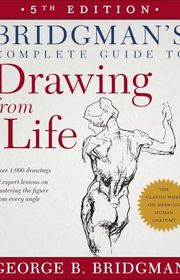
Bridgman's Complete Guide to Drawing From Life
For artists ready to study the body as interlocking masses with weight and movement. The collected drawings offer extensive structural problems to analyze, though the compressed explanations and vigorous distortions can confuse beginners without a simpler foundation.
What it's about
This collection brings together six of George Bridgman's instructional books on the human figure. Drawings and lessons examine bodily masses, anatomy and movement, showing how structural relationships can guide the depiction of people from varied angles.
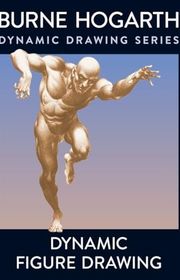
Dynamic Figure Drawing
For artists who want to construct dramatic poses and solve difficult foreshortening. Hogarth's sculptural approach emphasizes bodies moving through space, though the exaggerated forms can push drawings toward a muscular, stylized look rather than quiet observational realism.
What it's about
Burne Hogarth explains a system for constructing figures in varied poses and viewpoints. Lessons emphasize three-dimensional form, movement and foreshortening, guiding artists through relationships between body parts when drawing figures from imagination as well as observation.

For artists whose figures look accurate but stiff. Mattesi emphasizes directional energy, rhythm and connected shapes more strongly than the anatomy references, though the animation-influenced approach needs balancing with proportion and careful observation of the model.
What it's about
Mike Mattesi presents his FORCE approach to figure drawing, using rhythm, shape, and line to communicate energy and movement. Illustrated examples explain how to observe the body dynamically and translate that understanding into drawings for illustration, animation, and related work.

Anatomy for the Artist
For artists who want to compare anatomical structure with photographs and finished drawings. Simblet gives the body a strong observational context, though the substantial reference material is better paired with regular figure practice than treated as a quick method.
What it's about
Sarah Simblet combines anatomical explanation, photographs, and drawings to examine the human body's structure and appearance. Lessons connect bones and muscles with the visible figure, helping artists translate observation into drawings of the human form.

For artists interested in combining anatomical landmarks with rhythmic, expressive rendering. Jones's demonstrations make his personal approach visible from sketch to developed figure, though the strongly defined style should be studied selectively rather than treated as a universal model.
What it's about
Patrick J. Jones presents a life drawing course illustrated with his own work and study sheets. Step-by-step lessons cover drawing tools, anatomical landmarks, shapes, and rhythms, connecting knowledge of the body with expressive figurative drawing.

Figure Drawing For Dummies
For newcomers who want equipment, proportions and basic figure construction explained in familiar language. The broad introduction can ease the first steps, though artists seeking detailed anatomy or a distinctive expressive approach will need a more specialized book.
What it's about
Kensuke Okabayashi introduces drawing the human figure through illustrated explanations and examples. The guide addresses proportions, equipment, and constructing heads and bodies, with practical suggestions for correcting mistakes and developing confidence through observing people in everyday settings.

For beginners who want to start drawing people before studying extensive anatomy. Hart's simplified examples make early practice approachable, though their stylized formulas provide less help with subtle observation and the variety of real bodies.
What it's about
Christopher Hart introduces drawing people without beginning with extensive anatomical study. Clear examples progress from heads and facial expressions to complete male and female figures, covering varied proportions, fashion poses, and figures in dynamic action.
Sources
- 1
14 Best Figure Drawing Books for Beginners and Professionals
yourartpath.com
- 2
8 Best Figure Drawing Books for Anatomy (2026 Recommendations)
doncorgi.com
- 3
Best Books for Figure Drawing (Loomis, Bridgman, Tom Fox & More)
poselibrary.com
- 4
Figure Drawing Books
goodreads.com
- 5
Good books on figure drawing?
reddit.com
- 6
5 Drawing Books That Will Help You Render the Human Figure
mymodernmet.com
- 7
Figure Drawing Books
artmodelbook.com
- 8
I have decided to treat myself to some physical art books.
reddit.com
- 9
The best figure drawing books
creativebloq.com







Edited by
Software engineer whose passion for tracking book recommendations from podcasts inspired the creation of MRB.
Lead investor at 3one4 Capital whose startup expertise and love for books helped shape MRB and its growth.
Comments
Spotted a missing book, a wrong order or a mistake? Tell us and we'll fix this page.
We're a reading guide, not the author or publisher, so we can't send books or pass on messages.