
19 Best Drawing Books
The best drawing books, ranked by how many expert sources recommend each one, with notes to help you choose beginner exercises, figure study, or perspective.
Our take
Drawing books teach different parts of a skill that can look deceptively simple. Learning to observe shapes and proportions is one task; constructing a figure, organizing perspective, and controlling light are others. The most useful choice depends on where your drawings break down and whether you want to work from life, photographs, or imagination. A book becomes more useful when you actually draw through its exercises and return to the difficult ones.
For beginners, Keys to Drawing and Drawing on the Right Side of the Brain emphasize seeing more carefully. Perspective Made Easy tackles depth, while How To Draw takes construction into more demanding objects and environments. The figure books range from Loomis’s proportions to Hampton’s gesture and simplified anatomy. Pen and Ink Drawing concentrates on a medium, and Framed Ink turns toward visual storytelling. Start with Keys to Drawing for observation, then choose a specialist book to address a particular problem.
19 books · 10 sources · Last updated
As an Amazon Associate, we earn from qualifying purchases (at no extra cost to you).
How to choose from this list
Skip to the full rankingIf you are beginning with observation: Keys to Drawing
If you want a daily beginner routine: You Can Draw in 30 Days
If you want to construct spaces and objects: Perspective Made Easy → How To Draw
If you want human figures: Figure Drawing for All It's Worth → Figure Drawing
If you want ink technique: Pen and Ink Drawing
If you want visual storytelling: Framed Ink
The 19 books, ranked
Ranked by how many expert sources name each book. Ties go to the book more people recommend.

Drawing on the Right Side of the Brain
For beginners whose drawings rely on familiar symbols rather than careful observation. The perceptual exercises provide a structured way to look again, though the prescribed approach is less useful if your main goal is inventing characters or environments.
What it's about
Betty Edwards offers drawing instruction designed to strengthen visual observation and artistic confidence. Her exercises encourage learners to reconsider familiar ways of seeing, developing the perception needed to represent subjects more accurately and approach drawing as an accessible skill.
Also recommended by
1 person Adam Robinson recommended this book
Adam Robinson
"[One of five books that confirm] there is far, far more in our unconscious mind than is dreamt of in our philosophy." - Adam Robinson
Adam Robinson's recommendation of this book

Drawing the Head and Hands
For artists who can draw basic forms but struggle with heads at different angles or convincing hands. Its construction system makes these subjects manageable, though the idealized proportions and period examples need adapting to varied real subjects.
What it's about
Andrew Loomis explains constructing heads and hands through proportions, underlying forms, and anatomical detail. Illustrated lessons examine age differences, facial features, expression, perspective, and hands in action, helping artists approach these subjects from varied angles.

Figure Drawing for All It's Worth
For readers who want a construction based approach to the whole human figure. It connects proportion, balance, and perspective across poses, though the idealized bodies and commercial illustration style need supplementing with observation of diverse models.
What it's about
Andrew Loomis develops figure-drawing instruction from anatomy and basic forms to poses, movement, and finished rendering. Illustrated sections cover perspective, balance, rhythm, lighting, and clothing, showing how to construct convincing human figures in different positions.

Keys to Drawing
For beginners who want to improve observation through varied, practical exercises. Its flexible approach encourages direct drawing rather than polished copying, though you need to choose and repeat the exercises instead of expecting a tightly scheduled course.
What it's about
Bert Dodson presents fifty-five principles for drawing from observation, supported by practical exercises. The lessons help beginners develop control, see shapes and relationships more clearly, and translate unfamiliar subjects into marks on the page with greater confidence.

Perspective Made Easy
For readers who want a clear first explanation of horizons, vanishing points, and depth. The simple diagrams isolate each idea effectively, though its older examples and limited scope make it a foundation rather than a complete design course.
What it's about
Ernest Norling explains perspective through simple line drawings and a sequence of practical lessons. Beginning with horizons, eye level, and vanishing points, he shows how to place objects and figures, construct interiors, and depict convincing depth and shadows.

For readers who want materials, basic techniques, and realistic subjects introduced together. Its gradual demonstrations make the first steps accessible, though the broad survey offers less depth than the specialist books on anatomy or perspective.
What it's about
Mark and Mary Willenbrink teach realistic drawing through exercises that progress from simple objects to animals, landscapes, and portraits. Lessons cover materials, pencil handling, proportion, perspective, reflections, and composition, with demonstrations showing how the techniques work together.

How to Draw What You See
For beginners who understand subjects better when they can reduce them to simple forms. Its construction approach links observation with solid objects, though the older demonstrations and style can feel less inviting than newer introductory guides.
What it's about
Rudy de Reyna teaches realistic drawing by reducing objects to basic forms such as cubes, cylinders, cones, and spheres. His lessons develop observation and construction skills, showing how simple underlying shapes can organize subjects with complex details.

For readers who want to build tone and texture with ink instead of pencil shading. Its focus on stroke control makes the medium’s demands clear, though you will need repeated drills and must work around permanent marks.
What it's about
Alphonso Dunn introduces the materials, strokes, and control needed for pen and ink drawing. Demonstrations explain shading and the construction of varied textures, while his Line of Balance concept adds another method for organizing marks and visual detail.

For committed learners who want gesture, contour, and sustained observation to shape their practice. Its organized working plan offers more discipline than a browsing guide, though the time demands and open ended exercises can discourage casual learners.
What it's about
Kimon Nicolaides offers a structured program of drawing exercises centered on observation and physical engagement with the subject. Studies of gesture, action, expression, and feeling aim to develop the foundations of drawing through sustained practice rather than isolated tricks.

For artists ready to construct vehicles, products, and environments from imagination. Its systematic perspective and ellipse work supports precise design, though the technical exercises are demanding and make it a difficult first drawing book.
What it's about
Scott Robertson and Thomas Bertling teach perspective drawing for imagined objects and environments. Beginning with grids and ellipses, they build toward more complex forms and demonstrate research and design methods for developing original visual concepts.
Also recommended by
1 person Feng Zhu recommended this book
Feng Zhu
"[The author is] the BEST at this." - Feng Zhu
Feng Zhu's recommendation of this book

For artists moving from copying poses toward constructing figures with gesture and volume. Its simplified anatomy links movement to structure, though the compressed explanations benefit from repeated practice and some existing drawing experience.
What it's about
Michael Hampton presents figure drawing as a practical process built on a simplified understanding of surface anatomy. His instruction connects the body's mechanics with design and invention, helping artists combine individual steps into a coherent working method.
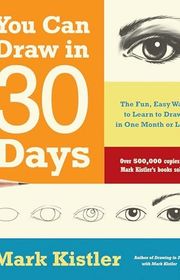
For absolute beginners who want short lessons and a clear daily routine. Its simple three dimensional forms build confidence quickly, though the thirty day structure introduces fundamentals rather than delivering the mastery the title might suggest.
What it's about
Mark Kistler presents thirty lessons that build drawings from simple forms, shading, and perspective. The step by step exercises introduce a daily practice for beginners, using accessible subjects to develop confidence with pencil and paper.

Drawing for the Absolute and Utter Beginner
For nervous beginners who want gradual exercises and examples made by learners. Its classroom approach makes imperfect progress visible, though the emphasis on observation and basic rendering may feel slow if you already draw regularly.
What it's about
Claire Watson Garcia builds drawing skills through progressive exercises in sketching and rendering. Student examples accompany lessons on still lifes and portraits, while this revised edition adds guidance on travel sketching, three-dimensional subjects, and three-quarter-view portraits.
Drawing Lessons from the Great Masters
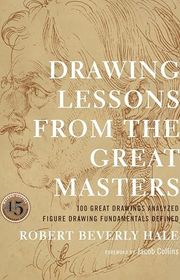
For artists ready to learn by analyzing accomplished drawings rather than following beginner demonstrations. Its annotated examples connect structure, anatomy, and design, though the discussion is dense and works best with some practical drawing experience.
What it's about
Robert Beverly Hale examines one hundred drawings by artists including Leonardo, Michelangelo, and Rembrandt. His diagrams and commentary explain decisions about line, light, anatomy, and mass, showing how studying finished work can inform an artist’s own drawing.

For artists who want to draw people as they actually appear in clothing. Its attention to folds and drapery fills a gap in anatomy books, though basic figure construction will help you use its more involved examples.
What it's about
Barbara Bradley explains drawing clothed figures, beginning with proportion, perspective, and tonal values. She then examines fabric folds and drapery on people at rest or in motion, showing how clothing can convey natural form and movement.

For illustrators and comics artists who want images to communicate action and mood clearly. Its value arrangements and shot choices make composition concrete, though it assumes you can already draw and does not provide a basic technique course.
What it's about
Marcos Mateu-Mestre explains using drawing and composition to communicate a story's mood and action. Lessons move from single images to continuous sequences, examining shot choices, settings, character expression, and the visual development of illustrated narratives.

How To Draw Comics The Marvel Way
For beginners who specifically want energetic superhero comics. It connects figure exaggeration, perspective, and panel storytelling in one recognizable style, though the period Marvel conventions are narrower than the range of contemporary comics.
What it's about
Stan Lee and John Buscema introduce creating superhero comics through explanations and artwork drawn from Marvel. Illustrations demonstrate comic-art methods, while Lee's commentary guides aspiring artists through the visual techniques involved in building their own strips.

For artists who can outline a subject but struggle to make light behave convincingly. Its examples explain surfaces, shadows, and atmosphere across media, though it offers more visual principles than a sequence of pencil drawing exercises.
What it's about
Richard Yot explains how natural and artificial light affect surfaces, shadows, reflections, transparency, and color. Illustrated examples connect these principles with composition and atmosphere, helping painters, photographers, illustrators, and digital artists create convincing or deliberately imaginative scenes.

Vilppu Drawing Manual
For artists who want to understand movement before adding anatomical detail. Its gesture and volume approach supports drawing from life or imagination, though the concise manual is easier to use alongside demonstrations or previous figure study.
What it's about
Glenn Vilppu teaches figure drawing through gesture, simple volumes, construction, anatomy, and light. His approach emphasizes analyzing the movement and structure of a subject, giving artists methods they can apply when working from a model or from imagination.
Sources
- 1
The best drawing books
creativebloq.com
- 2
Top 10 Best Drawing Books For Absolute Beginners
conceptartempire.com
- 3
Best Drawing Books For Beginners To Learn To Draw: My Books Reviews
craftylikegranny.com
- 4
Best Drawing Books for Artists: 20 Books to Learn How to Draw
finearttutorials.com
- 5
Best Drawing Books to Improve Your Skills 2026
pencildrawinghub.com
- 6
8 Best Drawing Books for Absolute Beginners
proactivecreative.com
- 7
41+ Best Drawing Books for Kids, Beginners, and Intermediate Artists in 2026
artsideoflife.com
- 8
Learn to Draw Book List and Order
reddit.com
- 9
Improve Your Sketches: Best Books on Sketching For Artists
conceptartempire.com
- 10
Learn How to Draw Books
goodreads.com





Edited by
Software engineer whose passion for tracking book recommendations from podcasts inspired the creation of MRB.
Lead investor at 3one4 Capital whose startup expertise and love for books helped shape MRB and its growth.
Comments
Spotted a missing book, a wrong order or a mistake? Tell us and we'll fix this page.
We're a reading guide, not the author or publisher, so we can't send books or pass on messages.