
35 Best Embedded Systems Books
The best embedded systems books, ranked by expert-source recommendations, with notes for beginners and engineers choosing firmware, hardware and RTOS guides.
Our take
Embedded systems connect software with physical devices, often under tight limits on memory, power and timing. Learning the field can mean writing C for a small microcontroller, building a Linux-based product or investigating a fault that crosses the hardware-software boundary. These books cover those different routes, so the right starting point depends on your programming background and the hardware you plan to use.
Making Embedded Systems gives a broad view of the development job. An Embedded Software Primer introduces interrupts and real-time concepts, while Embedded Systems with ARM Cortex-M Microcontrollers in Assembly Language and C follows a concrete processor family. Designing Embedded Hardware fills in the electronics perspective. For working firmware developers, Test Driven Development for Embedded C addresses testing and design, and Debugging develops a disciplined investigative method. Linux and processor references are more useful once you know your target platform; older editions need checking against current tools and device documentation.
Start with Making Embedded Systems, then choose a processor-specific text that matches the board on your desk.
35 books · 10 sources · Last updated
As an Amazon Associate, we earn from qualifying purchases (at no extra cost to you).
How to choose from this list
Skip to the full rankingIf you want an overview of embedded development: Making Embedded Systems → An Embedded Software Primer
If you need stronger C foundations: The C Programming Language → Understanding and Using C Pointers
If you want to connect firmware with hardware: Designing Embedded Hardware → Embedded Systems Fundamentals with Arm Cortex-M based Microcontrollers
If you want practical real-time development: Real-Time Concepts for Embedded Systems → Hands-On RTOS with Microcontrollers
If you want stronger testing and debugging: Test Driven Development for Embedded C → Debugging
If you are building a Linux device: Embedded Linux Primer → Mastering Embedded Linux Programming
The 35 books, ranked
Ranked by how many expert sources name each book. Ties go to the book more people recommend.
For programmers moving into physical products who want a view of the whole development job. Its design and debugging perspective connects code with hardware constraints, but the linked first edition predates material available in the updated edition.
What it's about
Elecia White examines disciplined development practices for embedded systems with limited resources. Software design patterns support discussions of architecture, hardware interfaces, manufacturing, and optimization, helping programmers connect their code with the demands of physical devices.
Test Driven Development for Embedded C
For C developers who want automated tests to influence firmware design from the start. Its incremental examples address hardware-dependent code more directly than general testing books, but applying the method requires investing in testability and tool setup.
What it's about
James Grenning demonstrates test-driven development for embedded C software through practical examples. The book connects small automated tests, incremental implementation, and refactoring with the challenges of hardware-dependent code, showing how testing can guide design and reveal defects during development.
An Embedded Software Primer
For programmers who need a readable introduction to interrupts, architectures and real-time operating systems. Its processor-independent explanations build useful foundations, but the older examples and tools need translating into a current development environment.
What it's about
David Simon introduces embedded software development through hardware fundamentals, interrupts, software architectures, and real-time operating systems. Examples connect core concepts with development tools, debugging, and practical design choices that apply across processors and operating systems.
For developers who need a detailed reference for Cortex-M3 and Cortex-M4 behavior. Its architectural depth supports work with exceptions, memory and low-level code, but it is dense and must be paired with your chip manufacturer’s documentation.
What it's about
Joseph Yiu explains the architecture and programming of ARM Cortex-M3 and Cortex-M4 processors. This guide connects processor features with embedded development, giving engineers a foundation for using these microcontrollers and migrating from other architectures.
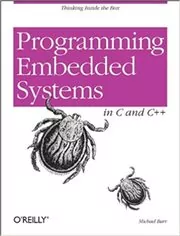
Programming Embedded Systems in C and C++
For C and C++ programmers who want to connect language knowledge with memory and hardware access. Its practical introduction covers core embedded concerns, but the older tools and examples require adaptation rather than direct copying into current projects.
What it's about
Michael Barr introduces embedded programming in C and C++ through memory, peripherals, and device drivers. The book examines testing and managing memory, interacting with hardware, and optimizing code for size and speed in constrained systems.
Better Embedded System Software
For engineers reviewing how an embedded team builds dependable software. Its problem-oriented chapters turn process weaknesses into concrete warning signs and improvements, but the emphasis on engineering practice offers less instruction in peripheral programming.
What it's about
Philip Koopman draws lessons from embedded product design reviews to examine common development problems. Chapters address requirements, architecture, implementation, and verification, identifying warning signs, risks, and practical changes teams can make to their software process.
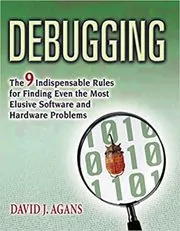
Debugging
The 9 Indispensable Rules for Finding Even the Most Elusive Software and Hardware Problems
For engineers who want a repeatable way to investigate difficult faults across hardware and software. Its concise rules encourage observation and disciplined experiments, but the memorable stories provide a method rather than instructions for particular debugging tools.
What it's about
David Agans presents nine rules for investigating elusive hardware and software faults. Stories from debugging work illustrate understanding the system, observing evidence, isolating variables, and recording results, offering a disciplined approach to finding causes.
Designing Embedded Hardware
For programmers who want to understand the electronics supporting their firmware. Its practical hardware perspective fills a gap left by software-focused introductions, but the older devices and interfaces require comparison with current component documentation.
What it's about
John Catsoulis introduces the hardware behind embedded computing devices, connecting processors, memory, interfaces and supporting electronics. The guide explains how these elements become working systems, offering programmers and engineers a practical foundation for understanding and developing embedded hardware.
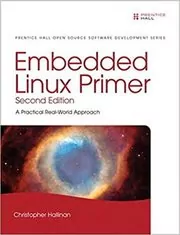
For developers who want to understand how an embedded Linux system starts and fits together. Its practical coverage connects bootloaders, kernels and filesystems, but the older edition requires checking commands and platform details against current documentation.
What it's about
Christopher Hallinan explains how to build and use an embedded Linux development environment. The guide follows kernel configuration and initialization, bootloaders, device drivers, file systems, and system analysis, connecting concepts with practical development challenges.
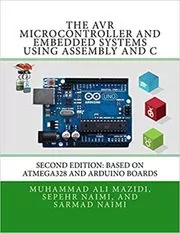
The AVR Microcontroller and Embedded Systems Using Assembly and C
Using Arduino Uno and Atmel Studio
For learners using AVR hardware who want to move below high-level Arduino libraries. Its assembly-and-C progression connects registers with peripheral behavior, but the device family and development environment make this a targeted choice rather than a general introduction.
What it's about
This guide teaches AVR programming through assembly language and C using the Arduino Uno and Atmel Studio. Examples progress from internal architecture to timers, communications, analog conversion, and interfacing with displays, motors, and sensors.
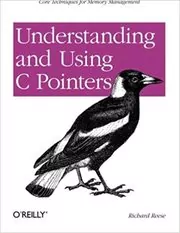
For C programmers whose main difficulty is understanding memory and indirection. Its focused examples give pointers more attention than a broad embedded overview, but it does not teach microcontroller peripherals, hardware timing or complete firmware architecture.
What it's about
Richard Reese explains C pointers through memory models and practical examples involving arrays, strings, structures, and functions. Coverage of declarations, pointer arithmetic, memory management, and common pitfalls develops the understanding needed to use pointers effectively in C programs.
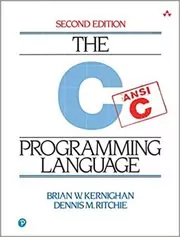
The C Programming Language
For programmers who want a compact grounding in the language behind much embedded firmware. Its exercises and concise explanations reward careful study, but the second edition reflects older C and does not address embedded hardware or current language revisions.
What it's about
Brian Kernighan and Dennis Ritchie teach C as defined by the ANSI standard through concise explanations and programming examples. The book covers expressions, control flow, functions, pointers, arrays, structures, input and output, and the UNIX system interface.
Also recommended by
2 people Patrick Collison recommended this book
Patrick Collison
"In the aggregate [with other programming books] hugely shaped me." - Patrick Collison
Patrick Collison's recommendation of this book  Linus Torvalds recommended this book
Linus Torvalds
"It was small, clear, concise, but you need to already have a programming background to appreciate it." - Linus Torvalds
Linus Torvalds's recommendation of this book
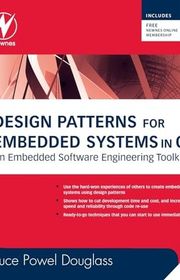
Design Patterns for Embedded Systems in C
For experienced C programmers who want reusable approaches to recurring embedded design problems. Its pattern-based organization makes architectural choices explicit, but the catalog format is more useful with project experience than as a first programming course.
What it's about
Bruce Powel Douglass presents design patterns for embedded software written in C. The book considers recurring design problems and their tradeoffs, connecting reusable solutions with the constraints of embedded development and the structure of larger software systems.
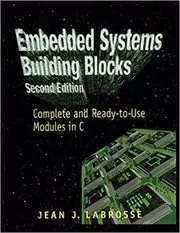
For C programmers who learn by examining reusable embedded components. Its modules connect real-time services with concrete implementations, but the older code and assumptions need review before adapting them to a contemporary product.
What it's about
Jean Labrosse provides reusable C modules for embedded systems alongside explanations of their operation and services. Exercises and implementation discussions connect real-time concepts with practical components and the resources needed to incorporate them into a product.
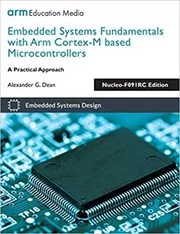
Embedded Systems Fundamentals with Arm Cortex-M based Microcontrollers
For students who want a practical Cortex-M course that connects C with peripherals and concurrency. Its concrete microcontroller setting makes the ideas testable, but the board-specific work needs adaptation if your hardware or development tools differ.
What it's about
Alexander Dean introduces microcontroller-based embedded systems using Arm Cortex-M development boards and C. The text connects processor architecture, interrupts, peripherals, and programming, emphasizing concurrent operation and practical multitasking as foundations for responsive, modular systems.
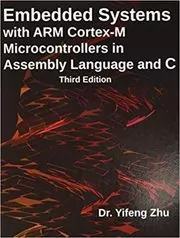
For students who want assembly and C developed together on Cortex-M hardware. Its register-level progression connects architecture with peripheral programming, but the detailed platform work requires compatible hardware and more patience than a broad software overview.
What it's about
Yifeng Zhu develops embedded programming through ARM instruction architecture, assembly language, and C. Chapters progress into interrupts, timers, data conversion, communications, and multitasking, connecting processor fundamentals with peripherals and practical hardware applications.
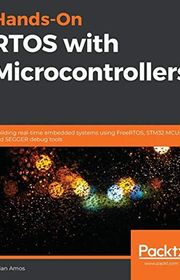
Hands-On RTOS with Microcontrollers
For developers ready to implement real-time concepts on actual microcontrollers. Its FreeRTOS projects connect scheduling and debugging with a concrete STM32 workflow, but the specific boards and tools require adaptation when your development setup differs.
What it's about
Brian Amos develops real-time embedded applications using FreeRTOS, STM32 microcontrollers and SEGGER debugging tools. Practical projects connect operating-system concepts with implementation, helping readers understand how to organize, observe and troubleshoot applications running on constrained hardware.
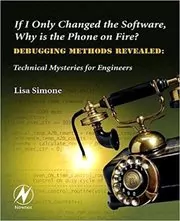
If I Only Changed the Software, Why is the Phone on Fire?
Embedded Debugging Methods Revealed
For engineers who learn debugging by following realistic investigations. Its fictional team makes hardware-software interactions and reasoning mistakes easier to recognize, but the scenario format is less convenient than a concise checklist during urgent troubleshooting.
What it's about
Lisa Simone teaches embedded debugging through fictional engineers confronting realistic technical problems. Scenarios grow in complexity as readers follow the team's investigations, learning methods for reasoning about interactions between software and hardware.
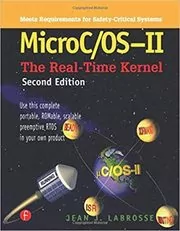
For developers who want to study how a real-time kernel is implemented and ported. Its detailed code-based explanation makes operating-system services concrete, but the kernel-specific and historical material is less direct preparation for a different RTOS.
What it's about
Jean Labrosse documents the design and implementation of the MicroC/OS-II real-time kernel. Detailed explanations and code connect operating-system services with porting to a processor, installing the kernel, and structuring applications that run on it.
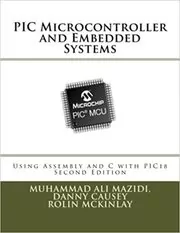
For learners working specifically with PIC18 devices who want assembly and C explained together. Its systematic peripheral coverage supports hardware exercises, but the architecture-specific details transfer less directly to ARM or other microcontroller families.
What it's about
Muhammad Ali Mazidi and his coauthors introduce PIC18 programming through assembly language and C. Examples develop a systematic understanding of the chip's features, including timers, serial communication, analog-to-digital conversion, and peripheral interfaces.
Real-Time C++
Efficient Object-Oriented and Template Microcontroller Programming
For C++ developers who want to apply language abstractions on resource-constrained microcontrollers. Its attention to efficiency connects templates and object-oriented techniques with hardware realities, but the examples demand more language confidence than a first embedded programming course.
What it's about
Christopher Kormanyos explores C++ programming for real-time microcontroller systems. Examples connect object-oriented techniques, templates, and optimization with embedded components, emphasizing performance, portability, and the practical constraints that shape software running on small processors.
Real-Time Concepts for Embedded Systems
For developers who understand basic embedded programming and want to reason about RTOS services. Its kernel-object approach connects concepts with application structure, but the explanations are less useful as a board-specific implementation tutorial.
What it's about
Qing Li and Caroline Yao connect real-time system design with practical embedded programming. Explanations of operating-system kernel objects, services, and application decomposition show how reusable building blocks can support the design and implementation of embedded applications.
The 8051 Microcontroller and Embedded Systems
For students using the 8051 family who need a structured route through architecture and interfacing. Its assembly-and-C approach links instructions with peripherals, but the platform-specific focus is less useful when your course or project uses another processor.
What it's about
Muhammad Ali Mazidi and his coauthors teach the architecture and programming of the 8051 microcontroller. Assembly and C examples connect registers and instructions with peripheral interfacing, preparing readers to understand and develop embedded systems.
The Art of Designing Embedded Systems
For engineers interested in the habits and decisions that make embedded projects work. Its combination of hardware interactions and development practice gives a wider view than a coding manual, but the older examples require contemporary context.
What it's about
Jack Ganssle examines the design and development of embedded systems as a disciplined engineering process. Discussions of real-time software, hardware interactions, firmware standards, and process improvement address the technical and organizational problems that can derail an embedded project.
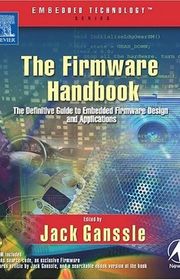
The Firmware Handbook
For engineers who want a reference spanning the firmware development process. Its practical perspective connects technical work with productivity and project discipline, but the older material needs supplementing with current tools and platform-specific implementation guidance.
What it's about
Jack Ganssle presents a reference for firmware developers covering key stages of embedded software development. The handbook connects technical practices with process and productivity, helping engineers consider the broader demands of creating and maintaining software for physical products.
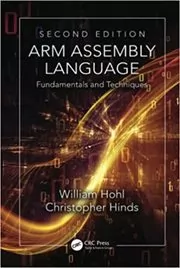
ARM Assembly Language
For developers who want to understand ARM execution below the C level. Its assembly-focused explanations make processor behavior more concrete, but instruction sets and exception details must be matched carefully to the particular ARM core you use.
What it's about
William Hohl and Christopher Hinds explain ARM assembly programming and the processor behavior beneath higher-level languages. The book examines instruction sets, architecture, exception handling, and development tools, connecting fundamental concepts with examples for embedded systems.
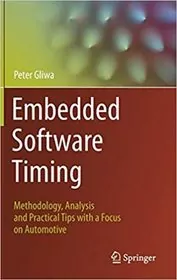
Embedded Software Timing
Methodology, Analysis and Practical Tips with a Focus on Automotive
For engineers responsible for timing behavior in complex embedded products. Its automotive examples connect measurement, analysis and development processes, but the specialist focus and multicore detail are more useful after you understand basic real-time concepts.
What it's about
Peter Gliwa examines timing throughout embedded software development, with examples mainly from automotive systems. The book connects processor and operating-system fundamentals with timing analysis, optimization, multicore challenges, development methodology, and verification.
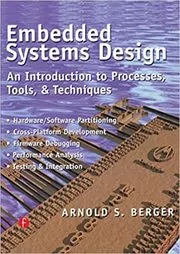
For engineers who want to understand the embedded development lifecycle and its tools. Its attention to partitioning, debugging and testing connects project stages with practical work, but much of the tool discussion reflects an earlier generation of systems.
What it's about
Arnold Berger introduces the embedded development lifecycle and its specialized tools and decisions. Chapters examine hardware and software partitioning, development environments, debugging equipment, performance analysis, and testing, connecting project stages with practical engineering work.
Embedded Systems Security
Practical Methods for Safe and Secure Software and Systems Development
For embedded engineers who need security considered alongside architecture and operating systems. Its broad systems perspective connects protection mechanisms with development decisions, but the older treatment needs supplementing with current vulnerabilities, standards and platform guidance.
What it's about
David and Mike Kleidermacher examine how security considerations enter embedded system design. Practical examples connect principles of protection with architecture, operating systems, hypervisors, networking, storage, and cryptography, emphasizing development methods for safer and more secure systems.
Mastering Embedded Linux Programming
Create fast and reliable embedded solutions with Linux 5.4 and the Yocto Project 3.1
For developers building complete Linux-based devices rather than isolated applications. Its toolchain-to-deployment coverage connects the system layers practically, but the linked Linux and Yocto versions are older and require adjustments for a current project.
What it's about
Frank Vasquez and Chris Simmonds explain building Linux-based embedded systems from toolchains, bootloaders, kernels, and root file systems. Buildroot and Yocto support the workflow, followed by storage, updates, hardware access, debugging, and performance analysis.
Real-Time UML Workshop for Embedded Systems
For engineers who want to practice model-based design rather than only read about UML. Its guided examples connect requirements with architecture and detailed design, but the modeling emphasis adds overhead for readers seeking immediate low-level programming practice.
What it's about
Bruce Powel Douglass teaches UML-based embedded and real-time design through guided exercises. Traffic-light and unmanned-aircraft examples carry readers through requirements, analysis, architecture, and detailed design, showing how models develop into concrete engineering solutions.
For developers integrating serial devices who need circuits and software considered together. Its practical treatment helps connect PC interfaces with embedded communication, but the legacy ports and platform examples need checking against current hardware.
What it's about
Jan Axelson explains programming and interfacing serial ports in PCs and embedded systems. Example circuits and code cover COM ports, USB virtual ports, and serial networks, with attention to upgrading designs and troubleshooting reliable communication.
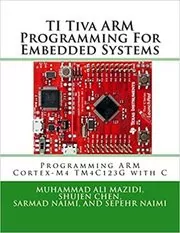
TI Tiva ARM Programming For Embedded Systems
Programming ARM Cortex-M4 TM4C123G with C
For learners using a Tiva C LaunchPad who want peripheral programming grounded in C examples. Its board-specific focus makes exercises concrete, but readers with different hardware must translate register details and tool assumptions.
What it's about
This guide focuses on programming Texas Instruments' Tiva C TM4C123G peripherals in C using a LaunchPad board. Examples introduce hardware interfaces and embedded tasks, connecting the Cortex-M4 platform with practical peripheral programming.
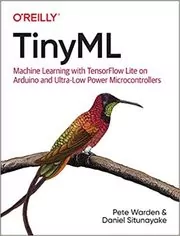
TinyML
Machine Learning with TensorFlow Lite on Arduino and Ultra-Low-Power Microcontrollers
For developers curious about deploying inference on small devices. Its projects connect model development with microcontroller constraints, but the rapidly changing machine-learning tools mean older setup instructions and libraries often need updating.
What it's about
Pete Warden and Daniel Situnayake demonstrate machine learning on small, low-power microcontrollers using TensorFlow Lite. Hands-on projects connect model training and deployment with embedded applications, showing how devices such as Arduino can perform inference within limited memory and power budgets.
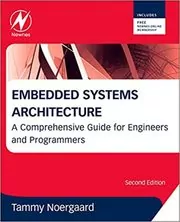
For engineers who want a systems-level view before specializing in firmware or hardware. Its broad architectural survey connects components and design decisions, but the breadth offers less hands-on depth than a processor-specific programming text.
What it's about
Tammy Noergaard surveys the components and decisions that form an embedded system's architecture. The guide gives engineers, programmers, and students a systems-level view of design, helping them understand how individual elements fit into a working product.
Sources
- 1
Book Recommendations - UPenn Embedded Systems Handbook
embedded.seas.upenn.edu
- 2
7 Best Books to learn Embedded Systems that excels your Career
codrey.com
- 3
Embedded Systems Books
embeddedrelated.com
- 4
100 Best Embedded Systems Books of All Time
shortform.com
- 5
Embedded Systems Books
goodreads.com
- 6
The books r/embedded keeps recommending
mikus.io
- 7
Book List + recommendations?
reddit.com
- 8
Reviews of Books for Embedded System Developers
ganssle.com
- 9
Embedded Systems BookList
deepdiveembedded.com
- 10
Good books on embedded systems
reddit.com
Edited by
Software engineer whose passion for tracking book recommendations from podcasts inspired the creation of MRB.
Lead investor at 3one4 Capital whose startup expertise and love for books helped shape MRB and its growth.
Comments
Spotted a missing book, a wrong order or a mistake? Tell us and we'll fix this page.
We're a reading guide, not the author or publisher, so we can't send books or pass on messages.