
13 Best C Books
The best C programming books, ranked by how many expert sources recommend each one, with notes for beginners, working programmers, and reference readers.
Our take
C books serve several different needs: learning to program, understanding the language’s detailed rules, and using it to work with memory, machines, or networks. A beginner usually benefits from exercises and patient explanations. Someone who already programs may prefer a concise introduction, then a reference or a book that explains how C behaves beneath familiar-looking syntax.
C Programming: A Modern Approach gives a broad textbook route, while Head First C uses a more visual, project-based style. The C Programming Language remains a compact choice for readers with some programming background, but its language coverage predates later standards. For current features, the second edition of Effective C and third edition of Modern C cover C23. Low-Level Programming connects C with Intel 64 assembly, and Hands-On Network Programming with C applies the language to networking. Start with the teaching style that fits you, then add a reference and build small programs as you read.
13 books · 8 sources · Last updated
As an Amazon Associate, we earn from qualifying purchases (at no extra cost to you).
How to choose from this list
Skip to the full rankingIf you're learning programming from scratch: C Programming → Effective C, 2nd Edition
If you prefer visual projects: Head First C
If you already program in another language: The C Programming Language → Modern C, Third Edition
If you want a desk reference: C in a Nutshell
If you want to understand machine execution: Low-Level Programming
If you want networking projects: Hands-On Network Programming with C
The 13 books, ranked
Ranked by how many expert sources name each book. Ties go to the book more people recommend.

For beginners who want a substantial textbook with explanations, exercises, and larger projects. Its gradual revisiting of concepts supports sustained study, though the second edition’s C99 coverage needs supplementation for features introduced by later standards.
What it's about
K. N. King develops C programming through a spiral approach that revisits concepts at increasing depth. Graded examples, exercises, and question-and-answer sections guide readers from introductory material toward more demanding topics, with the second edition covering the C99 standard.

The C Programming Language
For programmers who want a concise introduction to C’s core ideas and idioms. Its economy rewards careful reading and working the exercises, though beginners without programming experience may need slower explanations and coverage of later standards.
What it's about
Brian Kernighan and Dennis Ritchie teach C as defined by the ANSI standard through concise explanations and programming examples. The book covers expressions, control flow, functions, pointers, arrays, structures, input and output, and the UNIX system interface.
Also recommended by
2 people Patrick Collison recommended this book
Patrick Collison
"In the aggregate [with other programming books] hugely shaped me." - Patrick Collison
Patrick Collison's recommendation of this book  Linus Torvalds recommended this book
Linus Torvalds
"It was small, clear, concise, but you need to already have a programming background to appreciate it." - Linus Torvalds
Linus Torvalds's recommendation of this book

C Programming Absolute Beginner's Guide
For readers starting programming who want small examples and a gentle pace. Its incremental lessons lower the initial barrier, though the introductory emphasis leaves substantial language depth and current development practices for further study.
What it's about
Greg Perry and Dean Miller introduce C programming through small, progressive examples. Lessons move from input, output, variables, and loops to strings, arrays, pointers, functions, and memory management, giving beginners practice with the language's building blocks and the C11 standard.
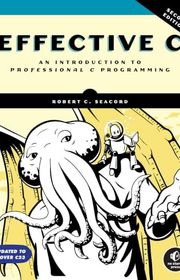
Effective C, 2nd Edition: An Introduction to Professional C Programming
For programmers who want to develop sound C habits with current language coverage. The second edition connects core concepts with professional concerns and C23, though its compact explanations move faster than the gentler beginner textbooks.
What it's about
Robert C. Seacord explains C types, objects, functions, memory management, strings, input and output, and program structure. The second edition incorporates C23 while connecting language rules with practices for building reliable, maintainable programs.

For programmers who already know C and want to understand difficult behavior through implementation stories. Its practical perspective adds context beyond a standard tutorial, though historical compiler details require care when applying lessons to current systems.
What it's about
Peter van der Linden explores C through implementation details, practical coding experience, and programming folklore. Examples of real software failures sit alongside explanations of difficult language behavior, with comparisons to other languages and an introduction to C++ extending the discussion.

For visual learners who want exercises and projects woven into the explanations. Its informal presentation gives pointers and memory a more approachable entry point, though the busy layout may distract readers who prefer a compact reference.
What it's about
David and Dawn Griffiths teach C through visual explanations, exercises, and substantial lab projects. The book connects language fundamentals with pointers, memory management, multithreading, and network programming, using practical tasks to develop skills beyond memorizing syntax.
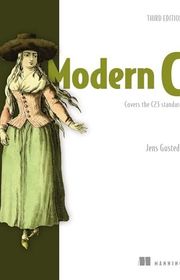
Modern C, Third Edition: Covers the C23 standard
For readers with programming experience who want a detailed, standards-aware account of C. The third edition brings C23 into a systematic progression, though its technical density makes it less comfortable as a first encounter with programming.
What it's about
Jens Gustedt develops C through progressively deeper levels of understanding, connecting language features with program design and execution. The third edition covers C23, including modern approaches to types, interfaces, memory, concurrency, and writing portable code.

For programmers who need a language and library reference beside their editor. Its organized coverage supports targeted lookups better than a project tutorial, though the second edition covers C11 rather than the latest language standard.
What it's about
Peter Prinz and Tony Crawford combine a C language reference with detailed coverage of its standard library. This second edition covers C11 features, including multithreading and type-generic macros, and explains GNU programming tools for building and working with C programs.

For newcomers who learn through complete examples and visible program output. Its stepwise presentation makes initial practice manageable, though the edition’s compiler installation instructions and Windows screenshots need checking against a current setup.
What it's about
Mike McGrath starts with installing a C compiler, then develops the language through complete example programs and screenshots of their output. This fifth edition uses GNU compiler 6.3.0, introducing procedural programming to readers with little or no prior experience.

Computer Fundamentals And Programming In C
For students who need basic computer concepts alongside their first programming language. Its combined curriculum makes hardware and software terminology less mysterious, though readers already comfortable with computing may find the introductory material unnecessarily broad.
What it's about
Reema Thareja connects an introduction to computer systems with learning to program in C. Explanations of hardware, software, and data lead into variables, operators, control structures, functions, and arrays, with examples showing how basic computing concepts support program development.

Data Structures Using C
For students who know basic C and want to implement data structures. Its progression links abstract operations with working representations, though the emphasis on algorithms leaves less room for developing a broader understanding of the language itself.
What it's about
Reema Thareja introduces data structures through their implementation in C, starting with a review of programming fundamentals. Arrays, linked lists, stacks, queues, trees, and graphs lead into searching, sorting, and algorithm analysis, linking each structure's design with the operations it supports.

Hands-On Network Programming with C
Learn Socket Programming in C and Write Secure and Optimized Network Code
For C programmers ready to build network clients and servers. Its cross-platform examples connect protocols with runnable code, though it assumes language fundamentals and should be paired with current platform and security documentation.
What it's about
Lewis Van Winkle introduces network programming for readers already comfortable with C. Cross-platform examples cover sockets, IP addressing, DNS, web requests, email, and servers, then add security features, connecting networking concepts with programs designed for Windows, macOS, and Linux.

For readers who want to connect C source code with machine execution. Its treatment of assembly, memory, and debugging develops a concrete systems perspective, though the Intel 64 focus limits its direct applicability to other architectures.
What it's about
Igor Zhirkov connects C programming with Intel 64 assembly and the steps involved in compiling and executing programs. Architecture, machine instructions, memory, and debugging reveal how source code becomes running software, with C11 and assembly introduced from their foundations.
Sources
- 1
6 Best C Programming Books Ranked by Review Score
itechguides.com
- 2
Best C++ Books and C Programming Books for 2026, Beginner to Advanced
computingforgeeks.com
- 3
The Definitive C Book Guide and List
stackoverflow.com
- 4
C Programming Books for Beginners and Advanced
mygreatlearning.com
- 5
C Programming Language Books
goodreads.com
- 6
what is the best book for learning c
reddit.com
- 7
Which book is more worth it to learn C?
reddit.com
- 8
100 Best C Books of All Time
shortform.com




Edited by
Software engineer whose passion for tracking book recommendations from podcasts inspired the creation of MRB.
Lead investor at 3one4 Capital whose startup expertise and love for books helped shape MRB and its growth.
Comments
Did we miss something? Have feedback?
Help us improve this page by sharing your thoughts