
14 Best E Commerce Books
The best ecommerce books, ranked by how many expert sources recommend each one, with notes on who they suit, from new sellers to growing store owners.
Our take
Running an online store means making several businesses work together: buying or creating products, attracting customers, helping them choose, and delivering what you promise. These books suit new sellers learning the basics and established owners trying to understand why growth has stalled. Some address ecommerce directly; others explain the business, design, and communication skills a store depends on.
The Personal MBA provides a broad foundation, while Ecommerce Evolved connects store growth with offers, repeat purchases, and operating systems. Building a StoryBrand helps clarify your message, and Don't Make Me Think focuses on making a website easier to use. For a more measured approach to improvement, You Should Test That explains how to turn assumptions into experiments. The Everything Store offers a reported business history rather than instructions you can copy.
Start with the book that addresses your current bottleneck: business basics, confusing pages, weak marketing, or an operation that relies too heavily on you.
14 books · 9 sources · Last updated
As an Amazon Associate, we earn from qualifying purchases (at no extra cost to you).
How to choose from this list
Skip to the full rankingIf you're starting a store: The Personal MBA → Ecommerce Evolved
If customers find your pages confusing: Building a StoryBrand → Don't Make Me Think
If you want to improve conversions: You Should Test That
If daily operations depend on you: The E-Myth Revisited
If you want a retail business history: The Everything Store
The 14 books, ranked
Ranked by how many expert sources name each book. Ties go to the book more people recommend.

For store owners whose product pages leave customers unsure what they offer. Its messaging framework is more directly useful for copy than the general business books here, though repeated storytelling templates can make brands sound alike.
What it's about
Donald Miller introduces a seven-part storytelling framework for clarifying a business's message. Positioning the customer as the hero and the brand as a guide, he explains how problems, plans, and calls to action shape effective marketing.
Also recommended by
1 person Dave Ramsey recommended this book
Dave Ramsey
Recommended on Dave Ramsey's website.
Dave Ramsey's recommendation of this book

For solo founders struggling to maintain consistent routines. It offers clearer tools for changing daily behavior than the marketing guides here, though it won't teach merchandising, customer acquisition, or the economics of running a store.
What it's about
James Clear explores why habits persist and how everyday systems influence behavior. He draws on behavioral research and illustrative stories to offer practical methods for establishing constructive routines, reducing unwanted habits, and making gradual improvements more sustainable.
Also recommended by
8 people Tim Urban recommended this book
Tim Urban
"I'd attribute about 60% of my good habits to [the author's] blog and this book is rapidly filling in the other 40%." - Tim Urban
Tim Urban's recommendation of this book  Vinod Khosla recommended this book
Vinod Khosla
"A decent book on self-help tools, not a category I am generally a fan of." - Vinod Khosla
Vinod Khosla's recommendation of this book  Biz Stone recommended this book
Biz Stone
"Great book." - Biz Stone
Biz Stone's recommendation of this book  Anthony Pompliano recommended this book
Anthony Pompliano
"Highly recommend." - Anthony Pompliano
Anthony Pompliano's recommendation of this book  Jodie Cook recommended this book
Jodie Cook
"I love the simplicity of this book." - Jodie Cook
Jodie Cook's recommendation of this book  Blake Randall recommended this book
Blake Randall
"" - Blake Randall
Blake Randall's recommendation of this book +2
More recommendations
- Ali Abdaal
"Helped me understand how habits are formed and what we can do." - Ali Abdaal
- Ben Greenfield
Most Recommended Books reached out to Ben Greenfield directly.
- Ali Abdaal

For readers who want to understand the competitive forces behind modern online retail. Its reporting offers more organizational context than the how-to books, though the account ends before many later developments and provides no store-building checklist.
What it's about
Brad Stone traces Amazon's growth from an online bookseller into a company pursuing a much broader vision of retail and technology. Drawing on interviews with employees and Bezos's family, he examines the ambitions and corporate culture behind that expansion.
Also recommended by
6 people Matt Mullenweg recommended this book
Matt Mullenweg
"Excellent book." - Matt Mullenweg
Matt Mullenweg's recommendation of this book  Doug McMillon recommended this book
Doug McMillon
"[I read and give this book because] you need to understand what you’re up against." - Doug McMillon
Doug McMillon's recommendation of this book  Tracy DiNunzio recommended this book
Tracy DiNunzio
"It's a great book and especially for people starting out." - Tracy DiNunzio
Tracy DiNunzio's recommendation of this book  Patrick O'Shaughnessy recommended this book
Patrick O'Shaughnessy
"A history of my favorite company and its enigmatic leader." - Patrick O'Shaughnessy
Patrick O'Shaughnessy's recommendation of this book  Mark Manson recommended this book
Mark Manson
Mark Manson recommended this book on his website.
Mark Manson's recommendation of this book - Jodie Cook recommended this book
Jodie Cook
"Do you dare run a business like Jeff?!" - Jodie Cook
Jodie Cook's recommendation of this book
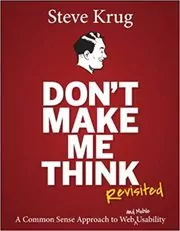
For anyone designing a storefront customers can navigate without help. Its short usability lessons are easier to apply than a full conversion-testing program, though improving clarity alone won't solve pricing, fulfillment, or weak demand.
What it's about
Steve Krug explains how to design websites people can navigate and understand with little effort. Using practical examples, he examines information design, scanning, usability testing, and mobile experiences, emphasizing clarity in everyday interactions.
Also recommended by
5 people Ev Williams recommended this book
Ev Williams
On the "books read" section of Ev Williams' GoodReads profile.
Ev Williams's recommendation of this book  Brian Armstrong recommended this book
Brian Armstrong
"A framework to simulate how customers experience your product, especially the moments of confusion." - Brian Armstrong
Brian Armstrong's recommendation of this book  Jeff Atwood recommended this book
Jeff Atwood
"The single best book on usability I've ever read." - Jeff Atwood
Jeff Atwood's recommendation of this book  Nick Ganju recommended this book
Nick Ganju
"About usability and making software and user interfaces that are friendly to people." - Nick Ganju
Nick Ganju's recommendation of this book  Garry Tan recommended this book
Garry Tan
"The simplest book I recommend everyone to read when they want to do design." - Garry Tan
Garry Tan's recommendation of this book

Dotcom Secrets
The Underground Playbook for Growing Your Company Online with Sales Funnels
For sellers who want to structure offers and follow-up sequences. Its funnel diagrams are more prescriptive than the messaging books here, though the approach fits some direct-response offers better than a large retail catalog.
What it's about
Russell Brunson explains how sales funnels guide online visitors toward becoming customers. He presents frameworks, scripts, and marketing processes for generating leads, structuring offers, and improving the path through which a business sells its products or services.

The E-Myth Revisited
Why Most Small Businesses Don't Work and What to Do About It
For founders who feel trapped doing every job themselves. Its emphasis on documented systems addresses a different growth problem from traffic and conversion guides, though its franchise-style model needs adapting to a small, changing online business.
What it's about
Michael Gerber argues that technical expertise does not automatically equip someone to run a small business. He distinguishes entrepreneurial, managerial, and technical responsibilities, outlining a systems-based approach designed to reduce a company’s dependence on its owner.
Also recommended by
7 people Tim Ferriss recommended this book
Tim Ferriss
"If you’re stuck in your own business, this book can help you get unstuck." - Tim Ferriss
Tim Ferriss's recommendation of this book - Dave Ramsey recommended this book
Dave Ramsey
Recommended on Dave Ramsey's website.
Dave Ramsey's recommendation of this book  Derek Sivers recommended this book
Derek Sivers
"Absolutely everyone who is an entrepreneur or wants to be one needs to read this book." - Derek Sivers
Derek Sivers's recommendation of this book  Dave Camarillo recommended this book
Dave Camarillo
"Was huge." - Dave Camarillo
Dave Camarillo's recommendation of this book  Tom Bilyeu recommended this book
Tom Bilyeu
Tom Bilyeu recommended this book on his website.
Tom Bilyeu's recommendation of this book  Michael Hyatt recommended this book
Michael Hyatt
Michael Hyatt recommended this book on his website.
Michael Hyatt's recommendation of this book +1
More recommendations
- Patrick Bet-David
Patrick Bet-David recommended this book on his website.
- Patrick Bet-David

For owners negotiating with suppliers, agencies, or business partners. Its listening techniques give you more conversational practice than the broader business guides, though the dramatic hostage-negotiation examples need adapting to relationships you want to preserve.
What it's about
Former FBI hostage negotiator Chris Voss draws on high-stakes encounters to explain his approach to negotiation. He presents principles centered on emotion, intuition and communication, applying lessons from crisis situations to business discussions and everyday disagreements.
Also recommended by
2 people Dustin Moskovitz recommended this book
Dustin Moskovitz
Dustin Moskovitz recommended this book on Twitter.
Dustin Moskovitz's recommendation of this book - Blake Randall recommended this book
Blake Randall
"" - Blake Randall
Blake Randall's recommendation of this book
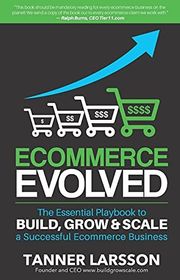
Ecommerce Evolved: The Essential Playbook To Build, Grow & Scale A Successful Ecommerce Business
For owners moving beyond their first sales toward a repeatable operation. It connects offers, retention, and back-end systems more directly than the general business titles, though some marketing tactics reflect an earlier stage of online retail.
What it's about
Tanner Larsson presents a framework for building and expanding an ecommerce business. He covers product selection, offers, customer acquisition, repeat purchases, and operational systems, emphasizing the relationship between attracting buyers and increasing their long-term value.
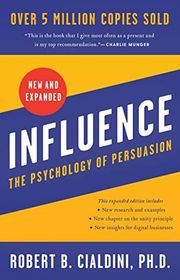
Influence: The Psychology of Persuasion
For marketers who want to understand why customers respond to certain requests. It explains persuasion more deeply than a funnel template, though you must translate its principles into ethical store practices and test their relevance.
What it's about
Robert Cialdini examines the psychological principles that make people agree to requests. Research and everyday examples explain how cues such as reciprocity, social proof, authority, and scarcity shape decisions, alongside ways to recognize unwanted persuasion.

Ultimate Guide To E-commerce Growth
7 Unexpected KPIs To Scale An E-commerce Shop To $10 Million Plus
For established shop owners unsure which constraint to tackle next. Its focus on a small set of performance measures is more diagnostic than broad startup advice, though ambitious revenue targets still depend on margins and execution.
What it's about
Ian and Mark Hammersley explain an ecommerce growth model built around seven key performance indicators. Their guide uses experience growing online stores to help owners identify constraints and focus their investment on opportunities for improvement.

For beginners who need to understand how sales, finance, and operations fit together. Its broad framework helps you diagnose business problems, though you'll need a more specialized book for implementing an ecommerce marketing or fulfillment system.
What it's about
Josh Kaufman presents the core ideas behind running a business without attending business school. He explains value creation, marketing, sales, finance, and operations through practical concepts and mental models intended to clarify everyday business decisions.
Also recommended by
1 person- Patrick O'Shaughnessy recommended this book
Patrick O'Shaughnessy
"If you dislike (most) business books like I do, but want to learn about the business of business, this book is a great tool." - Patrick O'Shaughnessy
Patrick O'Shaughnessy's recommendation of this book

For store owners deciding which marketing channels deserve their time and budget. Its focus on traffic that converts is more specific than general entrepreneurship advice, though individual channel tactics need checking against current platform conditions.
What it's about
Chloë Thomas presents a framework for choosing ecommerce marketing channels and attracting visitors likely to buy. She explains how to allocate effort, assess traffic quality and cost, and improve marketing performance as a business grows.

For readers exploring the range of ways online businesses can earn revenue. Its entrepreneurial examples offer more breadth than a storefront manual, though many platform details are dated and the money-making framing can oversimplify execution.
What it's about
Marc Ostrofsky explores ways to earn money through internet businesses, using examples of entrepreneurs who have done so. His guide discusses social platforms, domain names, and digital products alongside practical instructions for pursuing online opportunities.

You Should Test That
For teams with enough traffic to test changes meaningfully. It explains a more disciplined conversion process than relying on design opinions, though examples are older and small stores may struggle to gather useful experimental evidence.
What it's about
Chris Goward explains how to turn website optimization into a structured testing process. Case studies and exercises cover setting business goals, analyzing visitor data, prioritizing experiments, choosing testing methods, and interpreting results.
Sources
- 1
The 12 Best Books for Amazon Vendors in 2026
consulterce.com
- 2
Best E-Commerce Books Every Store Owner Must Read (2026)
learnwoo.com
- 3
Best Ecommerce Books: 20 Must-Reads for Growth (2025)
shopify.com
- 4
Best Ecommerce Books 2025 | Must-Reads
cloudways.com
- 5
Books that have helped you with your ecommerce business
reddit.com
- 6
21 must-read eCommerce books
cloudflight.io
- 7
Ecommerce Books
goodreads.com
- 8
What book helped you in your ecommerce career?
reddit.com
- 9
6 Best eCommerce Books You Can’t Miss (2024)
webscoot.io


Edited by
Software engineer whose passion for tracking book recommendations from podcasts inspired the creation of MRB.
Lead investor at 3one4 Capital whose startup expertise and love for books helped shape MRB and its growth.
Comments
Spotted a missing book, a wrong order or a mistake? Tell us and we'll fix this page.
We're a reading guide, not the author or publisher, so we can't send books or pass on messages.