
9 Best Docker Books
The best Docker books, ranked by how many expert sources recommend each one, with notes for beginners, application developers, and readers studying operations.
Our take
Docker books can help you understand containers, package an application, and connect local development with deployment. Some concentrate on a first working example, while others explain the concepts behind images, networking, storage, and isolation. Books aimed at production or delivery pipelines ask a different set of questions from introductory lessons. The best starting point depends on whether you need a guided course, a mental model, or help with a particular workflow.
For a structured introduction, try Learn Docker in a Month of Lunches. Getting Started with Docker is a shorter first step, while Docker Deep Dive develops the underlying concepts further. Docker in Action emphasizes practical examples and explanations, and Docker for Developers connects containers with delivery work. Once the basics are familiar, Docker in Practice offers techniques to consult by problem. Start with a small application you can run and change, then check edition-specific examples against current documentation as you work.
9 books · 9 sources · Last updated
As an Amazon Associate, we earn from qualifying purchases (at no extra cost to you).
How to choose from this list
Skip to the full rankingIf you want a structured first course: Learn Docker in a Month of Lunches
If you want a compact introduction: Getting Started with Docker → Docker Deep Dive
If you want hands-on technical explanations: Docker in Action
If you want to connect development and delivery: Docker for Developers
If you need solutions to particular problems: Docker in Practice
The 9 books, ranked
Ranked by how many expert sources name each book. Ties go to the book more people recommend.

For readers who want the concepts behind images, containers, networking, and storage explained alongside practical work. Its focused treatment builds a stronger mental model than a short introduction, though broader delivery and security questions require additional study.
What it's about
Nigel Poulton introduces Docker through an overview of containerization followed by explanations of images, containers, and the Docker engine. The book connects foundational concepts with practical examples of packaging applications and managing their container environments.

Docker in Action
For developers who want hands-on examples connected with container isolation and application management. The explanations support deeper reasoning about familiar commands, though the Linux emphasis and older tooling examples make some background knowledge and adaptation useful.
What it's about
Jeff Nickoloff and Stephen Kuenzli explain how to create, deploy, and manage applications in Docker containers on Linux. This second edition covers packaging, testing, secure execution, and deployment across hosts through practical development and operations examples.

For developers and operators who want to connect local container work with running applications reliably. The production perspective gives it a different emphasis from a first-commands tutorial, though practical details should be checked against the edition and current tooling.
What it's about
Sean P. Kane and Karl Matthias examine using Docker to package applications and support them in production. This second edition connects container architecture with workflows for building, testing, shipping, and operating software with its dependencies.

Docker in Practice
For readers who already understand the basics and want techniques organized around particular problems. The problem-and-solution format makes selective consultation useful, though it is less suited to learning the subject sequentially and some examples reflect older tools.
What it's about
Ian Miell and Aidan Hobson Sayers present more than one hundred Docker techniques using a problem, solution, and discussion format. This second edition covers development workflows, continuous delivery, networking, orchestration, security, and production challenges.
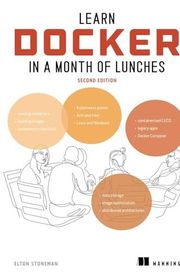
Learn Docker in a Month of Lunches
For beginners who learn best through short lessons and exercises. The scheduled, hands-on format provides more structure than a reference book, though understanding the material still depends on doing the labs and reviewing what happens when examples change.
What it's about
Elton Stoneman teaches Docker through a sequence of practical lessons and exercises. Readers build and run containers, work with images and multi-container applications, and connect those skills with development, deployment, and operating containerized software.
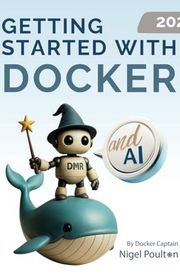
Getting Started with Docker
For newcomers who want a compact first encounter before taking on a larger technical book. The focused introduction makes initial practice manageable, though readers will need Docker Deep Dive or another fuller reference for more detailed explanations.
What it's about
Nigel Poulton introduces container concepts through practical work with Docker. The guide moves from running a first container to packaging an application, understanding images and registries, and working with applications that use multiple containers.

For developers and systems administrators who prefer a gradual, example-led introduction. Its progression from a single container to wider workflows makes the subject approachable, though older installation and orchestration details need checking against current documentation.
What it's about
James Turnbull introduces Docker for developers and systems administrators through practical examples. Starting with installation and a single container, the book progresses to images, repositories, testing, services, orchestration, and working with the Docker API.

Docker for Developers
Develop and Run your Application with Docker Containers Using DevOps Tools for Continuous Delivery
For developers who want container use connected with delivery pipelines and operations. The workflow perspective extends beyond running an isolated application, though its breadth means individual deployment, monitoring, and security topics receive less depth than dedicated references.
What it's about
Richard Bullington-McGuire and his collaborators teach Docker from container fundamentals through deployment and operations. Examples cover packaging applications, cloud and Kubernetes environments, security considerations, and monitoring, connecting development work with a continuous delivery workflow.

For developers who want a practical introduction to building and shipping applications in containers. Its developer-oriented progression offers a concrete starting point, though this older edition needs careful comparison with current commands, packaging practices, and deployment guidance.
What it's about
Jeeva S. Chelladhurai, Vinod Singh, and Pethuru Raj introduce Docker through practical work with images and containers. This second edition explains installation and deployment, connecting containerization concepts with building and running applications in a Docker environment.
Sources
- 1
Educational resources
docs.docker.com
- 2
Best Docker and Container Books to Read in 2026
computingforgeeks.com
- 3
Best Docker Books 2026: Expert Recommendations
collabnix.com
- 4
10 Best Books on Docker for Beginners
booksoncode.com
- 5
7 Best Docker Books for Beginners & Developers
programmingcube.com
- 6
Docker Books
goodreads.com
- 7
What are your thought on Docker Deep Dive vs Learn Docker in a Month Worth of Lunches
reddit.com
- 8
Best Books For Learning Docker From Scratch
whatpixel.com
- 9
The Complete Docker Read List: Q1 2026 Edition
dev.to


Edited by
Software engineer whose passion for tracking book recommendations from podcasts inspired the creation of MRB.
Lead investor at 3one4 Capital whose startup expertise and love for books helped shape MRB and its growth.
Comments
Did we miss something? Have feedback?
Help us improve this page by sharing your thoughts