
18 Best Design Thinking Books
The best design thinking books, ranked by how many expert sources recommend each one, with notes to help you choose theory, practical methods, and team guides.
Our take
Design thinking brings attention to people’s needs together with experimentation, prototypes, and repeated learning. Books on the subject differ in what they help you do. Some explain why organizations adopt the approach; others investigate how designers work or provide methods for research, workshops, products, and services.
Change by Design offers a broad introduction, while The Design of Business connects the subject to strategy. Nigel Cross’s Design Thinking examines designers through cases and observation. For hands-on work, The Field Guide to Human-Centered Design provides methods and worksheets, and Sprint gives a team a tightly structured project format. The service design books address work that crosses multiple interactions and departments. Creative Confidence, Creative Workshop, and Designing Your Life apply the ideas at a more individual scale.
Start with the kind of work in front of you, then pair a conceptual introduction with a practical guide that fits your project and the people involved.
18 books · 9 sources · Last updated
As an Amazon Associate, we earn from qualifying purchases (at no extra cost to you).
How to choose from this list
Skip to the full rankingIf you're new to design thinking: Change by Design
If you want to understand designers' reasoning: Design Thinking
If you need research and prototyping methods: The Field Guide to Human-Centered Design → The Design Thinking Toolbox
If your team needs a structured project: Sprint
If you're working on services: This is Service Design Thinking → This Is Service Design Doing
If you want to apply it to career choices: Designing Your Life
The 18 books, ranked
Ranked by how many expert sources name each book. Ties go to the book more people recommend.

For readers wanting a broad introduction to design thinking in organizations. Its project stories connect the approach with business decisions, though it spends more time establishing the case than providing a detailed workshop curriculum.
What it's about
Tim Brown explains how design thinking can shape products, services, and organizations. He explores approaches centered on people's needs, using experimentation and prototypes to develop ideas and address problems beyond the traditional design department.

For people who hesitate to contribute ideas because they do not see themselves as creative. Its approachable exercises lower that barrier, though confidence-building receives more attention than rigorous research planning or evaluating a finished solution.
What it's about
Tom and David Kelley argue that creativity can be developed through practice. Drawing on IDEO and Stanford's design school, they offer examples and strategies for overcoming hesitation, generating ideas, and applying creative approaches to work and everyday problems.

For students and researchers interested in what experienced designers actually do. Its case studies and analysis provide a more investigative foundation than the business introductions, though it is less immediately usable as a facilitation toolkit.
What it's about
Nigel Cross investigates how experienced designers think and work through observations and case studies. Examples from architecture, engineering, and product development explore problem solving, expertise, and the distinctive reasoning involved in developing design solutions.

For managers who want to understand the relationship between analytical efficiency and creative exploration. Its knowledge framework gives strategy a clear conceptual focus, though readers wanting practical research or prototyping exercises should choose a companion manual.
What it's about
Roger Martin argues that innovation requires design thinking alongside conventional analysis. Company examples illustrate his framework for moving knowledge from unexplained mysteries through useful heuristics to repeatable algorithms, connecting creative exploration with practical business decisions and competitive advantage.

The Design of Everyday Things
For readers who want to understand why products confuse people and how design can help. Its psychological principles make a strong foundation for observation, though it covers usable interaction more directly than running a design-thinking project.
What it's about
Don Norman examines why everyday objects can be difficult to use, locating many failures in design rather than their users. He connects human psychology with product design to explain how objects can better support understandable interaction.
Also recommended by
4 people Scott Adams recommended this book
Scott Adams
One of the books on Scott Adams' "Persuasion Reading List."
Scott Adams's recommendation of this book  Jeff Atwood recommended this book
Jeff Atwood
"Will give you a new appreciation of the 'devil in the details.'" - Jeff Atwood
Jeff Atwood's recommendation of this book  Tobi Lütke recommended this book
Tobi Lütke
Tobi Lütke mentioned this book on the "Invest Like the Best" podcast.
Tobi Lütke's recommendation of this book  Marissa Mayer recommended this book
Marissa Mayer
"Makes you think about design in new ways." - Marissa Mayer
Marissa Mayer's recommendation of this book

For managers who want to apply design thinking without adopting a specialist design vocabulary first. Its practical tools connect exploration with growth decisions, though the business emphasis leaves other contexts less fully developed.
What it's about
Jeanne Liedtka and Tim Ogilvie translate design thinking into tools for managers seeking growth. The book introduces its mindset and vocabulary, then shows how to move from abstract possibilities toward practical ideas while exploring uncertainty and risk.

For teams curious about how a design consultancy organizes creative work. Its project stories make observation and prototyping concrete, though the examples reflect one firm’s culture and an earlier period of product development.
What it's about
Tom Kelley describes how IDEO develops ideas through observing people, brainstorming, and prototyping. Stories from the firm's projects illustrate team practices, experimentation, and the organizational conditions that help creative work move from insight toward a usable product.

The Field Guide to Human-Centered Design
For teams who need practical methods for learning with the people they hope to serve. Its tools and worksheets support fieldwork and prototyping, though the social-sector examples may need adaptation to commercial or highly regulated settings.
What it's about
Methods for designing with the people a project aims to serve are organized into a practical field guide. Fifty seven tools, worksheets, case studies, and mindset discussions cover understanding people's lives, generating ideas, and testing prototypes, particularly in social sector work.

For teams with a defined challenge who want a structured route to a prototype and user test. Its detailed schedule makes collaboration concrete, though arranging the right people and setting aside the time require preparation.
What it's about
Knapp, Zeratsky, and Kowitz describe a five-day process for tackling difficult problems and testing ideas. Their design sprint guides teams from identifying a challenge through selecting a solution, building a prototype, and learning from customer responses before committing further resources.
Also recommended by
1 person Marty Cagan recommended this book
Marty Cagan
Marty Cagan mentioned this book on twitter.
Marty Cagan's recommendation of this book

For readers applying experimentation to career and life choices rather than products. Its exercises make alternatives tangible, though trying them requires time and access to conversations or opportunities that differ across personal circumstances.
What it's about
Bill Burnett and Dave Evans apply design thinking to decisions about work and life. Exercises encourage readers to explore possibilities, test ideas, and build alternative paths instead of expecting a single plan to settle every career question.

For facilitators and teams reconsidering how their physical workspace supports collaboration. Its concrete arrangements and adaptable furniture ideas distinguish it from process manuals, though many suggestions require space, materials, or permission to change the room.
What it's about
Scott Doorley and Scott Witthoft explain how physical environments can support creative collaboration. Furniture ideas, adaptable arrangements, scenarios, and case studies provide ways to reconsider meeting rooms and workspaces in relation to how people use them.
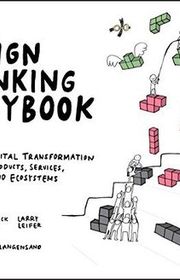
The Design Thinking Playbook
For teams linking design thinking with organizational and digital change. Its visual frameworks connect several approaches to innovation, though the wide scope can be harder to navigate than a guide built around one project format.
What it's about
Michael Lewrick, Patrick Link, and Larry Leifer present frameworks and tools for applying design thinking to teams, products, services, and organizations. Illustrated guidance connects user-focused experimentation with broader changes in how businesses develop and test ideas.
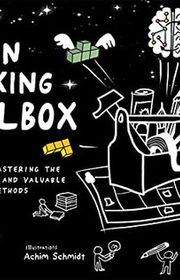
The Design Thinking Toolbox
For facilitators who already know the general process and want methods to choose from. Its compact tool explanations make it a useful working reference, though selecting the right method still depends on understanding the project’s needs.
What it's about
This illustrated reference explains methods used across a design-thinking project, from exploring a problem to generating and testing ideas. Instructions, examples, and practical tips help teams select activities and use them in collaborative work.

For teams ready to organize and implement service design work across disciplines. Its detailed methods and facilitation guidance go further into practice than an introductory overview, though the volume is easier to consult selectively than read quickly.
What it's about
A practical guide explains how teams research, develop, and implement services around people's experiences. Methods, workshop guidance, and examples address facilitation, collaboration across disciplines, and embedding service design within an organization's everyday work.

Designing Experiences
For readers designing events, services, or other experiences from the participant’s perspective. Its attention to the shape of an experience offers a distinct lens, though it is not a complete guide to every design-thinking method.
What it's about
J. Robert Rossman and Mathew Duerden explain how to plan experiences intentionally from a participant's perspective. Drawing on multiple disciplines, they discuss different experience types, memorable moments, dramatic structure, and the relationship between overall journeys and individual encounters.

For readers seeking an introduction to service design through principles, methods, and examples. Its varied contributors show the field’s breadth, though This Is Service Design Doing offers more detail for organizing a project in practice.
What it's about
Contributors from different disciplines introduce service design through its principles, tools, and cases. The book explores an iterative, collaborative approach to understanding users and improving services, combining explanations of the process with practical methods and examples.

For designers who learn by doing and want a bank of timed challenges. Its visual exercises build creative practice under constraints, though it gives less attention to user research and organizational change than the broader books.
What it's about
Eighty timed challenges give designers practice solving varied visual problems, from typefaces to interactive projects. David Sherwin combines the exercises with brainstorming approaches and accounts of other designers' processes to encourage experimentation under constraints.

HBR's 10 Must Reads on Design Thinking
For managers wanting several concise perspectives on design thinking and organizational practice. The article collection offers breadth and points for discussion, though its separate contributions do not form a single continuous project guide.
What it's about
Ten Harvard Business Review articles explore design thinking in business. The collection considers understanding customer needs, experimentation, organizational culture, teams, and biases, with perspectives on putting design approaches into practice across an organization.
Sources
- 1
d.school Reading List: Best Design Thinking Books
dschool.stanford.edu
- 2
Five of Our All-Time Favorite Design Thinking Books
voltagecontrol.com
- 3
Top Design Thinking Books to Grow and Thrive
innovationtraining.org
- 4
Books - Design Thinking - Research Guides at Naval Postgraduate School
libguides.nps.edu
- 5
18 Design Thinking Books to Read in 2025
andacademy.com
- 6
Recommended Readings
wdo.org
- 7
Design Thinking Books
goodreads.com
- 8
Design Thinking for Libraries Reading List
designthinkingforlibraries.com
- 9
Design books I like.
reddit.com


Edited by
Software engineer whose passion for tracking book recommendations from podcasts inspired the creation of MRB.
Lead investor at 3one4 Capital whose startup expertise and love for books helped shape MRB and its growth.
Comments
Spotted a missing book, a wrong order or a mistake? Tell us and we'll fix this page.
We're a reading guide, not the author or publisher, so we can't send books or pass on messages.