
6 Best Design Patterns Books
The best design patterns books, ranked by how many expert sources recommend each, with notes for beginners, working developers, and software architects.
Our take
Design patterns give programmers names for recurring design problems and ways to discuss possible solutions. Their value lies in understanding the forces behind a choice, including the extra complexity it may introduce. A useful book helps you recognize when a pattern fits, rather than encouraging you to add more classes simply because you know their names.
Head First Design Patterns: Building Extensible and Maintainable Object-Oriented Software offers a visual route through the basics. Design Patterns Explained: A New Perspective on Object-Oriented Design connects the ideas with object-oriented principles, while Design Patterns: Elements of Reusable Object-Oriented Software provides a more formal catalog. Patterns of Enterprise Application Architecture moves toward business applications and persistence. Refactoring to Patterns tackles the practical question of improving code that already exists. Start with an explanatory introduction if the terminology is new, then use the catalogs alongside a real design problem whose tradeoffs you can evaluate.
6 books · 9 sources · Last updated
As an Amazon Associate, we earn from qualifying purchases (at no extra cost to you).
How to choose from this list
Skip to the full rankingIf you're learning your first patterns: Head First Design Patterns → Design Patterns
If you want the underlying design principles: Design Patterns Explained
If you're improving existing code: Refactoring to Patterns
If you're building business applications: Patterns of Enterprise Application Architecture
If you want patterns at several architectural levels: Pattern-Oriented Software Architecture Volume 1
The 6 books, ranked
Ranked by how many expert sources name each book. Ties go to the book more people recommend.

Head First Design Patterns
Building Extensible and Maintainable Object-Oriented Software
For developers who know basic Java and want a guided introduction before a reference catalog. Visual examples and exercises explain why patterns help, though the playful layout and repeated explanations may feel slow to experienced readers.
What it's about
Eric Freeman and Elisabeth Robson teach object-oriented design patterns through Java examples, visual explanations, and exercises. The second edition connects recurring design solutions with underlying principles, emphasizing understanding and applying patterns to extensible, maintainable software.

For programmers comfortable with object-oriented code who want a systematic pattern reference. Its explicit discussion of intent, collaboration, and consequences supplies a shared vocabulary, though the formal presentation and older examples make it a demanding first introduction.
What it's about
Erich Gamma and his coauthors catalog reusable solutions to recurring object-oriented design problems. Organized into creational, structural, and behavioral patterns, the book explains when each approach applies, its consequences, and trade-offs within a larger software design.

For readers who want to connect object-oriented principles with the reasons for choosing a pattern. Its explanatory approach offers an alternative to the catalog format, though familiarity with object-oriented code and diagrams still helps.
What it's about
Alan Shalloway and James R. Trott introduce design patterns through object-oriented principles, UML diagrams, and examples in Java and C#. They explain how patterns work, when to use them, and the tradeoffs and implementation pitfalls involved in software design.
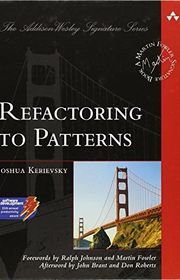
Refactoring to Patterns
For developers who understand basic object-oriented design and want to improve working code incrementally. Its step-by-step transformations connect problems with pattern choices, though the Java examples and assumed refactoring knowledge require more preparation than an introductory survey.
What it's about
Joshua Kerievsky shows how refactoring can move an existing design toward, into, or away from patterns. A catalog of transformations, code examples, and design problems explains how to introduce structure when it addresses a concrete need.
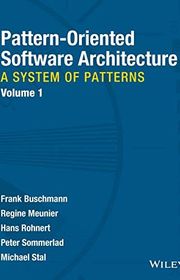
Pattern-Oriented Software Architecture Volume 1: A System of Patterns
For developers ready to connect individual design patterns with larger software structures. Its range from architecture to implementation idioms broadens the class-level perspective, though the older examples and substantial conceptual detail make it a study text rather than a quick tutorial.
What it's about
This volume organizes patterns across architectural structures, object-oriented designs, and implementation idioms. It explains how recurring solutions relate to one another, using examples and discussions of consequences to connect local code choices with the design of larger applications.

Patterns of Enterprise Application Architecture
For developers designing business applications with persistent data and layered responsibilities. Its focus on domain logic, mapping, and transactions addresses a different scale from class-level pattern books, though the examples predate many contemporary frameworks and deployment practices.
What it's about
Fowler catalogs recurring design patterns for enterprise software, explaining their uses and tradeoffs. The book addresses layered architecture, domain logic, database access, object-relational mapping, web presentation, concurrency, and distributed systems, helping developers choose structures suited to their applications.
Sources
- 1
Design Patterns
goodreads.com
- 2
Top 7 Books to Learn Java and Microservices Design Patterns in 2026
javarevisited.blogspot.com
- 3
A comprehensive list of books on Software Architecture
github.com
- 4
What design patterns should I study?
reddit.com
- 5
100 Best Design Pattern Books of All Time
shortform.com
- 6
Top 20 Design Patterns Books of All Time from Beginner to Experts
geeksforgeeks.org
- 7
Java Design Patterns Bibliography and Further Reading
softwarepatternslexicon.com
- 8
An Introduction to Design Patterns
cs.purdue.edu
- 9
Books on Pattern-Oriented Software Architecture
dre.vanderbilt.edu




Edited by
Software engineer whose passion for tracking book recommendations from podcasts inspired the creation of MRB.
Lead investor at 3one4 Capital whose startup expertise and love for books helped shape MRB and its growth.
Comments
Spotted a missing book, a wrong order or a mistake? Tell us and we'll fix this page.
We're a reading guide, not the author or publisher, so we can't send books or pass on messages.