
13 Best David McCullough Books
The best David McCullough books, ranked by how many expert sources recommend each one, with notes to help readers choose biographies, histories, or shorter works.
Our take
David McCullough’s books approach American history through people doing difficult things: building a bridge, learning to fly, making political decisions, or working far from home. Letters, family relationships, and the practical details of a project give his narratives their shape. The books are generally standalones, so choosing a subject that interests you matters more than following publication order.
John Adams and Truman offer long biographies, while Mornings on Horseback concentrates on the making of a future president. 1776 narrows the lens to a critical military year, and The Wright Brothers provides a shorter account of invention and persistence. For larger projects, The Great Bridge and The Path Between the Seas combine technical challenges with political and social history. Brave Companions and The American Spirit work well in shorter sittings. Start with The Wright Brothers or 1776 to try his style, then choose a longer book around a person or project you want to understand.
13 books · 8 sources · Last updated
As an Amazon Associate, we earn from qualifying purchases (at no extra cost to you).
Reading David McCullough in order? See all David McCullough books in order
How to choose from this list
Skip to the full rankingIf you want a shorter introduction: The Wright Brothers → 1776
If you want a full presidential biography: John Adams → Truman
If you like engineering and public projects: The Great Bridge → The Path Between the Seas
If you want cultural history: The Greater Journey
If you prefer short pieces: Brave Companions → History Matters
The 13 books, ranked
Ranked by how many expert sources name each book. Ties go to the book more people recommend.
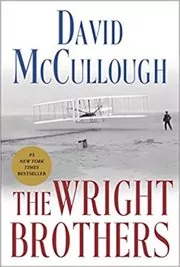
The Wright Brothers
For readers who want a relatively compact introduction to McCullough’s narrative style. Its attention to persistence, experimentation, and family makes the technical subject approachable, though it offers less detailed engineering analysis than an aviation specialist might want.
What it's about
McCullough follows Wilbur and Orville Wright from their bicycle shop in Ohio to the windswept dunes of Kitty Hawk and the first sustained flights. The book highlights their quiet persistence, close‑knit family, and the skeptical world they had to convince.
Also recommended by
6 people Bob Iger recommended this book
Bob Iger
Bob Iger told Variety this book was on his Reading List.
Bob Iger's recommendation of this book  Brian Armstrong recommended this book
Brian Armstrong
"A worthwhile read for all builders." - Brian Armstrong
Brian Armstrong's recommendation of this book  Ed Zschau recommended this book
Ed Zschau
"A fabulous book." - Ed Zschau
Ed Zschau's recommendation of this book  Austen Allred recommended this book
Austen Allred
"The slow, iterative process to breakthrough invention." - Austen Allred
Austen Allred's recommendation of this book  Lloyd Blankfein recommended this book
Lloyd Blankfein
Lloyd Blankfein recommended this book on the "Exchanges at Goldman Sachs" podcast.
Lloyd Blankfein's recommendation of this book  Ali Abdaal recommended this book
Ali Abdaal
"Contains timeless themes relevant to any and all forms of human endeavour." - Ali Abdaal
Ali Abdaal's recommendation of this book
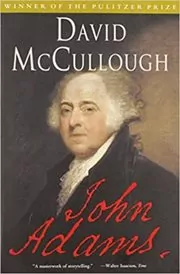
John Adams
For readers who want a full political biography anchored in relationships and private life. Its attention to Abigail Adams and correspondence gives the public career unusual intimacy, though the length and sympathetic perspective require a substantial commitment.
What it's about
This biography follows John Adams from his Massachusetts beginnings through revolution, diplomacy, the presidency, and a long retirement. McCullough pays special attention to Adams’s partnership with Abigail and his evolving friendship and rivalry with Thomas Jefferson.
Also recommended by
1 person Greg McKeown recommended this book
Greg McKeown
"By the end of it, I just loved John Adams and loved what he was trying to do." - Greg McKeown
Greg McKeown's recommendation of this book
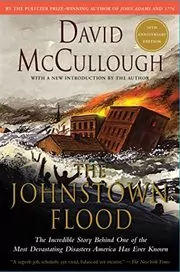
The Johnstown Flood
For readers who want a contained disaster history with a strong sense of place. Its examination of responsibility and human consequences makes a gripping introduction, though the tragedy and accounts of suffering can be difficult to read.
What it's about
McCullough reconstructs the 1889 Johnstown Flood in Pennsylvania, when a failed dam unleashed a wall of water that destroyed a steel town and killed thousands. Drawing on survivor accounts, he examines negligence, responsibility, and the community’s struggle to rebuild.
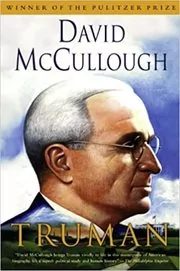
Truman
For readers ready for a long presidential biography spanning major twentieth-century crises. Its combination of personal background and public decision-making offers broader scope than McCullough’s shorter books, though the detail and admiring portrait may feel overwhelming.
What it's about
In this sweeping biography of Harry S. Truman, McCullough follows the Missouri farmer turned president through world war, atomic decisions, early Cold War crises, and bruising political battles at home. It presents Truman as both an ordinary man and a consequential leader.
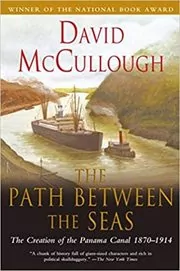
For readers who want an ambitious project history joining engineering with international politics. Its treatment of French and American efforts provides a wide narrative canvas, though the scale and many participants demand sustained attention.
What it's about
David McCullough traces the long, fraught effort to build the Panama Canal, from failed French ambitions to the American project that finally carved a passage between the oceans. He blends engineering detail, global politics, and personal stories of workers and leaders.
Also recommended by
1 person Bill Gates recommended this book
Bill Gates
List of books Bill Gates read in 2013.
Bill Gates's recommendation of this book
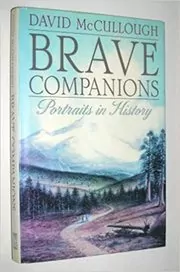
For readers who want McCullough in shorter, self-contained pieces. Its varied portraits make it easier to explore unfamiliar subjects than a long biography does, though the essay format offers less continuity and depth on each individual.
What it's about
This collection gathers McCullough’s shorter portraits of explorers, scientists, writers, and everyday Americans, from Alexander von Humboldt to Harriet Beecher Stowe. Each essay offers a self‑contained glimpse of people who shaped history in unexpected ways.
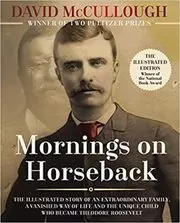
Mornings on Horseback
For readers interested in how a public figure’s early character develops within a family. Its focus on Roosevelt’s childhood and youth is more intimate than a presidential survey, though it ends before much of his best-known political career.
What it's about
Focusing on Theodore Roosevelt’s youth, McCullough traces his life from a fragile, sickly boy in New York to the energetic young man ready to charge into politics and the West. The book also paints a detailed portrait of the Roosevelt family and their world.
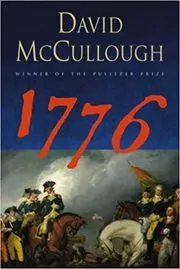
1776
For readers who want a focused account of the Revolution rather than a full founding-era survey. Its concentration on a precarious military year creates momentum, though political debate and the war’s later development receive less attention.
What it's about
In 1776 McCullough focuses on the year America’s fate hung in the balance, following George Washington and his ragged army through early victories, crushing defeats around New York, and the surprise attacks at Trenton and Princeton. It offers a ground‑level view of the Revolution’s most precarious months.
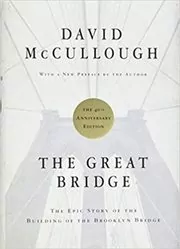
For readers interested in how engineering projects depend on families, workers, and city politics. Its broad social setting gives the construction story more depth, though technical and institutional detail makes it slower than the shorter biographies.
What it's about
This narrative of the Brooklyn Bridge tells how the Roebling family and a legion of engineers and workers overcame political fights, deadly accidents, and daunting technology to span the East River. It’s also a portrait of Gilded Age New York in rapid transformation.
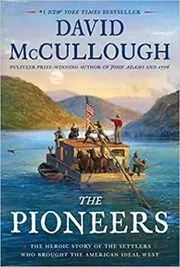
The Pioneers
The Heroic Story of the Settlers Who Brought the American Ideal West
For readers interested in a community-focused account of settlement in the Northwest Territory. Its letters and family stories give the narrative immediacy, though the celebratory settler perspective gives Indigenous experience and dispossession less attention.
What it's about
This book tells the story of New Englanders who settled the Northwest Territory after the American Revolution, founding Marietta, Ohio, under the Northwest Ordinance’s promises of education, religious freedom, and a ban on slavery. McCullough follows a handful of families through hardship and growth on the frontier.
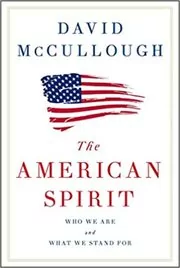
For readers who want a short introduction to McCullough’s public voice and belief in historical knowledge. Its speeches are accessible in separate sittings, though recurring civic themes offer less sustained analysis than his narrative histories.
What it's about
Drawn from speeches delivered over several decades, this collection finds McCullough urging audiences to know their history, cherish civic institutions, and take public life seriously. The talks are short, accessible reminders of shared American ideals and responsibilities.
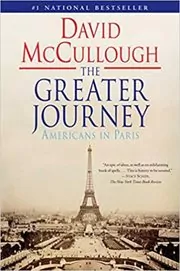
For readers interested in cultural exchange rather than wars or presidential office. Its group portraits connect Americans’ learning abroad with their later work, though the shifting cast makes it less concentrated than a single-person biography.
What it's about
McCullough follows 19th‑century Americans who went to Paris to study art, medicine, and politics, including figures like Samuel Morse, Elizabeth Blackwell, and Mary Cassatt. Their years abroad changed them and, through their work back home, helped reshape American culture.

History Matters
For readers who want to explore McCullough’s curiosity and reasons for studying the past in shorter pieces. Its posthumous selection provides another view of his interests, though it offers less sustained narrative than his major histories.
What it's about
Published after McCullough’s death, History Matters gathers essays and speeches that show his curiosity about people and places, his craft as a writer, and his belief that knowing history strengthens civic life. It’s an inviting sampler of his voice and concerns.
Sources
- 1
David McCullough Books in Order, and Which to Read First
lisanneswart.com
- 2
David McCullough
oaklawnlibraryfriends.com
- 3
11 David McCullough Books That Bring History to Life
tckpublishing.com
- 4
10 Best David McCullough Books (2025) That You Must Read!
ereads.com
- 5
David Mccullough Books
goodreads.com
- 6
Back to back McCullough
reddit.com
- 7
David McCullough
nationalbook.org
- 8
David McCullough Suggestions
reddit.com





Edited by
Software engineer whose passion for tracking book recommendations from podcasts inspired the creation of MRB.
Lead investor at 3one4 Capital whose startup expertise and love for books helped shape MRB and its growth.
Comments
Spotted a missing book, a wrong order or a mistake? Tell us and we'll fix this page.
We're a reading guide, not the author or publisher, so we can't send books or pass on messages.