
David McCullough Books in Order
Explore the works of historian David McCullough with books listed in order, quick summaries, series background, and guidance on the best titles to start with.
Last updated:
As an Amazon Associate, we earn from qualifying purchases (at no extra cost to you).
David McCullough books in publication order
15 books
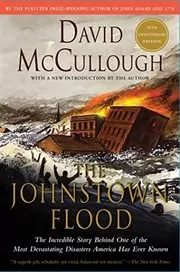
The Johnstown Flood
by David McCullough
1968
McCullough reconstructs the 1889 Johnstown Flood in Pennsylvania, when a failed dam unleashed a wall of water that destroyed a steel town and killed thousands. Drawing on survivor accounts, he examines negligence, responsibility, and the community’s struggle to rebuild.
The Great Bridge
by David McCullough
1972
This narrative of the Brooklyn Bridge tells how the Roebling family and a legion of engineers and workers overcame political fights, deadly accidents, and daunting technology to span the East River. It’s also a portrait of Gilded Age New York in rapid transformation.
The Path Between the Seas
by David McCullough
1977
David McCullough traces the long, fraught effort to build the Panama Canal, from failed French ambitions to the American project that finally carved a passage between the oceans. He blends engineering detail, global politics, and personal stories of workers and leaders.
Recommended by
1 person Bill Gates recommended this book
Bill Gates
List of books Bill Gates read in 2013.
Bill Gates's recommendation of this book
Mornings on Horseback
by David McCullough
1981
Focusing on Theodore Roosevelt’s youth, McCullough traces his life from a fragile, sickly boy in New York to the energetic young man ready to charge into politics and the West. The book also paints a detailed portrait of the Roosevelt family and their world.
Brave Companions
by David McCullough
1991
This collection gathers McCullough’s shorter portraits of explorers, scientists, writers, and everyday Americans, from Alexander von Humboldt to Harriet Beecher Stowe. Each essay offers a self‑contained glimpse of people who shaped history in unexpected ways.
Truman
by David McCullough
1992
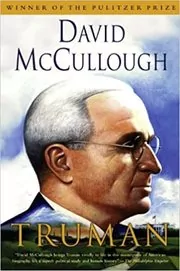
In this sweeping biography of Harry S. Truman, McCullough follows the Missouri farmer turned president through world war, atomic decisions, early Cold War crises, and bruising political battles at home. It presents Truman as both an ordinary man and a consequential leader.
John Adams
by David McCullough
2001
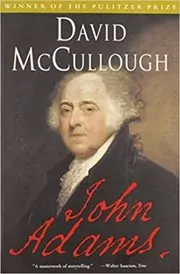
This biography follows John Adams from his Massachusetts beginnings through revolution, diplomacy, the presidency, and a long retirement. McCullough pays special attention to Adams’s partnership with Abigail and his evolving friendship and rivalry with Thomas Jefferson.
Recommended by
1 person Greg McKeown recommended this book
Greg McKeown
"By the end of it, I just loved John Adams and loved what he was trying to do." - Greg McKeown
Greg McKeown's recommendation of this book
The Course of Human Events
by David McCullough
2004
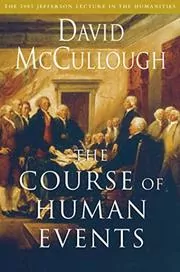
Based on McCullough’s 2003 Jefferson Lecture, this brief work reflects on why history and good writing matter. He draws on his own experience as a historian to show how language, memory, and storytelling shape what endures from the past.
1776
by David McCullough
2005
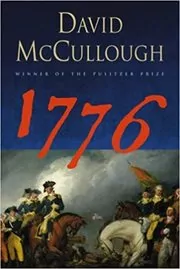
In 1776 McCullough focuses on the year America’s fate hung in the balance, following George Washington and his ragged army through early victories, crushing defeats around New York, and the surprise attacks at Trenton and Princeton. It offers a ground‑level view of the Revolution’s most precarious months.
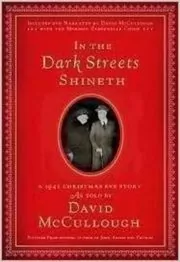
In the Dark Streets Shineth
by David McCullough
2010
This small volume recounts the 1941 Christmas Eve when Franklin D. Roosevelt and Winston Churchill addressed a nation at war from the White House, weaving in the carols they shared. It’s a nostalgic meditation on leadership, music, and hope in dark times.
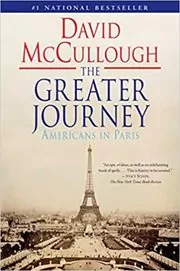
The Greater Journey
by David McCullough
2011
McCullough follows 19th‑century Americans who went to Paris to study art, medicine, and politics, including figures like Samuel Morse, Elizabeth Blackwell, and Mary Cassatt. Their years abroad changed them and, through their work back home, helped reshape American culture.
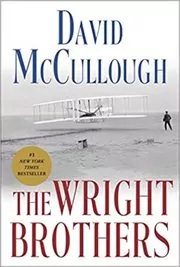
The Wright Brothers
by David McCullough
2015
McCullough follows Wilbur and Orville Wright from their bicycle shop in Ohio to the windswept dunes of Kitty Hawk and the first sustained flights. The book highlights their quiet persistence, close‑knit family, and the skeptical world they had to convince.
Recommended by
6 people Bob Iger recommended this book
Bob Iger
Bob Iger told Variety this book was on his Reading List.
Bob Iger's recommendation of this book  Brian Armstrong recommended this book
Brian Armstrong
"A worthwhile read for all builders." - Brian Armstrong
Brian Armstrong's recommendation of this book  Ed Zschau recommended this book
Ed Zschau
"A fabulous book." - Ed Zschau
Ed Zschau's recommendation of this book  Austen Allred recommended this book
Austen Allred
"The slow, iterative process to breakthrough invention." - Austen Allred
Austen Allred's recommendation of this book  Lloyd Blankfein recommended this book
Lloyd Blankfein
Lloyd Blankfein recommended this book on the "Exchanges at Goldman Sachs" podcast.
Lloyd Blankfein's recommendation of this book  Ali Abdaal recommended this book
Ali Abdaal
"Contains timeless themes relevant to any and all forms of human endeavour." - Ali Abdaal
Ali Abdaal's recommendation of this book
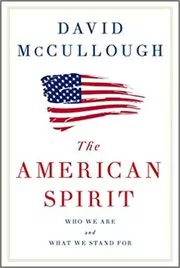
The American Spirit
by David McCullough
2017
Drawn from speeches delivered over several decades, this collection finds McCullough urging audiences to know their history, cherish civic institutions, and take public life seriously. The talks are short, accessible reminders of shared American ideals and responsibilities.
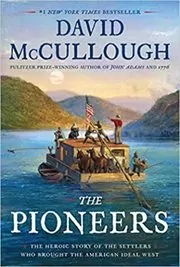
The Pioneers
by David McCullough
2019
This book tells the story of New Englanders who settled the Northwest Territory after the American Revolution, founding Marietta, Ohio, under the Northwest Ordinance’s promises of education, religious freedom, and a ban on slavery. McCullough follows a handful of families through hardship and growth on the frontier.
History Matters
by David McCullough
2025
Published after McCullough’s death, History Matters gathers essays and speeches that show his curiosity about people and places, his craft as a writer, and his belief that knowing history strengthens civic life. It’s an inviting sampler of his voice and concerns.
Where to start with David McCullough
If you want a big presidential biography: Truman → John Adams
If you want to relive the American Revolution: 1776
If you love engineering and big projects: The Great Bridge → The Path Between the Seas
If you’re drawn to invention and travel: The Wright Brothers → The Greater Journey
If you prefer shorter speeches and essays: The American Spirit → History Matters
David McCullough collections, short stories, and related book types
Non-Fiction Books
by David McCullough
1981The Illustrated Story of an Extraordinary Family, a Vanished Way of Life, and the Unique Child Who Became Theodore Roosevelt
by David McCullough
2019The Heroic Story of the Settlers Who Brought the American Ideal West
Author bio
David McCullough was an American historian, biographer, and narrator whose narrative histories brought major episodes of the past to a wide general audience. Born on July 7, 1933, in Pittsburgh, Pennsylvania, he spent nearly six decades writing about everything from catastrophic floods to presidents and pioneers. He died on August 7, 2022, in Hingham, Massachusetts, at age eighty‑nine.
He grew up in Pittsburgh’s Point Breeze neighborhood as one of four sons in a book‑loving family. School came easily, and he mixed sports and cartooning with long hours of reading and listening to stories at home. As a teenager he imagined many futures—doctor, architect, actor, writer—but the pull toward words and history kept strengthening.
In 1951 McCullough left for Yale University to study English literature, graduating in 1955. There he learned from accomplished novelists and critics and absorbed the value of clear, unpretentious prose. After college he worked for Time‑Life in New York, then for the United States Information Agency in Washington, before becoming an editor at American Heritage magazine.
While at American Heritage in the early 1960s, a chance visit to the Library of Congress changed his life. He came across newly acquired photographs of the 1889 Johnstown Flood and realized the disaster had never been fully retold for modern readers. Working nights and weekends, he wrote The Johnstown Flood, published in 1968; its success let him leave editing and commit to writing history full‑time.
From there he built a remarkable body of work. The Great Bridge examined the building of the Brooklyn Bridge and the Roebling family behind it, while The Path Between the Seas chronicled the creation of the Panama Canal. Mornings on Horseback explored Theodore Roosevelt’s formative years, and the presidential biographies Truman and John Adams traced two very different leaders through war, politics, and hard choices in office.
Later books widened his canvas again. 1776 focused on the precarious first year of the American Revolution; The Greater Journey followed 19th‑century Americans who remade themselves in Paris; The Wright Brothers told the story of aviation’s pioneers; and The Pioneers returned to the settlement of the Northwest Territory. Alongside these longer works he published collections such as Brave Companions, The American Spirit, and the posthumous History Matters, which gather his essays and speeches on people, places, and civic ideals.
McCullough grounded his writing in archives—letters, diaries, government records—but always said that history is, above all, “the story of people.” He liked to visit the sites he described and to walk the same streets or battlefields, believing that weather, distances, and sounds helped him imagine past lives more honestly. His style favored strong scenes, plain language, and a tone that welcomed general readers without talking down to them.
His approach earned both a large readership and many honors. McCullough twice won the Pulitzer Prize, for Truman and John Adams, and twice received the National Book Award, for The Path Between the Seas and Mornings on Horseback. In 2006 he also received the Presidential Medal of Freedom, the nation’s highest civilian award, along with numerous honorary degrees.
Beyond the printed page, his steady, recognizable voice narrated documentaries such as films on the Brooklyn Bridge and the Civil War, and he hosted the long‑running public‑television series American Experience. He taught as a visiting professor, delivered countless commencement addresses, and kept urging audiences to read widely, know their history, and take part in public life.
At home, McCullough and his wife, Rosalee Barnes McCullough, whom he married in 1954, raised five children and eventually settled in Massachusetts, later moving to Hingham with summers in Maine. Away from work he painted watercolors, followed sports, and spent time with a growing circle of grandchildren. Many readers who meet him today through 1776, The Wright Brothers, or other favorites come away feeling that he treated the past as a living place, full of real people whose choices still matter.

Edited by
Software engineer whose passion for tracking book recommendations from podcasts inspired the creation of MRB.
Lead investor at 3one4 Capital whose startup expertise and love for books helped shape MRB and its growth.
Comments
Did we miss something? Have feedback?
Help us improve this page by sharing your thoughts