
26 Best Data Structures Books
The best data structures books, ranked by how many expert sources recommend each one, with notes for beginners, language-specific study, and deeper analysis.
Our take
Data structures shape how programs store, find, and update information. Learning them means more than memorizing names: you need to understand which operations each structure supports and what those operations cost. The books here take different routes, from visual explanations and practical code to proofs, design techniques, and specialized reference material.
If you can program but find the theory unfamiliar, Grokking Algorithms or A Common-Sense Guide to Data Structures and Algorithms offers a manageable start. A language-specific textbook lets you implement what you learn, while Introduction to Algorithms provides a broader mathematical reference. The Algorithm Design Manual helps you recognize recurring problems, and Advanced Data Structures is better saved until the foundations are secure.
Choose a book that matches your programming language and mathematical confidence, then implement the structures and work through exercises as you read.
26 books · 12 sources · Last updated
As an Amazon Associate, we earn from qualifying purchases (at no extra cost to you).
How to choose from this list
Skip to the full rankingIf you want a visual first introduction: Grokking Algorithms → A Common-Sense Guide to Data Structures and Algorithms
If you want a Python course: Problem Solving with Algorithms and Data Structures Using Python → Data Structures and Algorithms in Python
If you want Java examples from Lafore: Data Structures and Algorithms in Java → Algorithms
If you want C++ implementation and analysis: Data Structures and Algorithm Analysis in C++ → Advanced Data Structures
If you want stronger mathematical design skills: Introduction to Algorithms → Algorithm Design
If you want to prepare for coding interviews: Data Structures and Algorithms Made Easy → Cracking the Coding Interview
The 26 books, ranked
Ranked by how many expert sources name each book. Ties go to the book more people recommend.

Introduction to Algorithms
Choose this for a broad mathematical reference once you can program and follow proofs. Its depth makes it useful across a degree or career, though it is a demanding first encounter with data structures.
What it's about
This textbook develops algorithm design and analysis through mathematical explanations, pseudocode, and exercises. Chapters cover data structures, sorting, graphs, and broader design techniques, presenting individual topics as units that can support coursework or professional reference.

Algorithms
For Java programmers who want implementations tied closely to performance analysis and visual explanation. It offers more sustained programming practice than conceptual introductions, though working through its code and exercises requires a substantial time commitment.
What it's about
Robert Sedgewick and Kevin Wayne present fundamental algorithms and data structures through Java implementations and analysis. The fourth edition connects practical programming with algorithm design, giving students and practitioners methods for approaching varied computational problems.

The Algorithm Design Manual
For programmers who want help recognizing which kind of algorithmic problem they face. Its practical discussions and problem catalog make a useful reference, though it assumes more background than a first data structures tutorial.
What it's about
Steven Skiena combines instruction in practical algorithm design with a catalog of recurring computational problems. Examples, implementation guidance, and accounts from real projects help readers recognize suitable approaches, while the reference section directs them toward algorithms and further resources.

Data Structures and Algorithms Made Easy
Data Structures and Algorithmic Puzzles
Choose this when you already know the basics and want a large supply of problems and alternative solutions. Its practice orientation suits interview preparation, though the crowded presentation is less gentle than a structured introductory course.
What it's about
Narasimha Karumanchi presents data structures through algorithmic problems and alternative solutions, using C and C++ examples. Recursion, linked lists, trees, graphs, searching, and sorting form part of a reference intended for interview preparation, examinations, and practicing problem solving.

Start here if diagrams and small Python examples help you understand unfamiliar ideas. It offers a gentler introduction than the mathematical textbooks, though the selective coverage means you will need another book for a fuller course.
What it's about
Aditya Bhargava introduces algorithms with diagrams and annotated Python examples, beginning with searching and sorting before tackling more complex applications. The explanations emphasize how procedures work, when to use them, and the performance trade-offs involved in choosing a solution.

Problem Solving with Algorithms and Data Structures Using Python
For Python learners ready to move from syntax into structured problem solving and performance analysis. Its course-like progression supports steady practice, though the introductory scope leaves advanced structures and deeper proofs to later study.
What it's about
Bradley N. Miller and David L. Ranum use Python to introduce algorithmic problem solving and data structures. Examples and exercises develop understanding of performance analysis, linear structures, recursion, searching, sorting, and trees while reinforcing fundamental programming skills.

Choose this for a compact implementation reference when you need to compare practical algorithm choices. Examples across programming languages make it flexible, though the compressed explanations are less suitable for learning every topic from scratch.
What it's about
George Heineman, Gary Pollice, and Stanley Selkow explain how to select and implement algorithms for practical programming tasks. Code examples in several languages accompany performance analysis, helping readers compare solutions and adapt established methods to their own software projects.
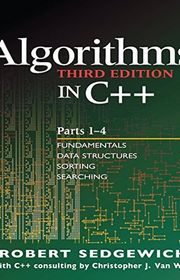
Algorithms in C++, Parts 1-4
For C++ readers who want detailed explanations of foundational structures, sorting, and searching. Its illustrations connect implementation with analysis, though the older code style needs adaptation and graph algorithms are covered in a separate volume.
What it's about
Sedgewick presents fundamental algorithms and data structures through C++ implementations and explanatory figures. This volume covers the first four parts of the work, concentrating on foundations, sorting, and searching rather than the separate treatment of graph algorithms.

Algorithms Unlocked
For readers who want to understand what algorithms do before committing to extensive code or proofs. Its conceptual approach makes the subject approachable, though it cannot replace the implementation practice needed to use data structures confidently.
What it's about
Thomas Cormen introduces computer algorithms with limited mathematics, explaining how to describe and evaluate them. Examples cover searching, sorting, graphs, character strings, cryptography, and compression, alongside problems that computers cannot currently solve efficiently in reasonable time.

Data Structures and Algorithms in Java
For Java learners who want patient explanations and visual support while building foundational structures. Its focus on concrete implementation is approachable, though the older examples and presentation should be read alongside current Java documentation.
What it's about
Robert Lafore introduces data structures and algorithms through Java examples and visual demonstrations. Coverage includes arrays, linked lists, stacks, queues, sorting, recursion, trees, hash tables, heaps, and graphs, with exercises and guidance on choosing appropriate structures.
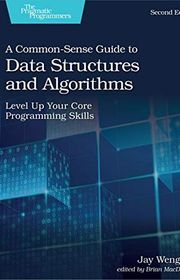
A Common-Sense Guide to Data Structures and Algorithms
Choose this if you can already write code but need an intuitive understanding of efficiency and structure choices. Its practical explanations bridge everyday programming and formal study, though it is less rigorous than the university textbooks.
What it's about
Jay Wengrow explains how data structures and algorithm choices affect program performance. Examples and exercises introduce efficiency analysis, searching, sorting, recursion, trees, and graphs, helping programmers recognize ways to improve the code they write.
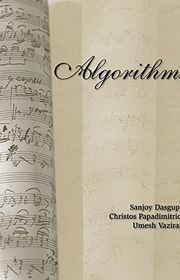
Algorithms
For students who want a relatively concise mathematical account of algorithm design. Its emphasis on the central idea behind each method makes comparisons easier, though proofs and abstraction require more preparation than a programming tutorial.
What it's about
This textbook develops fundamental algorithms through mathematical ideas, design techniques, and analysis. Topics include graphs, greedy methods, dynamic programming, and computational complexity, with explanations and exercises intended to build understanding rather than dependence on a particular programming language.

For job candidates who need structured practice explaining and solving programming problems under interview conditions. Its questions and preparation guidance give study a concrete target, though it should supplement foundational learning rather than replace it.
What it's about
Gayle Laakmann McDowell prepares software developers for technical interviews through 189 programming questions and worked solutions. The guide explains approaches to solving problems, reviews computer science concepts, and discusses interview evaluation, preparation, and communicating a solution.
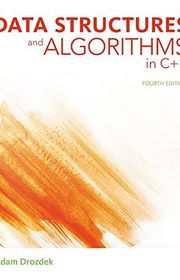
Data Structures and Algorithms in C++
For C++ readers who want a broad textbook balancing implementation with efficiency analysis. Its examples and case studies make it useful for coursework, though the older edition's language conventions should be checked against current C++ practice.
What it's about
Drozdek explains data structures and their associated algorithms through C++ examples, theoretical analysis, and case studies. The text links implementation choices to efficiency and includes advanced topics alongside the foundational structures needed for object-oriented software development.
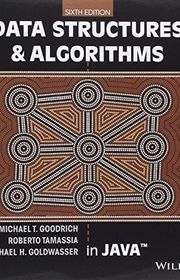
Data Structures and Algorithms in Java
For Java students who want abstract data types and interfaces treated as central design tools. It offers a more formal course structure than Lafore's book, though familiarity with object-oriented programming makes the progression much easier.
What it's about
Goodrich, Tamassia, and Goldwasser present data structures through Java interfaces and implementing classes. Their textbook connects abstract data types with concrete code, algorithmic analysis, and a teaching library designed to complement the Java Collections Framework.
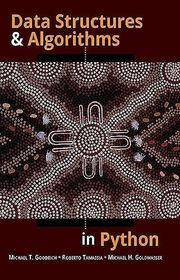
Data Structures and Algorithms in Python
Choose this for a substantial Python course that connects abstract data types, implementation, and analysis. Its systematic treatment goes beyond a visual introduction, though object-oriented programming knowledge and sustained exercise work are expected.
What it's about
This textbook introduces the design, analysis, and implementation of data structures using Python. An object-oriented framework connects abstract concepts to working programs, giving students a structured route through the foundations of algorithmic problem solving.

Choose this for learning the reasoning that produces an algorithm, especially through induction. Its creative emphasis offers a different route from memorizing standard procedures, though mathematical maturity and tolerance for older presentation help considerably.
What it's about
Udi Manber examines the creative process behind algorithm development, using mathematical induction and related reasoning to build solutions. His textbook connects familiar data structures with design problems, encouraging readers to understand the steps that produce an algorithm rather than memorize results.
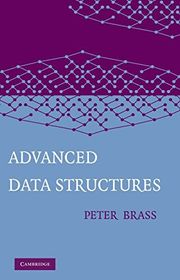
Advanced Data Structures
For experienced students who want data structures treated as a subject in their own right. Its range of specialized structures and implementation detail goes beyond introductory surveys, though the analysis is dense and demands strong foundations.
What it's about
Brass examines the design, analysis, and implementation of structures for searching and updating data. Trees, heaps, interval structures, strings, hashing, and persistence receive specialized treatment, supported by C examples and an extensive set of references.

Algorithm Design
Choose this after an introductory course if you want to learn how to construct and justify algorithms. Its problem-driven reasoning develops design judgment, though readers seeking a quick catalog of code will find it demanding.
What it's about
Jon Kleinberg and Eva Tardos introduce algorithm design through problems drawn from computing applications. Explanations connect design choices with efficiency analysis, helping students understand how to construct solutions and assess their performance rather than merely recognize familiar procedures.
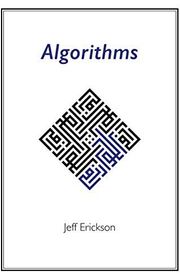
Algorithms
Choose this when you want to practice developing algorithms through mathematical reasoning and challenging exercises. Its emphasis on intuition supports deeper understanding, though it assumes prior programming knowledge and is not an elementary data structures manual.
What it's about
Erickson develops algorithm design and analysis through recurring problem-solving techniques, classical examples, and extensive exercises. Based on university teaching, the text emphasizes the reasoning behind solutions and includes historical discussion alongside its mathematical treatment.
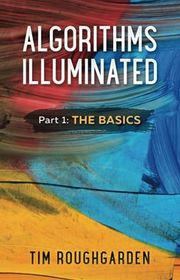
Algorithms Illuminated: Part 1: The Basics
For readers who want a focused, language-independent introduction to analysis, sorting, and divide-and-conquer. Its quizzes support active study without a huge textbook, though this first volume does not provide a complete data structures course.
What it's about
The first volume introduces asymptotic analysis, divide-and-conquer, randomized algorithms, sorting, and selection. Language-independent explanations and practice questions help readers learn how to reason about running time before continuing into the series' more specialized subjects.
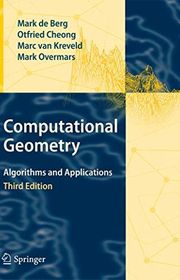
Computational Geometry
Choose this after the basics if your problems involve spatial data, graphics, or geographic systems. Its geometric focus supplies depth missing from general textbooks, though mathematical reasoning and prior algorithmic knowledge are needed throughout.
What it's about
This textbook studies geometric algorithms through problems drawn from robotics, graphics, computer-aided design, and geographic information systems. It connects specialized structures and mathematical techniques to applications that require efficient processing of spatial information.
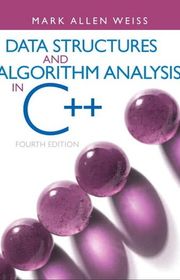
Data Structures and Algorithm Analysis in C++
For C++ students moving from implementation into more rigorous performance analysis. Its combination of concrete structures and deeper algorithmic treatment supports a second course, though readers need a working command of C++ and basic mathematics.
What it's about
Weiss connects C++ implementations of data structures with analysis of their efficiency. Coverage extends from heaps and sorting to amortized analysis and advanced structures, linking practical programming decisions with the reasoning used in algorithm courses.

Data Structures and Algorithms
For readers interested in a foundational treatment organized around abstract data types. Its comparison of implementations remains instructive, though Pascal examples and an older presentation make it less convenient than a contemporary language-specific course.
What it's about
Alfred Aho, John Hopcroft, and Jeffrey Ullman examine the data structures supporting computer programs and the algorithms that operate on them. Their textbook links implementation choices with design techniques and basic analysis, covering structures alongside problems involving searching, sorting, and graphs.
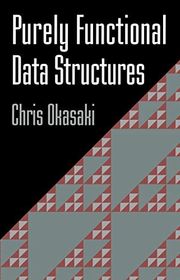
Purely Functional Data Structures
Choose this if you want to understand persistent structures and efficiency without mutable state. Its functional design techniques differ substantially from the imperative textbooks here, though comfort with functional programming and mathematical analysis is important.
What it's about
Okasaki studies data structures designed for functional programming, using Standard ML and Haskell examples. Classical structures and newer functional designs illustrate techniques for building efficient implementations when the assumptions of imperative programming do not apply.

Algorithms For Interviews
For candidates who already understand basic structures and want challenging algorithmic interview practice. Its solved problems encourage deliberate reasoning, though the older interview context and compressed treatment make it less useful as an initial textbook.
What it's about
Adnan Aziz and Amit Prakash organize interview preparation around solved algorithm design problems. Searching, sorting, graphs, dynamic programming, and more advanced topics appear alongside system design and interviewing techniques, giving candidates and interviewers material for practicing technical problem solving.
Sources
- 1
Best Data Structures and Algorithms Books
geeksforgeeks.org
- 2
8 Great Data Structure & Algorithms Books
tableau.com
- 3
Top 5 Data Structure and Algorithm Books - Must Read, Best of Lot
javarevisited.blogspot.com
- 4
10 Best Data Structures and Algorithms Books [2023]
interviewbit.com
- 5
12 BEST Data Structures and Algorithms Books (2026 Update)
guru99.com
- 6
Data Structures Books
educba.com
- 7
Programming Algorithms & Data Structures
goodreads.com
- 8
Looking for an intensive book on "data structures" only. Collected lots of trashy books that I regret now.
reddit.com
- 9
CS240E, Spring 2026: Lectures
student.cs.uwaterloo.ca
- 10
100 Best Data Structures Books of All Time
shortform.com
- 11
What are the best books that teach Data Structures and Algorithms?
reddit.com
- 12
Algorithms and Data Structures: COMPSCI 220 Semester 1, City Campus
cs.auckland.ac.nz


Edited by
Software engineer whose passion for tracking book recommendations from podcasts inspired the creation of MRB.
Lead investor at 3one4 Capital whose startup expertise and love for books helped shape MRB and its growth.
Comments
Spotted a missing book, a wrong order or a mistake? Tell us and we'll fix this page.
We're a reading guide, not the author or publisher, so we can't send books or pass on messages.