
10 Best Dark Psychology Books
The best dark psychology books, ranked by expert-source recommendations, with notes comparing persuasion research, relationship guides and reporting.
Our take
Dark psychology is a loose label for books about manipulation, harmful behavior and interpersonal power. It brings together work with very different aims and levels of evidence. Some titles explain persuasion, some interpret patterns in relationships, and others use historical stories or reporting to explore control. Choosing a book starts with deciding which of those questions you want to understand.
Influence introduces persuasion through research and everyday examples. In Sheep's Clothing: Understanding and Dealing with Manipulative People focuses on covert control, while 30 Covert Emotional Manipulation Tactics: How Manipulators Take Control In Personal Relationships offers a compact relationship-oriented format. The 48 Laws of Power and The Art of Seduction rely heavily on historical interpretation. Without Conscience discusses psychopathy, The Psychopath Test investigates how labels are used, and The Dark Triad of Personality gives a more academic account of personality research.
Begin with Influence for persuasion, or choose In Sheep's Clothing: Understanding and Dealing with Manipulative People for relationship patterns, keeping its interpretations separate from a diagnosis.
10 books · 10 sources · Last updated
As an Amazon Associate, we earn from qualifying purchases (at no extra cost to you).
How to choose from this list
Skip to the full rankingIf you want to understand persuasion: Influence
If you want to recognize relationship patterns: In Sheep's Clothing: Understanding and Dealing with Manipulative People → 30 Covert Emotional Manipulation Tactics: How Manipulators Take Control In Personal Relationships
If you want historical interpretations of power: The 48 Laws of Power → The Art of Seduction
If you want to compare research with reporting: Without Conscience → The Psychopath Test
If you want an academic personality overview: The Dark Triad of Personality
If you want an accessible discussion of conscience: The Sociopath Next Door
The 10 books, ranked
Ranked by how many expert sources name each book. Ties go to the book more people recommend.
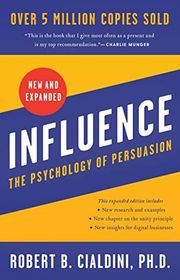
Influence: The Psychology of Persuasion
For readers who want persuasion explained through research and recognizable situations. Its principles provide a firmer framework than historical power anecdotes, but broad tendencies do not predict every person’s response and require attention to context.
What it's about
Robert Cialdini examines the psychological principles that make people agree to requests. Research and everyday examples explain how cues such as reciprocity, social proof, authority, and scarcity shape decisions, alongside ways to recognize unwanted persuasion.

The Art of Seduction
For readers interested in attraction as a form of influence in historical storytelling. Its character types offer a different lens from the relationship guides, but its instrumental view of people and selective examples need a skeptical reading.
What it's about
An exploration of attraction and influence, framed as character types, tactics, and cautionary stories. It looks at how people persuade, charm, and manipulate—and how to recognize those patterns before they work on you.
Also recommended by
2 people Neil Strauss recommended this book
Neil Strauss
"Collects and analyzes some of history’s greatest seducers and seductions." - Neil Strauss
Neil Strauss's recommendation of this book  Patrick Bet-David recommended this book
Patrick Bet-David
Patrick Bet-David recommended this book on his website.
Patrick Bet-David's recommendation of this book

The 48 Laws of Power
For readers interested in strategic power as presented through historical stories. Its memorable principles make patterns easy to debate and recognize, but the selective anecdotes and cynical framing should not be mistaken for a scientific account of human behavior.
What it's about
A compact guide to power dynamics, built around 48 memorable principles and historical examples. It shows how influence is gained, lost, and defended, while warning that every tactic can backfire when used carelessly.
Also recommended by
7 people Aubrey Marcus recommended this book
Aubrey Marcus
"I cannot express how immensely valuable this book is, when absorbed into an open mind." - Aubrey Marcus
Aubrey Marcus's recommendation of this book  DJ Vlad recommended this book
DJ Vlad
Most Recommended Books reached out to DJ Vlad directly.
DJ Vlad's recommendation of this book  Ryan Holiday recommended this book
Ryan Holiday
"Critical for anyone trying to accomplish anything." - Ryan Holiday
Ryan Holiday's recommendation of this book  Alice Little recommended this book
Alice Little
"I think that [this book is] a great tool to get into the hands of women and get that positive thinking going." - Alice Little
Alice Little's recommendation of this book - Neil Strauss recommended this book
Neil Strauss
"Heavily researched and distilled handbook." - Neil Strauss
Neil Strauss's recommendation of this book - Rollo Tomassi recommended this book
Rollo Tomassi
"His best book." - Rollo Tomassi
Rollo Tomassi's recommendation of this book +1
More recommendations
- Patrick Bet-David
Patrick Bet-David recommended this book on his website.
- Patrick Bet-David

For readers exploring covert control in relationships and workplaces. Its behavioral examples give a clearer focus than sweeping promises of mind control, but Simon’s interpretive framework is one perspective rather than a way to diagnose people.
What it's about
George Simon examines people who conceal controlling behavior behind apparently reasonable or helpful actions. Examples and practical guidance explore manipulative tactics, difficulties in recognizing them, and ways to respond more firmly in personal relationships and the workplace.

For readers who want an introduction to psychopathy from a researcher in the field. Its clinical and criminal examples provide more subject depth than generic manipulation guides, but the disturbing cases can encourage overgeneralization if applied casually to acquaintances.
What it's about
Robert D. Hare draws on research and case examples to examine psychopathy, including manipulation, deceit, and lack of remorse. He explores how such traits appear beyond sensational murder cases and considers the difficulties of recognition and personal protection.

30 Covert Emotional Manipulation Tactics
How Manipulators Take Control In Personal Relationships
For readers trying to name recurring patterns of emotional control in relationships. Its concise tactic-by-tactic format is easier to consult than the broader power books, but the checklist approach can oversimplify context and does not establish another person’s intentions.
What it's about
Adelyn Birch describes thirty forms of covert emotional manipulation, focusing especially on romantic relationships. Her guide explores warning signs, the erosion of confidence and boundaries, and ways readers can recognize patterns of control in relationships with partners and others.
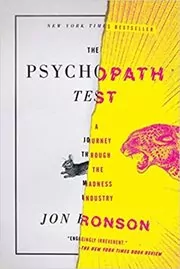
The Psychopath Test
For readers who prefer investigative reporting to a technical textbook. Ronson’s encounters make the use of psychiatric labels a compelling question, but his anecdotal journey is a journalist’s account and should not be used as a diagnostic manual.
What it's about
Ronson follows a strange academic hoax into the world of psychopathy, meeting patients, prison figures, and the experts who define madness. Funny and uneasy, it asks who gets labeled dangerous, and who gets to decide.
Also recommended by
2 people Shah Rukh Khan recommended this book
Shah Rukh Khan
"It's quite nice." - Shah Rukh Khan
Shah Rukh Khan's recommendation of this book  Jon Stewart recommended this book
Jon Stewart
"I took the test, and I'm happy to report I'm just neurotic." - Jon Stewart
Jon Stewart's recommendation of this book
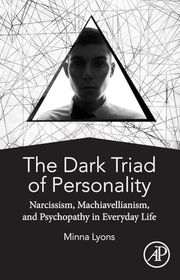
The Dark Triad of Personality
For readers who want a research-oriented account of narcissism, Machiavellianism and psychopathy. Its discussion of measurement and evolutionary perspectives offers more conceptual precision than tactic lists, but the academic approach is less immediate than a practical relationship guide.
What it's about
Minna Lyons reviews research on narcissism, Machiavellianism and psychopathy as personality traits. The book considers definitions, measurement, development and evolutionary explanations, examining how these traits appear in everyday behavior and affect individuals and social relationships.
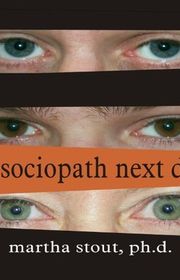
The Sociopath Next Door
For readers interested in harmful behavior within apparently ordinary relationships. Stout’s accessible examples bring conscience and interpersonal consequences into focus, but the broad framing and memorable cases can make complex behavior seem easier to classify than it is.
What it's about
Martha Stout explores the role of conscience and the effects of people she describes as lacking it. Drawing on clinical experience and illustrative cases, she discusses manipulation, relationships and ways readers might understand damaging interpersonal patterns.

Manipulation
Techniques in Dark Psychology, Influencing People with Persuasion, NLP, and Mind Control
For readers who want to examine a short popular guide to persuasion claims. Its compact presentation is easier to browse than the research references, but its NLP and mind-control framing is not a dependable foundation for understanding psychological evidence.
What it's about
Edward Benedict presents his approach to persuasion and interpersonal influence through concepts he associates with dark psychology, NLP, and mind control. The short guide discusses anchoring, feedback, behavior modification, and using influence in pursuit of personal goals.
Sources
- 1
The 5 Best Books on Dark Psychology
bloomsoup.com
- 2
Dark psychology: 8 must-read books on dark human behaviour
yourstory.com
- 3
Best Dark Psychology Books 2026 - 15 Top Picks Ranked
skriuwer.com
- 4
The Best Dark Psychology Books: 9 That Hold Up
craigbeck.com
- 5
Dark Psychology Books
goodreads.com
- 6
PT: 15 Dark Psychology Books That Expose the Shocking Truth About Manipulation and Mind Control [Must-Read]
reddit.com
- 7
Best Manipulation Books: Understanding Influence
thepowermoves.com
- 8
7 Best Books on Manipulation
bestbookshub.com
- 9
The Best Books on Dark Psychology
psypost.org
- 10
9 Best Dark Triad Books for Power & Self-Defense
thepowermoves.com




Edited by
Software engineer whose passion for tracking book recommendations from podcasts inspired the creation of MRB.
Lead investor at 3one4 Capital whose startup expertise and love for books helped shape MRB and its growth.
Comments
Spotted a missing book, a wrong order or a mistake? Tell us and we'll fix this page.
We're a reading guide, not the author or publisher, so we can't send books or pass on messages.