
17 Best Customer Experience Books
The best customer experience books, ranked by how many expert sources recommend each one, with notes to help you choose research, service, and leadership guides.
Our take
Customer experience includes the work customers do to get help, the way a product or service fits their needs, and the systems shaping every interaction. These books approach it from different directions. Some help leaders coordinate departments, others teach research and mapping, and others focus on complaints, loyalty, or memorable service. The most useful starting point depends on which problem your team can actually address.
Outside In treats customer experience as a business discipline, while Customer Understanding and Mapping Experiences help teams investigate what customers encounter. The Effortless Experience concentrates on making service easier. The Power of Moments and Unreasonable Hospitality explore experiences people remember, but those ideas serve a different purpose from removing basic friction. For leadership and coordination, consider Chief Customer Officer 2.0. Start with The Effortless Experience for service problems, or Customer Understanding when you first need to establish what customers value.
17 books · 8 sources · Last updated
As an Amazon Associate, we earn from qualifying purchases (at no extra cost to you).
How to choose from this list
Skip to the full rankingIf you need a business-wide foundation: Outside In → Chief Customer Officer 2.0
If you need to understand the journey: Customer Understanding → Mapping Experiences
If customers struggle to get help: The Effortless Experience → Hug Your Haters
If you want memorable interactions: The Power of Moments → Unreasonable Hospitality
If you manage social customer care: Winning at Social Customer Care
If you're exploring experience as strategy: The Experience Economy → The Ten Principles Behind Great Customer Experiences
The 17 books, ranked
Ranked by how many expert sources name each book. Ties go to the book more people recommend.

For service leaders focused on preventing repeat contacts and frustrating interactions. Its emphasis on reducing effort gives teams a concrete alternative to chasing surprise and delight, though its service research should not be stretched to explain every purchasing decision.
What it's about
Matthew Dixon, Nick Toman, and Rick DeLisi examine what customer service contributes to loyalty. Their research argues for reducing customers' effort and resolving problems reliably, with practical approaches to making service interactions simpler rather than more elaborate.

For teams designing memorable milestones and interactions. The Heaths offer a vocabulary for why particular moments stand out, though the examples extend well beyond business and need translating into a repeatable customer-experience operation.
What it's about
Chip and Dan Heath explore the ingredients of memorable experiences and how to create them intentionally. Their examples connect moments of insight, achievement, connection, and heightened emotion with changes in people's relationships, work, and lives.
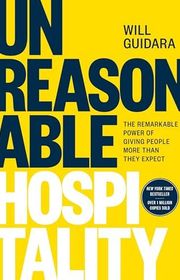
Unreasonable Hospitality: The Remarkable Power of Giving People More Than They Expect
For leaders interested in the culture behind highly personal service. Guidara makes hospitality tangible through restaurant experience, though the staffing, budgets, and discretion of fine dining need adapting before applying the lessons elsewhere.
What it's about
Will Guidara draws on leading Eleven Madison Park to explain an approach to hospitality built around attention, generosity, and personal connection. Restaurant stories explore how leaders and teams can create memorable experiences and extend those principles beyond dining.

For leaders responsible for aligning customer experience across departments. Bliss organizes the role around shared capabilities and accountability, though the organizational scope assumes influence and executive support that a frontline team may not possess.
What it's about
Jeanne Bliss presents five competencies for organizing a company around customer experience. Tools, leadership guidance, and examples address listening, accountability, reliable service, and coordinating departments, outlining how customer leaders can embed these priorities into business decisions.

For leaders trying to make customer experience an organization-wide discipline. Manning and Bodine connect visible interactions with the systems behind them, though the framework requires sustained coordination and authority beyond the customer-service team.
What it's about
Harley Manning and Kerry Bodine explain how customer experience depends on the whole organization, including operations customers never see. Examples and management practices connect policies, processes, technology, and employee behavior with a systematic approach to improving experiences across a business.

The Cult of the Customer
Create an Amazing Customer Experience that Turns Satisfied Customers into Customer Evangelists
For managers building a service culture around consistency and customer advocacy. Hyken emphasizes employee commitment and repeatable experiences, though the motivational examples provide less detail on measurement and organizational design than the management-focused books.
What it's about
Shep Hyken explores how consistent customer experiences can turn satisfied customers into enthusiastic advocates. Business examples and practical guidance connect employee commitment with customer loyalty, outlining how organizations can build a culture that supports reliable service and memorable interactions.

For teams handling complaints in public and private channels. Baer connects response practices with retention and reputation, though the focus on reacting to dissatisfaction provides less guidance on redesigning the underlying product or service.
What it's about
Jay Baer examines customer complaints across private channels and public platforms, arguing that businesses should respond rather than ignore criticism. Research and case studies offer approaches for handling dissatisfaction and making customer service part of a company's broader strategy.
Also recommended by
1 person Changpeng Zhao recommended this book
Changpeng Zhao
"A must-read for marketing and customer service teams." - Changpeng Zhao
Changpeng Zhao's recommendation of this book

Customer Understanding
Three Ways to Put the "Customer" in Customer Experience and at the Heart of Your Business
For teams that need better customer insight before proposing changes. Franz connects listening, personas, and journey mapping with decisions, though the methods depend on research quality and cannot produce understanding from internal assumptions alone.
What it's about
Annette Franz outlines three approaches to understanding customers: listening to feedback, developing personas, and mapping journeys. Practical guidance connects these methods with organizational decisions, showing how businesses can turn customer insights into actions and build a culture centered on customers.

Mapping Experiences
A Complete Guide to Customer Alignment Through Journeys, Blueprints, and Diagrams
For teams that need to make a fragmented customer journey visible. Kalbach explains mapping formats and how they support shared understanding, though producing useful diagrams requires research and collaboration rather than simply filling in a template.
What it's about
Jim Kalbach explains how journey maps, service blueprints, and other diagrams make customer experiences visible. Examples and practical guidance show how mapping can connect customer needs with organizational activities, helping teams identify opportunities and align their work around shared insights.

For leaders considering how convenience, personalization, and technology change expectations. Morgan organizes the discussion around guiding principles, though technology examples age quickly and the broad outlook supplies less implementation detail than a specialist manual.
What it's about
Blake Morgan presents ten principles for preparing businesses for changing customer expectations. Examples explore personalization, convenience, technology, and organizational coordination, connecting tools such as automation and analytics with the broader effort to create experiences that customers find useful and accessible.

For leaders asking how experience can become part of what customers buy. Pine and Gilmore provide a strategic lens for differentiation, though the staging metaphor needs adapting for essential services where reliability matters more than spectacle.
What it's about
B. Joseph Pine II and James Gilmore argue that businesses can compete by staging memorable experiences alongside goods and services. Their framework examines how organizations engage customers' time and attention, using examples to explore experience design and economic differentiation.

The Ten Principles Behind Great Customer Experiences
For practitioners who want principles they can apply across products and services. Watkinson turns psychological ideas into a framework for evaluating experiences, though the breadth needs supplementing with research specific to your customers and context.
What it's about
Matt Watkinson presents ten principles for designing customer experiences, drawing on psychology and business examples. Practical tools and guidance connect customer needs with everyday interactions, helping readers evaluate existing experiences and make deliberate improvements across products, services, and organizational processes.

Would You Do That to Your Mother?
The "Make Mom Proud" Standard for How to Treat Your Customers
For leaders seeking a simple standard to challenge impersonal policies. Bliss makes customer treatment a question people across departments can discuss, though the memorable framing needs accompanying processes and accountability to change daily behavior.
What it's about
Jeanne Bliss asks businesses to judge customer treatment by whether they would treat their own mothers the same way. Examples, questions, and practical guidance connect this standard with organizational culture, employee decisions, and more considerate approaches to everyday service.

For managers who want an integrated account of designing, measuring, and leading customer experience. Tavsan and Erdem connect several management responsibilities, though the textbook-style scope demands more sustained reading than a narrow guide to one problem.
What it's about
Nihat Tavsan and Can Erdem explain how organizations can design, integrate, measure, and lead customer experience initiatives. Their discussion connects customer journeys and memorable experiences with management practices, offering a framework for coordinating experience improvements across a business.

More Is More
For managers who want a broad agenda for improving customer experience. Morgan connects culture, technology, and employee practices through company examples, though the wide coverage offers less depth on any single operational method.
What it's about
Blake Morgan examines how companies organize themselves to deliver stronger customer experiences. Business examples connect employee experience, technology, accountability, and innovation with customer needs, outlining practices for making service and experience improvements part of an organization's everyday work.

Winning at Social Customer Care
How Top Brands Create Engaging Experiences on Social Media
For teams responsible for customer care on social platforms. Gingiss focuses on coordination and public interaction through brand examples, though platform features change and the channel-specific scope offers less guidance on the full customer journey.
What it's about
Dan Gingiss examines how businesses use social media to provide customer service and create engaging interactions. Interviews and brand examples support a practical framework for responding to customers, coordinating service efforts, and making social communication part of the broader customer experience.

Winning Her Business
How to Transform the Customer Experience for the World’s Most Powerful Consumers
For sales and service leaders examining women's experiences as customers. Brennan turns consumer patterns into questions about purchasing environments and interactions, though broad demographic observations still need testing against the people your business actually serves.
What it's about
Bridget Brennan examines women's influence as consumers and what it means for customer experience and sales. Examples and practical guidance explore how businesses can understand these customers' expectations, strengthen personal interactions, and create environments that support purchasing decisions.
Sources
- 1
Must-Read Customer Experience Books in 2024 - Qualtrics
qualtrics.com
- 2
12 Best Customer Experience Books of All Time
thecxlead.com
- 3
Best Customer Experience Books to Read in 2025 – Medallia
medallia.com
- 4
Customer Experience Books
goodreads.com
- 5
10 essential books and podcasts for CX leaders in 2026
zendesk.com
- 6
Recommended books about CX : r/customerexperience
reddit.com
- 7
The 29 best customer service books you need to read
blog.hubspot.com
- 8
6 Customer Experience Books Every Founder Should Read
helpscout.com


Edited by
Software engineer whose passion for tracking book recommendations from podcasts inspired the creation of MRB.
Lead investor at 3one4 Capital whose startup expertise and love for books helped shape MRB and its growth.
Comments
Spotted a missing book, a wrong order or a mistake? Tell us and we'll fix this page.
We're a reading guide, not the author or publisher, so we can't send books or pass on messages.