
19 Best Cryptocurrency Books
The best cryptocurrency books, ranked by how many expert sources recommend each one, with guidance for beginners, developers, and readers seeking history.
Our take
Cryptocurrency books can explain how a network works, argue for a different monetary system, or tell the story of the people building and trading digital assets. Those are different kinds of understanding. A persuasive case for Bitcoin does not provide the same foundation as a technical textbook, and an entertaining account of early fortunes does not establish an investment strategy.
The Basics of Bitcoins and Blockchains offers an accessible introduction, while Mastering Bitcoin and Mastering Ethereum serve readers ready for code and system design. The Bitcoin Standard and Broken Money connect digital currencies with broader arguments about money. For reported history, Digital Gold follows Bitcoin’s early participants and The Cryptopians turns toward Ethereum. Cryptoassets takes an investor’s perspective, with assumptions that readers should consider in their original market context.
Begin with an introduction if the terminology is unfamiliar, then choose a technical guide or a history before relying on any book’s claims about markets.
19 books · 9 sources · Last updated
As an Amazon Associate, we earn from qualifying purchases (at no extra cost to you).
How to choose from this list
Skip to the full rankingIf you're starting from zero: The Basics of Bitcoins and Blockchains → Blockchain Basics
If you want technical foundations: Mastering Bitcoin → Bitcoin and Cryptocurrency Technologies
If you want to study smart contracts: Mastering Ethereum
If you prefer industry history: Digital Gold → The Cryptopians
If you want monetary arguments: The Bitcoin Standard → Broken Money
If you want an investment framework: Cryptoassets
The 19 books, ranked
Ranked by how many expert sources name each book. Ties go to the book more people recommend.

For readers interested in frameworks for evaluating digital assets rather than instructions for programming them. Its portfolio perspective broadens the discussion beyond Bitcoin, though its early market assumptions and examples need reassessment after later industry upheavals.
What it's about
Chris Burniske and Jack Tatar examine cryptocurrencies and related tokens as an emerging investment category. They connect blockchain history with valuation, portfolio construction, speculative bubbles, exchanges, and storage, offering a framework for evaluating assets rather than focusing solely on bitcoin.

For developers who want a detailed account of Bitcoin’s underlying machinery. Its explanation of transactions, keys, and network operation goes beyond popular introductions, though the listed edition requires current documentation alongside older technical examples.
What it's about
Andreas M. Antonopoulos introduces Bitcoin and explains its underlying blockchain for readers developing applications or studying the technology. The guide covers wallets, keys, addresses, transactions, and mining, connecting introductory concepts with technical examples of how the network operates.

The Basics of Bitcoins and Blockchains
An Introduction to Cryptocurrencies and the Technology that Powers Them
For readers who want basic financial concepts and cryptocurrency mechanics explained together. Its patient structure provides a clearer starting point than specialist texts, though readers with technical experience may find the introductory pace slow.
What it's about
Antony Lewis introduces cryptocurrencies and the technology behind them for readers without prior financial or technical knowledge. Step-by-step explanations cover Bitcoin, transactions, mining, and blockchain systems, connecting their mechanics with the broader history and functions of money.

For readers interested in the social argument for open monetary networks without technical detail. Its origin in talks gives the essays an accessible rhythm, though the advocacy and repetition offer less balance than reported histories or critical analysis.
What it's about
Adapted from Antonopoulos's talks, these essays explore Bitcoin's significance beyond its technical operation. They consider the historical, social, and philosophical implications of open financial networks, including questions about access, independence, and the relationship between money and established institutions.

For readers interested in the monetary philosophy behind Bitcoin rather than its code. Its historical argument gives advocates’ thinking a clear shape, though the forceful Austrian economics perspective leaves limited room for competing interpretations.
What it's about
Saifedean Ammous places Bitcoin within a history of money, from early exchange media to gold and government currencies. Drawing on Austrian economics, he argues that Bitcoin's limited supply offers an alternative to central banking and inflationary monetary systems.
Also recommended by
3 people Nassim Taleb recommended this book
Nassim Taleb
"Bitcoin is an excellent idea." - Nassim Taleb
Nassim Taleb's recommendation of this book  Raoul Pal recommended this book
Raoul Pal
"Will help you understand why [Bitcoin] is so unique and why it is so valuable - and why it is the hardest form of money." - Raoul Pal
Raoul Pal's recommendation of this book  Max Keiser recommended this book
Max Keiser
"Took my knowledge of money, and therefore #Bitcoin, to new highs." - Max Keiser
Max Keiser's recommendation of this book

The Age of Cryptocurrency
How Bitcoin and Digital Money Are Challenging the Global Economic Order
For readers seeking a journalistic introduction to cryptocurrency’s early promise and social tensions. Its institutional perspective connects money with technology more broadly than a Bitcoin biography, though the original examples precede much of the industry’s later history.
What it's about
Paul Vigna and Michael J. Casey explain cryptocurrency's origins and how digital money works. They examine Bitcoin's potential to change finance and widen access to payments alongside volatility, illicit uses, and the challenges it poses for governments and established institutions.

For readers who prefer a fast business narrative to a technical introduction. Its focus on the Winklevoss twins gives early Bitcoin investment a personal storyline, though the dramatic success narrative offers a selective picture of the wider industry.
What it's about
After their Facebook battle, Tyler and Cameron Winklevoss make a risky bet on bitcoin and plunge into the strange, early days of crypto. Mezrich tracks ambition, reinvention, and the people who helped turn a fringe idea into a fortune.
Also recommended by
5 people Anthony Pompliano recommended this book
Anthony Pompliano
"If the movie is half as good as the book, it will be a box office hit :)" - Anthony Pompliano
Anthony Pompliano's recommendation of this book  Anthony Scaramucci recommended this book
Anthony Scaramucci
"Please read." - Anthony Scaramucci
Anthony Scaramucci's recommendation of this book  Cameron Winklevoss recommended this book
Cameron Winklevoss
"Chronicles the Wild West days of Bitcoin, and explains the technology and movement that’s changing the world." - Cameron Winklevoss
Cameron Winklevoss's recommendation of this book  Saagar Enjeti recommended this book
Saagar Enjeti
"The many personalities behind Bitcoin (like the Winklevi twins) make the story of its meteoric rise in the last decade even more compelling." - Saagar Enjeti
Saagar Enjeti's recommendation of this book - Ankur Warikoo recommended this book
Ankur Warikoo
"Terrific real-life story." - Ankur Warikoo
Ankur Warikoo's recommendation of this book

Digital Gold
Bitcoin and the Inside Story of the Misfits and Millionaires Trying to Reinvent Money
For readers who want to understand Bitcoin through its early participants and conflicts. Its reporting supplies context that investment manuals often omit, though the story ends before many later developments and cannot explain the present market by itself.
What it's about
Nathaniel Popper traces Bitcoin’s early development through the programmers, entrepreneurs, investors, and idealists drawn to digital money. Their stories reveal how an obscure technological experiment became a challenge to established finance amid speculation, conflict, and criminal use.
Also recommended by
4 people- Anthony Pompliano recommended this book
Anthony Pompliano
"[One of the] best books I read in 2017." - Anthony Pompliano
Anthony Pompliano's recommendation of this book  Barry Silbert recommended this book
Barry Silbert
"Fantastic, entertaining read...and historical record of bitcoin's first 5 years." - Barry Silbert
Barry Silbert's recommendation of this book  Trung Phan recommended this book
Trung Phan
"About the Bitcoin industry." - Trung Phan
Trung Phan's recommendation of this book - Saagar Enjeti recommended this book
Saagar Enjeti
"The theory of bitcoin, its utility, and the subculture that birthed it is nonetheless an important and profound one that will shape the way we use the internet as the years progress." - Saagar Enjeti
Saagar Enjeti's recommendation of this book

Blockchain Bubble or Revolution
The Future of Bitcoin, Blockchains, and Cryptocurrencies
For readers who want business applications assessed alongside the reasons projects fail. Its case study approach is more practical than sweeping predictions, though examples and platform judgments need to be revisited as the technology and market change.
What it's about
Neel Mehta, Aditya Agashe, and Parth Detroja examine the strengths and weaknesses of cryptocurrencies and blockchain. Accessible explanations, business case studies, and industry interviews explore where the technology may offer value and where enthusiasm outstrips practical usefulness.

Blockchain Revolution
How the Technology Behind Bitcoin Is Changing Money, Business, and the World
For readers curious about claims that blockchain could reshape business beyond payments. Its wide view encourages connections across industries, though the optimistic framing often needs a more skeptical companion to separate proposals from demonstrated results.
What it's about
Don and Alex Tapscott explore blockchain's potential beyond digital currency, considering uses in business, public records, and governance. Their analysis explains the technology behind distributed ledgers and argues that it could reshape how people exchange value and establish trust.

Cryptocurrency Investing For Dummies
For newcomers who want an organized introduction to exchanges, wallets, and investment terminology. Its familiar reference format makes basic topics easy to locate, though older editions cannot keep pace with changing products, regulation, and security practices.
What it's about
Kiana Danial introduces cryptocurrency investing through explanations of digital assets, exchanges, wallets, and market analysis. Her guide discusses diversification, investment strategies, and risk, presenting methods for evaluating opportunities and managing a portfolio through changing market conditions.

For programmers who want to move beyond Bitcoin into smart contracts and decentralized applications. Its technical focus supplies a different kind of understanding from investment guides, though this edition predates major Ethereum changes and needs current documentation.
What it's about
Andreas M. Antonopoulos and Gavin Wood explain Ethereum as a platform for decentralized computing. This practical guide introduces the concepts and development skills involved in building smart contracts and decentralized applications on Ethereum and related virtual-machine blockchains.
Also recommended by
1 person Preston Pysh recommended this book
Preston Pysh
Preston Pysh recommended this book on Twitter.
Preston Pysh's recommendation of this book

For beginners who want to understand blockchain before considering particular coins. Its stepwise analogies avoid programming prerequisites, though the broader distributed ledger focus offers less detail about cryptocurrency markets, custody, or monetary debates.
What it's about
Daniel Drescher explains blockchain technology in 25 steps using pictures, analogies, and metaphors. Written without code or mathematical formulas, the guide connects the system's components and limitations with the problems it addresses and potential business applications.
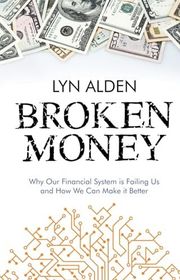
Broken Money
For readers who want cryptocurrency placed within a broader history of monetary technology. Its emphasis on settlement systems connects past constraints with present debates, though its favorable view of Bitcoin calls for comparison with alternative economic accounts.
What it's about
Lyn Alden examines the evolution of money through changes in technology, from early exchange systems to modern banking and digital networks. She connects monetary institutions and transaction systems with economic incentives, inequality, and the possibilities offered by Bitcoin.
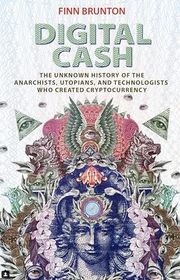
Digital Cash
For readers who want the intellectual and political history behind digital money experiments. Its attention to earlier utopian projects provides context missing from Bitcoin centered narratives, though the dense historical material offers little practical guidance for using cryptocurrency.
What it's about
Finn Brunton traces experiments in digital money through the technologists, activists, and utopians who pursued them. Their ambitions for privacy, autonomy, and transformed societies reveal an intellectual history of cryptocurrency that begins well before Bitcoin’s arrival.

For readers who want access to Bitcoin’s early discussions rather than another retrospective interpretation. The collected writings preserve the project’s original reasoning, though their fragmented context makes this a supplement to an introduction rather than a replacement.
What it's about
Phil Champagne collects writings attributed to Bitcoin creator Satoshi Nakamoto from the project's early development. The volume gathers explanations and discussions of Bitcoin's design and operation, preserving the online contributions through which its anonymous creator communicated.

For readers with a computing background who want a systematic foundation in cryptocurrency design. Its textbook structure covers security and incentives more carefully than popular introductions, though the technical demands and older examples make it a substantial commitment.
What it's about
This technical introduction explains how Bitcoin works and examines the broader design of cryptocurrencies. It covers cryptography, decentralized networks, mining, transaction security, privacy, and alternative systems, alongside questions about regulation and the technology's social implications.
Also recommended by
1 person Tai Lopez recommended this book
Tai Lopez
"Interesting bitcoin/crypto book. Put out by an Ivy League school. Princeton." - Tai Lopez
Tai Lopez's recommendation of this book

The Cryptopians
Idealism, Greed, Lies, and the Making of the First Big Cryptocurrency Craze
For readers who want reported history centered on Ethereum’s founders and internal conflicts. Its attention to people and organizational choices complicates abstract accounts of decentralization, though it is a business narrative rather than a technical guide.
What it's about
Laura Shin investigates the founding of Ethereum and the personalities who helped create it. Her account follows idealism, business ambition, and internal conflict as developers and entrepreneurs struggle to shape a new cryptocurrency network and its possibilities.
Also recommended by
1 person- Raoul Pal recommended this book
Raoul Pal
"Amazing book on the story of Ethereum." - Raoul Pal
Raoul Pal's recommendation of this book

An Altcoin Trader's Handbook
For readers interested in one trader’s experience of alternative cryptocurrency markets. Its candid discussion of mistakes adds context to the methods, though the strategies and market examples reflect a particular period and cannot establish repeatable future returns.
What it's about
Nik Patel combines a memoir of his cryptocurrency trading experiences with a practical manual. Accounts of early mistakes, market cycles, and setbacks lead into his approach to researching alternative coins and managing positions in volatile markets.
Sources
- 1
10 Best Cryptocurrency Investment Books for 2025
koinly.io
- 2
The 25 Best Books on Cryptocurrency of All Time
wealthfit.com
- 3
The 10 Best Cryptocurrency Books
financial-expert.co.uk
- 4
The 11 Best Cryptocurrency Books to Read in 2026
usethebitcoin.com
- 5
Cryptocurrency Books
goodreads.com
- 6
100 Best Cryptocurrency Books of All Time (Updated for 2026)
shortform.com
- 7
6 of the Best Crypto and Bitcoin Books in 2026
ledger.com
- 8
The Best Books on Cryptocurrency
fivebooks.com
- 9
What are the best crypto or blockchain books you have read? Best writing or resources?
reddit.com





Edited by
Software engineer whose passion for tracking book recommendations from podcasts inspired the creation of MRB.
Lead investor at 3one4 Capital whose startup expertise and love for books helped shape MRB and its growth.
Comments
Spotted a missing book, a wrong order or a mistake? Tell us and we'll fix this page.
We're a reading guide, not the author or publisher, so we can't send books or pass on messages.