
14 Best Computer Vision Books
The best computer vision books, ranked by how many expert sources recommend each one, with notes on prerequisites, practical projects, and where to start.
Our take
Computer vision turns images and video into information a machine can use, from recognizing an object to recovering the shape of a scene. These books suit programmers building their first image application, students taking a formal course, and engineers comparing methods for a demanding project. The main choice is between understanding the mathematics and getting working software onto a screen.
Computer Vision: Algorithms and Applications provides a broad foundation, while Foundations of Computer Vision connects image formation and geometry with learning methods. Multiple View Geometry in Computer Vision suits deeper work on cameras and 3D reconstruction. For practical study, Deep Learning for Vision Systems and Modern Computer Vision with PyTorch emphasize building models; the OpenCV book focuses on image and video tools. Expect older coding books to need dependency changes. Start with Szeliski for breadth, or Elgendy if you already write Python and want a practical route.
14 books · 8 sources · Last updated
As an Amazon Associate, we earn from qualifying purchases (at no extra cost to you).
How to choose from this list
Skip to the full rankingIf you want a broad foundation: Computer Vision → Foundations of Computer Vision
If you want to build neural image models: Deep Learning for Vision Systems → Modern Computer Vision with PyTorch
If you want Python image projects: Learning OpenCV 4 Computer Vision with Python 3
If you work on cameras and 3D: Multiple View Geometry in Computer Vision
If you need image-processing foundations: Digital Image Processing
The 14 books, ranked
Ranked by how many expert sources name each book. Ties go to the book more people recommend.
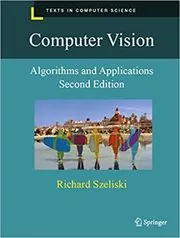
For students and practitioners seeking a broad reference across classical and learning approaches. It connects algorithms to applications particularly well, though readers need mathematical foundations and programming practice to make the most of it.
What it's about
Richard Szeliski surveys methods for analyzing and interpreting images, from image formation and feature matching to motion and three-dimensional reconstruction. Mathematical explanations and application examples support coursework and projects in computer vision.
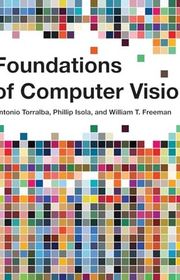
Foundations of Computer Vision
For students who want geometry, image formation, and learning explained within one course. Its integrated treatment offers a newer theoretical starting point, though the substantial mathematics makes it demanding for readers seeking immediate coding recipes.
What it's about
Antonio Torralba, Phillip Isola, and William T. Freeman explain how machines derive information from images. The textbook connects image formation, geometry, and learning, developing the concepts behind recognition, reconstruction, and other central computer vision tasks.
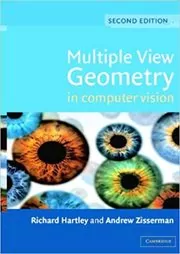
Multiple View Geometry in Computer Vision
For readers working on camera geometry and 3D reconstruction. Its focused mathematical treatment goes deeper than the broad surveys, but assumes comfort with linear algebra and offers little help with writing code.
What it's about
Richard Hartley and Andrew Zisserman explain how multiple images can reveal the structure of a scene. Projective geometry, camera models, and estimation algorithms provide the foundation for recovering three-dimensional information from photographs.
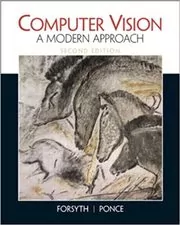
For students who want a traditional course spanning geometry and recognition. It provides a structured foundation with exercises, though its classical emphasis makes it less suitable as your only guide to current deep learning.
What it's about
David A. Forsyth and Jean Ponce introduce mathematical and computational methods for understanding images. Topics include camera models, image features, stereo vision, motion, segmentation, and tracking, with examples and exercises connecting theory to computer vision applications.
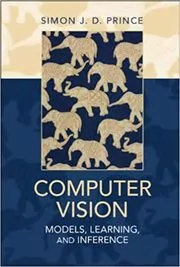
For readers who want probability to connect otherwise separate vision techniques. Its unified treatment of models and inference rewards careful study, though it takes more mathematical concentration than the project books.
What it's about
Simon J. D. Prince develops a probabilistic framework for computer vision, connecting models, learning, and inference. Foundations in probability and machine learning lead to applications involving geometry, shape, face recognition, tracking, and object recognition.
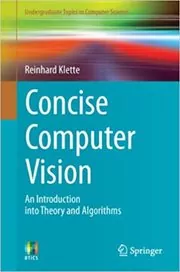
For students who prefer a compact mathematical introduction with exercises. Its selective coverage makes the foundations easier to navigate than larger surveys, though concise explanations still require effort and some mathematical confidence.
What it's about
Reinhard Klette introduces the mathematical foundations and algorithms of computer vision. Image analysis, segmentation, motion, camera calibration, stereo matching, and three-dimensional reconstruction are developed through explanations, programming exercises, and review questions.
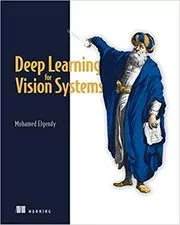
Deep Learning for Vision Systems
For Python programmers moving into neural networks for images. Its practical explanations make model building approachable, though readers seeking detailed geometric foundations or extensive mathematical derivations will need another book alongside it.
What it's about
Mohamed Elgendy teaches deep learning methods for interpreting and generating images. Python-based projects introduce neural networks, image classification, object detection, transfer learning, generative models, and visual embeddings, with explanations aimed at intermediate programmers.
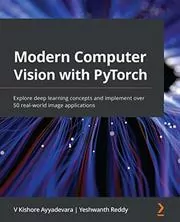
Modern Computer Vision with PyTorch
Explore Deep Learning Concepts and Implement Over 50 Real-World Image Applications
For Python users who learn through PyTorch implementations and varied projects. The range of applications helps build practical confidence, though this original edition needs software updates and predates some newer model families.
What it's about
V. Kishore Ayyadevara and Yeshwanth Reddy develop computer vision applications with PyTorch. Practical projects progress from neural networks and image classification to object detection, segmentation, pose estimation, generative models, and deploying trained systems.
For engineers who want theory connected to practical system design. Its attention to algorithmic limitations helps with choosing methods, though the breadth makes it a substantial textbook rather than a quick project guide.
What it's about
E. R. Davies explains computer vision principles alongside algorithms and practical design constraints. Image processing, classification, segmentation, and learning methods are connected to examples showing how vision systems operate under real-world conditions.
For engineers comparing feature detectors and descriptors for a particular task. Its organized survey helps assess robustness and computational cost, though it works better as a specialist reference than as a first course.
What it's about
Scott Krig compares feature detectors, descriptors, and other machine vision methods through a detailed taxonomy. The survey examines accuracy, efficiency, robustness, and invariance to help readers understand how methods work and suit different applications.
Digital Image Processing
For readers who need to understand what happens to pixels before tackling recognition. Its treatment of filtering and image transformations supplies useful foundations, though it is a mathematical image-processing text rather than a modern deep-learning guide.
What it's about
Rafael Gonzalez and Richard Woods introduce the concepts and methods of digital image processing. Fundamentals lead into restoration, segmentation, transforms, and related techniques, with examples, exercises, and computational projects connecting mathematical explanations with the practical analysis of digital images.
Learning OpenCV 4 Computer Vision with Python 3
Get to Grips with Tools, Techniques, and Algorithms for Computer Vision and Machine Learning
For Python programmers who want to build image and video applications with OpenCV. Its library-focused projects give a concrete starting point, though examples depend on older software versions and may need adjustments.
What it's about
Joseph Howse and Joe Minichino teach computer vision through OpenCV 4 and Python 3 projects. Image manipulation and video analysis lead into face recognition, object tracking, depth estimation, machine learning, and augmented reality.
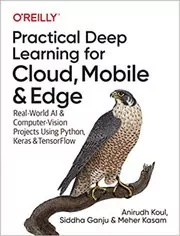
Practical Deep Learning for Cloud, Mobile, and Edge
Real-World AI & Computer-Vision Projects Using Python, Keras & TensorFlow
For developers who want to take image models beyond a notebook. Its deployment emphasis distinguishes it from the theory texts, though older frameworks and device instructions may need adaptation for current systems.
What it's about
Anirudh Koul, Siddha Ganju, and Meher Kasam guide readers from a deep learning idea to a working application. Projects cover training, tuning, and deploying computer vision models across cloud services, mobile devices, browsers, and edge hardware.
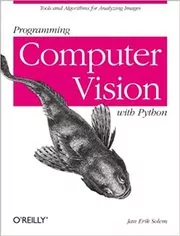
For programmers who want to connect classical vision algorithms to Python code. The examples make abstract methods tangible, though the older Python ecosystem means readers should expect to update dependencies and some syntax.
What it's about
Jan Erik Solem introduces computer vision algorithms through working Python examples. Object recognition, stereo imaging, three-dimensional reconstruction, and augmented reality are explained with code and exercises that connect the underlying theory to implementation.
Sources
- 1
The 10 Best Computer Vision Books
viso.ai
- 2
Top 23 must-read computer vision books
superannotate.com
- 3
6.S058 Course Materials
introtocv.github.io
- 4
Pls suggest some good modern computer vision books
reddit.com
- 5
Computer Vision Books
goodreads.com
- 6
Computer Vision (CSCI 5520G)
csgrad.science.uoit.ca
- 7
Computer Vision Resources
learnopencv.com
- 8
Intermediate level (text)books on computer vision?
reddit.com
Edited by
Software engineer whose passion for tracking book recommendations from podcasts inspired the creation of MRB.
Lead investor at 3one4 Capital whose startup expertise and love for books helped shape MRB and its growth.
Comments
Spotted a missing book, a wrong order or a mistake? Tell us and we'll fix this page.
We're a reading guide, not the author or publisher, so we can't send books or pass on messages.