
13 Best Computer Graphics Books
The best computer graphics books, ranked by how many expert sources recommend each one, with notes for beginners, students and experienced graphics programmers.
Our take
Computer graphics turns geometry, light and algorithms into images. Learning it can mean building a simple ray tracer, programming shaders or designing a rendering system that responds within a fraction of a second. The right book depends on your programming experience, your confidence with mathematics and whether you want to understand the concepts or implement a particular interface.
Computer Graphics from Scratch gives newcomers a manageable route through two working renderers. Fundamentals of Computer Graphics offers a broader mathematical introduction, while 3D Math Primer for Graphics and Game Development concentrates on the geometry behind the code. OpenGL Superbible and Computer Graphics Through OpenGL connect ideas with an API. Real-Time Rendering surveys techniques and their performance costs; Physically Based Rendering studies realistic image synthesis through a complete implementation. Game Engine Architecture places rendering within the larger software system.
Start with a foundational text, strengthen your mathematics where needed, then choose an implementation guide that matches the graphics work you want to do.
13 books · 10 sources · Last updated
As an Amazon Associate, we earn from qualifying purchases (at no extra cost to you).
How to choose from this list
Skip to the full rankingIf you're writing your first renderer: Computer Graphics from Scratch → Fundamentals of Computer Graphics
If you need stronger graphics mathematics: 3D Math Primer for Graphics and Game Development → Mathematics for 3D Game Programming and Computer Graphics
If you want hands-on OpenGL study: Computer Graphics Through OpenGL → OpenGL 4 Shading Language Cookbook
If you want realistic image synthesis: Physically Based Rendering
If you're building real-time systems: Real-Time Rendering → 3D Graphics Rendering Cookbook
If you need the wider engine context: Game Engine Architecture
The 13 books, ranked
Ranked by how many expert sources name each book. Ties go to the book more people recommend.

Real-Time Rendering
For graphics programmers who know the basics and need a wide survey of interactive rendering techniques. Its emphasis on visual results and computational tradeoffs supports design decisions, but the extensive reference format is demanding for beginners.
What it's about
Tomas Akenine-Möller and his coauthors examine techniques for producing interactive three-dimensional graphics. Discussions of rendering pipelines, geometry, lighting, textures, and shadows connect visual effects with computational costs, helping readers compare approaches when designing graphics systems that must respond quickly.
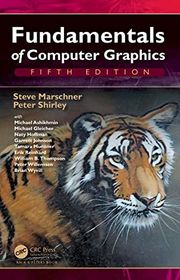
Fundamentals of Computer Graphics
For students who want a mathematically focused introduction before choosing a graphics specialty. Its coverage connects ray tracing, rasterization and geometry, but the varied contributed chapters can feel less consistent than the central introductory material.
What it's about
Steve Marschner, Peter Shirley and contributors introduce the mathematics and algorithms behind computer-generated images. Coverage includes transformations, ray tracing, rasterization, sampling, texture mapping and geometric representation, connecting the core ideas taught in an introductory graphics course.

For readers who want a broad, rigorous account of how graphics systems work. Its algorithms and mathematical reasoning support deeper study across techniques, but the scale and density make it demanding as a first introduction.
What it's about
John Hughes and his coauthors develop the mathematical and computational principles behind computer graphics. Algorithms, examples, and programming projects connect image creation, geometric representation, and rendering with implementation choices, giving readers tools for reasoning about graphics systems and their tradeoffs.
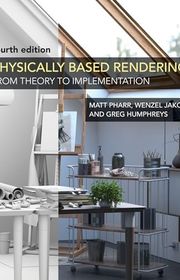
Physically Based Rendering
For programmers who want to understand realistic rendering by studying a complete implementation. Its integration of mathematical explanation with source code makes design choices visible, but the advanced material assumes strong programming and mathematical preparation.
What it's about
Matt Pharr, Wenzel Jakob and Greg Humphreys explain the theory and implementation of a photorealistic rendering system. Mathematical discussions and source code develop light transport, sampling and related algorithms, with the fourth edition adding GPU ray tracing coverage.
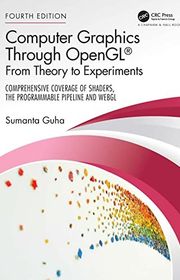
Computer Graphics Through OpenGL
For students who want graphics concepts reinforced through programming experiments. Its balance of theory and OpenGL exercises provides a structured practical course, but the substantial coverage and API-specific work require sustained study and coding time.
What it's about
Sumanta Guha introduces computer graphics through explanations and interactive programming exercises. Geometry, animation, modeling, lighting and texturing connect with OpenGL implementation, while later chapters explore curves, surfaces, transformations and the structure of graphics pipelines.

Game Engine Architecture
For programmers who want to understand where rendering fits within a complete game engine. Its connections across hardware, systems and engine technology provide useful context, but much of the substantial coverage extends beyond graphics alone.
What it's about
Jason Gregory's third edition explains the theory and practice behind game engine software, drawing on development experience at major studios. The book examines how engine systems fit together and the technical foundations needed to understand their architecture.

Mathematics for 3D Game Programming and Computer Graphics
For programmers ready to derive and apply the mathematics behind game graphics. Its detailed development of geometry and illumination supports implementation decisions, but the algebra and calculus require more patience than an introductory math primer.
What it's about
Eric Lengyel's third edition develops mathematics for game graphics, starting with vector geometry and linear algebra before advancing to illumination and visibility. Detailed derivations connect theoretical results with programming applications, supported by reviews of relevant calculus and trigonometry.

For programmers who want a sustained tutorial in OpenGL alongside reference material. Its examples connect graphics techniques with API use, but the focus on a particular interface makes it less portable than a principles-first textbook.
What it's about
Graham Sellers and his coauthors introduce OpenGL programming through tutorials and worked examples. Graphics pipelines, shaders, and rendering techniques connect the interface's capabilities with practical applications, while reference material and performance discussions support readers developing their own graphics programs.

3D Math Primer for Graphics and Game Development
For programmers who need geometric intuition before implementing three-dimensional graphics. Its treatment of vectors, coordinate systems and rotations connects mathematics with coding problems, but it is a foundation rather than a complete rendering course.
What it's about
Fletcher Dunn and Ian Parberry explain the mathematics used in three-dimensional graphics and games. Coordinate systems, vectors, matrices, rotations, and quaternions connect geometric ideas with practical programming problems, supported by examples that show how mathematical tools shape graphics applications.
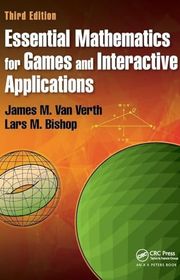
Essential Mathematics for Games and Interactive Applications
For programmers who want mathematics connected with animation, rendering and simulation. Its broad application coverage links formulas to engine behavior, but the range makes it a larger commitment than a compact introduction to vectors and matrices.
What it's about
James Van Verth and Lars Bishop explain mathematical representations and algorithms used in interactive graphics. Geometry, transformations, color, randomness, intersections and physical simulation connect theoretical foundations with the practical tasks of animating, rendering and simulating virtual worlds.
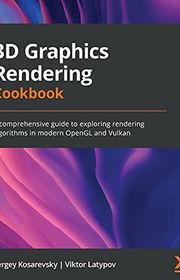
3D Graphics Rendering Cookbook
For experienced C++ developers who want to combine rendering techniques into a working framework. Its OpenGL and Vulkan recipes emphasize integration and performance, but they assume linear algebra and prior experience building custom graphics applications.
What it's about
Sergey Kosarevsky and Viktor Latypov develop a rendering framework through C++ recipes using OpenGL and Vulkan. Projects connect graphics techniques with engine construction, including physically based rendering, geometry handling, culling, large datasets and performance optimization.
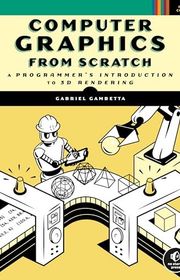
Computer Graphics from Scratch
For newcomers who know basic programming and want to build a renderer themselves. Its restrained mathematics and two working implementations make the fundamentals tangible, but the focus on rendering leaves other graphics specialties for later study.
What it's about
Gabriel Gambetta guides readers through building a ray tracer and a rasterizer, introducing the principles that turn three-dimensional scenes into images. The explanations use basic coding knowledge and high-school mathematics to develop shadows, reflections and viewpoint transformations.
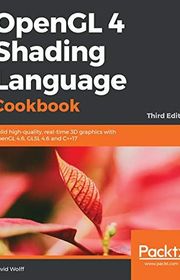
OpenGL 4 Shading Language Cookbook
For C++ graphics programmers who want practical GLSL techniques organized by task. Its recipes cover effects from lighting to compute shaders, but it assumes basic three-dimensional graphics knowledge and ties implementation details to OpenGL.
What it's about
David Wolff presents recipes for implementing graphics techniques with OpenGL and GLSL. Examples develop shader programs, lighting, textures, shadows, particles and compute shaders, combining background explanations with code for building real-time visual effects and rendering features.
Sources
- 1
Real-Time Rendering Graphics Books Page
realtimerendering.com
- 2
What are some good books on Computer Graphics?
haroldserrano.com
- 3
100 Best Computer Graphics Books of All Time
shortform.com
- 4
Computer Graphics Books
goodreads.com
- 5
Textbooks
pages.graphics.cs.wisc.edu
- 6
Give me the top 5 books that I must have
reddit.com
- 7
Graphics programming books
reddit.com
- 8
Advanced Computer Graphics - SS 2018
cgvr.cs.uni-bremen.de
- 9
Best Computer Graphics Books for Beginners (OpenGL, Vulkan…)
coderslegacy.com
- 10
CSCI 4471: Computer Graphics (Fall 2026)
cs.smu.ca









Edited by
Software engineer whose passion for tracking book recommendations from podcasts inspired the creation of MRB.
Lead investor at 3one4 Capital whose startup expertise and love for books helped shape MRB and its growth.
Comments
Spotted a missing book, a wrong order or a mistake? Tell us and we'll fix this page.
We're a reading guide, not the author or publisher, so we can't send books or pass on messages.