
16 Best Image Processing Books
The best image processing books, ranked by how many expert sources recommend each one, with notes for students, MATLAB and Python users, and working engineers.
Our take
Image processing covers the steps that make digital images more useful: representing them, reducing noise, improving contrast, separating regions, and measuring features. Some books develop the mathematics behind those operations. Others teach through code or focus on the scientific measurements and computer-vision systems that use the results. Your background and programming environment help determine the best starting point.
Gonzalez and Woods’s Digital Image Processing provides a broad foundation. Solomon and Breckon’s Fundamentals of Digital Image Processing uses MATLAB experiments, while Python Image Processing Cookbook offers task-based examples. The Image Processing Handbook is useful for quantitative analysis across applications. More specialized texts explore signal processing, feature extraction, and acquisition. Szeliski’s Computer Vision places image methods in a wider framework that includes reconstruction and recognition, so it serves a different purpose from a dedicated processing textbook.
Start with the foundations if the mathematics is unfamiliar, then choose an implementation book that matches the tools you use.
16 books · 9 sources · Last updated
As an Amazon Associate, we earn from qualifying purchases (at no extra cost to you).
How to choose from this list
Skip to the full rankingIf you want a mathematical foundation: Digital Image Processing
If you want MATLAB practice with Gonzalez and Solomon: Digital Image Processing Using MATLAB → Fundamentals of Digital Image Processing
If you want scientific Python examples: Image Processing and Acquisition using Python → Hands-On Image Processing with Python
If you want algorithm implementation: Algorithms for Image Processing and Computer Vision → Feature Extraction and Image Processing for Computer Vision
If you want a signal-processing treatment: Two-Dimensional Signal and Image Processing
If you want Szeliski’s broader vision reference: Computer Vision
The 16 books, ranked
Ranked by how many expert sources name each book. Ties go to the book more people recommend.

Digital Image Processing
For students wanting a systematic mathematical foundation before building image-analysis systems. Gonzalez and Woods connect the main processing stages in one course, though the breadth and exercises require more preparation than a recipe-based programming guide.
What it's about
Rafael Gonzalez and Richard Woods introduce the concepts and methods of digital image processing. Fundamentals lead into restoration, segmentation, transforms, and related techniques, with examples, exercises, and computational projects connecting mathematical explanations with the practical analysis of digital images.

For readers wanting to see how image processing fits into reconstruction, recognition, and complete vision systems. Szeliski provides a broad reference with application context, though it is not a dedicated course in low-level image processing alone.
What it's about
Richard Szeliski surveys methods for analyzing and interpreting images, from image formation and feature matching to motion and three-dimensional reconstruction. Mathematical explanations and application examples support coursework and projects in computer vision.

Digital Image Processing Using MATLAB
For MATLAB users who want established image-processing theory connected directly to working programs. The authors’ examples complement a general textbook, though learning the software alongside the mathematics can be demanding and toolbox access matters.
What it's about
Rafael Gonzalez, Richard Woods, and Steven Eddins connect digital image processing fundamentals with their implementation in MATLAB. Algorithms and worked examples show how mathematical concepts become software, giving readers practical ways to explore image processing methods using computational tools.

Fundamentals of Digital Image Processing
A Practical Approach with Examples in Matlab
For students who want computer experiments to reinforce each new concept. Solomon and Breckon connect methods with practical MATLAB work, though the emphasis on one environment is less convenient for readers committed to Python or another language.
What it's about
Chris Solomon and Toby Breckon teach image processing through MATLAB examples, exercises, and computer experiments. Topics progress from image representation and enhancement to transforms and automated classification, connecting the underlying concepts with applications drawn from science, medicine, and engineering.
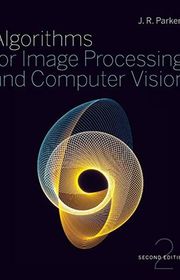
Algorithms for Image Processing and Computer Vision
For developers who want algorithms they can study and implement without first reading a full theoretical course. Parker’s practical organization supports specific tasks, though readers seeking unified mathematical foundations should pair it with a textbook.
What it's about
James Parker presents algorithms for image-processing and computer-vision tasks in a practical reference format. The book covers methods for analyzing images and developing applications, linking computational procedures with examples intended for programmers, engineers, scientists, and other technical readers.

For students who want a course connecting image formation with increasingly complex visual interpretation. Forsyth and Ponce develop a wider vision framework, though readers focused only on enhancement or restoration will find substantial material beyond their needs.
What it's about
David A. Forsyth and Jean Ponce introduce mathematical and computational methods for understanding images. Topics include camera models, image features, stereo vision, motion, segmentation, and tracking, with examples and exercises connecting theory to computer vision applications.
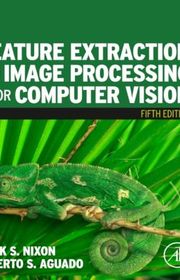
For readers ready to turn processed images into measurable features for vision systems. Nixon and Aguado connect derivations with implementations, though the specialized emphasis makes it more useful after learning basic filtering and segmentation.
What it's about
Mark Nixon and Alberto Aguado explain methods for extracting useful information from images, linking mathematical development with implementations. The fifth edition includes MATLAB and Python material, covering classical feature methods alongside newer approaches used in computer vision.
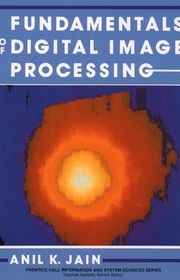
Fundamentals of Digital Image Processing
For readers comfortable with mathematics who want a signal-oriented foundation for image processing. Jain gives stochastic models substantial attention, though the older implementation context makes it a theory reference rather than a guide to current libraries.
What it's about
Anil Jain develops digital image processing from mathematical tools, image representation, and models of visual information. Topics include transforms, enhancement, reconstruction, coding, and stochastic methods, connecting algorithm development with the properties of images and signals.
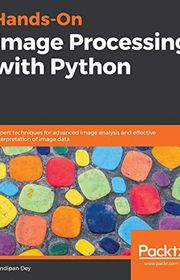
Hands-On Image Processing with Python
For readers who prefer a developing Python course to isolated cookbook entries. Dey moves from classical methods toward machine learning, though the broad scope leaves less room for mathematical derivation and library compatibility needs attention.
What it's about
Sandipan Dey develops image-processing methods through Python tools and examples, beginning with classical operations and extending into machine learning and deep learning. The book connects mathematical computations with tasks such as smoothing, enhancement, descriptors, and image analysis.
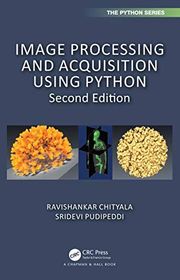
Image Processing and Acquisition using Python
For scientific users who need to understand how images are acquired as well as processed. Chityala and Pudipeddi connect imaging modalities with Python analysis, though the scientific emphasis is less direct for consumer-photography or recognition projects.
What it's about
Ravishankar Chityala and Sridevi Pudipeddi combine Python-based image analysis with an introduction to acquisition methods. The book covers filtering, segmentation, morphology, and measurement alongside imaging modalities such as microscopy, X-ray, CT, and MRI for scientific work.

For programmers wanting precise algorithm descriptions supported by derivations and implementations. Burger and Burge make experimentation central, though this is one volume of a series and assumes more groundwork than an introduction built around short recipes.
What it's about
Wilhelm Burger and Mark Burge explain core image processing algorithms through illustrated discussions and mathematical derivations. Topics include color, spectral techniques, geometric operations, and image comparison, with an emphasis on implementing and experimenting with methods to understand their practical behavior.

For Python programmers who want processing methods connected to larger vision projects. Solem’s examples give a practical route into geometric tasks, though the older code environment needs checking and the coverage extends well beyond image enhancement.
What it's about
Jan Erik Solem introduces computer vision algorithms through working Python examples. Object recognition, stereo imaging, three-dimensional reconstruction, and augmented reality are explained with code and exercises that connect the underlying theory to implementation.

The Image Processing Handbook
For scientists and engineers who need to measure and interpret images across applications. Russ and Neal offer broader quantitative reference coverage than a short tutorial, though the size makes selective consultation easier than a first course.
What it's about
John Russ and Brent Neal explain computer-based image processing through two-dimensional and three-dimensional imaging, algorithms, and quantitative analysis. Examples connect image storage, printing, feature measurement, and statistical methods with applications across different scales and scientific and technical disciplines.
Two-Dimensional Signal and Image Processing
For advanced undergraduates or graduate students who want image methods grounded in multidimensional signal processing. Lim provides a more specialized theoretical route than general vision books, though it assumes the mathematical preparation of an electrical-engineering course.
What it's about
Jae Lim presents the principles and applications of two-dimensional and multidimensional digital signal processing. Intended for advanced undergraduate and graduate study, the text connects signal representations and processing methods with the analysis and manipulation of digital images.

Digital Image Processing using MATLAB
ZERO to HERO Practical Approach with Source Code
For MATLAB beginners who prefer learning through source-code examples and a practical sequence. Its direct approach offers a quick route into experiments, though readers wanting substantial mathematical development will need a fuller textbook alongside it.
What it's about
Arsath Natheem introduces digital image processing through a practical MATLAB approach with source code. Explanations connect improving images for human interpretation with processing visual data for machines, placing these methods in application areas such as remote sensing, medicine, and industrial automation.

Python Image Processing Cookbook
Over 60 Recipes to Help You Perform Complex Image Processing and Computer Vision Tasks With Ease
For Python programmers who want individual tasks they can adapt into experiments. Dey’s recipe format makes targeted lookup convenient, though the mix of classical processing and deep learning is less cohesive than a sequential mathematical course.
What it's about
Sandipan Dey presents Python recipes for image processing and computer vision, combining classical methods with deep learning. Examples cover enhancement, restoration, segmentation, classification, object detection, and text recognition, connecting algorithms with practical tools for analyzing and extracting information from images.
Sources
- 1
Top 10 Image Processing Books to Read in 2023 | Best Image Processing Books
aihints.com
- 2
56 Best Image Processing Books of All Time
shortform.com
- 3
Recommended Reading
imatest.com
- 4
COMP60442: Computer Vision: Text Books and Electronic Resources
personalpages.manchester.ac.uk
- 5
Computer Vision Resources
learnopencv.com
- 6
Image Processing Books
goodreads.com
- 7
What is your favorite book on image processing?
reddit.com
- 8
Recommendation for image processing-analysis or computer vision book
reddit.com
- 9
Toby Breckon :: Computer Vision and Image Processing - Books
breckon.org


Edited by
Software engineer whose passion for tracking book recommendations from podcasts inspired the creation of MRB.
Lead investor at 3one4 Capital whose startup expertise and love for books helped shape MRB and its growth.
Comments
Spotted a missing book, a wrong order or a mistake? Tell us and we'll fix this page.
We're a reading guide, not the author or publisher, so we can't send books or pass on messages.