
10 Best Chinese History Books
The best Chinese history books, ranked by how many expert sources recommend each one, with notes on who they suit, from first surveys to focused studies.
Our take
Chinese history spans millennia, so the right starting book depends on both your period and your preferred scale. A broad survey provides a chronology and helps place dynasties, revolutions, and social changes in relation to one another. Memoirs, reporting, and focused studies then show experiences that a national narrative can only briefly describe. Several books here concentrate on the twentieth century, while others approach history through a city, a craft, or an influential text.
The Cambridge Illustrated History of China offers a broad introduction, and The Search for Modern China gives more sustained attention to the late imperial and modern periods. Wild Swans and Life and Death in Shanghai bring political upheaval into family and personal life. Every Step a Lotus examines material culture, while Factory Girls follows industrial change through migrant women. Start with Ebrey if you need the chronology, then choose a more focused book that matches your interests.
10 books · 8 sources · Last updated
As an Amazon Associate, we earn from qualifying purchases (at no extra cost to you).
How to choose from this list
Skip to the full rankingIf you're starting with the broad history: The Cambridge Illustrated History of China → The Search for Modern China
If you want personal accounts of twentieth-century upheaval: Wild Swans → Life and Death in Shanghai
If you want social change through individual lives: China in Ten Words → Factory Girls
If you want women's history and material culture: Every Step a Lotus
If you want a city-centered history: Shanghai
If you want to examine historical perspectives directly: The Art Of War → Red Star over China
The 10 books, ranked
Ranked by how many expert sources name each book. Ties go to the book more people recommend.

For readers who want twentieth-century upheaval made tangible through three generations of one family. Chang offers a more intimate entrance than a general survey, though this personal account reflects a particular family’s experiences rather than the whole country.
What it's about
Part family memoir and part twentieth-century history, Wild Swans follows Jung Chang, her mother, and her grandmother through war, revolution, and the Cultural Revolution. It turns private lives into a vivid portrait of modern China.
Also recommended by
3 people Hillary Clinton recommended this book
Hillary Clinton
"An inspiring tale of women who survived every kind of hardship, deprivation and political upheaval with their humanity intact." - Hillary Clinton
Hillary Clinton's recommendation of this book  Andrew Chen recommended this book
Andrew Chen
"It was incredibly important and formative. Must read." - Andrew Chen
Andrew Chen's recommendation of this book  Richard Branson recommended this book
Richard Branson
Richard Branson recommended this book on his "70 must-read books" blog post.
Richard Branson's recommendation of this book

The Search for Modern China
For readers ready for a substantial survey of China from the late imperial period onward. Spence connects political developments with social and cultural life, though the length and density demand more commitment than memoirs or introductory essays.
What it's about
Jonathan D. Spence traces the development of modern China from changes beginning in the early seventeenth century. His survey combines social and political history with an examination of Chinese culture and its relationship to political life.
Also recommended by
1 person Edward Norton recommended this book
Edward Norton
"The definitive book about modern Chinese history." - Edward Norton
Edward Norton's recommendation of this book

China in Ten Words
For readers interested in how language, memory, and social change connect in modern China. Yu Hua’s essays offer a more personal and ironic approach than a chronological history, though readers without background may need a broader survey alongside them.
What it's about
Yu Hua uses ten familiar Chinese words and phrases to examine his country's transformation. Personal recollections and social observations connect the Cultural Revolution with contemporary life, revealing tensions behind economic growth and the changing meaning of everyday language.

For readers who want industrial change understood through migrant women’s ambitions and working lives. Chang’s sustained reporting supplies a personal scale missing from national surveys, though its particular people and period cannot represent every factory or migrant experience.
What it's about
Leslie Chang follows two young women trying to advance beyond factory assembly lines in Dongguan. Their changing jobs, ambitions, and relationships illuminate migration from rural villages and the personal consequences of China's rapid industrial and social transformation.

Life and Death in Shanghai
For readers who want a firsthand account of imprisonment during the Cultural Revolution. Cheng offers close detail about endurance and resistance, though the trauma is severe and one person’s testimony cannot substitute for a wider political history.
What it's about
Nien Cheng recounts her imprisonment during China's Cultural Revolution after refusing to confess to accusations against her. The memoir describes years of solitary confinement, her resistance to interrogation, and her search for justice after release.
The Cambridge Illustrated History of China
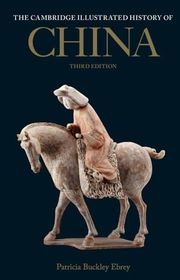
For newcomers who need a broad chronology before choosing a dynasty or theme. Ebrey combines political history with social and cultural context and illustrations, though the long time span leaves individual periods less detailed than specialist studies.
What it's about
Ebrey surveys Chinese history from its early origins into the modern period. Maps, illustrations, and discussions of social, cultural, and political developments connect major transitions with the institutions and practices that shaped everyday life across centuries.

The Art Of War
For readers who want to encounter an influential Chinese strategic text directly. Its compact observations reward close reading and discussion, though it teaches military judgment rather than narrating Chinese history, and the quality of context depends on the edition.
What it's about
Sun Tzu's military treatise examines planning, leadership, deception, terrain, and adapting to an opponent. Its thirteen chapters consider how preparation and strategic judgment can secure an advantage while limiting the costs and dangers of warfare.
Also recommended by
12 people Jocko Willink recommended this book
Jocko Willink
Jocko Willink covered this book in "Jocko Podcast" Ep. 23
Jocko Willink's recommendation of this book  Neil deGrasse Tyson recommended this book
Neil deGrasse Tyson
"To learn that the act of killing fellow humans can be raised to an art." - Neil deGrasse Tyson
Neil deGrasse Tyson's recommendation of this book  Marc Benioff recommended this book
Marc Benioff
"Served me well. [...] Advocates keeping one’s cool at all times." - Marc Benioff
Marc Benioff's recommendation of this book  Evan Spiegel recommended this book
Evan Spiegel
"After meeting Mark Zuckerberg, [Evan Spiegel] immediately bought every [Snapchat] employee a copy of 'The Art Of War'." - Business Insider
Evan Spiegel's recommendation of this book  Dave Camarillo recommended this book
Dave Camarillo
"Another [book] I have to mention." - Dave Camarillo
Dave Camarillo's recommendation of this book  Ryan Petersen recommended this book
Ryan Petersen
Ryan Petersen mentioned this book on Twitter.
Ryan Petersen's recommendation of this book +6
More recommendations
- Travis Kalanick
"It became [Travis Kalanick's bible]." - Mike Isaac
- Vlad Tenev
"I like the classics such as The Republic by Plato and The Art of War by Sun Tzu." - Vlad Tenev
- Fred Wilson
"Has to get onto my list." - Fred Wilson
- Lex Fridman
Lex Fridman mentioned this book on Instagram.
- Elon Musk
"I've read [this book] many times." - Elon Musk
- Patrick Bet-David
Patrick Bet-David recommended this book on his website.
- Travis Kalanick

For readers studying how the Communist movement presented itself during its rise. Snow’s access gives the book value as historical reporting, though his sympathetic perspective requires comparison with later scholarship rather than acceptance as a balanced retrospective.
What it's about
Edgar Snow reports on the Chinese Communist movement after visiting its territory and interviewing its leaders in the 1930s. His account combines personal encounters, revolutionary histories, and observations of the Red Army, introducing Western readers to an emerging political force.
Also recommended by
1 person Nelson Mandela recommended this book
Nelson Mandela
"In [this book] I saw that it was Mao’s determination and nontraditional thinking that led him to victory." - Nelson Mandela
Nelson Mandela's recommendation of this book

For readers interested in women’s history through objects and craft. Ko’s close attention to shoes adds material detail that broad political histories often omit, though this focused study works best with wider context about gender, class, and coercion.
What it's about
Dorothy Ko explores Chinese footbinding through shoes, craft practices, and women's experiences. Her illustrated study examines origins, symbolism, and regional styles, interpreting the practice within the domestic expectations and social constraints that shaped women's lives.

For readers who want a lively city history centered on foreign commerce, inequality, and political upheaval. Dong gives Shanghai more texture than national surveys can, though the emphasis on dramatic personalities and vice narrows the view of ordinary urban life.
What it's about
Stella Dong traces Shanghai's development from a trading settlement into a city of extraordinary wealth and inequality. Her history explores foreign commerce, opium, organized crime, and political upheaval across the turbulent century before Communist rule.
Sources
- 1
100 Best Chinese History Books of All Time
shortform.com
- 2
21 Chinese History Books by #Ownvoices Authors
bookriot.com
- 3
9 books about the culture and history of China
trafalgar.com
- 4
Chinese History Books
goodreads.com
- 5
Good history books on china?
reddit.com
- 6
The 11 best Chinese history books
thehelpfulpanda.com
- 7
The Best Books on Modern China
fivebooks.com
- 8
Best books on Chinese history?
reddit.com






Edited by
Software engineer whose passion for tracking book recommendations from podcasts inspired the creation of MRB.
Lead investor at 3one4 Capital whose startup expertise and love for books helped shape MRB and its growth.
Comments
Spotted a missing book, a wrong order or a mistake? Tell us and we'll fix this page.
We're a reading guide, not the author or publisher, so we can't send books or pass on messages.