
10 Best Chess Opening Books
The best chess opening books, ranked by how many expert sources recommend each one, with notes on who each suits, from beginners to tournament players.
Our take
Chess opening books do three different jobs: explain the purpose of early moves, survey the main openings, or recommend a repertoire you can play. Knowing which job you need helps you choose a useful book. Beginners usually gain more from understanding development, the center, and king safety than from reading long tables of variations.
Discovering Chess Openings starts with those principles, while Back to Basics offers a wider introduction to opening families. A repertoire book narrows your choices: A Strategic Chess Opening Repertoire for White begins with queen’s-pawn play, and Chess Openings for White, Explained builds around 1.e4. Modern Chess Openings is better treated as a reference once you understand the positions you are checking. Older explanations can still help, but exact lines change as analysis develops. Start with ideas, review the openings that arise in your own games, and then choose a repertoire that produces positions you enjoy playing.
10 books · 9 sources · Last updated
As an Amazon Associate, we earn from qualifying purchases (at no extra cost to you).
How to choose from this list
Skip to the full rankingIf you’re new to opening study: Discovering Chess Openings → Back to Basics
If you want a White repertoire with 1.d4: A Strategic Chess Opening Repertoire for White
If you want a White repertoire with 1.e4: Chess Openings for White, Explained
If you need a Black repertoire: Chess Openings for Black, Explained
If you already play the London: The Agile London System
If you need a broad reference: Modern Chess Openings
The 10 books, ranked
Ranked by how many expert sources name each book. Ties go to the book more people recommend.
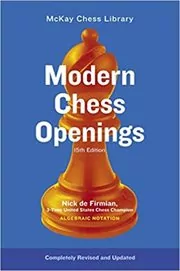
Modern Chess Openings
For experienced players who want a compact map of major variations. Its reference format supports checking lines after a game, though the dense tables provide less explanation than books designed to teach opening ideas.
What it's about
Nick de Firmian surveys standard chess openings in a reference for club and tournament players. Organized variations and analysis help readers compare lines of play, study opening theory, and prepare for the positions that arise early in a game.
Also recommended by
1 person Dan Heisman recommended this book
Dan Heisman
"Every intermediate can use a one-volume tome covering all the openings." - Dan Heisman
Dan Heisman's recommendation of this book
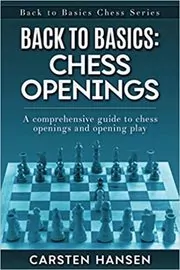
For improving players who want an overview before choosing openings to study deeply. Its breadth helps you compare different kinds of positions, though the treatment of each opening is too brief for a complete tournament repertoire.
What it's about
Carsten Hansen introduces chess openings through principles, pawn structures, gambits, traps, and repertoire building. An overview of major opening families combines examples and problems, helping readers understand early moves and reach playable middlegame positions.
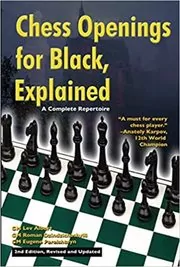
For players who want a connected set of defenses rather than separate books on every opening. Its explanatory repertoire makes preparation more focused, though the selected systems may not match every reader’s preferred positions.
What it's about
Lev Alburt and his collaborators present an opening repertoire for playing Black against White’s different first moves. The guide explains selected systems and their underlying ideas, giving tournament players a connected approach to preparing defenses and navigating early positions.
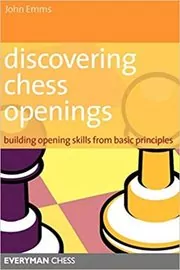
For beginners who want to understand why early moves matter. Its focus on principles provides a clearer foundation than variation tables, though players looking for a ready-made repertoire will need a more specific follow-up.
What it's about
John Emms explains chess openings through development, control of the center, and king safety. The guide helps players understand the purpose behind early moves and build opening skills through principles rather than relying solely on memorized variations.
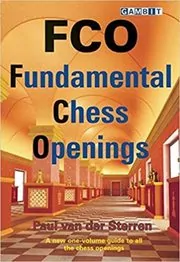
For club players who want to understand the character of many openings before specializing. Its explanations offer more orientation than a condensed reference, though the breadth leaves less room for deeply analyzed individual systems.
What it's about
Paul van der Sterren surveys chess openings through basic variations and explanations of the plans available to both players. The guide emphasizes the character and strategic ideas of each opening, giving club players a foundation for developing a repertoire.
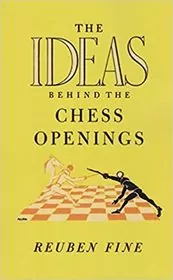
The Ideas Behind The Chess Openings
For readers who want a historical explanation of the plans behind opening moves. Its focus on ideas remains useful for orientation, though specific theory needs checking and editions differ in their notation.
What it's about
Reuben Fine explains the strategic ideas that give chess openings their purpose. His guide focuses on understanding the reasons behind moves and variations, helping players use a foundation of opening principles rather than relying entirely on memorized sequences.
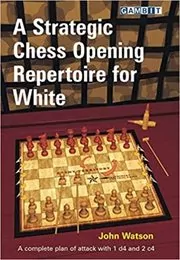
A Strategic Chess Opening Repertoire for White
A complete plan of attack with 1 d4 and 2 c4
For players choosing a strategic White repertoire based on queen’s-pawn openings. Its connected recommendations help turn general understanding into practical choices, though committing to the repertoire still means studying variations and move orders.
What it's about
John Watson presents a White opening repertoire designed around strategic understanding and flexible development. His selected lines address major defenses while emphasizing pawn structures, move orders, and the plans behind the moves rather than memorization alone.
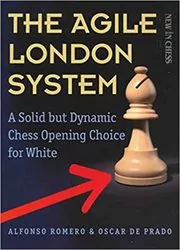
The Agile London System
For players who have chosen the London System and want more than a basic setup. Its games and exercises connect recurring plans with tactics, though its narrow repertoire focus is less useful for exploring other openings.
What it's about
Alfonso Romero Holmes and Oscar de Prado present the London System as a flexible opening choice for White. Illustrative games and exercises explain typical plans, tactics, and attacking options, drawing on historical material and examples from grandmaster play.
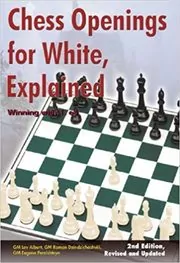
For players who want a White repertoire built around 1.e4 with explanations of the resulting plans. Its connected choices reduce the work of selecting lines, though the recommendations commit you to the authors’ preferred systems.
What it's about
Lev Alburt and his collaborators build a White opening repertoire around 1.e4. Explanations of systems against Black’s major defenses emphasize the plans behind the moves, providing tournament players with a practical framework for beginning their games.
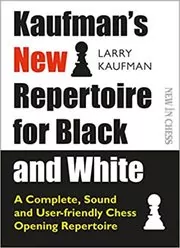
Kaufman's New Repertoire for Black and White
A Complete, Sound and User-Friendly Chess Opening Repertoire
For stronger players who want coordinated repertoires for both colors. Its analysis gives concrete choices rather than a general survey, though the detail demands serious study and readers should check critical lines against newer analysis.
What it's about
Larry Kaufman offers opening repertoires for both colors, using engine analysis to select lines with practical value against human opponents. This volume introduces a White repertoire based on 1.e4 and revises his recommendations for Black.
Sources
- 1
Chess Opening Books: 10 of the Best
uscfsales.com
- 2
7 Best Chess Opening Books: Find Your Next Read
chessdoctrine.com
- 3
Chess Opening Books
goodreads.com
- 4
Best Chess Opening Books in 2026: What’s Worth Reading and What Isn’t
discusschess.com
- 5
Best Opening Theory Book
reddit.com
- 6
Good Chess Openings Books For Beginners and Beyond
chess.com
- 7
New to chess booklist
englishchess.org.uk
- 8
Best Chess Books on Openings
thechessadvisor.com
- 9
3 Best Chess Opening Books (2025) - Which Should You Read?
ereads.com
Edited by
Software engineer whose passion for tracking book recommendations from podcasts inspired the creation of MRB.
Lead investor at 3one4 Capital whose startup expertise and love for books helped shape MRB and its growth.
Comments
Spotted a missing book, a wrong order or a mistake? Tell us and we'll fix this page.
We're a reading guide, not the author or publisher, so we can't send books or pass on messages.