
12 Best Carl Sagan Books
The best Carl Sagan books, ranked by expert-source recommendations, with notes for readers choosing astronomy, skepticism, evolution and science fiction.
Our take
Carl Sagan’s books connect scientific discovery with questions about how people think and what kind of future they might create. Astronomy is central, but his writing also reaches into evolution, public life, religion and fiction. Some books offer a broad tour; others follow a single subject or gather short reflections. Their scientific details reflect their time, while their questions still invite discussion.
Cosmos gives the widest introduction to his interests. Pale Blue Dot: A Vision of the Human Future in Space places planetary exploration beside questions of responsibility, and The Demon-Haunted World: Science as a Candle in the Dark focuses on evaluating claims. Contact: A Novel gives evidence and belief a fictional setting. Written with Ann Druyan, Shadows of Forgotten Ancestors explores human evolution, while Comet follows one astronomical subject in detail. Murmurs of Earth documents the creation of Voyager’s interstellar record.
Begin with Cosmos for range, or choose The Demon-Haunted World: Science as a Candle in the Dark if critical thinking interests you most.
12 books · 8 sources · Last updated
As an Amazon Associate, we earn from qualifying purchases (at no extra cost to you).
Reading Carl Sagan in order? See all Carl Sagan books in order
How to choose from this list
Skip to the full rankingIf you want a broad introduction: Cosmos → Pale Blue Dot: A Vision of the Human Future in Space
If you want to question claims more carefully: The Demon-Haunted World: Science as a Candle in the Dark → Broca's Brain: Reflections on the Romance of Science
If you want science through fiction: Contact: A Novel
If you want Sagan’s ideas on evolution: The Dragons of Eden: Speculations on the Evolution of Human Intelligence → Shadows of Forgotten Ancestors
If you want science, belief and personal reflection: The Varieties of Scientific Experience → Billions & Billions: Thoughts on Life and Death at the Brink of the Millennium
If you want the early search for life beyond Earth: The Cosmic Connection → Murmurs of Earth
The 12 books, ranked
Ranked by how many expert sources name each book. Ties go to the book more people recommend.
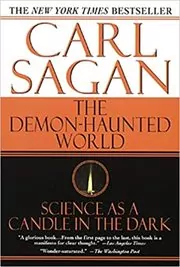
For readers who want practical habits for questioning claims. Its examples connect skepticism with everyday judgment more directly than the astronomy books, but the US-centered controversies reflect the 1990s and the argument sometimes repeats its themes.
What it's about
The Demon-Haunted World is Sagan’s plainspoken defense of science and critical thinking. Using examples from UFO claims to faith healing, he shows how skepticism and a simple “baloney detection kit” can help us tell the difference between evidence and comforting illusion.
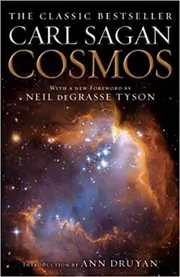
Cosmos
For newcomers who want Sagan’s broadest invitation into science. Its blend of astronomy, history and human perspective offers more range than the focused books, but discoveries since publication have changed parts of the scientific picture.
What it's about
Cosmos takes readers from the birth of stars and planets to the rise of life on Earth. Sagan blends astronomy, history, and philosophy into an accessible story about how we came to understand the universe and our small place within it.
Also recommended by
2 people Richard Branson recommended this book
Richard Branson
Richard Branson recommended this book on his "70 must-read books" blog post.
Richard Branson's recommendation of this book  Bill Nye recommended this book
Bill Nye
"The story of my other hero, Carl Sagan. The other guy who inspired me to do what I do now." - Bill Nye
Bill Nye's recommendation of this book
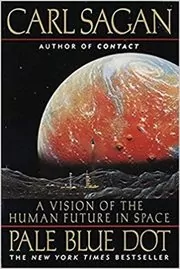
For readers who want planetary exploration connected with humanity’s future. Its outward-looking perspective develops the ethical questions beyond a basic astronomy survey, but its mission context and forecasts belong to an earlier stage of space exploration.
What it's about
Pale Blue Dot looks outward from the famous photograph of Earth as a tiny speck in space. Sagan recounts the story of planetary exploration and argues that seeing our world from afar changes how we think about war, ecology, and our shared future.
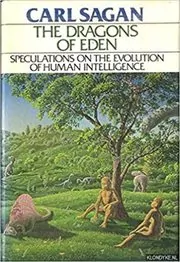
For readers interested in how Sagan connected evolution with the human mind. Its cross-disciplinary speculation is more exploratory than a standard astronomy introduction, but several models of brain evolution are dated and need comparison with modern neuroscience.
What it's about
The Dragons of Eden explores how human intelligence evolved, weaving together astronomy, biology, anthropology, and computer science. Sagan looks at brains from reptiles to primates and reflects on what our mental history suggests about dreams, language, and the future of our species.
Also recommended by
1 person Patrick O'Shaughnessy recommended this book
Patrick O'Shaughnessy
"I love to read about human evolution because it reminds me how slow our biology changes." - Patrick O'Shaughnessy
Patrick O'Shaughnessy's recommendation of this book
For readers who want scientific questions explored through fiction. Its first-contact story gives politics, belief and evidence a human setting, but the extended discussions and international negotiations move more slowly than an action-centered science-fiction adventure.
What it's about
Contact follows radio astronomer Ellie Arroway, who helps detect a message from an alien civilization. As nations struggle over how to respond and whether to build a mysterious machine, Ellie wrestles with politics, faith, and what genuine contact might mean.
For readers who want Sagan’s lectures on religion, cosmic perspective and evidence. Its direct voice gives these questions a different rhythm from the essay collections, but the 1985 lectures reflect their original scientific and cultural moment.
What it's about
The Varieties of Scientific Experience presents Sagan’s talks on science and religion, adapted from his Gifford Lectures. He examines ideas about God, the origin of the universe, and meaning in a vast cosmos, inviting readers to see awe through a scientific lens.
For readers who want Sagan’s scientific outlook applied to public questions and mortality. Its short essays offer a more personal encounter than the astronomy books, but the late-century debates and changing topics make it less cohesive than a sustained argument.
What it's about
Billions & Billions gathers Sagan’s later essays on science, the environment, and public life. Written during his final illness, the pieces range from climate change and planetary ethics to personal reflections on mortality and what it means to leave a livable world behind.
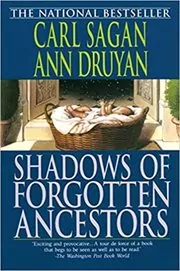
Shadows of Forgotten Ancestors
For readers interested in humans as part of a longer animal history. Written with Ann Druyan, it develops evolutionary questions more fully than Sagan’s astronomy surveys, but the wide-ranging interpretation reflects the research and debates of its publication period.
What it's about
Shadows of Forgotten Ancestors, written with Ann Druyan, traces the evolution of life from single cells to modern humans. By comparing us with other animals, the book probes the biological roots of traits like violence, love, language, and morality.
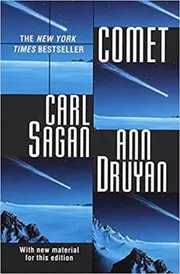
Comet
For readers who want one astronomical subject explored through both science and cultural history. Written with Ann Druyan, its focused account offers more detail than the general surveys, but later missions have substantially expanded knowledge of comets.
What it's about
Comet follows these icy wanderers from ancient omens to modern science. Sagan and Ann Druyan explain what comets are made of, how they move, and how encounters with them have shaped planets, inspired myths, and occasionally threatened Earth.
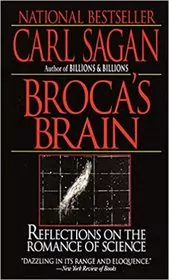
For readers who enjoy moving between scientific curiosity and criticism of doubtful claims. Its essays give a flexible introduction to Sagan’s interests, but the varied topics and older scientific context make it less systematic than his later skepticism book.
What it's about
Broca’s Brain is a collection of essays on science, pseudoscience, and the human mind. Sparked by Sagan’s visit to the preserved brain of neurologist Paul Broca, it ranges from relativity and time travel to astrology, UFOs, and what counts as good evidence.
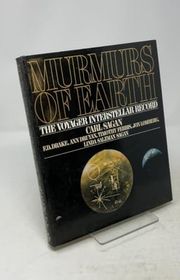
Murmurs of Earth
For readers who want the story behind Voyager’s attempt to represent Earth. Its collaborative account makes a specific scientific and cultural project concrete, but it is a historical record of the selection process rather than a broad astronomy introduction.
What it's about
Carl Sagan and fellow members of the Voyager record team explain the creation of the spacecraft’s interstellar message. They discuss the selection of sounds, music, images and greetings intended to represent Earth and its inhabitants to possible distant listeners.
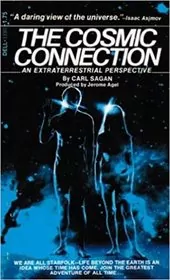
For readers interested in Sagan’s earlier thinking about extraterrestrial life and planetary exploration. Its essays reveal an emerging vision later developed in Cosmos, but the scientific details and space-program context require a historical reading.
What it's about
The Cosmic Connection collects essays that link everyday life on Earth to the wider universe. Sagan writes about planetary exploration, the search for extraterrestrial intelligence, and humanity’s long fascination with the stars, arguing that our future is bound up with the cosmos around us.
Sources
- 1
Carl Sagan Books
hastyreader.com
- 2
10 Best Carl Sagan Books
ereads.com
- 3
Books
carlsagan.com
- 4
Books by Carl Sagan
fivebooks.com
- 5
Books by Carl Sagan
goodreads.com
- 6
Best Carl Sagan Book to Start With
bookreviewguide.com
- 7
Best Sagan Book
reddit.com
- 8
Good morning. Which Carl Sagan books do you recommend? Thanks.
reddit.com









Edited by
Software engineer whose passion for tracking book recommendations from podcasts inspired the creation of MRB.
Lead investor at 3one4 Capital whose startup expertise and love for books helped shape MRB and its growth.
Comments
Spotted a missing book, a wrong order or a mistake? Tell us and we'll fix this page.
We're a reading guide, not the author or publisher, so we can't send books or pass on messages.