
12 Best Space Books
The best space books, ranked by how many expert sources recommend each, with notes for readers choosing astronaut memoirs, popular science, and fiction.
Our take
Space books can take you inside a spacecraft, explain the universe, or imagine lives beyond Earth. Astronaut memoirs concentrate on training, teamwork, and the experience of flight. Popular science asks how planets, stars, space, and time fit together. Fiction can explore those questions through survival puzzles, alien encounters, galactic politics, or comedy. The most useful starting point depends on which kind of journey you want.
Carrying the Fire offers a personal account of early spaceflight, while Packing for Mars investigates the practical difficulties of sending human bodies into space. Cosmos connects astronomy with the history of scientific curiosity, and A Brief History of Time turns toward cosmology. For fiction, The Martian emphasizes resourcefulness, Dune builds a political and ecological world, and The Hitchhiker’s Guide to the Galaxy treats the universe as an absurd place. Start with a memoir for lived experience, a science book for explanation, or a novel for imaginative exploration.
12 books · 5 sources · Last updated
As an Amazon Associate, we earn from qualifying purchases (at no extra cost to you).
How to choose from this list
Skip to the full rankingIf you want real astronaut experiences: Carrying the Fire → An Astronaut's Guide to Life on Earth
If you want the practical side of spaceflight: Packing for Mars
If you want to understand the universe: Cosmos → A Brief History of Time
If you want science-driven adventures: The Martian → Project Hail Mary
If you want galactic societies: Dune → Foundation
If you want comic space travel: The Hitchhiker's Guide to the Galaxy
The 12 books, ranked
Ranked by how many expert sources name each book. Ties go to the book more people recommend.

For readers who enjoy technical problem-solving and an isolated character refusing to give up. The practical puzzles give the survival story momentum, though the detailed calculations and persistent humor can outweigh deeper emotional exploration.
What it's about
Astronaut Mark Watney is stranded on Mars after a mission accident leaves him presumed dead and completely alone. With limited supplies and no easy way to contact Earth, he uses botany, engineering, and dark humor to improvise a way to stay alive long enough for rescue.
Also recommended by
7 people Ev Williams recommended this book
Ev Williams
"What’s great about this adventure—which I find rare in pop culture—is the celebration of the mind, invention, and science." - Ev Williams
Ev Williams's recommendation of this book  Noah Kagan recommended this book
Noah Kagan
Noah Kagan recommended this book in the "Tools of Titans" book.
Noah Kagan's recommendation of this book  Chris Sacca recommended this book
Chris Sacca
"A fantastic read. The best." - Chris Sacca
Chris Sacca's recommendation of this book  Matt Ridley recommended this book
Matt Ridley
"I loved the fact that the hero never once implies that it’s courage, spirit and faith that saves him [...] just lots of practical tinkering and problem-solving: Science the crap out of it." - Matt Ridley
Matt Ridley's recommendation of this book  Max Levchin recommended this book
Max Levchin
Max Levchin recommended this book on LinkedIn.
Max Levchin's recommendation of this book  Christopher Paolini recommended this book
Christopher Paolini
"Enjoyed the book." - Christopher Paolini
Christopher Paolini's recommendation of this book +1
More recommendations
- Tom Hanks
"[The author's] masterpiece!" - Tom Hanks
- Tom Hanks
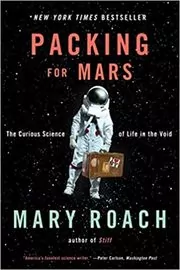
For readers curious about the awkward human realities behind spaceflight. Roach makes research and preparation approachable through unusual questions, though bodily functions and practical experiments receive more attention than mission history or astronomy.
What it's about
Roach looks at the unglamorous side of space travel, from zero gravity sickness to toilets, isolation, and crash tests. It is a funny, deeply reported tour of what the human body can, and cannot, handle off Earth.
Also recommended by
1 person Jon Stewart recommended this book
Jon Stewart
"Hilarious." - Jon Stewart
Jon Stewart's recommendation of this book

Carrying the Fire
For readers who want an astronaut’s reflective account of training and early spaceflight. Collins combines technical experience with personal observation, though the focus on his own missions provides less coverage of the wider space program.
What it's about
Michael Collins recounts the training and spaceflights that brought him from test piloting to Gemini 10 and Apollo 11. Personal observations of colleagues, spacecraft, and Earth combine technical detail with the tensions, humor, and emotions of early space exploration.
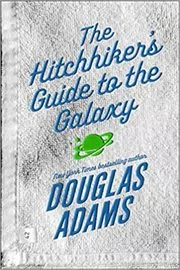
For readers who want space travel turned into absurd comedy rather than a solemn exploration narrative. The jokes and digressions make the universe feel delightfully unpredictable, though anyone seeking consistent science or a tightly controlled plot may struggle.
What it's about
Seconds before Earth is demolished to make way for a hyperspace bypass, bewildered everyman Arthur Dent is whisked into deep space by his friend Ford Prefect and the starship Heart of Gold, stumbling into a funny tour of an indifferent universe.
Also recommended by
10 people Elon Musk recommended this book
Elon Musk
"A book of philosophy disguised as a silly humor book." - Elon Musk
Elon Musk's recommendation of this book  Shah Rukh Khan recommended this book
Shah Rukh Khan
"I looked forward to books by [this author] when he was alive." - Shah Rukh Khan
Shah Rukh Khan's recommendation of this book  Naval Ravikant recommended this book
Naval Ravikant
"Classic. I love [this book]." - Naval Ravikant
Naval Ravikant's recommendation of this book  Seth Rogen recommended this book
Seth Rogen
"I love [this book]." - Seth Rogen
Seth Rogen's recommendation of this book  Richard Branson recommended this book
Richard Branson
Richard Branson recommended this book on his "70 must-read books" blog post.
Richard Branson's recommendation of this book  Tim Ferriss recommended this book
Tim Ferriss
"If 'Fear and Loathing in Las Vegas' and 'Star Wars' had a love-child, it would read something like this." - Tim Ferriss
Tim Ferriss's recommendation of this book +4
More recommendations
- Evan Goldberg
Evan Goldberg mentioned this book on "The Tim Ferriss Show" podcast.
- Sahil Lavingia
Sahil Lavingia recommended this book on Notion.
- Jack Edwards
"A bit silly but also good fun to read." - Jack Edwards
- Zack D'Aleo
"SciFi umoristico. Inchini ad Adams il sommo re del no sense." - Zac D'Aleo
- Evan Goldberg
Cosmos
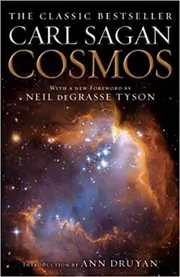
For readers who want astronomy connected to the history of discovery and humanity’s place in the universe. Sagan makes the broad questions inviting, though some scientific details reflect the period when the book was written.
What it's about
Cosmos takes readers from the birth of stars and planets to the rise of life on Earth. Sagan blends astronomy, history, and philosophy into an accessible story about how we came to understand the universe and our small place within it.
Also recommended by
2 people- Richard Branson recommended this book
Richard Branson
Richard Branson recommended this book on his "70 must-read books" blog post.
Richard Branson's recommendation of this book  Bill Nye recommended this book
Bill Nye
"The story of my other hero, Carl Sagan. The other guy who inspired me to do what I do now." - Bill Nye
Bill Nye's recommendation of this book

For readers drawn to mysterious alien intelligence and the place of humanity in a larger universe. The novel connects practical mission details to larger questions, though its deliberate pacing and enigmatic ending resist a tidy explanation.
What it's about
From a prehistoric encounter with a mysterious monolith to a crewed mission to Jupiter controlled by the HAL 9000 computer, this novel traces key steps in human evolution. When HAL begins to malfunction, astronaut Dave Bowman must survive—and face whatever intelligence planted the monoliths.
Also recommended by
1 person Lex Fridman recommended this book
Lex Fridman
Lex Fridman mentioned this book on Instagram.
Lex Fridman's recommendation of this book
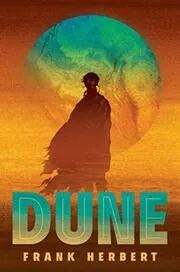
For readers who want a planet’s ecology intertwined with political power, religion, and long-term strategy. The dense setting rewards immersion, though it offers less direct space travel and a steeper introduction than a straightforward adventure.
What it's about
On the desert planet Arrakis, young Paul Atreides must survive betrayal, master the lethal ecology of the sandworms, and lead the Fremen in a struggle over the spice melange, a drug that underpins galactic power, prophecy, and trade.
Also recommended by
4 people PewDiePie recommended this book
PewDiePie
"A badass space adventure." - PewDiePie
PewDiePie's recommendation of this book  Ryan Shea recommended this book
Ryan Shea
Ryan Shea recommended this book on his website.
Ryan Shea's recommendation of this book  Zack D'Aleo recommended this book
Zack D'Aleo
"Ti dicono che è uno Sci-fi. Mentono. È un fantasy profetico. È tipo la Bibbia." - Zac D'Aleo
Zack D'Aleo's recommendation of this book  Paul Krugman recommended this book
Paul Krugman
"As a teenager, I was a total Dune fanatic." - Paul Krugman
Paul Krugman's recommendation of this book

Project Hail Mary
For readers who want another science-driven survival puzzle with a larger mystery than The Martian. The unfolding discoveries sustain the adventure, though frequent technical explanations and a consistently jokey voice may not suit every reader.
What it's about
Ryland Grace wakes up alone on a spacecraft with no memory of who he is or why he is there. As he pieces together his past and the crisis threatening Earth’s sun, he must solve a staggering scientific mystery, and he may not be the only one fighting to survive.
Also recommended by
3 people Glenn Beck recommended this book
Glenn Beck
"Great." - Glenn Beck
Glenn Beck's recommendation of this book  Jason Calacanis recommended this book
Jason Calacanis
"It's really great." - Jason Calacanis
Jason Calacanis's recommendation of this book - Ryan Shea recommended this book
Ryan Shea
Ryan Shea recommended this book on his website.
Ryan Shea's recommendation of this book

A Brief History of Time
For readers who want a compact introduction to the big questions of cosmology. Hawking connects space, time, and black holes conceptually, though the lack of equations does not make every argument easy to follow.
What it's about
Stephen Hawking introduces questions about the universe's beginning, its possible fate, and the nature of time. He explains black holes, relativity, and quantum ideas for general readers, connecting familiar physical concepts with the puzzles of cosmology.
Also recommended by
2 people- Richard Branson recommended this book
Richard Branson
Richard Branson recommended this book on his "70 must-read books" blog post.
Richard Branson's recommendation of this book  James Clear recommended this book
James Clear
"[One of] the 10 best nonfiction books of all-time." - James Clear
James Clear's recommendation of this book

An Astronaut's Guide to Life on Earth
What Going to Space Taught Me About Ingenuity, Determination, and Being Prepared for Anything
For readers interested in how an astronaut prepares, works with others, and handles uncertainty. Hadfield turns professional experience into accessible lessons, though the personal-development focus shares space with the account of spaceflight itself.
What it's about
Drawing on decades as a test pilot and astronaut, Chris Hadfield shares how he chased an impossible dream and what spaceflight taught him about preparation, teamwork, risk and perspective, turning behind-the-scenes stories into practical lessons for everyday life.
Also recommended by
1 person Satya Nadella recommended this book
Satya Nadella
"Great read!" - Satya Nadella
Satya Nadella's recommendation of this book
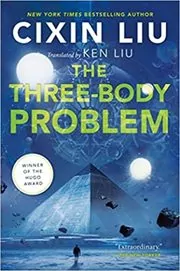
For readers who want first contact approached through scientific puzzles and a different historical perspective. The expanding implications reward attention to ideas, though the technical explanations and distant characterizations can make the opening challenging.
What it's about
During China's Cultural Revolution, astrophysicist Ye Wenjie secretly contacts the unstable world of Trisolaris. Decades later, nanomaterials researcher Wang Miao uncovers a deadly conspiracy through a baffling VR game and a global breakdown of fundamental physics.
Also recommended by
1 person Thomas Frank recommended this book
Thomas Frank
"Haven’t tore through a novel like that in quite a while. I couldn’t put it down. Highly recommended if you like sci-fi." - Thomas Frank
Thomas Frank's recommendation of this book

For readers interested in a civilization’s future shaped by knowledge, institutions, and political pressure. The linked crises offer an ideas-driven view of a galactic empire, though the episodic structure gives individual characters less room to develop.
What it's about
Hari Seldon's science of psychohistory predicts the Galactic Empire's collapse. He establishes a Foundation on distant Terminus to preserve knowledge and shorten the coming dark age, leaving successive generations to face crises involving religion, trade and political power.
Sources




Edited by
Software engineer whose passion for tracking book recommendations from podcasts inspired the creation of MRB.
Lead investor at 3one4 Capital whose startup expertise and love for books helped shape MRB and its growth.
Comments
Spotted a missing book, a wrong order or a mistake? Tell us and we'll fix this page.
We're a reading guide, not the author or publisher, so we can't send books or pass on messages.