
13 Best Calisthenics Books
The best calisthenics books, ranked by how many expert sources recommend each one, with guidance for beginners, home workouts and advanced strength skills.
Our take
Calisthenics books range from collections of short home workouts to detailed manuals on bodyweight strength and gymnastics skills. Some give you a schedule to follow. Others explain how exercises become harder and how to organize practice around particular goals. Choosing between those approaches matters more than choosing the book with the most demanding move on its cover.
Get Strong and Bodyweight Strength Training offer defined programs for readers who want structure. Complete Calisthenics provides a broader collection of exercises and progressions, while Overcoming Gravity spends more time on the reasoning behind a routine. 100 No-Equipment Workouts Vol. 1 emphasizes variety. If bar skills are your main interest, Raising the Bar gives that narrower subject its own space.
Start with a book that matches both your experience and the way you like to learn. A clear introductory plan is often easier to use than a large reference full of skills you are not yet working toward.
13 books · 9 sources · Last updated
As an Amazon Associate, we earn from qualifying purchases (at no extra cost to you).
How to choose from this list
Skip to the full rankingIf you want a defined beginner plan: Bodyweight Strength Training → Get Strong
If you want a broad exercise reference: Complete Calisthenics
If you want to design your own routine: Overcoming Gravity
If you want varied home workouts: 100 No-Equipment Workouts Vol. 1 → You Are Your Own Gym
If you want bar-focused skills: Raising the Bar → Street Workout
If you want to understand the muscles involved: Bodyweight Strength Training Anatomy
The 13 books, ranked
Ranked by how many expert sources name each book. Ties go to the book more people recommend.

For readers ready to understand programming rather than follow a fixed schedule. Its systematic treatment helps connect individual skills with a complete routine, though the technical detail makes it a demanding first fitness book.
What it's about
Steven Low explains how to build gymnastics and bodyweight strength routines around individual goals. Exercise progressions, physiology, programming, and recovery principles connect the mechanics of particular skills with the larger task of organizing training and monitoring progress.

For readers who want a broad reference spanning basic exercises and advanced skills. Its illustrated progressions make it useful to revisit as goals change, though the amount of material can overwhelm someone who simply wants a first weekly routine.
What it's about
Ashley Kalym explains bodyweight training from basic movements to advanced holds and strength skills. Exercise progressions, training programs, and discussions of nutrition, recovery, mobility, and goal setting help readers understand how to organize and develop their own practice.

Convict Conditioning
How to Bust Free of All Weakness-Using the Lost Secrets of Supreme Survival Strength
For readers who like a small set of movements developed through clear steps. Its minimalist structure makes progression easy to follow, though the prison-themed presentation and rigid exercise ladders will not appeal to every learner.
What it's about
Paul Wade presents a progressive bodyweight strength program built around six movements, including pushups, squats, and pullups. Exercises advance from simpler variations toward demanding skills, with guidance on technique, training routines, and measuring progress.
Also recommended by
1 person Naval Ravikant recommended this book
Naval Ravikant
"Bought the book, will try it." - Naval Ravikant
Naval Ravikant's recommendation of this book

For readers who want a defined training plan instead of designing workouts from scratch. Its phased sixteen-week structure makes the sequence clear, though the fixed format offers less flexibility than a reference built around individual skill goals.
What it's about
Al and Danny Kavadlo organize progressive calisthenics into a sixteen-week strength-training program. Four phases guide readers from foundational work toward more demanding exercises, combining movement progressions with structured workouts and a clear approach to assessing personal development.

The Naked Warrior
Master the Secrets of the super-Strong--Using Bodyweight Exercises Only
For readers who want a narrow exploration of strength as a practiced skill. Its emphasis on tension and two demanding movement goals offers unusual depth, though it provides less exercise variety than the broader calisthenics handbooks.
What it's about
Pavel Tsatsouline treats bodyweight strength as a skill developed through tension, breathing, and frequent practice. Progressions toward one-arm push-ups and one-legged squats illustrate his approach to demanding strength work with minimal equipment and carefully controlled technique.

For readers drawn to outdoor bars, varied movement and calisthenics culture. Its broad visual approach gives street training more context than a home-workout collection, though advanced skills require more preparation than the pictures alone can convey.
What it's about
Al and Danny Kavadlo explore urban calisthenics through bodyweight exercises performed using the surrounding environment. Illustrated progressions and training guidance range from familiar movements to demanding strength skills, presenting outdoor workouts as both physical practice and a wider culture.
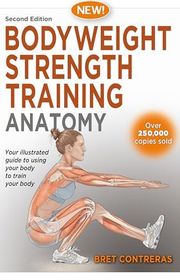
Bodyweight Strength Training Anatomy
For readers who want to see which muscles an exercise uses and how variations differ. Its anatomical illustrations make it a useful companion to a routine, though it is less focused on advanced skill ladders than Overcoming Gravity.
What it's about
Bret Contreras explains bodyweight exercises through anatomical illustrations and movement instructions. Organized around muscle groups, the book shows how variations change the work involved and connects exercise selection with the practical task of planning strength workouts.

For readers who want bodyweight workouts that fit home life or travel. Its accessible exercise collection and plans prioritize general fitness over specialist tricks, though some variations still rely on ordinary household supports or suitable surroundings.
What it's about
Mark Lauren and Joshua Clark adapt bodyweight training methods for workouts at home, outdoors, or while traveling. Exercise instruction, training plans, motivation, and nutrition guidance show how the body and ordinary surroundings can provide resistance without a gym.

For readers who like organizing exercise variations around a manageable set of basic movements. Its visual format makes adapting workouts straightforward, though readers seeking detailed gymnastics programming will need a more specialized reference.
What it's about
BJ Gaddour builds a bodyweight training system around eight core movements and their progressively demanding variations. Illustrated instructions and sample routines help readers organize workouts by goal, duration, intensity, and body area while practicing movement technique.

100 No-Equipment Workouts Vol. 1
Easy to Follow Home Workout Routines with Visual Guides for all Fitness Levels
For readers who want a menu of illustrated workouts they can choose from quickly. Its variety makes short sessions easy to organize, though separate routines offer less guidance on long-term skill progression than a systematic training manual.
What it's about
Neila Rey collects a hundred illustrated bodyweight routines designed for exercising without gym equipment. Each workout offers three difficulty levels, allowing readers to choose among varied routines and adjust the challenge to their experience and available time.

Raising the Bar: The Definitive Guide to Pull-Up Bar Calisthenics
For readers who want to concentrate on pull-up-bar practice rather than general conditioning. Its focused exercise progressions give bar skills more attention than broad workout collections, though it requires suitable equipment and leaves other training goals less developed.
What it's about
Al Kavadlo presents pull-up-bar calisthenics through illustrated exercises and progressions. Starting with hangs and foundational pulling movements, the guide develops more demanding variations and bar skills, explaining ways to organize practice around strength and control.

For beginners who want a scheduled introduction with illustrated exercises. Its twelve-week structure reduces the need to assemble a plan yourself, though readers interested in advanced holds or gymnastics skills will outgrow its scope.
What it's about
Jay Cardiello introduces forty illustrated exercises within a twelve-week beginner’s strength-training plan. Instructions and customizable routines focus on using bodyweight to train the legs, arms, abdomen, and back, with adjustments for differing experience and stamina.

Explosive Calisthenics
For experienced trainees interested in explosive bodyweight movements rather than only controlled strength work. Its focus on power and coordination distinguishes it from the basic programs, though the demanding skills make it unsuitable as a first exercise manual.
What it's about
Paul Wade focuses on developing power, speed, and agility through bodyweight exercises. He explains progressions for demanding movements such as muscle-ups and kip-ups, alongside training principles, programming advice, and drills intended to improve athletic coordination.
Sources
- 1
Best Calisthenics Books [2026]: 5 I Recommend for Beginners to Advanced
calisthenics.com
- 2
The 9 Best Calisthenics Books, Beginner to Advanced
superhumanstrength.org
- 3
The 8 Best Calisthenics Books to Educate Yourself
calisthenicsworldwide.com
- 4
Best calisthenics books
calisthenics-equipment.com
- 5
Best Calisthenics & Bodyweight Training Books
origym.co.uk
- 6
Best Calisthenics Books
calisthenics-101.co.uk
- 7
Calisthenics Books
goodreads.com
- 8
Best Calisthenics Book?
reddit.com
- 9
What other books do you recommend (that aren’t Convict Conditioning)?
reddit.com






Edited by
Software engineer whose passion for tracking book recommendations from podcasts inspired the creation of MRB.
Lead investor at 3one4 Capital whose startup expertise and love for books helped shape MRB and its growth.
Comments
Spotted a missing book, a wrong order or a mistake? Tell us and we'll fix this page.
We're a reading guide, not the author or publisher, so we can't send books or pass on messages.