
10 Best C++ Books
The best C++ books, ranked by how many expert sources recommend each one, with notes on who each suits, language versions, and where to begin.
Our take
C++ books differ in both teaching style and the version of the language they cover. A first programming course needs exercises and a gradual sequence. A programmer moving from another language may prefer a compact overview, while someone maintaining established code may need older idioms explained carefully. Treat the edition and its language standard as part of the choice.
Programming: Principles and Practice Using C++ emphasizes learning to program, while C++ Primer provides a substantial introduction for readers ready to study the language in detail. A Tour of C++, Third Edition offers a shorter overview for experienced programmers, including C++20 features. The Meyers books sharpen specific decisions, but their advice belongs to different language eras. Template and Boost books serve narrower interests and demand more background. Start with a teaching text if you need programming foundations, or the tour if you already write software, then choose a specialist reference for your project.
10 books · 8 sources · Last updated
As an Amazon Associate, we earn from qualifying purchases (at no extra cost to you).
How to choose from this list
Skip to the full rankingIf you're learning programming itself: Programming → C++ Primer
If you already program in another language: A Tour of C++, Third Edition → The C++ Programming Language
If you want to understand C++11 and C++14 choices: C++ Primer → Effective Modern C++
If you want to study templates deeply: C++ Templates → C++ Template Metaprogramming
If you maintain code from before C++11: Effective C++ → More Effective C++
The 10 books, ranked
Ranked by how many expert sources name each book. Ties go to the book more people recommend.

The C++ Programming Language
For experienced programmers who want an extensive language reference connected to design. Stroustrup offers greater breadth than the focused advice books, though the fourth edition’s C++11 coverage needs supplementing for newer features.
What it's about
Bjarne Stroustrup explains C++ and its standard library in a guide for students and working programmers. The fourth edition connects language details with programming techniques and design, providing both a tutorial and a reference for understanding how C++ features work together.

For programmers who know C++ basics and want sharper judgment about C++11 and C++14. The focused guidelines explain subtle choices more directly than a broad textbook, though later standards require separate coverage.
What it's about
Scott Meyers presents forty-two guidelines for using C++11 and C++14 effectively. Examples examine the choices introduced by these standards, explaining how language features interact and how programmers can avoid pitfalls when adapting established coding practices to newer forms of C++.

C++ Primer
For programmers ready for a thorough introduction with exercises and standard-library examples. Its sustained explanations offer more practice than a short tour, though the fifth edition covers C++11 rather than later language standards.
What it's about
Stanley Lippman, Josee Lajoie, and Barbara Moo introduce C++ through examples that use the standard library from the outset. The fifth edition covers C++11, combining exercises and explanations of language rules with guidance on readable code and program design.
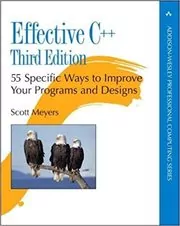
For programmers moving beyond syntax toward reliable interfaces and resource management. Meyers’ short items make design tradeoffs easier to revisit than a full reference, though the third edition reflects practices from before C++11.
What it's about
Scott Meyers presents fifty-five guidelines for writing and designing C++ programs. Each item explains a practical choice or common pitfall, connecting language features with correctness, efficiency, and maintainability for programmers who want to move beyond basic fluency.
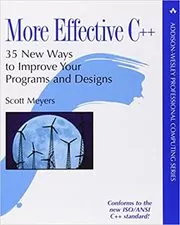
For experienced readers maintaining older C++ or studying how its idioms developed. The concentrated design discussions reward close reading, though many techniques predate C++11 and should be reconsidered before use in modern code.
What it's about
Scott Meyers offers thirty-five focused discussions of C++ programming and design. Examples address exceptions, efficiency, portability, and language features, exploring techniques for making software behave reliably and for designing interfaces that are easier to use correctly.
C++ Templates: The Complete Guide, Second Edition
For experienced C++ programmers who need a systematic understanding of templates. Its comprehensive explanations offer a broader foundation than a metaprogramming-only tutorial, though the detail is demanding and the edition predates C++20 concepts.
What it's about
David Vandevoorde, Nicolai M. Josuttis, and Douglas Gregor explain template mechanisms and their use in generic programming. The second edition develops fundamentals, specialized techniques, and practical designs, with expanded coverage of features introduced through C++17.
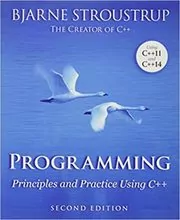
For readers learning programming itself who want exercises and attention to program design. Its teaching sequence is more guided than a reference manual, though the second edition represented here omits later developments in C++.
What it's about
Bjarne Stroustrup introduces programming through C++, combining fundamental concepts with design techniques, examples, and exercises. Written for beginners and self-directed learners, this second edition builds practical skills while showing how language features and libraries support the construction of useful programs.
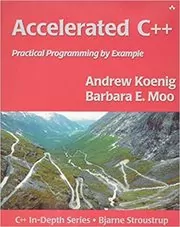
For programmers who learn through practical problems and want standard-library tools introduced early. Andrew Koenig and Barbara Moo take a brisk route to useful programs, though the pre-C++11 language coverage needs substantial updating.
What it's about
Andrew Koenig and Barbara Moo teach C++ through practical problems, beginning with standard library data structures and algorithms. Once readers are writing useful programs, the book introduces deeper language features and memory management in the context of solving those problems.
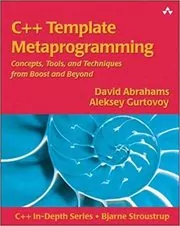
For advanced programmers studying the foundations of template metaprogramming. David Abrahams and Aleksey Gurtovoy develop the underlying techniques systematically, though the Boost-centered approach predates newer facilities such as constexpr and concepts.
What it's about
David Abrahams and Aleksey Gurtovoy explain how C++ templates can perform computations and manipulate programs during compilation. The tutorial develops generic programming techniques through examples and the Boost Metaprogramming Library, connecting underlying concepts with tools for applying them.
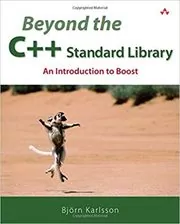
For experienced readers exploring the design ideas behind older Boost libraries. Its focused library studies provide historical depth beyond a general tutorial, though many facilities now have standard alternatives or substantially changed APIs.
What it's about
Bjorn Karlsson introduces Boost for intermediate and advanced C++ programmers, surveying its libraries before examining twelve in depth. Smart pointers, conversions, containers, and data structures illustrate library use and design, with explanations of the techniques behind their implementations.
Sources
- 1
Best C++ Books and C Programming Books for 2026 (16 Picks)
computingforgeeks.com
- 2
A comprehensive catalog of modern and classic books on C++ programming language
github.com
- 3
Resources
cppstories.com
- 4
C Plus Plus Books
goodreads.com
- 5
Top C++ books in 2022
dev.to
- 6
What’s the best C++ book?
reddit.com
- 7
Whats the best c++ book to get an indepth understanding after the ones I have read ?
reddit.com
- 8
EECS 381 Book List
public.websites.umich.edu


Edited by
Software engineer whose passion for tracking book recommendations from podcasts inspired the creation of MRB.
Lead investor at 3one4 Capital whose startup expertise and love for books helped shape MRB and its growth.
Comments
Spotted a missing book, a wrong order or a mistake? Tell us and we'll fix this page.
We're a reading guide, not the author or publisher, so we can't send books or pass on messages.