
10 Best Business Strategy Books
The best business strategy books, ranked by how many expert sources recommend each one, with notes on who each suits, from founders to management teams.
Our take
Business strategy involves choosing what a company will do, what it will leave aside, and how its actions fit the conditions it faces. These books approach that task from different directions. Some help diagnose a problem or examine an industry. Others focus on innovation, organizational discipline, enduring advantages, or the choices competitors and customers make in response to your own.
Good Strategy Bad Strategy is a useful starting point for recognizing a coherent response to a real obstacle. Playing to Win provides a structure for connected business choices, while Competitive Strategy goes deeper into industry analysis. Blue Ocean Strategy asks how an offering might escape familiar competitive assumptions, and 7 Powers considers what could make an advantage last. The management stories in Good to Great and innovation cases in The Innovator’s Dilemma offer additional perspectives, rather than guarantees. Start with the book that matches the decision you face, then test its assumptions against the specifics of your business.
10 books · 8 sources · Last updated
As an Amazon Associate, we earn from qualifying purchases (at no extra cost to you).
How to choose from this list
Skip to the full rankingIf you want a foundation for strategic thinking: Good Strategy Bad Strategy → Playing to Win
If you want to analyze competition and durable advantage: Competitive Strategy → 7 Powers
If you want to rethink market boundaries: Blue Ocean Strategy
If you want to examine innovation threats: The Innovator's Dilemma
If you operate across different business environments: Your Strategy Needs a Strategy
If you want to anticipate other players’ choices: The Art of Strategy
The 10 books, ranked
Ranked by how many expert sources name each book. Ties go to the book more people recommend.
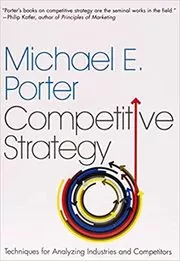
For readers who want a rigorous foundation for analyzing industries and competitive position. Porter supplies more detailed structural analysis than the shorter frameworks here, though the dense treatment and older industry examples require patient reading and adaptation.
What it's about
Michael Porter presents a framework for understanding industry competition and choosing a business strategy. His analysis of five competitive forces, rivals, and industry structures explains how companies can assess their position and pursue sustainable advantages.
Also recommended by
2 people Bill Gurley recommended this book
Bill Gurley
"All entrepreneurs should read." - Bill Gurley
Bill Gurley's recommendation of this book  Jamie Dimon recommended this book
Jamie Dimon
On Jamie Dimon's list of favorite books.
Jamie Dimon's recommendation of this book
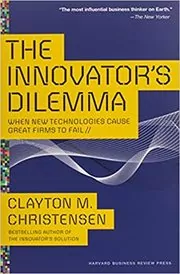
For readers examining why successful incumbents struggle with emerging markets and technologies. Christensen offers a focused lens on innovation incentives, though the disruption framework does not explain every competitive setback or predict which challenger will succeed.
What it's about
Christensen examines why established companies can lose market leadership despite serving customers well and following sound management practices. Through industry examples, he explains disruptive innovation and considers how organizations can respond to emerging technologies and initially smaller markets.
Also recommended by
18 people Jeff Bezos recommended this book
Jeff Bezos
Part of "Jeff's Reading List."
Jeff Bezos's recommendation of this book  Steve Jobs recommended this book
Steve Jobs
Walter Isaacson said Steve Jobs was deeply influenced by this book.
Steve Jobs's recommendation of this book  Mark Cuban recommended this book
Mark Cuban
Mark Cuban's answer to "what's a book you always recommend?"
Mark Cuban's recommendation of this book  Marc Benioff recommended this book
Marc Benioff
"We often referenced [this book. A] thought-provoking [book] that validated our crusade." - Marc Benioff
Marc Benioff's recommendation of this book  Ben Horowitz recommended this book
Ben Horowitz
"A great book on strategy." - Ben Horowitz
Ben Horowitz's recommendation of this book  Drew Houston recommended this book
Drew Houston
"About how businesses get disrupted, and a lot of those themes are why startups can succeed and thrive even when there are big competitors who you would think would just wipe ’em out." - Drew Houston
Drew Houston's recommendation of this book +12
More recommendations
- Aaron Levie
"[One of] four good books that I would highly recommend reading if you're gonna build a B2B software company." - Aaron Levie
- Ev Williams
On the "books read" section of Ev Williams' GoodReads profile.
- Max Levchin
One of Max Levchin's answers to "what's your favourite business book you'd advise to young entrepreneurs?"
- Tim O’Reilly
"[A] business classic." - Tim O’Reilly
- Caterina Fake
"A must-read for entrepreneurs." - Caterina Fake
- Guy Kawasaki
"Taught me why it’s so hard to come up with a second hit." - Guy Kawasaki
- Bill Gurley
"All entrepreneurs should read." - Bill Gurley
- Blake Scholl
"Everyone talks about it, I wonder how many people actually read it. You should actually read it." - Blake Scholl
- Chris Dixon
Chris Dixon recommended this book on Twitter.
- Marc Andreessen
"Really critical to understanding how this industry works." - Marc Andreessen
- Michael Bloomberg
"An insightful analysis of changing technology and its importance to a company's future success." - Michael Bloomberg
- Steve Blank
"The foundational read for managing disruptive innovation." - Steve Blank
- Aaron Levie
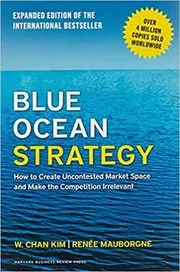
Blue Ocean Strategy
How to Create Uncontested Market Space and Make the Competition Irrelevant
For readers who want to question an industry’s familiar competitive boundaries. W. Chan Kim and Renée Mauborgne provide tools for exploring different sources of customer value, though identifying unmet demand does not establish that a viable market exists.
What it's about
W. Chan Kim and Renée Mauborgne argue that organizations can grow by creating new market space. They present principles and analytical tools for developing offerings that attract demand beyond direct competition with existing rivals.
Also recommended by
5 people Tim Ferriss recommended this book
Tim Ferriss
"Study [this book]." - Tim Ferriss
Tim Ferriss's recommendation of this book  Aaron Levie recommended this book
Aaron Levie
"[One of] four good books that I would highly recommend reading if you're gonna build a B2B software company." - Aaron Levie
Aaron Levie's recommendation of this book  Daymond John recommended this book
Daymond John
One of Daymond John's answers to "most-gifted or recommeded books?"
Daymond John's recommendation of this book  Russell Brunson recommended this book
Russell Brunson
"Every new entrepreneur should read [this book]!!!" - Russell Brunson
Russell Brunson's recommendation of this book  Patrick Bet-David recommended this book
Patrick Bet-David
Patrick Bet-David recommended this book on his website.
Patrick Bet-David's recommendation of this book
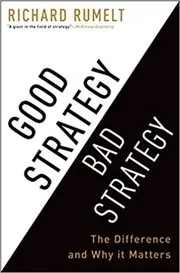
For readers who need to distinguish a real strategy from a set of ambitions. Rumelt makes diagnosis and coordinated action concrete through varied examples, though applying the reasoning still requires detailed knowledge of your own organization.
What it's about
Richard Rumelt examines what makes a strategy a coherent response to obstacles. Examples from business, public institutions, and military affairs explore sources of strategic power and the problems with confusing goals, slogans, or values with actionable plans.
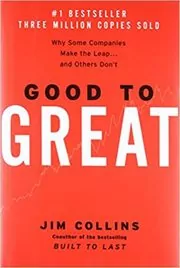
For readers interested in leadership, discipline, and organizational focus behind sustained improvement. The comparative company stories make management patterns memorable, though retrospective selection and later company fortunes limit treating those patterns as a reliable formula.
What it's about
Jim Collins examines why some companies achieve lasting improvements while comparable businesses do not. His research emphasizes leadership, people, disciplined focus, and cumulative momentum as foundations of transformation.
Also recommended by
11 people- Jeff Bezos recommended this book
Jeff Bezos
Part of "Jeff's Reading List."
Jeff Bezos's recommendation of this book  Dave Ramsey recommended this book
Dave Ramsey
Recommended on Dave Ramsey's website.
Dave Ramsey's recommendation of this book  Jason Calacanis recommended this book
Jason Calacanis
"The great management book." - Jason Calacanis
Jason Calacanis's recommendation of this book  Max Levchin recommended this book
Max Levchin
One of Max Levchin's answers to "what's your favourite business book you'd advise to young entrepreneurs?"
Max Levchin's recommendation of this book  Brian Armstrong recommended this book
Brian Armstrong
"The scientific method can be applied to business. This book draws powerful lessons from data." - Brian Armstrong
Brian Armstrong's recommendation of this book  Ev Williams recommended this book
Ev Williams
On the "books read" section of Ev Williams' GoodReads profile.
Ev Williams's recommendation of this book +5
More recommendations
- Frank Blake
"As a business person, I love [this book]." - Frank Blake
- Tracy DiNunzio
"It’s too good. [...] Definitely a must read." - Tracy DiNunzio
- Daniel Ek
"A really interesting book." - Daniel Ek
- John Doerr
John Doerr recommended this book at the end of "Measure What Matters."
- Michael Hyatt
Michael Hyatt recommended this book on his website.
- Frank Blake
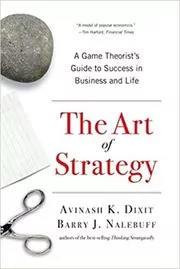
For readers who want to anticipate how other people’s choices affect their own. Dixit and Nalebuff make game-theoretic reasoning approachable through varied examples, though this is broader decision analysis rather than a complete company-strategy method.
What it's about
Avinash Dixit and Barry Nalebuff explain how game theory illuminates decisions in business and everyday life. Examples from negotiation, politics, sports, and other settings show how anticipating others' choices changes the possibilities for competition and cooperation.
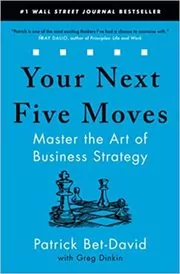
For entrepreneurs who like direct coaching on planning, teams, and personal clarity. Patrick Bet-David and Greg Dinkin offer a motivational route into strategic thinking, though the advice is less analytically systematic than the industry-focused books here.
What it's about
Patrick Bet-David uses thinking several moves ahead as a framework for business strategy. The guide addresses personal clarity, reasoning through decisions, growth tactics, building teams around shared values, and understanding power in professional relationships.
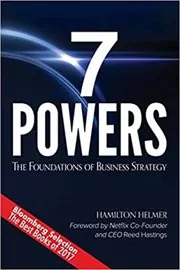
For readers asking what could make a business advantage endure. Helmer concentrates on the mechanisms behind defensible positions more narrowly than a general planning guide, though identifying a power does not tell you exactly how to build it.
What it's about
Hamilton Helmer develops a framework for understanding the conditions that give businesses persistent competitive advantages. Using examples from real companies, he examines how strategic power is created and when it must emerge during a business's development.
Also recommended by
6 people Keith Rabois recommended this book
Keith Rabois
Keith Rabois recommended this book on a Medium blog post.
Keith Rabois's recommendation of this book  Daniel Ek recommended this book
Daniel Ek
"At Spotify the 7 Powers are widely used as we discuss new initiatives." - Daniel Ek
Daniel Ek's recommendation of this book  Patrick Collison recommended this book
Patrick Collison
"Deeply incisive." - Patrick Collison
Patrick Collison's recommendation of this book  Peter Thiel recommended this book
Peter Thiel
"[The author] understands that strategy starts with invention. He can't tell you what to invent, but he can and does show what it takes for a new invention to become a valuable business." - Peter Thiel
Peter Thiel's recommendation of this book  Reed Hastings recommended this book
Reed Hastings
"The forces of competition are just incredibly strong. Everyone is trying to eat your lunch, and if you don't read [this book] you're going to die alot sooner." - Reed Hastings
Reed Hastings's recommendation of this book  Ryan Petersen recommended this book
Ryan Petersen
"[Part of] my biz book canon." - Ryan Petersen
Ryan Petersen's recommendation of this book
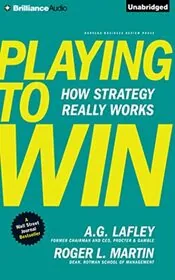
For teams that need a shared structure for making connected strategic choices. A. G. Lafley and Roger L. Martin link competitive decisions with capabilities and systems, though translating large consumer-business examples to another setting takes work.
What it's about
A. G. Lafley and Roger L. Martin explain business strategy as a set of connected choices about goals, markets and competition. Drawing on their work at Procter & Gamble, they examine the capabilities and management systems needed to support those choices.
Also recommended by
1 person Ramit Sethi recommended this book
Ramit Sethi
Ramit Sethi mentioned this book in the "What to Read Next" newsletter.
Ramit Sethi's recommendation of this book
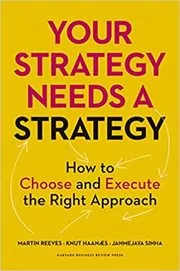
For readers managing businesses in different competitive environments. Reeves, Haanaes, and Sinha show why one planning approach cannot suit every situation, though diagnosing an environment correctly is harder than assigning it a category.
What it's about
Martin Reeves, Knut Haanaes, and Janmejaya Sinha explain how strategic approaches should fit a company's environment. The book considers choosing and executing an approach, combining methods across different settings, and leading organizations through those choices.
Sources
- 1
16 Best Business Strategy Books to Read
teambuilding.com
- 2
The Personal MBA Recommended Reading List - 99 Best Business Books
personalmba.com
- 3
Which of these books is good for corporate strategy?
reddit.com
- 4
Top books in business strategy
reddit.com
- 5
Business Strategy Books
goodreads.com
- 6
The 6 Best Business Strategy Books To Read In 2023
rickkettner.com
- 7
6 Best Business Strategy Books to Pull Ahead of the Competition [2021]
success.com
- 8
The Strategist’s Reading List: 13 Strategy Books, Annotated
stratrix.com
Edited by
Software engineer whose passion for tracking book recommendations from podcasts inspired the creation of MRB.
Lead investor at 3one4 Capital whose startup expertise and love for books helped shape MRB and its growth.
Comments
Did we miss something? Have feedback?
Help us improve this page by sharing your thoughts