
9 Best AWS Books
The best AWS books, ranked by how many expert sources recommend each one, with notes on beginner labs, cloud architecture, security, automation and costs.
Our take
AWS books can help you understand the relationships between cloud services instead of learning each feature in isolation. The right starting point depends on whether you need a first deployment, a broader infrastructure foundation or a focused treatment of security, delivery automation or spending. Edition dates matter because examples and interfaces can change even when the underlying ideas remain useful.
Amazon Web Services in Action connects services through practical application and infrastructure work. Learn Amazon Web Services in a Month of Lunches breaks learning into smaller lessons. For readers with some experience, Serverless Architectures on AWS examines how managed components fit together, while AWS Security gives protective controls a more sustained treatment. AWS Automation Cookbook focuses on delivery workflows, and Mastering AWS Cost Optimization turns toward the operating decisions behind cloud spending.
Start with a general practical guide and complete a small project. Add a specialist book when the project gives you a concrete question, and check its examples against current documentation.
9 books · 7 sources · Last updated
As an Amazon Associate, we earn from qualifying purchases (at no extra cost to you).
How to choose from this list
Skip to the full rankingIf you want a practical general foundation: Amazon Web Services in Action
If you prefer short lessons: Learn Amazon Web Services in a Month of Lunches
If you want serverless application design: Amazon Web Services in Action → Serverless Architectures on AWS
If you want to focus on security: AWS Security
If you want delivery automation: AWS Automation Cookbook
If you want to examine cloud spending: Mastering AWS Cost Optimization
The 9 books, ranked
Ranked by how many expert sources name each book. Ties go to the book more people recommend.

Amazon Web Services in Action
For developers who want to connect core services through a working application and infrastructure. Its practical progression gives a stronger general foundation than a narrow service guide, though readers should choose a recent edition because commands and platform features change.
What it's about
Andreas and Michael Wittig explain how to build applications on Amazon Web Services using its computing, storage, and networking services. Practical examples connect deployment, automation, security, and availability to the design of scalable cloud infrastructure.
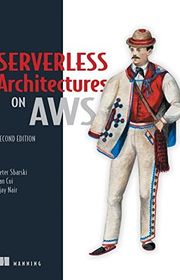
Serverless Architectures on AWS
For developers who want to design applications around managed services and functions. Its architecture patterns connect individual services into larger systems, though the examples assume programming experience and the operational tradeoffs require more thought than simply removing servers.
What it's about
Peter Sbarski, Yan Cui and Ajay Nair explain how to design serverless applications using AWS services. Examples connect functions, APIs and event-driven components, examining architecture patterns, security and operational choices involved in building and managing cloud applications.

Amazon Web Services For Dummies
For readers who want an approachable explanation of cloud concepts and basic tasks. Its low assumed knowledge makes the subject easier to enter, though this older edition needs substantial checking against current interfaces and service documentation before following examples.
What it's about
Bernard Golden introduces Amazon Web Services through practical cloud computing tasks, including hosting websites, storing data, and using compute services. The guide explains core AWS concepts and walks beginners through building and managing cloud resources.
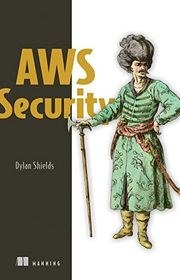
AWS Security
For developers and operators who want security treated as a sustained part of AWS work. Its focused coverage gives access control and monitoring more room than general introductions, though prior familiarity with cloud services helps and implementation details evolve.
What it's about
Dylan Shields explains how to secure applications and infrastructure on AWS. The book covers account access, identity permissions, data protection, logging and automated security practices, connecting cloud service choices with the work of detecting and reducing security risks.

For mobile developers studying how application features connect with a cloud backend. Its running chat example supplies continuity across services, though the older Swift, Java and SDK workflows require careful adaptation and are unsuitable as current copy-and-paste instructions.
What it's about
Abhishek Mishra shows mobile developers how to connect Swift and Java applications to AWS services. A chat application provides a working example for integrating authentication, data storage, and cloud infrastructure into mobile app development.

For readers who want a brief orientation before a more substantial AWS course. Its narrow introductory scope keeps the initial commitment small, though it offers less depth and sustained practice than the longer application-based guides here.
What it's about
Dennis Hutten introduces Amazon Web Services as a platform for cloud computing and website hosting. Written for beginners, the tutorial explains how AWS works and explores the services involved in running websites on cloud infrastructure.

AWS Automation Cookbook
Continuous Integration and Continuous Deployment using AWS services
For developers familiar with AWS who want software-delivery tasks organized as recipes. Its automation focus makes it more specialized than the introductions, though the service-specific pipelines and older tooling need review before applying them in a current environment.
What it's about
Nikit Swaraj presents recipes for automating software delivery on AWS, covering continuous integration and deployment with CodeCommit, CodeBuild, CodeDeploy, and CodePipeline. The examples also incorporate infrastructure automation, configuration management, Jenkins, and serverless functions.

Learn Amazon Web Services in a Month of Lunches
For learners who prefer short lessons with a concrete task to complete. Its manageable lab structure helps turn reading into practice, though the older examples need updating and the breadth leaves less room for deep treatment of individual services.
What it's about
David Clinton teaches AWS through short lessons and hands-on labs built around practical infrastructure tasks. The book covers computing, databases, storage, networking, security, and backup, then explores automation and availability as applications grow.

Mastering AWS Cost Optimization
Real-world Technical and Operational Cost-saving Best Practices
For teams that already run cloud workloads and want cost control connected with operating practices. Its financial focus fills a gap in general technical introductions, though pricing, purchasing options and service features need current verification before acting on examples.
What it's about
Eli Mansoor and Yair Green examine the technical and operational work involved in controlling AWS spending. Drawing on infrastructure projects, they present cost optimization practices for organizations developing and running applications in the public cloud.
Sources



Edited by
Software engineer whose passion for tracking book recommendations from podcasts inspired the creation of MRB.
Lead investor at 3one4 Capital whose startup expertise and love for books helped shape MRB and its growth.
Comments
Spotted a missing book, a wrong order or a mistake? Tell us and we'll fix this page.
We're a reading guide, not the author or publisher, so we can't send books or pass on messages.