
7 Best Assertiveness Books
The best assertiveness books, ranked by how many expert sources recommend each one, with notes on who each book suits and where to practice clearer communication.
Our take
Assertiveness means expressing needs, opinions, and limits while allowing other people the same respect. The books here approach that skill in different ways. Some offer phrases and everyday examples; others ask you to examine the beliefs or relationship patterns that make speaking up difficult. Workbooks add repeated practice, so the most useful choice depends partly on how much active work you want to do.
Assertiveness by Judy Murphy provides a short introduction, while The Assertiveness Workbook offers a more structured route through exercises. The Art of Everyday Assertiveness suits readers who recognize people-pleasing habits. The Assertiveness Guide for Women gives emotional awareness and relationships greater space, and Set Boundaries, Find Peace concentrates on personal limits. For an older foundation with many sample exchanges, try When I Say No, I Feel Guilty. Start with one recurring situation you would like to handle differently, then choose a book whose format helps you practice.
7 books · 7 sources · Last updated
As an Amazon Associate, we earn from qualifying purchases (at no extra cost to you).
How to choose from this list
Skip to the full rankingIf you want a brief introduction: Assertiveness
If you want structured practice: The Assertiveness Workbook
If you want to examine people-pleasing habits: The Art of Everyday Assertiveness
If you want a relationship-centered approach: The Assertiveness Guide for Women
If you struggle with personal limits: Set Boundaries, Find Peace → When I Say No, I Feel Guilty
The 7 books, ranked
Ranked by how many expert sources name each book. Ties go to the book more people recommend.
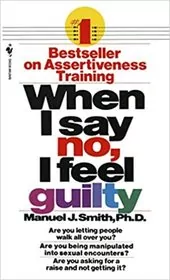
When I Say No, I Feel Guilty
For readers who want concrete examples of responding to pressure without surrendering their position. Smith makes assertive exchanges easy to examine, though the older scenarios and sometimes mechanical dialogue need adapting to a warmer personal voice.
What it's about
Manuel Smith presents techniques for communicating assertively and setting boundaries without being overwhelmed by guilt. Sample dialogues address criticism, family pressures, workplace demands, and everyday disputes, showing readers ways to express their wishes and defend their rights.
Also recommended by
1 person Brian Armstrong recommended this book
Brian Armstrong
"Life is better when you only agree do the things you really want to do." - Brian Armstrong
Brian Armstrong's recommendation of this book
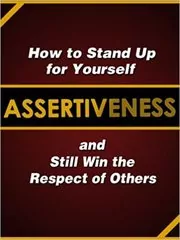
For readers who want a short, direct introduction to speaking up respectfully. Murphy keeps everyday situations in view, though the compact guidance offers less room for repeated practice and reflection than a full workbook.
What it's about
Judy Murphy presents practical strategies for communicating wants and needs while maintaining respect for others. The guide addresses saying no, handling difficult peers, asserting boundaries, and applying these skills at work and in family relationships.
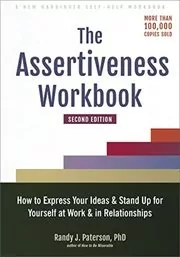
The Assertiveness Workbook
How to Express Your Ideas and Stand Up for Yourself at Work and in Relationships
For readers who want to practice rather than only read about assertiveness. Paterson breaks the subject into exercises and specific situations, though the workbook format only earns its extra length if you complete the activities.
What it's about
Randy J. Paterson presents exercises grounded in cognitive behavioral therapy for developing assertive communication. The workbook addresses expressing opinions, setting boundaries, responding calmly to criticism, and handling unreasonable requests while maintaining relationships.
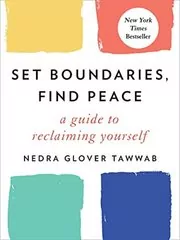
For readers whose main difficulty is recognizing and communicating limits. Tawwab gives boundaries a clearer focus than the general assertiveness guides, though the many examples cannot provide a ready-made response for every complicated relationship.
What it's about
Nedra Glover Tawwab explains how to recognize personal limits and communicate needs clearly in relationships. Practical examples address saying no, handling boundary violations, and navigating family, friendships, and work while reducing the strain of overcommitment.
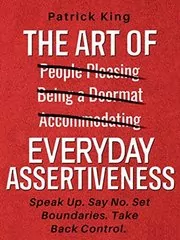
The Art of Everyday Assertiveness
Speak Up. Say No. Set Boundaries. Take Back Control.
For habitual people pleasers who want practical language alongside reflection on what holds them back. King makes ordinary refusals and requests feel approachable, though the broad advice needs adapting to the specific relationships involved.
What it's about
Patrick King examines the beliefs that fuel people pleasing and difficulty speaking up. Everyday examples and an action plan show how to refuse requests, establish boundaries, ask for what you need, and reduce habitual over-apologizing.
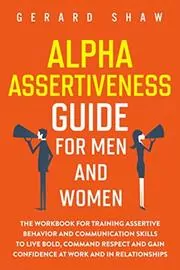
Alpha Assertiveness Guide for Men and Women
For readers who like self-assessment followed by practical exercises. Shaw gives confidence and communication a clear action focus, though the forceful branding and motivational tone may appeal less than a quieter, relationship-centered approach.
What it's about
Gerard Shaw's workbook uses self-assessment, examples, and exercises to explore assertive communication. It addresses saying no, constructive criticism, confidence, personal strengths, and fear of conflict in workplace and personal relationships.
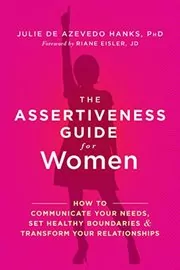
The Assertiveness Guide for Women
How to Communicate Your Needs, Set Healthy Boundaries, and Transform Your Relationships
For women who want to connect speaking up with emotional awareness and relationship patterns. Hanks gives the reasons behind hesitation more attention than a script-based guide, though the reflective exercises ask for time and personal exploration.
What it's about
Julie de Azevedo Hanks connects assertiveness with attachment styles and emotional awareness. Examples and exercises draw on mindfulness and therapeutic approaches to help readers identify their needs, set boundaries, and communicate within relationships.
Sources
- 1
7 Best Assertiveness Books That Actually Change Behavior
boundaryplaybook.com
- 2
6 Best Books on People-Pleasing, Ranked for 2026
yalom.com
- 3
Assertiveness Books
goodreads.com
- 4
Books about being assertive
reddit.com
- 5
Building Assertiveness Skills: Top 12 Books & Workbooks
positivepsychology.com
- 6
The 5 Best Books on Assertiveness for Ultimate Social Influence
bloomsoup.com
- 7
The 5 Best Books on Assertiveness
thehubevents.com








Edited by
Software engineer whose passion for tracking book recommendations from podcasts inspired the creation of MRB.
Lead investor at 3one4 Capital whose startup expertise and love for books helped shape MRB and its growth.
Comments
Spotted a missing book, a wrong order or a mistake? Tell us and we'll fix this page.
We're a reading guide, not the author or publisher, so we can't send books or pass on messages.