
9 Best Arundhati Roy Books
The best Arundhati Roy books, ranked by how many expert sources recommend each one, with notes on who each book suits and where to begin with her writing.
Our take
Arundhati Roy moves between fiction, political argument, and memoir. Her novels connect intimate lives with wider structures of power, while her essays speak directly about development, nationalism, war, and inequality. The forms offer different reading experiences: inventive language and shifting chronology in the fiction, urgent persuasion in the nonfiction, and a more personal reckoning in the memoir.
Begin with The God of Small Things if you want the family story and language that introduced many readers to her work. The Ministry of Utmost Happiness opens into a more fragmented world of intersecting lives. For nonfiction, The Cost of Living is a compact starting point, while Capitalism concentrates on corporate power. Azadi brings freedom, public life, and writing into a later collection. Check the contents before buying several early essay books, since The End of Imagination gathers material available elsewhere here. Choose Mother Mary Comes to Me for her account of becoming a writer and her relationship with her mother.
9 books · 7 sources · Last updated
As an Amazon Associate, we earn from qualifying purchases (at no extra cost to you).
Reading Arundhati Roy in order? See all Arundhati Roy books in order
How to choose from this list
Skip to the full rankingIf you're new to her fiction: The God of Small Things → The Ministry of Utmost Happiness
If you want a short nonfiction introduction: The Cost of Living → Capitalism
If you want the early essays in breadth: The Algebra of Infinite Justice → War Talk
If you prefer one substantial early omnibus: The End of Imagination
If you want later political essays: Azadi
If you want her personal history: Mother Mary Comes to Me
The 9 books, ranked
Ranked by how many expert sources name each book. Ties go to the book more people recommend.
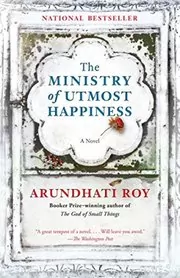
For readers who want expansive fiction connecting marginalized lives with political violence. The shifting ensemble gives the novel a wider reach than her debut, though the fragmented structure and dense context make it a demanding starting point.
What it's about
Roy's second novel follows Anjum, an intersex woman who builds a community in a Delhi graveyard, and Tilo, an architect drawn into the conflict in Kashmir. Their intersecting lives reveal an India marked by dispossession, surveillance and small, stubborn acts of care.
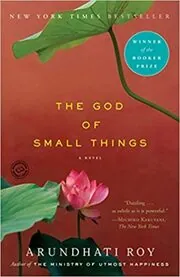
For readers who enjoy intimate family fiction with inventive language and shifting time. The close attention to childhood gives its social pressures emotional force, though the nonlinear structure and recurring phrases ask for patient reading.
What it's about
Set in Kerala in the late 1960s and 1990s, The God of Small Things follows twins Estha and Rahel as a childhood tragedy ripples through their family. The novel braids caste, forbidden love and memory into a nonlinear story of how small choices can shatter lives.
Also recommended by
1 person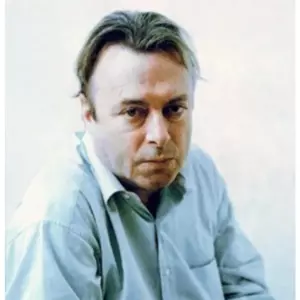 Christopher Hitchens recommended this book
Christopher Hitchens
"Exquisite." - Christopher Hitchens
Christopher Hitchens's recommendation of this book
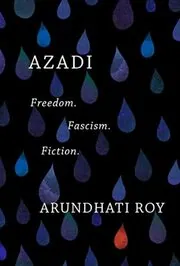
Azadi
For readers who want Roy’s later political essays alongside reflections on fiction and language. The compact collection connects public events with a writer’s practice, though its strongly argued positions and specific context require active, critical reading.
What it's about
Azadi collects late-2010s essays on the rise of Hindu nationalism, the Kashmir freedom slogan, protest movements and the COVID-19 pandemic, as Roy asks what freedom can mean in an India shaped by surveillance, inequality and creeping authoritarianism.

Mother Mary Comes to Me
For readers who want to understand the life and difficult family relationship behind Roy’s writing. The memoir brings personal experience into direct focus, though its emotional intensity and painful memories make it more demanding than a conventional literary autobiography.
What it's about
Mother Mary Comes to Me is Roy's memoir of her mother, Mary Roy, and of growing up in Kerala, weaving scenes of family conflict, legal battles and boarding-school escapes with reflections on writing, love, faith and the making of both a daughter and a country.
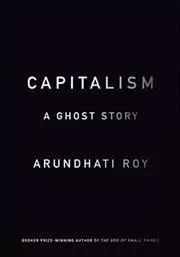
For readers who want a short, forceful introduction to Roy’s critique of corporate power. The concentrated argument makes the political connections easy to follow, though it is an openly partisan intervention rather than a balanced survey.
What it's about
In Capitalism: A Ghost Story, Roy explores how corporate wealth, philanthropy and media power shape Indian democracy, linking glittering skyscrapers and luxury towers to dispossession, farmer suicides, militarised regions and the quiet capture of public institutions.
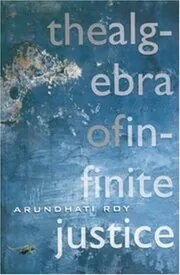
The Algebra of Infinite Justice
For readers who want the breadth of Roy’s early political writing in one collection. The range connects development, nationalism, and war, though the dated interventions benefit from background reading about the events that prompted them.
What it's about
One of Roy's first essay collections, The Algebra of Infinite Justice examines India's nuclear tests, big dam projects, multinational corporations and the war on terror, arguing that official ideas of progress and justice often mask violence and dispossession.
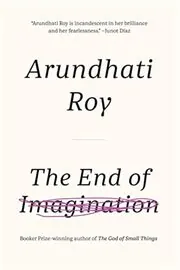
The End of Imagination
For readers who want several early essay books gathered into one volume. The omnibus makes her developing political arguments easier to compare, though it overlaps substantially with smaller collections here and can become repetitive.
What it's about
This omnibus brings together five of Roy's major essay collections, from The Cost of Living and Power Politics to War Talk and An Ordinary Person's Guide to Empire, tracing her arguments against nuclear nationalism, mega-dams, US wars and corporate power.
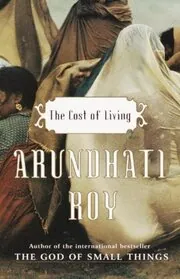
The Cost of Living
For readers who want a compact entry into Roy’s nonfiction through concrete public controversies. The paired essays give development and national security a shared human scale, though their urgency assumes some knowledge of the original debates.
What it's about
Roy's first nonfiction book pairs a long report on the Narmada Valley dam projects with a fierce critique of India's nuclear tests, arguing that both development and security are being pursued at the expense of the poor and of the future.
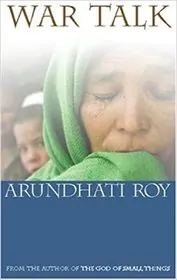
War Talk
For readers focused on Roy’s early-2000s arguments about militarism and public power. The brief essays retain the energy of direct intervention, though their specific political moment makes contextual reading useful and limits their role as a current overview.
What it's about
War Talk gathers Roy's early-2000s essays on nuclear brinkmanship in South Asia, the Gujarat pogrom, and the US-led war on terror, questioning how nationalism, religion and globalisation feed militarism while ordinary people live with the consequences.
Sources
- 1
Books by Arundhati Roy
goodreads.com
- 2
Arundhati Roy
fantasticfiction.com
- 3
A guide to reading Arundhati Roy: From The God of Small Things to Mother Mary Comes to Me
indianexpress.com
- 4
Arundhati Roy Books: Novels, Memoir and Every Essay, in Order
lisanneswart.com
- 5
First time reading Arundhati Roy
reddit.com
- 6
Review: The Ministry of Utmost Happiness
reddit.com
- 7
Best Arundhati Roy Books Of All Time
cashkaro.com







Edited by
Software engineer whose passion for tracking book recommendations from podcasts inspired the creation of MRB.
Lead investor at 3one4 Capital whose startup expertise and love for books helped shape MRB and its growth.
Comments
Spotted a missing book, a wrong order or a mistake? Tell us and we'll fix this page.
We're a reading guide, not the author or publisher, so we can't send books or pass on messages.