
Arundhati Roy Books in Order
Explore Arundhati Roy's books in order, with summaries of her novels, essays and memoir, plus background on her life, activism and clear guidance on the best places to start reading.
Last updated:
As an Amazon Associate, we earn from qualifying purchases (at no extra cost to you).
Arundhati Roy books in publication order
25 books
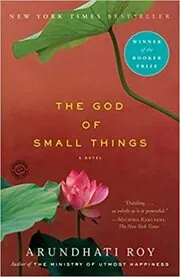
The God of Small Things
by Arundhati Roy
1997
Set in Kerala in the late 1960s and 1990s, The God of Small Things follows twins Estha and Rahel as a childhood tragedy ripples through their family. The novel braids caste, forbidden love and memory into a nonlinear story of how small choices can shatter lives.
Recommended by
1 person Christopher Hitchens recommended this book
Christopher Hitchens
"Exquisite." - Christopher Hitchens
Christopher Hitchens's recommendation of this book
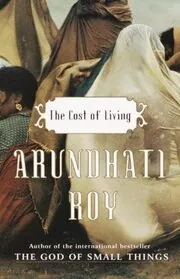
The Cost of Living
by Arundhati Roy
1999
Roy's first nonfiction book pairs a long report on the Narmada Valley dam projects with a fierce critique of India's nuclear tests, arguing that both development and security are being pursued at the expense of the poor and of the future.
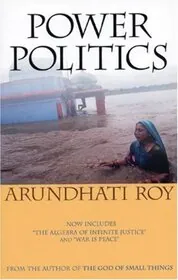
Power Politics
by Arundhati Roy
2000
Power Politics focuses on the privatisation of electricity and water in India, especially the role of foreign companies and massive dam projects, showing how technical language hides the displacement of millions of poor and low-caste people.
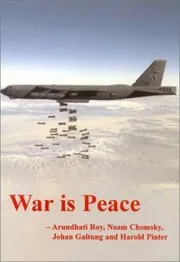
War Is Peace
by Arundhati Roy
2001
War Is Peace is Roy's extended essay on the US-led attack on Afghanistan after September 11, tracing a long history of interventions and asking how language, media and selective mourning allow war to be sold as a defence of freedom.
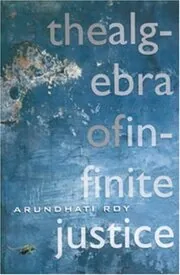
The Algebra of Infinite Justice
by Arundhati Roy
2002
One of Roy's first essay collections, The Algebra of Infinite Justice examines India's nuclear tests, big dam projects, multinational corporations and the war on terror, arguing that official ideas of progress and justice often mask violence and dispossession.
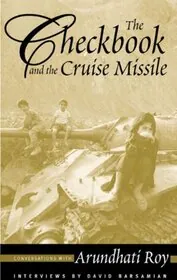
The Checkbook and the Cruise Missile
by Arundhati Roy
2003
This volume of conversations with David Barsamian ranges across dams, privatisation, nuclear weapons, US foreign policy and media spin, using the contrast in its title to show how financial pressure and military force work together inside today's global order.
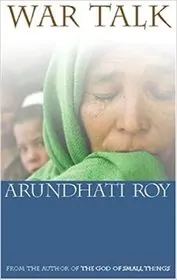
War Talk
by Arundhati Roy
2003
War Talk gathers Roy's early-2000s essays on nuclear brinkmanship in South Asia, the Gujarat pogrom, and the US-led war on terror, questioning how nationalism, religion and globalisation feed militarism while ordinary people live with the consequences.
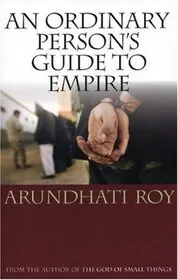
An Ordinary Person's Guide to Empire
by Arundhati Roy
2004
This essay collection tracks the early years of the US war on terror, corporate globalisation and new security laws, as Roy speaks to protest crowds and reading audiences about how ordinary people can recognise and resist empire in everyday life.
Come September
by Arundhati Roy
2004
Come September is the text of Roy's 2002 lecture delivered in the United States, a wide-ranging reflection on September 11, earlier coups and wars, and the relationship between grief, empire, nationalism and resistance in an age of permanent conflict.
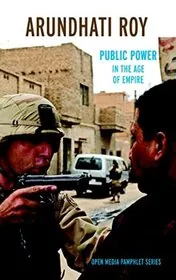
Public Power in the Age of Empire
by Arundhati Roy
2004
Public Power in the Age of Empire prints a major speech in which Roy reflects on global movements against war and privatisation, asking what public power might mean when corporations, militaries and compliant governments seem to hold all the cards.
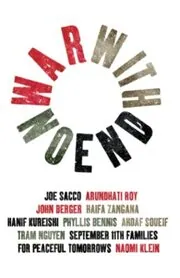
War With No End
by Arundhati Roy
2007
This multi-author collection, which includes a contribution from Roy, examines the so-called war on terror from Afghanistan and Iraq to civil liberties at home, linking distant battlefields to surveillance, propaganda and the erosion of democratic guarantees.
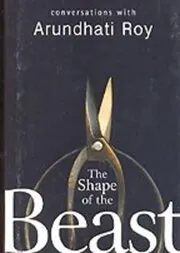
The Shape of the Beast
by Arundhati Roy
2008
The Shape of the Beast gathers long interviews with Roy about big dams, Gujarat, Kashmir, American wars and the Naxalite conflict, as well as her own life, offering a conversational tour through the ideas that underlie her fiction and essays.

Listening To Grasshoppers
by Arundhati Roy
2009
Listening to Grasshoppers collects essays written in the 2000s about democracy in India, from pogroms and election campaigns to hunger, dispossession and the language of nationalism, arguing that formal voting can coexist with deepening violence and exclusion.
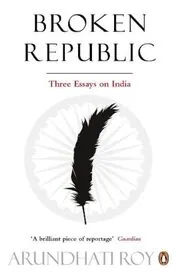
Broken Republic
by Arundhati Roy
2011
Broken Republic brings together essays on the Maoist insurgency in central India, the displacement of Adivasi communities for mining and dams, and the Indian state's counterinsurgency campaigns, asking what development looks like to those standing in its path.
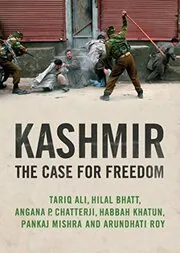
Kashmir
by Arundhati Roy
2011
This slim volume on Kashmir's struggle for self-determination gathers essays by several writers, including Roy's piece on the slogan Azadi, to trace the region's history, military occupation and the gap between official narratives and life on the ground.
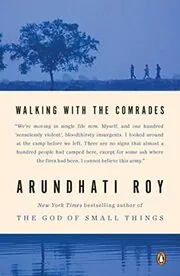
Walking with the Comrades
by Arundhati Roy
2011
In Walking with the Comrades, Roy treks into the forests of central India to live with Maoist guerrillas and Adivasi villagers, documenting how a war over land, minerals and state power plays out far from India's shining cities.
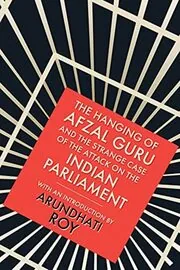
The Hanging of Afzal Guru and the Strange Case of the Attack on the Indian Parliament
by Arundhati Roy
2013
This book revisits the 2001 attack on the Indian Parliament and the execution of Afzal Guru, assembling court documents, commentary and essays to question how the investigation was conducted and what his hanging means for democracy, media and due process.
Capitalism
by Arundhati Roy
2014
In Capitalism: A Ghost Story, Roy explores how corporate wealth, philanthropy and media power shape Indian democracy, linking glittering skyscrapers and luxury towers to dispossession, farmer suicides, militarised regions and the quiet capture of public institutions.
The End of Imagination
by Arundhati Roy
2016
This omnibus brings together five of Roy's major essay collections, from The Cost of Living and Power Politics to War Talk and An Ordinary Person's Guide to Empire, tracing her arguments against nuclear nationalism, mega-dams, US wars and corporate power.
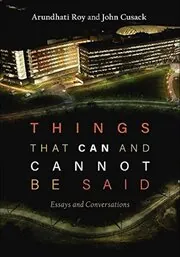
Things that Can and Cannot Be Said
by Arundhati Roy
2016
Co-written with John Cusack, this slim volume braids conversations with Edward Snowden and Daniel Ellsberg into a meditation on secrecy, surveillance and empire, asking what can be spoken aloud in a world structured by militarism and managed information.
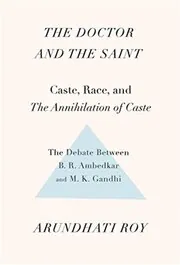
The Doctor and the Saint
by Arundhati Roy
2017
A short book-length essay, The Doctor and the Saint reads the debate between B. R. Ambedkar and M. K. Gandhi on caste, race and representation, asking how Gandhi's image was built and why Ambedkar's radical challenge was pushed to the margins.
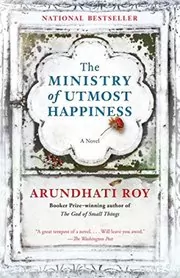
The Ministry of Utmost Happiness
by Arundhati Roy
2017
Roy's second novel follows Anjum, an intersex woman who builds a community in a Delhi graveyard, and Tilo, an architect drawn into the conflict in Kashmir. Their intersecting lives reveal an India marked by dispossession, surveillance and small, stubborn acts of care.
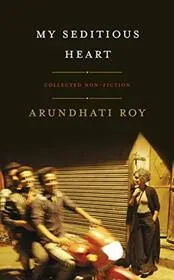
My Seditious Heart
by Arundhati Roy
2019
Spanning more than two decades, My Seditious Heart gathers nearly a thousand pages of Roy's nonfiction on dams, nuclear weapons, caste, communal violence, Kashmir and global capitalism, tracing how India has changed since her Booker-winning debut.
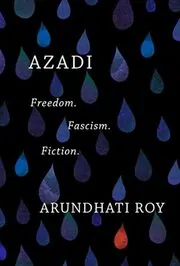
Azadi
by Arundhati Roy
2020
Azadi collects late-2010s essays on the rise of Hindu nationalism, the Kashmir freedom slogan, protest movements and the COVID-19 pandemic, as Roy asks what freedom can mean in an India shaped by surveillance, inequality and creeping authoritarianism.

Mother Mary Comes to Me
by Arundhati Roy
2025
Mother Mary Comes to Me is Roy's memoir of her mother, Mary Roy, and of growing up in Kerala, weaving scenes of family conflict, legal battles and boarding-school escapes with reflections on writing, love, faith and the making of both a daughter and a country.
Where to start with Arundhati Roy
If you want to start with her novels: The God of Small Things → The Ministry of Utmost Happiness.
If you're curious about her early political essays: The Cost of Living → Power Politics → An Ordinary Person's Guide to Empire.
If you want a crash course in contemporary India and democracy: Field Notes on Democracy: Listening to Grasshoppers → Capitalism: A Ghost Story → Azadi.
If you're drawn to on-the-ground reportage and conflict zones: Walking with the Comrades → Broken Republic → The Doctor and the Saint.
If you prefer intimate life writing: Mother Mary Comes to Me → The God of Small Things.
Arundhati Roy collections, short stories, and related book types
Non-Fiction
Standalone Arundhati Roy books
Author bio
Arundhati Roy was born on 24 November 1961 in Shillong, in north-east India, and grew up between the hill town of Ooty and the backwaters of Kerala. Her mother, Mary Roy, was a feminist educator from Kerala, and her father, Rajib Roy, managed tea plantations and struggled with alcoholism. Their marriage ended when Arundhati was two, and the fracture shaped much of the rest of her childhood.
As a child she moved with her mother and brother to Kerala, where the family lived with her grandparents before Mary Roy started an experimental school. Roy attended Corpus Christi in Kottayam and later the Lawrence School in Lovedale, discovering early that she liked arguing with authority as much as passing exams.
As a teenager she left home for New Delhi to study at the School of Planning and Architecture. Architecture gave her a way out of a tense home life, but not a career she wanted to pursue forever. After graduating she worked briefly at the National Institute of Urban Affairs and shared cramped rooms with other young architects, learning how Indian cities were being redesigned on paper and on the ground.
In those years she met architect Gerard da Cunha, with whom she lived in Delhi and Goa before they separated, and later the filmmaker Pradip Krishen, who became her husband and collaborator. Roy acted in his film Massey Sahib and co-wrote the television series In Which Annie Gives It Those Ones and the feature Electric Moon. The experience taught her how images and dialogue travel, but also how narrow the Indian film world could feel.
Walking away from film, often broke and teaching aerobics to pay rent, she began to write the novel that would change her life.
In 1997 she published The God of Small Things, a family story set in Kerala that folds caste, forbidden love and childhood memory into a fractured timeline. The book won the Booker Prize for fiction and became an international bestseller, giving Roy both financial independence and an enormous, sometimes uncomfortable, spotlight. Its mix of intimate detail and political undercurrents signalled the concerns she would keep returning to.
After that success she turned much of her energy to nonfiction. Roy wrote about big dams in The Cost of Living, nuclear tests in The End of Imagination, and corporate power and privatisation in books such as Power Politics, An Ordinary Person's Guide to Empire, Capitalism: A Ghost Story and My Seditious Heart. Her essays on Kashmir, Hindu nationalism, the Naxalite insurgency and the war on terror are based on long trips to protest camps, forests and courtrooms rather than armchair commentary.
Her political writing has brought her contempt-of-court charges, sedition cases, public vilification and a worldwide readership that looks to her for clear, insistent description of how power works.
Roy returned to fiction in 2017 with The Ministry of Utmost Happiness, a sprawling novel that moves between Old Delhi's graveyards and the streets and mountains of Kashmir, following characters who live at the edges of the official story of modern India. She has continued to publish essay collections such as Azadi and long-form reportage like Walking with the Comrades, about travelling with Maoist guerrillas in central India.
In 2025 she published Mother Mary Comes to Me, a memoir about her formidable mother, her own coming-of-age and the long, difficult closeness between them. Roy now lives in Delhi, where she writes in English and divides her time between fiction, essays, court appearances, public talks and quiet stretches of work at her desk. To her, there is no clean line between literature and politics; the same voice that creates memorable characters is also trying, book by book, to record what is happening to the country she refuses to stop arguing with.





Edited by
Software engineer whose passion for tracking book recommendations from podcasts inspired the creation of MRB.
Lead investor at 3one4 Capital whose startup expertise and love for books helped shape MRB and its growth.
Comments
Did we miss something? Have feedback?
Help us improve this page by sharing your thoughts