
16 Best Orthopaedics Books
The best orthopaedics books, ranked by expert recommendation counts, with notes to help students, residents, and clinicians choose the right level and format.
Our take
Orthopaedic books serve different stages of training and different clinical roles. A student learning regional anatomy needs explanations and illustrations; a resident revising for an examination needs a concise review; a surgeon preparing a case needs much greater procedural detail. Trauma references also differ from rehabilitation and physical assessment texts, even when they discuss the same bones and joints.
For an early clinical framework, AAOS Essentials of Musculoskeletal Care connects common complaints with assessment. Netter's Concise Orthopaedic Anatomy supports focused anatomy review, while Physical Examination of the Spine and Extremities explains a structured examination. Trainees studying injuries can progress from Handbook of Fractures to Rockwood and Green's Fractures in Adults. Miller's Review of Orthopaedics suits revision after that foundation, and Campbell's Operative Orthopaedics offers a much larger surgical reference. Begin with your course or clinical role, then choose a depth and format you can use consistently.
16 books · 8 sources · Last updated
As an Amazon Associate, we earn from qualifying purchases (at no extra cost to you).
How to choose from this list
Skip to the full rankingIf you're building a clinical foundation: AAOS Essentials of Musculoskeletal Care → Netter's Concise Orthopaedic Anatomy
If you're studying physical examination: Physical Examination of the Spine and Extremities → Magee’s Orthopedic Physical Assessment
If you want to study fracture care: Handbook of Fractures → Rockwood and Green's Fractures in Adults
If you're preparing for examinations: Miller's Review of Orthopaedics
If you're preparing for operative training: Surgical Exposures in Orthopaedics → Campbell's Operative Orthopaedics
If you want detailed imaging study: Orthopaedic Imaging
The 16 books, ranked
Ranked by how many expert sources name each book. Ties go to the book more people recommend.
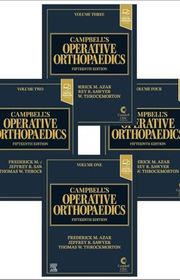
Campbell's Operative Orthopaedics
For residents and surgeons who need a broad operative reference across subspecialties. The detailed techniques make it useful for substantial preparation, though the multivolume scale and assumed background are poorly suited to learning the basics quickly.
What it's about
This multivolume reference surveys orthopaedic conditions and operative management across body regions. Illustrated techniques, diagnostic considerations, treatment decisions, complications, and rehabilitation connect procedural detail with the broader clinical knowledge required for specialist surgical training and practice.

Rockwood and Green's Fractures in Adults
For residents and surgeons who need depth on adult trauma. Its extensive discussion supports study of treatment choices and complications, though the size and specialist detail are less convenient than a handbook for quick review.
What it's about
Paul Tornetta and fellow editors assemble a comprehensive reference on adult fracture care. Expert contributions address planning, operative and nonoperative treatment, complications and outcomes, with algorithms, checklists and tables supporting decisions across common orthopedic injuries.

Handbook of Fractures
For trainees who need a compact reference to fracture patterns and management considerations. The portable organization supports review around clinical work, though abbreviated explanations and numerous classifications make it a supplement to foundational study rather than its replacement.
What it's about
Kenneth Egol, Kenneth Koval and Joseph Zuckerman provide a portable reference for fracture classification and management. Organized coverage of adult and pediatric injuries brings clinical evaluation and treatment considerations together for residents and practicing clinicians.
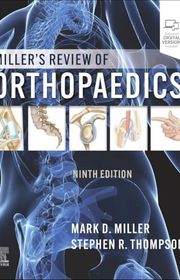
Miller's Review of Orthopaedics
For residents revising material they have already studied for in-training or board examinations. The outline and review format compress a wide curriculum efficiently, though the brevity makes it a difficult first explanation of unfamiliar topics.
What it's about
Stephen Thompson and Mark Miller organize orthopaedic knowledge into a concise examination review. Bulleted summaries, illustrations, tables, and questions address core topics across subspecialties, helping trainees consolidate previous learning and identify areas needing further study before professional examinations.

For trainees preparing to understand surgical approaches and vulnerable structures. The regional anatomical organization makes it a useful operative companion, though an exposure atlas does not supply a complete account of indications, treatment selection, or postoperative care.
What it's about
Stanley Hoppenfeld, Piet de Boer and Richard Buckley illustrate surgical approaches through detailed regional anatomy. The atlas explains landmarks, incisions and dissection, identifying vulnerable structures and procedural pitfalls while showing surgeons how to reach operative sites.
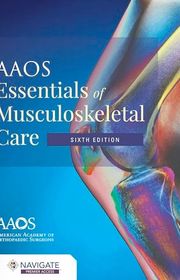
AAOS Essentials of Musculoskeletal Care
For medical students and clinicians building a practical approach to common musculoskeletal complaints. Its regional assessment and management framework is more accessible than operative encyclopedias, though it still assumes basic anatomy and isn't a subspecialty surgical text.
What it's about
The American Academy of Orthopaedic Surgeons presents common musculoskeletal conditions through symptoms, examination, differential diagnosis, treatment, and referral considerations. Regional organization, illustrations, exercises, and case material connect clinical assessment with the everyday care of patients across health professions.
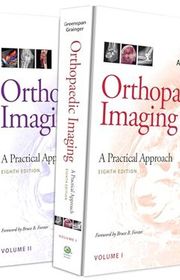
Orthopaedic Imaging
For trainees and clinicians who need to interpret musculoskeletal images in context. The large illustrated reference develops imaging judgment more deeply than a brief review, though its scope and radiological detail make targeted reading more practical.
What it's about
Adam Greenspan and fellow contributors explain musculoskeletal imaging across modalities, linking visual findings with pathological conditions. Large illustrations, diagrams, and practical summaries support study of diagnostic interpretation and the choice of imaging approaches for different clinical questions.
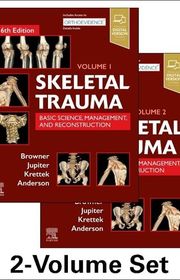
Skeletal Trauma
For residents and specialists studying traumatic injuries beyond a pocket summary. Its integration of biomechanics, assessment, and reconstruction offers substantial depth, though the comprehensive coverage overlaps with other major trauma references and requires selective reading.
What it's about
This reference examines acute musculoskeletal injury and reconstruction after trauma. Coverage connects anatomy, biomechanics, injury mechanisms, diagnostic approaches, treatment options, and complications, giving trainees and specialists a detailed framework for studying both initial injuries and longer-term problems.
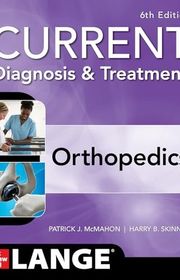
CURRENT Diagnosis & Treatment Orthopedics
For clinicians and students who need a broad clinical reference between an introductory manual and an operative encyclopedia. The condition-focused organization aids consultation, though compressed coverage cannot replace detailed sources for complex subspecialty or procedural questions.
What it's about
Patrick McMahon and Harry Skinner survey orthopaedic disorders through diagnostic features, investigations, and treatment options. Chapters span trauma, reconstruction, sports medicine, spine, pediatrics, and other fields, connecting clinical presentations with the workup and management of musculoskeletal disease.
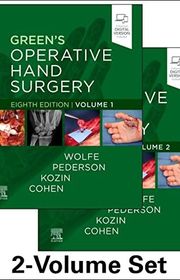
Green's Operative Hand Surgery
For trainees and specialists concentrating on the hand and upper extremity. The detailed surgical and nonsurgical coverage goes beyond a general orthopaedic reference, though its specialist scope makes it excessive for a first broad overview.
What it's about
Scott Wolfe and fellow contributors cover disorders of the hand, wrist, and elbow through anatomy, diagnosis, operative techniques, nonsurgical care, and rehabilitation. Illustrations and case-based discussions connect specialist procedures with indications, controversies, and outcomes across upper extremity practice.
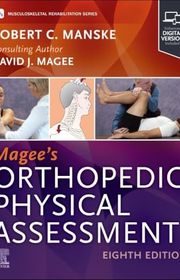
Magee’s Orthopedic Physical Assessment
For rehabilitation learners who want a systematic examination reference with detailed clinical context. Its breadth supports comparison across regions and tests, though the volume of maneuvers requires judgment and practice rather than memorization alone.
What it's about
Robert Manske and David Magee present musculoskeletal assessment by region, linking history, examination, and differential diagnosis. Illustrated tests, clinical cases, and discussions of gait and posture help rehabilitation learners build a structured approach to evaluating movement and physical findings.
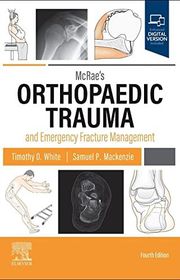
McRae's Orthopaedic Trauma and Emergency Fracture Management
For trainees who want an illustrated framework for emergency fracture care before tackling larger trauma texts. The stepwise presentation makes early study manageable, though its practical compression leaves less room for controversies and detailed operative alternatives.
What it's about
Timothy White and Samuel Mackenzie introduce orthopaedic trauma across emergency assessment, investigations, procedures, and follow-up. Stepwise illustrations and radiographs connect relevant anatomy with common injuries, providing a compact framework for trainees learning to approach fracture and trauma presentations.

Netter's Concise Orthopaedic Anatomy
For medical students who want to connect musculoskeletal anatomy with clinical problems. The illustrations and concise tables support focused review, though the compressed format provides less explanation of management decisions than a broader clinical textbook.
What it's about
Jon Thompson connects orthopedic anatomy with clinical examination, disorders, trauma and surgical approaches. Netter illustrations, radiologic images and concise tables organize information on bones, joints, muscles and nerves, alongside diagnostic and treatment algorithms.
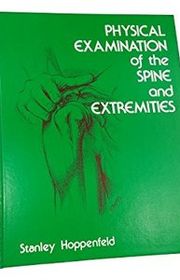
Physical Examination of the Spine and Extremities
For learners who want the anatomical reasoning behind a structured examination. Clear illustrations make the sequence easier to follow, though this older classic needs supplementing for contemporary evidence about tests and provides little treatment guidance.
What it's about
Stanley Hoppenfeld explains examination of the spine and limbs through a consistent regional method. Illustrations link surface anatomy, movement, and physical findings, helping students and clinicians understand the observations and maneuvers used during a musculoskeletal assessment.

For rehabilitation students and clinicians who want examination connected with intervention. The integration of biomechanics, differential assessment, and exercise distinguishes it from surgical references, though the detailed approach assumes professional study rather than general patient reading.
What it's about
Mark Dutton presents a systematic approach to orthopedic examination, evaluation and rehabilitation. Regional anatomy and biomechanics connect with differential diagnosis, manual techniques and therapeutic exercise, while algorithms and case studies illustrate clinical decision-making.

Orthopaedics for Physician Assistants
For physician assistants seeking a reference aligned with their clinical role. The combination of assessment and practical procedures is more targeted than a surgical encyclopedia, though the focused scope leaves subspecialty depth to other references.
What it's about
Sara Rynders and Jennifer Hart provide an orthopedic reference written for physician assistants. Physical examination, history taking, imaging, diagnosis and treatment strategies are organized alongside practical coverage of injections, casting, splinting and wound care.
Sources
- 1
Orthopedics - Health Sciences Textbooks - Library Guides at University of Missouri Libraries
libraryguides.missouri.edu
- 2
Books - Orthopaedics - Research Guides at University of British Columbia
guides.library.ubc.ca
- 3
Musculoskeletal Educational Resources for the Aspiring Orthopaedic Surgeon - PMC
pmc.ncbi.nlm.nih.gov
- 4
What Books Should You Study as an Orthopaedic Resident? - Nepal Orthopaedic Association
noa.org.np
- 5
Orthopedics Books
goodreads.com
- 6
Book recommendations for new resident in orthopedic surgery : r/orthopaedics
reddit.com
- 7
Orthopedics - Residents and Fellows - All Specialties - LibGuides at LSUHSC-New Orleans Libraries
libguides.lsuhsc.edu
- 8
100 Best Orthopedics Books of All Time (Updated for 2026)
shortform.com









Edited by
Software engineer whose passion for tracking book recommendations from podcasts inspired the creation of MRB.
Lead investor at 3one4 Capital whose startup expertise and love for books helped shape MRB and its growth.
Comments
Spotted a missing book, a wrong order or a mistake? Tell us and we'll fix this page.
We're a reading guide, not the author or publisher, so we can't send books or pass on messages.