
14 Best Arduino Books
The best Arduino books, ranked by how many expert sources recommend each one, with notes on who each suits, from first circuits to coding and robotics projects.
Our take
Arduino books bring together two skills that do not always develop at the same pace: writing programs and building circuits. Some readers already know how to code but need help with components; others can wire a project and want to understand the sketch controlling it. A useful guide matches that starting point and gives you something to test as you learn.
Arduino For Dummies offers a broad introduction, while Programming Arduino concentrates on understanding sketches. Arduino Workshop and Arduino Project Handbook supply builds that put ideas to work. For questions that arise inside your own project, Arduino Cookbook organizes solutions by task. Arduino Robotics moves toward motors and mobile machines, and Making Things Talk explores communication between devices. Older examples can still explain useful concepts, but check that the board and components match what you have.
Start with Arduino For Dummies for a general foundation, or Programming Arduino if reading and changing code is your main obstacle.
14 books · 8 sources · Last updated
As an Amazon Associate, we earn from qualifying purchases (at no extra cost to you).
How to choose from this list
Skip to the full rankingIf you're new to electronics and coding: Arduino For Dummies → Arduino Workshop
If you want to understand sketches: Programming Arduino → Beginning C for Arduino
If you want visually guided projects: Arduino Project Handbook
If you need solutions for your own build: Arduino Cookbook
If you want mobile robots: Arduino Robotics
If you want devices to communicate: Making Things Talk
The 14 books, ranked
Ranked by how many expert sources name each book. Ties go to the book more people recommend.

For makers who have a project underway and need a solution to a particular problem. Its recipes connect code with components more efficiently than a linear tutorial, but you must understand enough basics to adapt each example correctly.
What it's about
Michael Margolis and his coauthors organize Arduino development around practical recipes. Worked examples cover programming, sensors, communication, displays, audio, motors, libraries, and memory, helping readers solve specific problems while learning how to connect software with electronic components.

For beginners who want to learn by building a sequence of increasingly involved devices. Its many projects give concepts an immediate purpose, but you need to gather components and spend time troubleshooting rather than simply reading along.
What it's about
John Boxall teaches Arduino electronics and programming through sixty-five projects. Schematics and component illustrations support lessons involving sensors, displays, motors, wireless communication, and robotics, with projects increasing in complexity as readers learn to reuse code and design interactive devices.

For complete newcomers who want a compact introduction to physical computing from one of Arduino’s creators. It emphasizes prototyping and experimentation over exhaustive coverage, so you will need another reference as projects and programming demands become more complex.
What it's about
Massimo Banzi and Michael Shiloh introduce Arduino through practical electronics projects. The guide explains the board, software environment, circuits, breadboard prototyping, and schematics, progressing toward computer communication and a custom plant-watering system.

For beginners who want to understand the code inside sketches instead of only copying it. The concise programming explanations keep software central, but electronics and larger construction projects receive less attention than in the project-led guides.
What it's about
Simon Monk introduces Arduino programming through short example sketches. He explains language basics, functions, arrays, strings, libraries, and digital and analog input and output, helping beginners understand how programs communicate with the board and its connected electronic components.

Arduino For Dummies
For beginners who want hardware setup, coding and circuits explained without assuming an engineering background. Its broad introduction helps the pieces fit together, but experienced programmers may find the early lessons slow and need to check board-specific examples.
What it's about
John Nussey introduces Arduino through practical explanations and projects for building interactive electronics. He guides readers through hardware and software setup, basic programming, circuits, and connected components, then explores how to combine those skills in devices of their own design.

For learners who like a course divided into manageable sessions with programming at its center. The lesson structure supplies a clear route through hardware examples, but the title’s timetable should not be mistaken for a realistic mastery deadline.
What it's about
Richard Blum divides Arduino programming into twenty-four lessons that build from setup to prototyping. Examples teach C fundamentals and show how to work with digital and analog devices, sensors, motors, displays, and shields while developing complete hardware projects.

Arduino Robotics
For readers who specifically want to build mobile robots and connect motors, sensors and control logic. Its progression gives mechanical projects a clear focus, but the larger builds demand more parts, construction effort and patience than introductory breadboard exercises.
What it's about
John-David Warren, Josh Adams, and Harald Molle teach robot building with Arduino through progressively more complex projects. The book connects electronics and programming fundamentals with motors, controllers, sensors, and construction, moving from simple mobile robots toward GPS-enabled and other specialized machines.

For readers who want electronics and programming explained together through projects. Its attention to the principles behind connections makes it a useful bridge toward independent designs, though the broad technical coverage requires more study than a short beginner primer.
What it's about
Jeremy Blum uses Arduino projects to introduce electronics, programming, and interaction design. Schematics and code examples explain sensors, motor control, communication, networking, and wireless connections, building from individual concepts toward more complex devices.

For experienced makers who want pinouts, electrical behavior and software details close at hand. Its reference format supports design questions beyond beginner sketches, but the AVR-focused coverage and older hardware context need checking against your particular board.
What it's about
J. M. Hughes provides a reference to the electrical, software, and performance characteristics of Arduino systems. Pinouts, AVR microcontroller details, firmware, libraries, shields, and sensors help technicians, engineers, and makers understand the platform and resolve questions while developing projects.
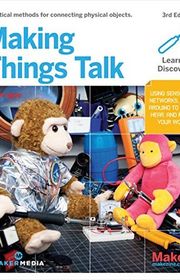
Making Things Talk
For makers who want devices to exchange information instead of working in isolation. Its focus on sensors, networks and communication extends beyond basic circuit tutorials, but the range of protocols and hardware makes it better after some initial projects.
What it's about
Tom Igoe connects microcontrollers, sensors and networking hardware in projects that communicate with computers and other devices. The book explores wired and wireless connections, showing how physical objects can exchange information and respond to activity beyond a single circuit.

30 Arduino Projects for the Evil Genius
For learners motivated by having a working device at the end of each exercise. Its varied builds give basic electronics and coding a concrete goal, but following supplied projects alone provides less systematic programming depth than a dedicated language book.
What it's about
Simon Monk introduces Arduino programming and electronics through thirty projects. Instructions, schematics, and examples explain how to connect components, write programs, and build interactive devices, giving beginners practical experience with the microcontroller platform and the coding needed to control it.
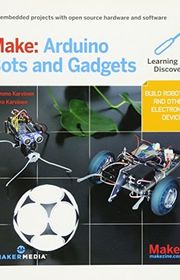
Arduino Bots and Gadgets
For readers who want a small set of complete embedded projects rather than a large reference. The builds connect code with robots and interactive devices, but older hardware and phone-related instructions may need substantial adaptation.
What it's about
Kimmo and Tero Karvinen introduce embedded computing through six Arduino projects. Each build adds programming and electronics skills, moving from basic prototyping toward robots, computer-controlled devices and interactions with phones, with instructions intended to support practical experimentation.
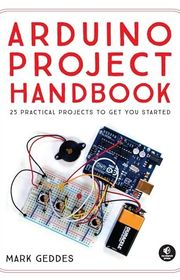
Arduino Project Handbook
For beginners who prefer clear visual instructions and a choice of small builds. Its photographs, diagrams and supplied code make starting a project approachable, but readers need to examine the sketches actively to move beyond following instructions.
What it's about
Mark Geddes presents twenty-five electronics projects using Arduino, with photographs, circuit diagrams and code. An introduction covers tools and components before projects such as light displays and games, allowing readers to follow the sequence or choose individual builds.

For beginners who want programming structures explained through hardware examples. Its language-first progression gives more practice with organizing code than many project collections, but readers mainly seeking ready-to-build gadgets may find it less immediately rewarding.
What it's about
Jack Purdum teaches C programming through examples that control Arduino microcontrollers and connected hardware. Designed for beginners, the book builds from programming structures to reusable library routines, pairing explanations with demonstrations that connect coding concepts to working electronics.
Sources
- 1
Top Arduino books curated by experts
mentorcruise.com
- 2
Best Arduino Books for Beginners in 2026
hackr.io
- 3
10 Best Arduino Books For Programmers & Engineers
whatpixel.com
- 4
Getting Started with Arduino: Books
libguides.nyit.edu
- 5
Arduino Books
goodreads.com
- 6
Arduino books recommendations while/after following Paul McWhorter's tutorials?
reddit.com
- 7
MEC101, Fall 2025 - Books
sites.google.com
- 8
Hi, can you please recommend books on Arduino that you used to learn?
reddit.com




Edited by
Software engineer whose passion for tracking book recommendations from podcasts inspired the creation of MRB.
Lead investor at 3one4 Capital whose startup expertise and love for books helped shape MRB and its growth.
Comments
Spotted a missing book, a wrong order or a mistake? Tell us and we'll fix this page.
We're a reading guide, not the author or publisher, so we can't send books or pass on messages.