
9 Best American Civil War Books
The best American Civil War books, ranked by how many expert sources recommend each one, with notes on reader fit, perspectives, scope, and where to start.
Our take
The American Civil War can be studied through battles and command decisions, but also through slavery, political breakdown, emancipation, and the lives changed by mass death. Its aftermath includes the struggle over how Americans remembered the conflict and whose experiences that memory excluded. A general history supplies a map of events; a focused study helps explain a question that an overview can only introduce.
Battle Cry of Freedom connects the political and military story in one substantial volume. Grant's memoirs offer a commander's firsthand perspective, while The Fiery Trial follows Lincoln's changing relationship to slavery. This Republic of Suffering examines death and mourning, and Race and Reunion turns toward the politics of remembrance. Readers interested in causes can choose The Impending Crisis or the more concentrated Apostles of Disunion. Start with Battle Cry of Freedom for orientation, then follow the political, military, or social question you most want to understand.
9 books · 5 sources · Last updated
As an Amazon Associate, we earn from qualifying purchases (at no extra cost to you).
How to choose from this list
Skip to the full rankingIf you want a broad first history: Battle Cry of Freedom
If you want to understand the road to secession: The Impending Crisis, 1848-1861 → Apostles of Disunion
If you want participants' perspectives: The Personal Memoirs of Ulysses S. Grant → For Cause and Comrades
If you're interested in Lincoln and emancipation: The Fiery Trial
If you want the social consequences of mass death: This Republic of Suffering
If you want to understand contested remembrance: Race and Reunion → Confederates in the Attic
The 9 books, ranked
Ranked by how many expert sources name each book. Ties go to the book more people recommend.

The Personal Memoirs of Ulysses S. Grant
For readers who want a commander's own account of campaigns and decisions. Grant's direct prose makes military problems unusually approachable, though a memoir presents a participant's retrospective perspective rather than an independent assessment of his record.
What it's about
Ulysses S. Grant recounts his early life and military service, focusing on the Mexican War and the American Civil War. His firsthand narrative explains campaigns, command decisions, and his perspective on the people and conflicts he encountered.
Also recommended by
2 people Jamie Dimon recommended this book
Jamie Dimon
On Jamie Dimon's list of favorite books.
Jamie Dimon's recommendation of this book  Mark Twain recommended this book
Mark Twain
Mark Twain recommended this book in a letter.
Mark Twain's recommendation of this book

This Republic of Suffering
For readers who want to understand the war through death, mourning, and the work of caring for the dead. Its social and cultural perspective broadens a campaign-centered account, though the sustained attention to loss is emotionally demanding.
What it's about
Drew Gilpin Faust explores how mass death during the Civil War transformed American families, institutions, and beliefs. Soldiers’ and civilians’ voices illuminate the practical work of burial and mourning alongside religious and moral efforts to understand unprecedented loss.

For readers who want to understand how the war's public meaning changed afterward. Its connection between remembrance, reconciliation, and racial exclusion explains enduring disputes, though it concentrates on memory rather than narrating the fighting itself.
What it's about
David Blight examines how Americans remembered the Civil War during the decades that followed. He argues that reconciliation between white Northerners and Southerners marginalized slavery, emancipation, and Black Americans' experiences, shaping a national memory built around selective forgetting.

For readers who want emancipation examined through Lincoln's changing ideas and political choices. Its focused argument connects leadership with outside pressures, though readers seeking a complete presidential biography or military overview will need another book.
What it's about
Eric Foner traces Abraham Lincoln’s changing views on slavery from his early life through the presidency. The book places those developments within the political pressures and antislavery movements that shaped the Civil War and the course of emancipation.

Battle Cry of Freedom
For newcomers who want politics, slavery, society, and military events connected in one volume. Its broad narrative establishes the context for specialist reading, though the substantial length still requires more commitment than a short introductory survey.
What it's about
James McPherson traces the political, social, and military developments that led to the American Civil War and shaped its course. His narrative connects slavery, sectional conflict, leadership, and battlefield campaigns to the struggles over the Union and emancipation.
Also recommended by
2 people Ta-Nehisi Coates recommended this book
Ta-Nehisi Coates
"The definitive history of the Civil War. One of the greatest works of history I've ever read and arguably the best one volume history in existence." - Ta-Nehisi Coates
Ta-Nehisi Coates's recommendation of this book  Saagar Enjeti recommended this book
Saagar Enjeti
"Reading it in the midst of social and political chaos in America gave me profound hope that America at its best can overcome even its worst challenges." - Saagar Enjeti
Saagar Enjeti's recommendation of this book
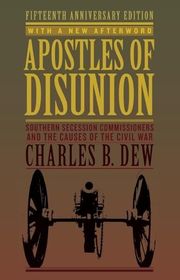
Apostles of Disunion: Southern Secession Commissioners and the Causes of the Civil War
For readers who want a concise investigation of what secession's advocates actually argued. Its close use of commissioners' statements makes political motives concrete, though the narrow focus does not provide a full history of the sectional crisis.
What it's about
Charles Dew examines the speeches and letters of Southern commissioners sent to persuade other slave states to secede. Their appeals reveal how slavery and racial ideology shaped the arguments for disunion at the beginning of the Civil War.

For readers interested in how Civil War memory survives in everyday encounters. Horwitz's reporting makes contested identities and reenactment culture concrete, though the travel narrative reflects particular people and a particular moment rather than comprehensive historical coverage.
What it's about
Tony Horwitz travels through the South to explore the Civil War’s continuing hold on American memory. Encounters with reenactors, descendants, activists, and battlefield visitors reveal how remembrance, regional identity, and racial conflict intersect long after the fighting ended.

For readers interested in soldiers' reasons for joining, fighting, and continuing under pressure. Letters and diaries bring ideology into contact with experience, though the surviving accounts cannot represent every soldier or explain each individual choice.
What it's about
James McPherson draws on Civil War soldiers' letters and diaries to investigate why they enlisted and continued fighting. Comparing Union and Confederate experiences, he examines ideology, duty, faith, comradeship, and the pressures that sustained men through danger and hardship.

The Impending Crisis, 1848-1861
For readers who want the political breakdown before the shooting began explained in depth. Its sustained attention to sectional conflict gives later events stronger context, though it is a substantial study of causes rather than a battlefield history.
What it's about
David Potter examines the political and sectional crises that brought the United States to civil war between 1848 and 1861. The narrative follows disputes over slavery, territorial expansion, compromise, and secession, showing how conflict gradually overwhelmed efforts to preserve the Union.
Sources





Edited by
Software engineer whose passion for tracking book recommendations from podcasts inspired the creation of MRB.
Lead investor at 3one4 Capital whose startup expertise and love for books helped shape MRB and its growth.
Comments
Spotted a missing book, a wrong order or a mistake? Tell us and we'll fix this page.
We're a reading guide, not the author or publisher, so we can't send books or pass on messages.