
14 Best Algebra Books
The best algebra books, ranked by how many expert sources recommend each one, with notes on reader fit, course levels, practice, and where to start.
Our take
Algebra turns relationships between numbers into expressions, equations, and functions. Learning it requires both understanding what a method does and practicing until you can choose and use it reliably. The books here focus on school algebra and preparation for college mathematics, from introductory equations to functions and trigonometry. A workbook, a self-teaching guide, and a full classroom text can all help, but they provide different kinds of support.
No-Nonsense Algebra and Painless Algebra offer approachable explanations, while Practical Algebra suits readers returning to the subject independently. Workbooks such as Algebra I Workbook For Dummies concentrate on practice and checking methods. More extensive texts provide a course sequence, and Rusczyk's Introduction to Algebra asks students to tackle less routine problems. Check the assumed level before choosing: an Algebra 2 text expects skills an introductory guide is still building. Start with a clear first-course explanation, then add practice that makes you work without looking at the solution.
14 books · 6 sources · Last updated
As an Amazon Associate, we earn from qualifying purchases (at no extra cost to you).
How to choose from this list
Skip to the full rankingIf you're starting or rebuilding confidence: No-Nonsense Algebra → Painless Algebra
If you want an independent refresher: Practical Algebra
If you need more introductory practice: Algebra I Workbook For Dummies → The Humongous Book of Algebra Problems
If you're ready for Algebra 2: Algebra 2
If you're preparing for precalculus: Algebra and Trigonometry
If you want challenging problem solving: Introduction to Algebra
The 14 books, ranked
Ranked by how many expert sources name each book. Ties go to the book more people recommend.

For beginners who want short lessons with examples, practice, and repeated review. The accompanying tutorials give another route through a difficult topic, though the concise approach offers less exploration than a full classroom textbook.
What it's about
Richard W. Fisher presents introductory algebra in short lessons with worked examples, practice, and built-in review. Topics progress from prerequisite skills to equations, graphing, polynomials, radicals, and quadratics, with video tutorials accompanying individual lessons in the book.
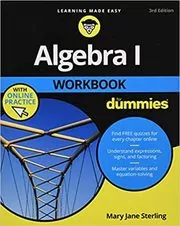
Algebra I Workbook For Dummies
For learners who understand the basics but need more practice and feedback. Detailed solutions help locate errors in a method, though the workbook format works better alongside instruction than as a complete first explanation.
What it's about
Mary Jane Sterling supplies practice problems with detailed solutions covering core introductory algebra. Exercises address factoring, equations, inequalities, word problems, and graphs, allowing readers to check their methods and identify where calculations or reasoning go wrong.
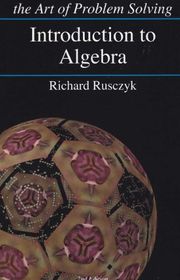
Introduction to Algebra
For motivated students who want to understand methods through challenging problems. Its problem-solving approach develops flexibility beyond routine drills, though the harder exercises can be frustrating without time, persistence, or occasional guidance.
What it's about
Richard Rusczyk develops introductory algebra through problems and explanations designed to build mathematical reasoning. Topics include equations, inequalities, functions, polynomials, and related foundations, with challenging exercises that encourage students to discover methods and connect ideas.
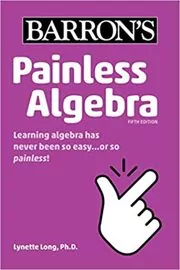
Painless Algebra
For students put off by algebra's vocabulary or formal presentation. Its accessible explanations and quizzes offer a gentler review, though the simplified format does not replace the depth and exercise range of a full course.
What it's about
Lynette Long reviews algebra in a step-by-step format that translates mathematical terminology into accessible language. Diagrams, examples, quizzes, and tips address equations, inequalities, graphing, roots, and radicals while drawing attention to common errors and misunderstandings.
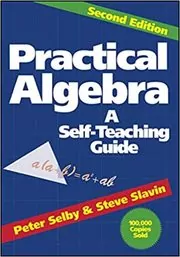
For adults returning to algebra who want to connect procedures with practical problems. Its self-teaching approach makes independent review manageable, though the older examples and presentation may feel less inviting than newer illustrated guides.
What it's about
Peter H. Selby and Steve Slavin offer a self-teaching introduction and refresher focused on practical algebra. Problems drawn from engineering, science, social science, and business show how algebraic methods can be used beyond classroom exercises.
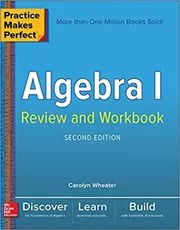
Practice Makes Perfect Algebra I Review and Workbook
For students who want a manageable combination of review and repeated practice. Worked examples lead into exercises across core topics, though the compact format gives less room for developing concepts than a comprehensive textbook.
What it's about
Carolyn Wheater pairs introductory algebra lessons with hundreds of exercises and an answer key. Worked examples cover variables, linear graphs, polynomials, quadratic and radical equations, and word problems, helping readers practice new methods and check their understanding.
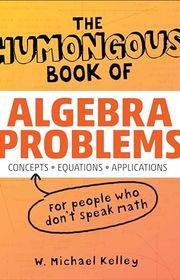
The Humongous Book of Algebra Problems
For learners who need to see many worked examples with the missing steps filled in. Its annotations make problem solving easier to follow, though reviewing solutions must be paired with independent attempts to check understanding.
What it's about
W. Michael Kelley presents a large collection of algebra problems with worked solutions and explanatory annotations. Organized by topic, the examples show intermediate steps and common reasoning patterns, helping students review methods and practice applying them.

For students who want a conventional first-year high-school algebra course. Its organized lessons and varied practice support steady progression, though independent learners may need outside feedback or solutions when an explanation does not click.
What it's about
This high-school textbook develops algebra through expressions, equations, functions, and their graphical representations. Explanations, exercises, and problem-solving activities connect numerical skills with symbolic reasoning, while lessons on linear equations build a foundation for further study.

For students who have completed introductory algebra and want a structured next course. Its work with functions and more advanced relationships supports further study, though it assumes earlier skills rather than rebuilding them from scratch.
What it's about
Building on introductory algebra, this textbook develops functions, systems of equations, matrices, and more advanced relationships. Worked material and practice activities connect algebraic techniques with graphs, modeling, and trigonometry, preparing students for subsequent mathematics courses.
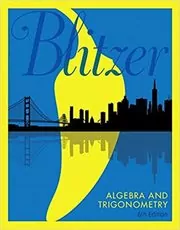
Algebra and Trigonometry
For students moving toward precalculus who like applications and familiar contexts. Blitzer connects algebra with trigonometry in a substantial course, though its breadth and volume of material can overwhelm someone still learning elementary equations.
What it's about
Robert Blitzer connects algebra and trigonometry with applications drawn from everyday life and other fields. His textbook combines explanations and exercises with prerequisite review, using familiar situations to help students connect mathematical procedures with the concepts they represent.
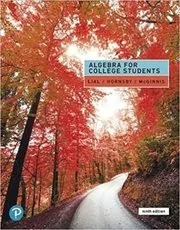
Algebra for College Students
For college learners consolidating intermediate skills before more advanced coursework. Its balance of skill practice and conceptual questions supports a broad review, though students already confident in algebra may find parts repetitive.
What it's about
Margaret Lial, John Hornsby, and Terry McGinnis combine intermediate algebra with selected college-algebra topics. Their instructional approach balances skills exercises and conceptual questions, with reviews and applications that support students progressing toward more advanced mathematics.
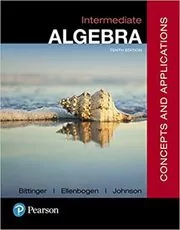
For learners who know elementary algebra and want to connect procedures with graphs and models. Its intermediate scope supports further college mathematics, though readers with weak arithmetic or equation-solving foundations should review those first.
What it's about
Marvin Bittinger and his coauthors connect algebraic concepts with problem solving through functions, equations, inequalities, and mathematical models. The text develops polynomial, rational, radical, quadratic, and exponential relationships, combining procedural skills with graphical interpretation and applications.

For students who want a traditional progression through algebra and trigonometry with substantial reasoning work. Its connected treatment suits careful study, though the dense format and older classroom style provide less conversational support for hesitant beginners.
What it's about
Richard G. Brown’s Structure and Method textbook develops algebraic reasoning through equations, inequalities, functions, polynomials, and trigonometry. Its progression connects symbolic methods with graphs, applications, and proofs, extending foundational skills into more advanced high-school mathematics.
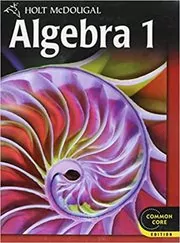
Holt McDougal Algebra 1
For students who prefer a full school-textbook structure with lessons and practice across introductory topics. Its consistent progression supports a year-long course, though independent learners may need an instructor or companion resources to resolve mistakes.
What it's about
This introductory algebra textbook develops skills with expressions, equations, inequalities, functions, and polynomials. Classroom lessons and practice connect symbolic work with graphs and data, providing a foundation for students moving beyond arithmetic and pre-algebra into high-school mathematics.
Sources
- 1
Top 10 Algebra Textbooks
wiki.ezvid.com
- 2
10 Really Helpful Books for Algebra
numberdyslexia.com
- 3
Best Algebra Books for High School & College (2026)
gauravtiwari.org
- 4
Math Curriculum Recommendations - Elementary to High School
artofproblemsolving.com
- 5
Best book(s) for Algebra 1-2
reddit.com
- 6
100 Best Algebra Books of All Time
shortform.com


Edited by
Software engineer whose passion for tracking book recommendations from podcasts inspired the creation of MRB.
Lead investor at 3one4 Capital whose startup expertise and love for books helped shape MRB and its growth.
Comments
Did we miss something? Have feedback?
Help us improve this page by sharing your thoughts