
13 Best Child Psychology Books
The best child psychology books, ranked by how many expert sources recommend each one, with notes on development, parenting, emotional skills and trauma.
Our take
Child psychology covers how children think, learn, form relationships and respond to the world around them. Readers arrive with different questions: a student may need a developmental overview, while a parent may want help understanding an argument or a difficult routine. These books range from textbooks and influential theories to communication guides, activity collections and accounts of clinical work. Their purposes matter when deciding what to read first.
How Children Develop offers the broadest route into developmental study. The Psychology Of The Child provides a historical theoretical perspective, while The Whole-Brain Child presents a practical parenting framework. For everyday communication, the two How to Talk books serve different age groups. Smart but Scattered focuses on executive skills, and The Boy Who Was Raised as a Dog approaches development through trauma case narratives. Far From the Tree explores identity and acceptance through family reporting. Start with a general developmental text for breadth, or choose the practical guide that matches the age and question you have in mind.
13 books · 5 sources · Last updated
As an Amazon Associate, we earn from qualifying purchases (at no extra cost to you).
How to choose from this list
Skip to the full rankingIf you want a broad developmental overview: How Children Develop → The Psychology Of The Child
If you're communicating with young children: How to Talk so Little Kids Will Listen → No Bad Kids
If you want everyday communication tools: How to Talk So Kids Will Listen & Listen So Kids Will Talk → No-Drama Discipline
If you're supporting organization and recurring difficulties: Smart but Scattered → The Explosive Child
If you're exploring trauma and family experience: The Boy Who Was Raised as a Dog → Far From the Tree
If you want structured activities: Building Emotional Intelligence → Therapy Games for Teens
The 13 books, ranked
Ranked by how many expert sources name each book. Ties go to the book more people recommend.

The Whole-Brain Child
12 Revolutionary Strategies to Nurture Your Child's Developing Mind
For parents who want memorable ways to respond to strong feelings and everyday conflict. The stories and illustrations make the authors' framework accessible, though its simplified brain explanations should not be treated as a comprehensive developmental textbook.
What it's about
Daniel Siegel and Tina Payne Bryson present twelve parenting strategies based on their account of children's brain development. Through explanations, stories, and illustrations, they explore ways to respond to emotions, everyday conflicts, and opportunities for learning.
Also recommended by
1 person Graham Duncan recommended this book
Graham Duncan
Graham Duncan mentioned this book on "The Tim Ferriss Show" podcast.
Graham Duncan's recommendation of this book

For parents who want concrete alternatives to arguments, dismissive responses and repeated commands. The illustrated exchanges make communication choices easy to compare, though using the approach naturally takes practice and it is not a full child-development course.
What it's about
Adele Faber and Elaine Mazlish offer approaches to communicating with children through everyday challenges. Examples and exercises address listening, feelings, cooperation, and conflict, showing how parents can express concerns while respecting a child's perspective and developing understanding.
Also recommended by
1 person Brian Armstrong recommended this book
Brian Armstrong
"Really about how to communicate with all people. I found this book quite helpful and it changed how I communicate." - Brian Armstrong
Brian Armstrong's recommendation of this book

The Psychology Of The Child
For students interested in Piaget and Inhelder's influential account of how thinking develops. The concise theoretical overview provides historical grounding, though it represents a particular developmental framework and needs reading alongside more recent research.
What it's about
Piaget and Bärbel Inhelder summarize their account of cognitive development from infancy through adolescence. They examine how perception, language, reasoning, and social understanding change as children actively engage with their surroundings and develop new forms of thought.

For parents of toddlers who want a consistent approach to boundaries without shaming. Lansbury's short pieces make her respectful-parenting perspective easy to revisit, though the collected format can repeat ideas and offers one philosophy rather than a research survey.
What it's about
Janet Lansbury offers an approach to toddler discipline based on respect, calm leadership, and clear boundaries. Collected articles address tantrums, hitting, biting, and other common challenges, explaining how parents can respond while acknowledging children's feelings and developmental needs.
Also recommended by
1 person Ezra Klein recommended this book
Ezra Klein
Ezra Klein recommended this book on Twitter.
Ezra Klein's recommendation of this book

For parents and educators who want age-organized practices for attention and emotional awareness. The exercise-based format encourages shared practice, though its narrow focus on emotional skills offers less explanation of development than the broader textbooks.
What it's about
Linda Lantieri offers age-organized practices for helping children develop emotional awareness and resilience. Designed for parents, educators, and caregivers, the exercises address calming the body, focusing attention, understanding emotions, and strengthening empathy and communication.
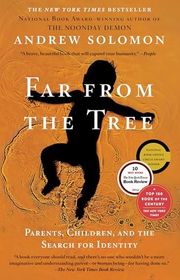
Far From the Tree
For readers interested in identity, acceptance and profound differences within families. Solomon's extensive reporting broadens the discussion beyond everyday parenting techniques, though the length and emotionally difficult experiences make it a substantial, sometimes demanding read.
What it's about
Andrew Solomon explores families in which children differ profoundly from their parents. Drawing on interviews across varied identities, disabilities and experiences, he examines acceptance, belonging and the tension between supporting a child's individuality and responding to difficult circumstances.

How Children Develop
For students who want a broad, research-oriented introduction to child development. The textbook connects theories with multiple areas of children's lives, though the course-style scope and terminology require more sustained study than a practical parenting guide.
What it's about
This child-development textbook combines developmental theories, research across cultures, and practical applications. Organized by topic, it examines children’s learning and social lives, including emotions, attachment, family relationships, peers, moral development, and gender.

How to Talk so Little Kids Will Listen
A Survival Guide to Life with Children Ages 2-7
For adults navigating cooperation, frustration and routines with children aged two to seven. Its examples translate listening principles into recognizable situations, though the many suggested responses need adapting to the individual child rather than repeating as fixed scripts.
What it's about
Joanna Faber and Julie King adapt their communication approach for adults caring for children ages two to seven. The guide offers practical tools for recognizing feelings, encouraging cooperation, and navigating everyday conflicts while strengthening relationships with young children.
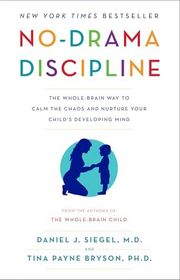
No-Drama Discipline
For parents who want discipline framed around teaching and connection. Its focused treatment extends the approach in The Whole-Brain Child into recurring conflicts, though readers seeking a broad scientific overview will find a practical parenting framework instead.
What it's about
Daniel Siegel and Tina Payne Bryson present an approach to discipline that emphasizes connection before redirecting behavior. Examples and illustrations explore how adults can respond to conflict while communicating expectations and helping children understand their feelings and actions.

Smart but Scattered
The Revolutionary "Executive Skills" Approach to Helping Kids Reach Their Potential
For parents and teachers concerned with planning, organization and follow-through in everyday tasks. Its focus on specific executive skills makes support more concrete, though the assessments and strategies require time to apply and are not a diagnostic evaluation.
What it's about
Peg Dawson and Richard Guare explain executive skills such as planning, organization, attention, and emotional control. Assessments and practical strategies help parents and teachers identify children’s strengths and difficulties and support everyday tasks like homework and chores.

The Boy Who Was Raised as a Dog
And Other Stories from a Child Psychiatrist's Notebook
For readers seeking a clinician's perspective on childhood trauma through individual cases. The narratives connect developmental ideas with lived experiences, though the distressing material and selected stories provide a different kind of understanding from a systematic research textbook.
What it's about
Child psychiatrist Bruce Perry and journalist Maia Szalavitz recount cases involving children affected by severe trauma. Their stories examine how stress influences development and how compassionate care, supportive relationships, and an understanding of the brain can inform recovery.
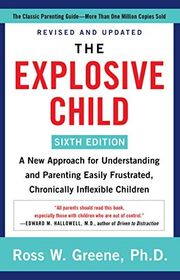
The Explosive Child
For parents facing recurring, intense conflicts who want a structured collaborative approach. Greene concentrates on identifying unresolved problems and discussing them proactively, though the method requires preparation and patient conversations rather than an immediate response for every outburst.
What it's about
Ross Greene presents his Collaborative and Proactive Solutions approach to children who struggle with frustration, flexibility and problem solving. The book describes identifying recurring difficulties and working with children to address the problems that precede challenging behavior.

Therapy Games for Teens
150 Activities to Improve Self-Esteem, Communication, and Coping Skills
For adults facilitating structured activities with teenagers rather than reading developmental theory. The games and discussion prompts provide ready material for interaction, though selecting an appropriate activity still requires judgment about the participants, setting and purpose.
What it's about
This collection offers 150 recreation-based activities for teens, with instructions, discussion prompts, and simple materials. Games for individuals and groups encourage self-expression, emotional awareness, communication, and reflection on challenges such as stress, bullying, and grief.
Sources
- 1
5 Great Books About Child Psychology
bestmastersinpsychology.com
- 2
10 Great Books for Child Psychologists
onlinepsychologydegree.info
- 3
The 7 most recommended child psychology books
exploringyourmind.com
- 4
Child Psychology Books
goodreads.com
- 5
Can anyone recommend a basic child psychology book for parents?
reddit.com


Edited by
Software engineer whose passion for tracking book recommendations from podcasts inspired the creation of MRB.
Lead investor at 3one4 Capital whose startup expertise and love for books helped shape MRB and its growth.
Comments
Spotted a missing book, a wrong order or a mistake? Tell us and we'll fix this page.
We're a reading guide, not the author or publisher, so we can't send books or pass on messages.