
The Thom Hartmann Hidden History Books in Order
Part ofThom Hartmann Books in OrderSee The Thom Hartmann Hidden History books by Thom Hartmann in order, with quick summaries, series background, and tips on the best place to start.
Last updated:
As an Amazon Associate, we earn from qualifying purchases (at no extra cost to you).
The Thom Hartmann Hidden History books in publication order
9 books
The Hidden History of Guns and the Second Amendment
by Thom Hartmann
2019
Hartmann revisits American gun history from slavery and conquest to the modern gun lobby. He argues that the current reading of the Second Amendment is far newer and more political than many readers assume.
The Hidden History of the Supreme Court and the Betrayal of America
by Thom Hartmann
2019
A brisk history of how the Supreme Court gained and used sweeping political power. Hartmann argues that judicial overreach has distorted democracy and asks what it would take for voters to reclaim that ground.
The Hidden History of Monopolies
by Thom Hartmann
2020
This book follows the long fight between concentrated corporate power and democratic control. Hartmann shows how monopolies shape daily life, politics, and prices, then argues for a return to stronger antitrust action.
The Hidden History of the War on Voting
by Thom Hartmann
2020
Hartmann traces voter suppression from the founding era to present-day restrictions, showing how the ballot has always been a battlefield. He also points to practical ways citizens can defend and expand voting rights.
The Hidden History of American Healthcare
by Thom Hartmann
2021
A history of why healthcare in the United States became so expensive, unequal, and profit-driven. Hartmann links today's system to older battles over money, racism, and political power, and argues for universal care.
The Hidden History of American Oligarchy
by Thom Hartmann
2021
Hartmann frames American history as a recurring struggle between democracy and rule by the rich. He tracks that conflict from the founding through the New Deal and into the present, while pushing for organized resistance.
The Hidden History of Big Brother in America
by Thom Hartmann
2022
Hartmann examines how corporations and government track, store, and use personal data. The book blends history, technology, and civil-liberties concerns into a warning about surveillance becoming normal.
The Hidden History of Neoliberalism
by Thom Hartmann
2022
Hartmann explains how free-market dogma moved from theory into everyday policy and helped hollow out the middle class. He treats neoliberalism as a history of ideas with very real consequences for work, wealth, and democracy.
The Hidden History of the American Dream
by Thom Hartmann
2024
Hartmann traces the rise of the American middle class, the policies that helped build it, and the later choices that weakened it. He pairs that history with proposals for making the American Dream less distant again.
The Thom Hartmann Hidden History books in chronological order

The Hidden History of Guns and the Second Amendment
by Thom Hartmann
2019The Thom Hartmann Hidden History, Book 1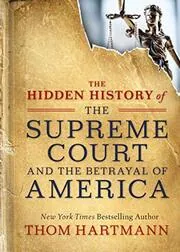
The Hidden History of the Supreme Court and the Betrayal of America
by Thom Hartmann
2019The Thom Hartmann Hidden History, Book 2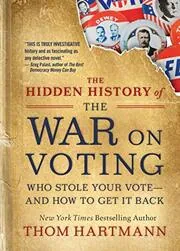
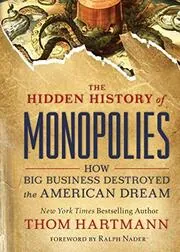
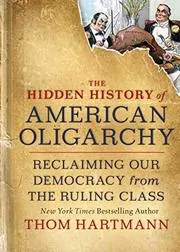
The Hidden History of American Oligarchy
by Thom Hartmann
2021The Thom Hartmann Hidden History, Book 5
The Hidden History of American Healthcare
by Thom Hartmann
2021The Thom Hartmann Hidden History, Book 6
The Hidden History of Big Brother in America
by Thom Hartmann
2022The Thom Hartmann Hidden History, Book 7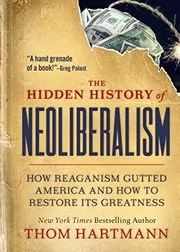

The Hidden History of the American Dream
by Thom Hartmann
2024The Thom Hartmann Hidden History, Book 9
Series background & context
The Hidden History books are Hartmann's short, fast-moving works of political history. Each one takes a part of American life that feels broken and asks what older decisions, court cases, business interests, or power networks made it that way. The subjects change from book to book, but the basic move stays the same: look past the headline, then follow the paper trail.
What links the series is a long argument about democracy and concentrated power. In books on guns, the Supreme Court, voting, monopolies, oligarchy, healthcare, surveillance, neoliberalism, and the American Dream, Hartmann keeps asking who gets protected, who gets shut out, and how the rules were written that way. The books are less interested in isolated events than in systems.
These are history books with an argument.
Hartmann writes like a broadcaster who wants listeners to get the backstory before the next news cycle hits. That means clear stakes, brisk pacing, and a lot of attention to how law, money, race, media, and party strategy feed into one another. He is not trying to sound distant or neutral. The appeal is the opposite: he is direct about what he thinks, and he wants readers to test the story he is telling against the facts of public life.
Even so, the books work well as standalones. If you want to see Hartmann tackle a founding myth head-on, start with The Hidden History of Guns and the Second Amendment or The Hidden History of the Supreme Court and the Betrayal of America. If you care most about civil rights and civic participation, The Hidden History of the War on Voting is an easy entry point. Readers more interested in economics often begin with The Hidden History of Monopolies, The Hidden History of American Oligarchy, The Hidden History of Neoliberalism, or The Hidden History of the American Dream. Readers pulled toward public policy often start with The Hidden History of American Healthcare or The Hidden History of Big Brother in America.
The books are blunt on purpose.
Read together, the series builds a larger picture of the country Hartmann thinks America became, and the country he thinks it could still be. The later books widen out from single issues to the bigger architecture of middle-class decline and democratic erosion. The through line is that rights can be narrowed, public goods can be privatized, and democratic habits can fade when people stop noticing the history underneath them. That is why the books keep circling back to the same things: memory, power, and participation. If you like compact political history that tries to connect past choices to present crises, this series has a very clear lane.
















Edited by
Software engineer whose passion for tracking book recommendations from podcasts inspired the creation of MRB.
Lead investor at 3one4 Capital whose startup expertise and love for books helped shape MRB and its growth.
Comments
Did we miss something? Have feedback?
Help us improve this page by sharing your thoughts