
Future History Books in Order
See the Future History series by Robert A Heinlein in order, with story lists, timeline notes, summaries, and guidance on how these linked tales fit together inside his imagined history of humanity.
Last updated:
As an Amazon Associate, we earn from qualifying purchases (at no extra cost to you).
Future History books in publication order
7 books

Misfit
by Robert A Heinlein
1939
A mathematically gifted misfit, Andrew Jackson "Slipstick" Libby, joins a space construction crew tasked with moving an asteroid into a new orbit. When disaster looms, his ability to calculate under pressure may be the only thing that saves the mission.
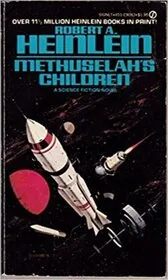
Methuselah's Children
by Robert A Heinlein
1941
The secretive Howard Families have bred for long life, but when their centuries‑long lifespans are exposed, a frightened public turns on them. Led by wily Lazarus Long, they flee Earth in search of a world where they can live free.
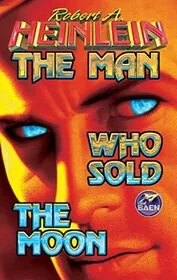
The Man Who Sold the Moon
by Robert A Heinlein
1950
Stories about hard‑driving entrepreneur D. D. Harriman and other pioneers determined to open space for profit and adventure. Deals, engineering challenges, and stubborn idealism combine as they gamble everything to put the first rockets on the Moon.
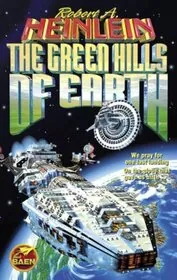
The Green Hills of Earth
by Robert A Heinlein
1951
A collection of short stories centered on the balladeer Rhysling and other working spacers, sketching cargo runs, moon bases, and far‑flung colonies. Together they give a lyrical, rough‑edged portrait of everyday life in Heinlein's spacefaring future.
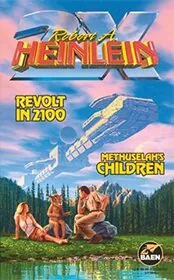
Revolt in 2100
by Robert A Heinlein
1953
A linked set of tales set in Heinlein's Future History, beginning with a coup against a fundamentalist American theocracy and its aftermath. These stories mix political rebellion, exile, and reluctant heroism as ordinary people push back against absolute power.
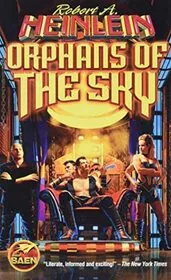
Orphans of the Sky
by Robert A Heinlein
1963
On a vast generation ship whose crew has forgotten it is a ship, young Hugh Hoyland discovers the terrifying truth about his closed world. His struggle to understand and act reshapes both his own beliefs and his society's future.
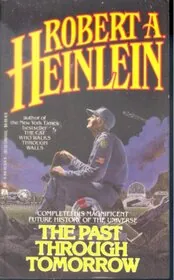
The Past Through Tomorrow
by Robert A Heinlein
1967
An omnibus of Heinlein's core Future History stories, tracing humanity from near‑future labor unrest and spaceflight through the rise of a theocracy and the long lives of the Howard Families. Ideal for readers who want his imagined timeline in one volume.
Where to start with Future History
For a generation-ship mystery: Orphans of the Sky
For shorter Future History stories: The Man Who Sold the Moon → The Green Hills of Earth
For a larger collection: The Past Through Tomorrow
Author bio
Robert A. Heinlein built his Future History around a simple but expansive idea: separate stories could belong to the same imagined account of humanity's future. The books collected here form part of a much larger writing career. They show his interest in invention, political freedom and the social arrangements people create when familiar rules stop working. Space travel changes the possible settings, but arguments about authority and responsibility remain close at hand.
He was born in Missouri in 1907 and grew up there. After graduating from the United States Naval Academy in 1929, he served in the Navy until illness forced his retirement in 1934. His first published story, “Life-Line,” was sold to Astounding Science-Fiction in 1939. The Future History framework was mapped out in 1941, giving short fiction and longer works a shared timeline.
The future became a setting that could change from one story to another.
Orphans of the Sky makes that idea especially concrete. Its inhabitants live inside an immense generation ship, but their understanding of their surroundings has narrowed until the vessel itself is no longer recognized as a ship. The premise turns a technical project into a question about education, belief and the authority of inherited explanations. Discovering how the world works can become dangerous when an entire society depends on a mistaken account of it.
Other titles on this page provide collections and entry points into the wider chronology. The Green Hills of Earth and The Past Through Tomorrow gather shorter works, while Revolt in 2100 and Methuselah's Children explore different conflicts within the imagined future. A reader can therefore encounter the setting through a concentrated short story or a longer narrative. The shared background allows social and technological changes to accumulate without making every volume a direct sequel.
Heinlein's wider fiction repeatedly returns to individuals testing the boundaries imposed by institutions. That interest can take the form of resistance to state power, a challenge to accepted custom or a practical struggle to survive somewhere unfamiliar. The appeal is often in the encounter between a speculative premise and people willing to argue about its consequences. The books invite disagreement as well as curiosity about how their societies operate.
He received four Hugo Awards and was the first recipient of science fiction's Grand Master honour.
Heinlein died in 1988, leaving a body of work that includes novels, short stories and linked fictional histories. For this part of the bibliography, Orphans of the Sky offers a self-contained starting point with a clear central puzzle. The collections offer another route, showing how the same future can support different characters, problems and lengths of story. Reading them is less like following one hero through consecutive adventures than visiting different stages of an imagined civilization.





Edited by
Software engineer whose passion for tracking book recommendations from podcasts inspired the creation of MRB.
Lead investor at 3one4 Capital whose startup expertise and love for books helped shape MRB and its growth.
Comments
Spotted a missing book, a wrong order or a mistake? Tell us and we'll fix this page.
We're a reading guide, not the author or publisher, so we can't send books or pass on messages.