
Thom Hartmann Books in Order
Browse Thom Hartmann books in order, with quick summaries, series notes, and where to start across his political, ADHD, spiritual, and environmental writing.
Last updated:
As an Amazon Associate, we earn from qualifying purchases (at no extra cost to you).
Thom Hartmann books in publication order
45 books
Attention Deficit Disorder
by Thom Hartmann
1993
Hartmann reframes ADD as a different way of seeing and reacting to the world, not just a deficit. He introduces the hunter versus farmer idea and offers a more humane way to understand attention, energy, and behavior.
The Best of the Desktop Publishing Forum on Compuserve
by Thom Hartmann
1993
Focus Your Energy
by Thom Hartmann
1994
Hartmann looks at how ADD traits can become assets in business when they are understood and channeled well. The book mixes mindset shifts with practical advice on focus, organization, risk-taking, and entrepreneurship.
Hunter In A Business World
by Thom Hartmann
1994
Hartmann looks at how classic ADHD hunter traits can become real strengths in business. The focus is practical: choosing the right work, staying organized, and building a life that fits a fast-moving mind.
ADD Success Stories
by Thom Hartmann
1995
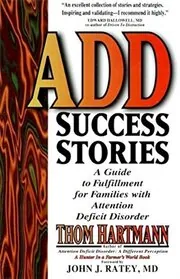
This collection brings together stories, strategies, and encouragement for families living with ADD. Hartmann highlights real-world struggles and successes to show how understanding the condition can lead to steadier, more hopeful daily life.
Beyond ADD
by Thom Hartmann
1996
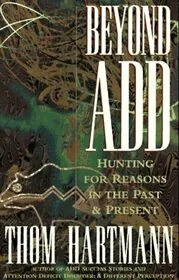
Hartmann digs into the history, culture, and possible roots of ADD, asking why certain minds fit badly with modern expectations. It is a broader, more reflective companion to his practical ADHD books.
Think Fast
by Thom Hartmann
1996
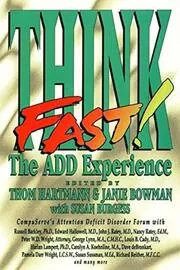
An anthology of expert views and first-person experiences from the ADD community. It combines practical information about treatment and coping with candid accounts of what everyday life with ADD can actually feel like.
Healing ADD
by Thom Hartmann
1998
Built around short exercises and mindset shifts, this book is about easing the emotional wear that often comes with growing up with ADD. Hartmann focuses on self-talk, old hurts, and practical ways to change daily patterns.
The Last Hours of Ancient Sunlight
by Thom Hartmann
1998
Hartmann connects ecology, energy, culture, and history to argue that modern life is burning through resources it cannot replace. It is both a warning about environmental collapse and a call to relearn more sustainable ways of living.
Imagine: What America Could Be in the 21st Century
by Thom Hartmann & Anne Lamott
2000
This forward-looking anthology gathers essays by American thinkers considering how individuals and communities might help shape the twenty-first century. Its contributors address personal change alongside public questions involving health, the environment, education, religion, cities, politics, and technology.
The Greatest Spiritual Secret of the Century
by Thom Hartmann
2000
When young reporter Paul Abler impulsively saves a child's life, he is pulled into a strange world of love, myth, and spiritual revelation. Hartmann uses the novel's adventure plot to explore faith, consciousness, and compassion.
Thom Hartmann's Complete Guide to ADHD
by Thom Hartmann
2000
A broad, practical handbook for families dealing with ADHD at home, at school, and at work. Hartmann combines explanations, coping strategies, and day-to-day advice for children, parents, and adults.
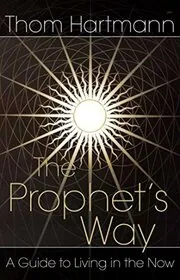
The Prophet's Way
by Thom Hartmann
2001
Part memoir and part spiritual guide, this book follows Hartmann's search for meaning through travel, service, and the teachings of his mentor Herr Muller. It explores how to live in the present without losing sight of the sacred.
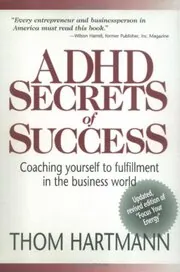
ADHD Secrets of Success
by Thom Hartmann
2002
A practical guide for readers with ADHD who want to work with their strengths instead of against them. Hartmann focuses on business life, coaching readers through focus, goal-setting, and the kinds of careers where fast-moving minds can thrive.
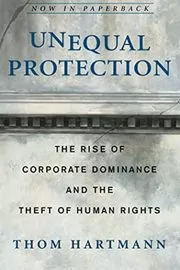
Unequal Protection
by Thom Hartmann
2002
Hartmann argues that corporations gradually took on the legal rights of people and used that power to dominate public life. The book follows the rise of corporate personhood and asks how democracy can be pulled back into balance.
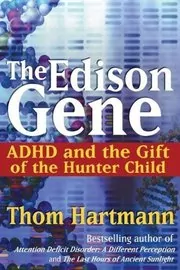
The Edison Gene
by Thom Hartmann
2003
Hartmann expands his argument that ADHD traits may be inherited strengths better suited to older hunter-gatherer settings than modern classrooms. He mixes evolutionary theory, science, and advice for parents raising inventive, restless kids.
We the People
by Thom Hartmann
2004
An accessible call to reclaim American democracy from fear politics, concentrated wealth, and corporate influence. Hartmann ties current troubles to longer historical patterns and urges ordinary citizens to get organized and involved.
What Would Jefferson Do?
by Thom Hartmann
2004
Hartmann turns to early American ideas to argue that democracy works best when power stays close to ordinary people. He links the founders' debates to modern fights over corporate influence, representation, and civic responsibility.
Ultimate Sacrifice
by Thom Hartmann
2005
Lamar Waldron and Thom Hartmann examine the Kennedy administration's secret plans to overthrow Fidel Castro. Drawing on interviews and declassified records, they argue that organized crime exploited the operation to arrange President Kennedy's assassination and obstruct its investigation.
Screwed
by Thom Hartmann
2006
Hartmann argues that the American middle class was not lost by accident but weakened by policy choices that favored corporations and the very rich. He traces the damage and sketches out ways citizens can fight back.
Walking Your Blues Away
by Thom Hartmann
2006
Hartmann explores how walking and other bilateral movement can help people process distress and old emotional wounds. It is a slim, practical book about healing the mind through motion, rhythm, and attention.
Cracking the Code
by Thom Hartmann
2007
A book about persuasion, framing, and political language. Hartmann tries to show readers how arguments win hearts, how stories shape public life, and how progressives can speak more clearly and effectively.
Legacy of Secrecy
by Thom Hartmann
2008
Following their investigation in Ultimate Sacrifice, Lamar Waldron and Thom Hartmann explore the secrecy surrounding Kennedy's assassination. They use archival documents and interviews to argue that concealed government operations and organized crime shaped the investigation and its political aftermath.
Threshold
by Thom Hartmann
2009
Written in the shadow of economic crisis, this book asks how the United States ended up on the brink and what a more sustainable future might look like. Hartmann blends politics, history, ecology, and reform-minded proposals.
On the Verge
by Thom Hartmann
2010
Hartmann pulls together climate danger, resource depletion, and political failure into a sharp warning about what human activity is doing to the planet. He also argues that better policy and collective action can still change the outcome.
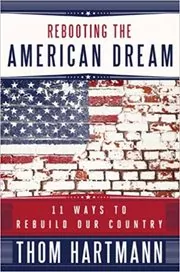
Rebooting the American Dream
by Thom Hartmann
2010
A concise, policy-minded book about how to rebuild the country from the bottom up. Hartmann lays out practical fixes for the economy, democracy, work, and public life, all aimed at restoring a stronger middle class.
Recommended by
1 person Bernie Sanders recommended this book
Bernie Sanders
"[The author's] very specific ideas as to how we can save the collapsing middle class and rebuild the American Dream are worthy of serious thought and discussion." - Bernie Sanders
Bernie Sanders's recommendation of this book
The Thom Hartmann Reader
by Thom Hartmann
2011
A wide-ranging collection of Hartmann's essays on democracy, education, ADHD, spirituality, ecology, and corporate power. It works well as an introduction to the ideas and themes that run through the rest of his nonfiction.
The Crash of 2016
by Thom Hartmann
2013
Hartmann argues that the conditions behind the 2008 financial collapse were never really fixed and could trigger an even deeper crisis. He ties economic risk to inequality, corporate power, and the weakening of democratic institutions.
The Last Hours of Humanity
by Thom Hartmann
2013
A short, urgent warning about runaway global warming and the possibility of mass extinction. Hartmann focuses on tipping points, methane release, and the narrow window people still have to change course.
The American Revolution of 1800
by Thom Hartmann
2014
This history-driven book revisits Jefferson's election as a turning point in the fight against concentrated power and factional rule. Hartmann helps connect that earlier democratic crisis to the country's present political troubles.
ADHD and the Edison Gene
by Thom Hartmann
2015
Hartmann argues that many ADHD traits can be gifts when children are understood and supported instead of shamed. He pairs the Edison gene idea with practical, drug-free strategies for helping kids manage school, family, and self-esteem.
Death in the Pines
by Thom Hartmann
2015
Retired Atlanta private investigator Oakley Tyler is drawn into a Vermont case after an old forester asks him to protect his reporter grandson. A suspicious death, environmental stakes, and genetic engineering turn it into a tense mystery.
Adult ADHD
by Thom Hartmann
2016
A step-by-step guide to using ADHD hunter traits in work, business, and family life. Hartmann offers practical advice on focus, organization, entrepreneurship, and how to stop treating every difference as a defect.
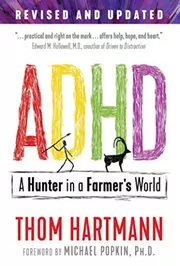
ADHD
by Thom Hartmann
2019
In this revised take on his hunter versus farmer framework, Hartmann argues that ADHD is often a mismatch with modern systems rather than a simple disorder. He blends reframing, evolutionary theory, and practical coping ideas.
The Hidden History of Guns and the Second Amendment
by Thom Hartmann
2019
Hartmann revisits American gun history from slavery and conquest to the modern gun lobby. He argues that the current reading of the Second Amendment is far newer and more political than many readers assume.
The Hidden History of the Supreme Court and the Betrayal of America
by Thom Hartmann
2019
A brisk history of how the Supreme Court gained and used sweeping political power. Hartmann argues that judicial overreach has distorted democracy and asks what it would take for voters to reclaim that ground.
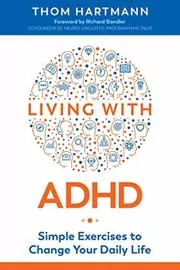
Living with ADHD
by Thom Hartmann
2020
A short, hands-on guide built around simple exercises for everyday life. Hartmann and Richard Bandler focus on patterns, habits, and mental tools that can help readers handle distractibility, stress, and overwhelm.
The Hidden History of Monopolies
by Thom Hartmann
2020
This book follows the long fight between concentrated corporate power and democratic control. Hartmann shows how monopolies shape daily life, politics, and prices, then argues for a return to stronger antitrust action.
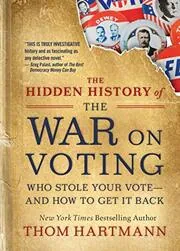
The Hidden History of the War on Voting
by Thom Hartmann
2020
Hartmann traces voter suppression from the founding era to present-day restrictions, showing how the ballot has always been a battlefield. He also points to practical ways citizens can defend and expand voting rights.
The Hidden History of American Healthcare
by Thom Hartmann
2021
A history of why healthcare in the United States became so expensive, unequal, and profit-driven. Hartmann links today's system to older battles over money, racism, and political power, and argues for universal care.
The Hidden History of American Oligarchy
by Thom Hartmann
2021
Hartmann frames American history as a recurring struggle between democracy and rule by the rich. He tracks that conflict from the founding through the New Deal and into the present, while pushing for organized resistance.
The Hidden History of Big Brother in America
by Thom Hartmann
2022
Hartmann examines how corporations and government track, store, and use personal data. The book blends history, technology, and civil-liberties concerns into a warning about surveillance becoming normal.
The Hidden History of Neoliberalism
by Thom Hartmann
2022
Hartmann explains how free-market dogma moved from theory into everyday policy and helped hollow out the middle class. He treats neoliberalism as a history of ideas with very real consequences for work, wealth, and democracy.
The Hidden History of the American Dream
by Thom Hartmann
2024
Hartmann traces the rise of the American middle class, the policies that helped build it, and the later choices that weakened it. He pairs that history with proposals for making the American Dream less distant again.
The Last American President
by Thom Hartmann
2025
Hartmann argues that Donald Trump exposed long-running failures in American democracy rather than creating them from scratch. The book follows the political and moneyed networks behind his rise and ends with strategies for resisting authoritarianism.
Where to start with Thom Hartmann
If you want his Hidden History books: The Hidden History of Guns and the Second Amendment → The Hidden History of the Supreme Court and the Betrayal of America → The Hidden History of the War on Voting
If you want his ADHD framework: Attention Deficit Disorder → The Edison Gene → Adult ADHD
If you want environmental writing: The Last Hours of Ancient Sunlight → The Last Hours of Humanity → On the Verge
If you want a broad political entry point: Unequal Protection → Screwed → Rebooting the American Dream
Thom Hartmann sub-series and character series
The Thom Hartmann Hidden History books in order
Explore this series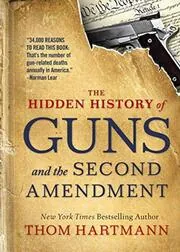
The Hidden History of Guns and the Second Amendment
by Thom Hartmann
2019The Thom Hartmann Hidden History, Book 1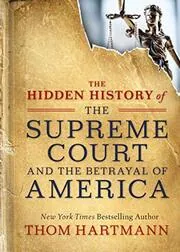
The Hidden History of the Supreme Court and the Betrayal of America
by Thom Hartmann
2019The Thom Hartmann Hidden History, Book 2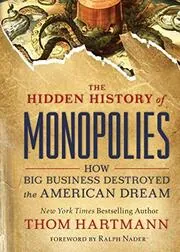

The Hidden History of American Healthcare
by Thom Hartmann
2021The Thom Hartmann Hidden History, Book 6
The Hidden History of American Oligarchy
by Thom Hartmann
2021The Thom Hartmann Hidden History, Book 5
The Hidden History of Big Brother in America
by Thom Hartmann
2022The Thom Hartmann Hidden History, Book 7

The Hidden History of the American Dream
by Thom Hartmann
2024The Thom Hartmann Hidden History, Book 9
The Thom Hartmann Hidden History books in chronological order
The Hidden History of Guns and the Second Amendment
by Thom Hartmann
2019The Thom Hartmann Hidden History, Book 1The Hidden History of the Supreme Court and the Betrayal of America
by Thom Hartmann
2019The Thom Hartmann Hidden History, Book 2The Hidden History of American Oligarchy
by Thom Hartmann
2021The Thom Hartmann Hidden History, Book 5The Hidden History of American Healthcare
by Thom Hartmann
2021The Thom Hartmann Hidden History, Book 6The Hidden History of Big Brother in America
by Thom Hartmann
2022The Thom Hartmann Hidden History, Book 7The Hidden History of the American Dream
by Thom Hartmann
2024The Thom Hartmann Hidden History, Book 9
Thom Hartmann collections, short stories, and related book types
Non-Fiction

by Thom Hartmann
1998The Breakthrough Program that Allows You to See and Heal the 7 Types of ADD

by Thom Hartmann
2006Practical Bilateral Therapies for Healing the Mind and Optimizing Emotional Well-Being
by Thom Hartmann
2007How to Win Hearts, Change Minds, and Restore America's Original Vision




Standalone Thom Hartmann books



by Thom Hartmann
2005John and Robert Kennedy, the Plan for a Coup in Cuba, and the Murder of JFK

Author bio
Thom Hartmann was born in Grand Rapids, Michigan, in 1951 and grew up in Lansing in a conservative Midwestern household. Politics reached him early. As a teenager he campaigned for Barry Goldwater with his father, then veered sharply the other way and was expelled in tenth grade after starting an anti-Vietnam War newspaper.
He later earned a GED, studied at Lansing Community College and Michigan State, and started hustling early. In 1968 he opened an electronics repair shop near campus and worked part time as a disc jockey at a local country station. That mix of engineering, broadcasting, and restlessness never really left him.
Spiritual questions pulled at him just as strongly as politics did. In the late 1960s he moved from counterculture searching toward Christian mysticism, and in 1971 he was ordained through Coptic Fellowship International. Years later that part of his life fed directly into The Prophet's Way, his memoir of spiritual seeking, service, and life with mentor Herr Muller.
He also built businesses.
Hartmann co-founded an herbal products company, later started advertising and travel businesses, and helped found a residential community for abused children in New Hampshire. Through Salem International he was also involved in relief work on several continents. He has said that he and his wife, Louise, built seven businesses together and retired more than once, which makes him an unusual kind of public voice, part broadcaster, part organizer, part entrepreneur.
Then came the ADHD books.
Hartmann's best-known idea is his hunter in a farmer's world reframing of ADHD. In books like Attention Deficit Disorder, The Edison Gene, ADHD and the Edison Gene, and Adult ADHD, he argues that traits often treated as deficits can also be strengths, especially in fast-moving, creative, or entrepreneurial settings. Readers who connect with this work usually like the change in tone: less shame, more usefulness.
Another big strand of his writing looks outward at culture, history, and power. The Last Hours of Ancient Sunlight brought together ecology, energy, and older ways of living. What Would Jefferson Do?, Unequal Protection, Screwed, Rebooting the American Dream, and the Hidden History books turn to democracy, corporate power, voting rights, the courts, and the long fight over who American government is really supposed to serve.
Broadcasting gave him an even bigger daily stage. Since 2003 he has hosted The Thom Hartmann Program, and for years he also hosted The Big Picture on television. He is also a four-time Project Censored Award winner and a New York Times bestselling author, but the most noticeable thing across the books and the broadcasts is the same habit of mind: he likes to take today's crisis and trace the roots backward.
These days he still writes and broadcasts, and he lives in Portland, Oregon, with Louise. For a writer whose books range from spirituality to ADHD to political history, the through line is actually pretty steady. Hartmann keeps coming back to the same question, how people can build systems that are more human than cruel.













Edited by
Software engineer whose passion for tracking book recommendations from podcasts inspired the creation of MRB.
Lead investor at 3one4 Capital whose startup expertise and love for books helped shape MRB and its growth.
Comments
Did we miss something? Have feedback?
Help us improve this page by sharing your thoughts