
James Alexander Thom Books in Order
This page lists James Alexander Thom books in order, with concise summaries, nonfiction titles, publication details, and guidance on where to start.
Last updated:
As an Amazon Associate, we earn from qualifying purchases (at no extra cost to you).
James Alexander Thom books in publication order
16 books

Let the Sunshine In
by James Alexander Thom
1976
This brief early collection captures Thom before his historical fiction breakthrough. Its compact pieces show the observational habits of a working journalist and storyteller rather than the sweep of his later novels.

Spectator Sport
by James Alexander Thom
1978
Set around the rain-soaked, crash-marred 1973 Indianapolis 500, this early novel follows a web of spectators whose lives collide at the Speedway. The result is a sharp look at crowds, violence, and voyeurism.

Long Knife
by James Alexander Thom
1979
George Rogers Clark leads a small Revolutionary force west from Virginia to challenge British power between the Ohio and Mississippi. Thom turns a neglected campaign into a story of ambition, endurance, and betrayal.

Follow the River
by James Alexander Thom
1981
Pregnant Mary Ingles is taken captive after a Shawnee raid on Draper's Meadow in 1755. Refusing to surrender her hope of home, she escapes and follows the river through a brutal wilderness journey.
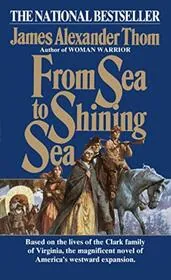
From Sea to Shining Sea
by James Alexander Thom
1984
The Clark family saga follows Ann and John Clark and their children through Revolution, frontier settlement, and the Lewis and Clark expedition. It links family life to the risky work of building a young nation.
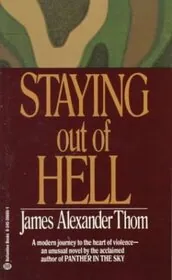
Staying Out of Hell
by James Alexander Thom
1985
Former Marine Scotty Montgomery becomes an anti-war journalist, but old hatred follows him from the Midwest to the Middle East. His clash with bully turned arms dealer Billy Bob Skaggs tests his ideals and anger.

Panther in the Sky
by James Alexander Thom
1989
This fictional life of Tecumseh follows the Shawnee leader from his birth under a comet to his campaign for a Native confederacy. The novel centers his fight to defend land, people, and identity.
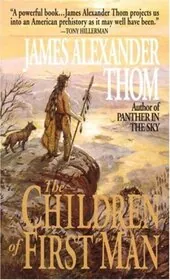
The Children of First Man
by James Alexander Thom
1994
Thom imagines Welsh prince Madoc crossing the Atlantic in the twelfth century and founding a colony in a strange new land. Across generations, his descendants merge with Native peoples and legend.

The Spirit of the Place
by James Alexander Thom
1995
Paired with Darryl L. Jones's photographs, Thom's essays linger over southern Indiana's hill country, its woods, farms, roads, and people. It is nonfiction about landscape, memory, rootedness, and home.
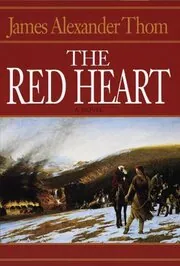
Red Heart
by James Alexander Thom
1997
After young Frances Slocum is taken from her Quaker family during the Revolutionary War, she grows into Maconakwa among the Miami. Years later, her birth family returns, forcing her to face where she belongs.

Sign-Talker
by James Alexander Thom
2000
George Drouillard, a gifted hunter and interpreter of Shawnee and French heritage, joins Lewis and Clark's expedition. Through his eyes, the journey becomes both adventure and warning about the changes coming west.
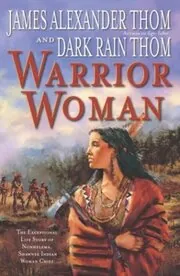
Warrior Woman
by James Alexander Thom
2003
Nonhelema, the Shawnee Women's Peace Chief, tries to protect her people as Virginia settlers and Revolutionary forces push toward their homeland. When peace fails, she must fight, negotiate, and endure betrayals from both sides.

Saint Patrick's Battalion
by James Alexander Thom
2006
During the Mexican-American War, Irish immigrant John Riley deserts U.S. ranks and helps form the San Patricios. Told from both sides, the novel asks what loyalty means when faith, abuse, and conquest collide.

The Art and Craft of Writing Historical Fiction
by James Alexander Thom
2010
Thom's hands-on guide shows writers how to research archives, places, speech, and material culture, then shape those facts into believable fiction without losing the pull of story.

Fire in the Water
by James Alexander Thom
2015
One-armed correspondent Paddy Quinn boards the overcrowded Sultana with his new bride after the Civil War. When the steamboat explodes on the Mississippi, his final assignment becomes a desperate fight to survive.
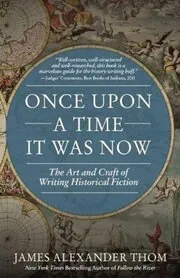
Once Upon a Time It Was Now
by James Alexander Thom
2017
Thom explains how to turn historical research into scenes that feel alive. This guide covers archives, fieldwork, voice, setting, and the tricky balance between documented fact and invented story.
Where to start with James Alexander Thom
For frontier survival: Follow the River → Long Knife → Panther in the Sky.
For Lewis and Clark readers: From Sea to Shining Sea → Sign-Talker.
For Native American historical fiction: Panther in the Sky → Red Heart → Warrior Woman.
For later wars and moral conflict: Saint Patrick's Battalion → Fire in the Water → Staying Out of Hell.
For writers: The Art and Craft of Writing Historical Fiction → Once Upon a Time It Was Now.
James Alexander Thom collections, short stories, and related book types
Non-Fiction
Standalone James Alexander Thom books
Author bio
James Alexander Thom was born in Gosport, Indiana, in 1933, the son of two doctors. He grew up with Indiana close at hand, from small-town Owen County roots to high school in Indianapolis, and that sense of place never really left his work.
Before he was a novelist, Thom had a few other lives. He served in the U.S. Marine Corps during the Korean War, then studied journalism at Butler University. A kind rejection note on an early story helped convince him that maybe writing was not just a private habit.
He kept at it.
Thom worked at The Indianapolis Star, wrote and edited for magazines, and later taught journalism at Indiana University. The reporter's tools stayed with him: check the record, walk the ground, listen for how people talk, and don't take the easy version of a story if the harder one is truer.
His first published fiction, Spectator Sport, grew out of the deadly, rain-soaked 1973 Indianapolis 500. Then came Long Knife, his novel about George Rogers Clark, and Follow the River, the book that brought many readers to him. Based on the ordeal of Mary Draper Ingles after her 1755 captivity, it has the kind of simple engine Thom liked: a person is pushed past the limit, then keeps going.
The past, for him, was physical.
That was not a metaphor. For research, Thom retraced routes, studied old tools and weapons, camped on difficult ground, and even rebuilt a nineteenth-century log cabin near Bloomington with period methods. He believed a historical novelist had to make the reader feel weather, hunger, fear, mud, smoke, and silence, not just learn dates.
His best-known books often return to the early American frontier, but they do not all stand in the same doorway. From Sea to Shining Sea follows the Clark family, including William Clark of Lewis and Clark fame. Panther in the Sky tells the life of Tecumseh and won a Spur Award. Sign-Talker revisits the Lewis and Clark expedition through George Drouillard, the hunter and interpreter whose skills helped hold the journey together. Readers tend to come to these books for the history, then stay for the lived-in details and the moral unease.
Thom also wrote about people caught between cultures, armies, and loyalties. Red Heart follows Frances Slocum, taken as a child and raised among the Miami. With his wife, Dark Rain Thom, he co-wrote Warrior Woman, based on the life of Nonhelema, the Shawnee woman chief. His later work included Saint Patrick's Battalion, Fire in the Water, and a practical guide for writers, The Art and Craft of Writing Historical Fiction.
Thom and Dark Rain lived for many years in the wooded hill country near Bloomington, Indiana. He died on January 30, 2023, at 89. He left behind novels that ask readers to slow down and imagine history as someone else's present, dangerous, confusing, and very much alive.











Edited by
Software engineer whose passion for tracking book recommendations from podcasts inspired the creation of MRB.
Lead investor at 3one4 Capital whose startup expertise and love for books helped shape MRB and its growth.
Comments
Did we miss something? Have feedback?
Help us improve this page by sharing your thoughts