
The Pandora Sequence Books in Order
Part ofFrank Herbert Books in OrderFollow The Pandora Sequence by Frank Herbert and Bill Ransom in order, with book summaries, series background, and guidance on how it connects to Destination: Void.
Last updated:
As an Amazon Associate, we earn from qualifying purchases (at no extra cost to you).
The Pandora Sequence books in publication order
4 books
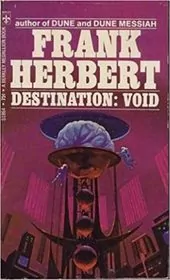
Destination Void
by Frank Herbert
1966
A starship carrying thousands of clones to Tau Ceti loses its organic computer brains, leaving a tiny crew awake in deep space. Their only hope is to build a conscious AI from scratch—knowing it might decide humans are expendable.
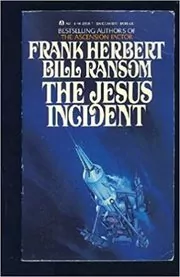
The Jesus Incident
by Frank Herbert
1979
On the ocean world Pandora, descendants of a failed colony struggle under ruthless administrators while Ship—the godlike AI they created in space—demands they learn how to “Worship” properly. Genetic experiments, sentient kelp, and religious upheaval collide in this follow‑up to Destination: Void.
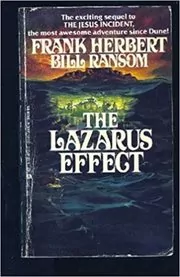
The Lazarus Effect
by Frank Herbert
1983
Centuries after The Jesus Incident, Pandora’s seas cover almost all land, and humanity has split into Islanders and gill‑handed Mermen. As both cultures scheme over genetics, power, and the long‑dormant intelligent kelp, an ancient threat begins to reawaken.
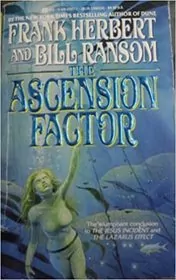
The Ascension Factor
by Frank Herbert
1988
A generation after The Lazarus Effect, Pandora is ruled by the authoritarian Raja Flattery, who exploits food shortages and memories of Ship to maintain control—until rebels, awakening kelp intelligence, and buried histories converge to challenge his grip on the planet.
The Pandora Sequence books in chronological order
Series background & context
The Pandora Sequence is a linked set of novels that grows out of Frank Herbert’s earlier book Destination Void. Together with co‑author Bill Ransom, Herbert uses the series to explore artificial intelligence, religion, and ecology through the long history of a single, very dangerous experiment.
In Destination Void, a starship packed with thousands of clones heads toward another star system to found a colony. The ship is guided by Organic Mental Cores—disembodied human brains wired into the controls—until all three cores fail, leaving only a skeleton crew awake. Under immense pressure, those few must build a conscious machine mind to save themselves, knowing that the last attempt to create such an intelligence went catastrophically wrong. The book ends once they succeed, and the new being takes on a name: Ship.
The later books move the action to Pandora, a harsh ocean world where Ship deposits its human charges. In The Jesus Incident, Ship has become godlike, able to manipulate space and time. It demands that the people on Pandora learn how to form a proper relationship with it—how to "Worship"—or face extinction. Administrators, scientists, and colonists struggle over food, status, and safety while genetic experiments and a possibly sentient global kelp complicate every choice.
The Lazarus Effect takes place centuries later. Most dry land has vanished beneath the sea, and humans have split into two cultures: Islanders living on vast organic rafts and Mermen who inhabit underwater cities. Each group has its own myths about Ship, the original colonists, and the kelp that once filled the oceans. When hints emerge that the kelp may be returning—and with it buried memories and ancient technology—the balance between Islanders and Mermen begins to shift.
The sequence concludes with The Ascension Factor, set a generation after The Lazarus Effect. A clone of Raja Flattery rules Pandora through food control and fear, trying to keep the kelp suppressed and Ship’s legacy locked down. Resistance movements, corporate schemes, and the planet’s own evolving ecology converge, forcing characters to decide whether they will cling to rigid control or accept a more unpredictable, interconnected future.
Across these books you get Herbert’s familiar mix of politics, religion, and systems thinking, but in a very different setting from Dune. The ocean world of Pandora, its living islands, and its enigmatic kelp give the series a shifting, unstable feel. This page lays out the reading order—Destination Void first, followed by the three Pandora novels—and offers summaries and background so you can see how the pieces fit together.







Edited by
Software engineer whose passion for tracking book recommendations from podcasts inspired the creation of MRB.
Lead investor at 3one4 Capital whose startup expertise and love for books helped shape MRB and its growth.
Comments
Did we miss something? Have feedback?
Help us improve this page by sharing your thoughts