
Ardneh Sequence Books in Order
Part ofFred Saberhagen Books in OrderSee the Ardneh Sequence by Fred Saberhagen in order, with connected series, quick summaries, world background, and help on where to begin.
Last updated:
As an Amazon Associate, we earn from qualifying purchases (at no extra cost to you).
Ardneh Sequence books in publication order
16 books

The Broken Lands
by Fred Saberhagen
1968
In a far future warped by ancient catastrophe, Rolf joins the resistance against the Empire of the East. What looks like fantasy is haunted at every turn by the ruins of lost technology.

The Black Mountains
by Fred Saberhagen
1971
Rolf and his allies keep fighting across a transformed world where magic has replaced science and the Eastern Empire presses westward. Survival depends on strategy, loyalty, and stubborn hope.

Ardneh's World / Changeling Earth
by Fred Saberhagen
1973
In the shattered far future, the struggle against the Eastern Empire moves toward Ardneh's final confrontation with dark power. Magic, old technology, and destiny meet in the series' turning point.
The First Book of Swords
by Fred Saberhagen
1983
The gods forge twelve Swords of Power for sport and scatter them among mortals. What begins as a game quickly turns into chaos, ambition, and bloodshed.
The Second Book of Swords
by Fred Saberhagen
1983
Years later, the scattered Swords are still reshaping kingdoms and lives. Mark, Ben, and Barbara are drawn into a dangerous hunt where cunning matters as much as magic.

The Third Book of Swords
by Fred Saberhagen
1984
The last volume of the first Swords trilogy draws scattered players and terrible blades into open conflict. Old plots ripen, and the cost of these god-forged weapons becomes impossible to ignore.

Woundhealer's Story
by Fred Saberhagen
1986
After Baron Amintor steals Woundhealer from the White Temple, Prince Mark races to recover the sword that can heal any wound. The chase becomes a struggle over power, mercy, and desperation.

Sightblinder's Story
by Fred Saberhagen
1987
Prince Mark is trapped, wizards shift sides, and Sightblinder makes its wielder appear as whatever onlookers most want or fear. Escape, betrayal, and illusion drive this tight castle-bound adventure.

Farslayer's Story
by Fred Saberhagen
1988
Farslayer can kill any named target, no matter the distance. When a feud gains hold of the sword, revenge spreads fast and leaves survivors scrambling to stop the next death.

Stonecutter's Story
by Fred Saberhagen
1988
When the sword Stonecutter is stolen, Magistrate Wen Chang and his young assistant Kasimir follow a trail of clues through courts, rebels, and shifting loyalties. It's part fantasy quest, part detective story.
Coinspinner's Story
by Fred Saberhagen
1989
Coinspinner brings luck, but it also changes hands when it chooses. Prince Murat's quest tangles with magic, ambition, and family danger as chance keeps rewriting everyone's plans.
Mindsword's Story
by Fred Saberhagen
1990
Prince Murat finds the Mindsword and means to use it honorably, then learns how easily forced devotion becomes corruption. One drawn blade can turn love, loyalty, and rule into a trap.

Wayspinner's Story
by Fred Saberhagen
1992
A simple grape grower discovers Wayfinder, the Sword of Wisdom, and is pulled into struggles far larger than his life. The blade offers guidance, but not safety.
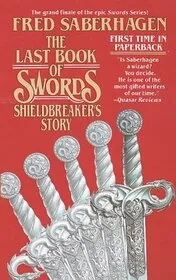
Shieldbreaker's Story
by Fred Saberhagen
1994
Vilkata seizes a city with the Mindsword and turns nearly everyone into loyal followers. Only young Prince Stephen, armed with Shieldbreaker, stands outside the spell and inside the storm.
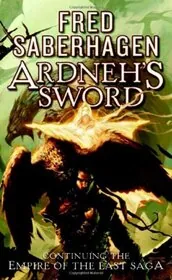
Ardneh's Sword
by Fred Saberhagen
2006
A thousand years after Ardneh's legend, Chance Rolfson joins an expedition hunting proof of the old savior and his hidden vault. His visions suggest the past is not finished with him.

Blind Man's Blade
by Fred Saberhagen
2012
This prequel tale goes back to the beginning, when the newly forged Swords first pass from gods to human hands. A small change at the start could have altered the whole deadly game.
Ardneh Sequence books in chronological order
Series background & context
The Ardneh books are best thought of as one long world-history told in different shapes. The sequence starts with Empire Of The East, moves forward into Books Of Swords and Books Of Lost Swords, and then circles back with Ardneh's Sword. The setting changes tone over time, but the underlying world is the same far-future Earth, scarred by catastrophe and still living with the consequences.
At the center of that history is Ardneh, a legendary figure whose influence lasts for centuries. In the earlier books, the world is closer to post-apocalyptic science fantasy. Empires fight across ruined landscapes. Technology from the old age survives in broken, half-understood forms. What looks like wizardry is often tangled up with ancient machinery, altered laws of nature, or both.
Later, the same world feels more like epic fantasy. Gods walk onto the stage. Magic swords scatter through human politics. Dynasties, temples, and wandering adventurers take over from armies and resistance cells. But the shift is part of the pleasure. Saberhagen keeps reminding you that myth here has a deep backstory.
That backstory matters.
One book may read like a campaign against tyranny, another like a quest for a single weapon, and another like a search through old prophecy and half-lost records. Read together, though, they become a story about inheritance. Every generation is dealing with tools, stories, and dangers left behind by the one before it. No one starts clean.
If you like fantasy that slowly reveals a science-fiction skeleton underneath, this sequence is where Saberhagen is most expansive. The stakes can be local, a family, a city, one traveler with the wrong object, or enormous, a civilization pushed by forces set in motion ages earlier. Either way, the appeal is the same, a world that keeps discovering its own buried past.







Edited by
Software engineer whose passion for tracking book recommendations from podcasts inspired the creation of MRB.
Lead investor at 3one4 Capital whose startup expertise and love for books helped shape MRB and its growth.
Comments
Did we miss something? Have feedback?
Help us improve this page by sharing your thoughts