
Frank Herbert Books in Order
See every Frank Herbert book in order, from the original Dune saga to Pandora and his standalones, with brief summaries, series guides, and clear suggestions on where to start.
Last updated: 2 new books added
As an Amazon Associate, we earn from qualifying purchases (at no extra cost to you).
Frank Herbert books in publication order
50 books
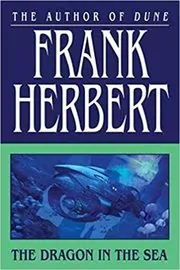
The Dragon in the Sea
by Frank Herbert
1956
In a near‑future resource war, psychologist John Ramsey joins a four‑man crew on a covert submarine mission to steal oil from enemy waters, only to find that paranoia, sabotage, and claustrophobia may destroy them long before the opposing navy does.
Missing Link
by Frank Herbert
1959
Field agent Lewis Orne is sent to Gienah III to investigate a vanished Terran ship and finds a seemingly primitive culture holding advanced weapons—evidence of a contact that could trigger ruthless “pacification” unless he can defuse the misunderstanding in time.
Operation Haystack
by Frank Herbert
1959
Recovering from a near‑fatal mission, undercover operative Lewis Orne is thrust into a web of political marriages and secret genetics programs, where a clandestine sisterhood has spent centuries shaping galactic power—and where his own identity may be their most dangerous asset.
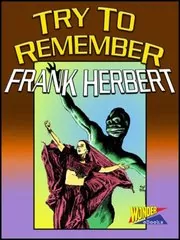
Try to Remember
by Frank Herbert
1961
When frog‑like aliens park an immense ship over Earth and demand true communication or total annihilation, linguist Francine Millar races to decode their gestures and dances, discovering that words alone may not be enough to save the planet.
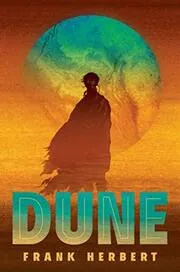
Dune
by Frank Herbert
1965
On the desert planet Arrakis, young Paul Atreides must survive betrayal, master the lethal ecology of the sandworms, and lead the Fremen in a struggle over the spice melange, a drug that underpins galactic power, prophecy, and trade.
Recommended by
4 people PewDiePie recommended this book
PewDiePie
"A badass space adventure." - PewDiePie
PewDiePie's recommendation of this book  Ryan Shea recommended this book
Ryan Shea
Ryan Shea recommended this book on his website.
Ryan Shea's recommendation of this book  Zack D'Aleo recommended this book
Zack D'Aleo
"Ti dicono che è uno Sci-fi. Mentono. È un fantasy profetico. È tipo la Bibbia." - Zac D'Aleo
Zack D'Aleo's recommendation of this book  Paul Krugman recommended this book
Paul Krugman
"As a teenager, I was a total Dune fanatic." - Paul Krugman
Paul Krugman's recommendation of this book

The Illustrated Dune
by Frank Herbert
1965
A special edition of Dune featuring interior artwork and visual supplements that bring Arrakis, its sandworms, and its feuding noble houses to life on the page, aimed at readers who want a more pictorial tour through Herbert’s original novel.
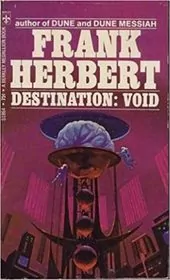
Destination Void
by Frank Herbert
1966
A starship carrying thousands of clones to Tau Ceti loses its organic computer brains, leaving a tiny crew awake in deep space. Their only hope is to build a conscious AI from scratch—knowing it might decide humans are expendable.
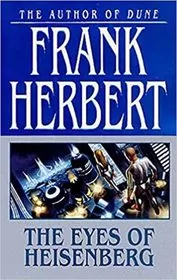
The Eyes of Heisenberg
by Frank Herbert
1966
In a distant future where immortal Optimen control human reproduction, a routine embryo procedure reveals a forbidden genetic potential. As doctors, rebels, and cyborgs clash over the child, the foundations of a frozen, supposedly perfect society begin to crack.
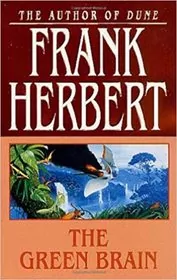
The Green Brain
by Frank Herbert
1966
In a world determined to exterminate “pest” insects and open jungles to human settlement, exterminator Joao Martinho’s latest mission in Brazil exposes a shocking rebellion from nature itself: a vast, hive‑like intelligence using mutated insects and human‑shaped swarms to fight back.
The Featherbedders
by Frank Herbert
1967
A short work of political science fiction in which human officials and alien interests tangle over regulations, subsidies, and control, using bureaucracy itself as a weapon and showing how quiet “featherbedding” can determine who really holds power in an interstellar economy.
The Heaven Makers
by Frank Herbert
1968
Immortal aliens secretly film and manipulate human lives for entertainment, twisting relationships and tragedies to keep their audiences enthralled—until one skeptical observer questions whether treating Earth as a stage has crossed a moral line even their culture can’t ignore.
The Santaroga Barrier
by Frank Herbert
1968
Psychologist Gilbert Dasein is sent to a California valley whose residents shun outside goods, show no recorded mental illness, and keep outsiders at arm’s length. Probing the town’s mysterious food additive, Jaspers, he finds an unnervingly close‑knit society that may kill to protect itself.
Dune Messiah
by Frank Herbert
1969
Now Emperor and messiah, Paul Atreides faces conspirators who want to end his reign and the bloody jihad waged in his name, forcing him to confront how much of the future he’s willing to sacrifice to keep humanity free.
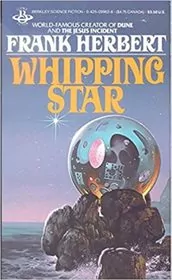
Whipping Star
by Frank Herbert
1969
BuSab saboteur Jorj X. McKie must stop a sadistic heiress from torturing a star‑like alien she has bound in an insane contract. If the Caleban dies, so does almost everyone who has ever used the jumpdoors that hold the ConSentiency together.
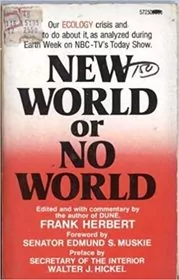
New World Or No World
by Frank Herbert
1970
This nonfiction collection brings together Herbert’s essays and commentary on ecology, overpopulation, and technology, arguing that humanity must rethink growth, energy use, and politics if we want a livable new world instead of exhausting the one we already have.
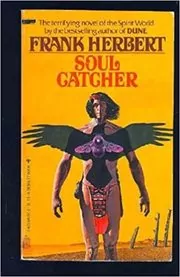
Soul Catcher
by Frank Herbert
1972
After white loggers assault his younger sister, Native American student Charles Hobuhet takes on the spirit name Katsuk and kidnaps a politician’s teenage son, leading the boy through the Pacific Northwest wilderness toward a ritual sacrifice that both binds and divides them.

The Godmakers
by Frank Herbert
1972
Government agent Lewis Orne travels between recovering planets to defuse potential wars, only to be drawn into a world where “religious engineers” deliberately manufacture gods. As his latent psychic talents emerge, he must decide whether becoming a living deity will save or doom humanity.

Gambling Device
by Frank Herbert
1973
In this eerie short story, a honeymooning couple become prisoners in a desert hotel run by an implacable controlling intelligence that eliminates any “gambling devices” from their lives—up to and including the randomness of reproduction itself.
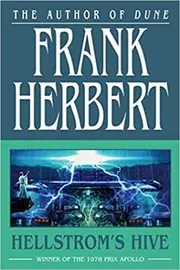
Hellstrom's Hive
by Frank Herbert
1973
In rural Oregon, a shadowy government agency probes the farm of documentary filmmaker and entomologist Nils Hellstrom, uncovering vast underground tunnels and a hive‑bred human culture that lives like social insects—and may be preparing to replace “wild” humanity entirely.
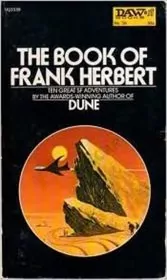
The Book of Frank Herbert
by Frank Herbert
1973
This ten‑story collection samples Frank Herbert’s early short fiction, from first‑contact puzzles and military intrigues to eerie domestic tales like “Gambling Device,” offering a compact tour of the ideas he was playing with long before Dune.

Threshold: The Blue Angels Experience
by Frank Herbert
1973
A companion volume to a documentary about the U.S. Navy’s Blue Angels, this nonfiction book pairs Herbert’s reflective text with dramatic aviation photography, exploring the psychology of risk, precision flying, and what draws pilots to the edge of human endurance.

The Best of Frank Herbert
by Frank Herbert
1975
An omnibus selection of Frank Herbert’s strongest short fiction, drawn from earlier collections and spanning everything from early space adventures to mature tales of politics, religion, and ecology beyond the Dune universe.
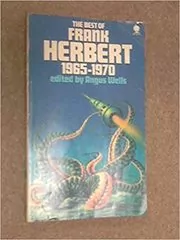
The Best of Frank Herbert 1965-70
by Frank Herbert
1975
This second “Best of” volume gathers Herbert’s mid‑1960s short fiction, showcasing stories about psi powers, political conspiracies, and ecological catastrophe, and offering a snapshot of how his ideas evolved in the years surrounding the creation of Dune.
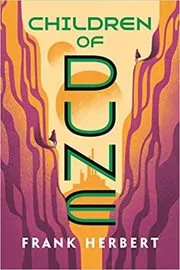
Children of Dune
by Frank Herbert
1976
Paul Atreides’ twin children, Leto II and Ghanima, become targets in a struggle over the future of Arrakis and the Imperium as religious fanatics, rival houses, and the Bene Gesserit all try to steer the next phase of humanity’s evolution.

The Best of Frank Herbert 1952-1964
by Frank Herbert
1977
This first “Best of” collection assembles Herbert’s early magazine stories, from pulp adventures to thought‑heavy tales of telepaths, bureaucrats, and alien ecologies, tracing how the concerns that later shaped Dune first appeared in shorter, punchier form.
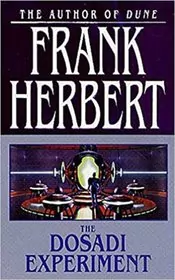
The Dosadi Experiment
by Frank Herbert
1977
ConSentiency agent Jorj X. McKie is sent to the hellish, quarantined world Dosadi, where humans and Gowachin have been crammed together for generations in lethal conditions as part of a secret experiment. Surviving its brutal politics may upend the galactic order.
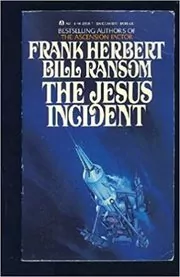
The Jesus Incident
by Frank Herbert
1979
On the ocean world Pandora, descendants of a failed colony struggle under ruthless administrators while Ship—the godlike AI they created in space—demands they learn how to “Worship” properly. Genetic experiments, sentient kelp, and religious upheaval collide in this follow‑up to Destination: Void.

Direct Descent
by Frank Herbert
1980
Set on a far‑future library planet, this illustrated novella follows archivists who guard humanity’s accumulated knowledge as would‑be tyrants try to erase inconvenient records, turning the quiet work of librarianship into a high‑stakes fight over history and power.
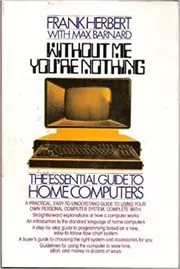
Without Me You're Nothing
by Frank Herbert
1980
Co‑written with Max Barna, this accessible guide to early home computers explains how the machines work, what you can do with them, and how to choose and program one, capturing the frontier days when personal computing was still new.
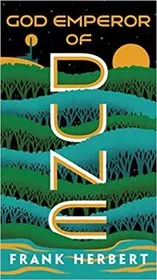
God Emperor of Dune
by Frank Herbert
1981
Thousands of years after Children of Dune, Leto II has become the near‑immortal God Emperor, a human–sandworm hybrid who rules with iron control and long‑term vision, provoking conspiracies that test whether his brutal Golden Path is worth the cost.
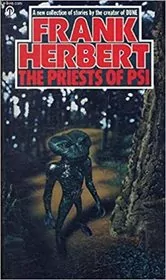
The Priests Of Psi
by Frank Herbert
1981
A collection of five psi‑themed tales—including “Old Rambling House,” “Try to Remember!” and the title novella—in which telepathy, precognition, and psychic obsession complicate everything from domestic life to interstellar politics.
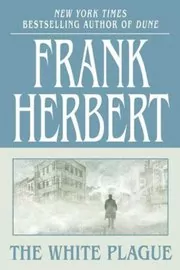
The White Plague
by Frank Herbert
1982
After terrorists kill his family in Dublin, molecular biologist John Roe O’Neill engineers a virus that kills only women and releases it in Ireland, Britain, and Libya, plunging the world into panic as collapsing societies race to stop him and cure the plague.
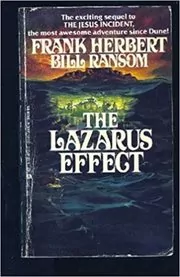
The Lazarus Effect
by Frank Herbert
1983
Centuries after The Jesus Incident, Pandora’s seas cover almost all land, and humanity has split into Islanders and gill‑handed Mermen. As both cultures scheme over genetics, power, and the long‑dormant intelligent kelp, an ancient threat begins to reawaken.
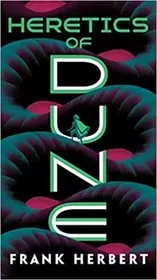
Heretics of Dune
by Frank Herbert
1984
Centuries after Leto II’s death, a universe reshaped by his Golden Path faces new invaders, the ruthless Honored Matres, while the Bene Gesserit, Tleilaxu, Ixians, and scattered Atreides descendants fight to control revived sandworms, spice, and humanity’s next transformation.
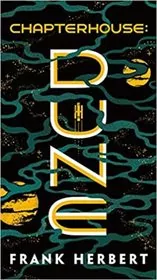
Chapterhouse: Dune
by Frank Herbert
1985
The Bene Gesserit retreat to their stronghold Chapterhouse after Rakis is destroyed, nurturing the last sandworm and training new sisters while the Honored Matres’ onslaught forces them into risky alliances and experiments that could redefine power across the galaxy.
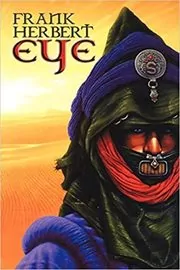
Eye
by Frank Herbert
1985
This collection brings together Herbert’s shorter work, including stories set in the Dune and ConSentiency universes as well as stand‑alone pieces, plus “The Road to Dune,” a fictional in‑world travel guide that adds texture to Arrakis and its history.
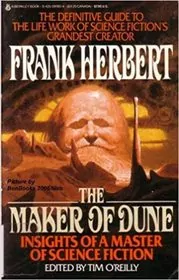
Maker of Dune
by Frank Herbert
1985
A nonfiction volume of essays, talks, interviews, and introductions in which Frank Herbert discusses ecology, religion, politics, and how Dune came to be, offering behind‑the‑scenes glimpses of his craft and the ideas that drove his fiction.
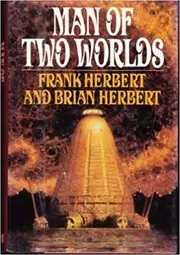
Man of Two Worlds
by Frank Herbert
1986
On distant Dreenor, powerful aliens create and manipulate universes as stories. When young Dreen Ryll merges bodies with ruthless human businessman Lutt Hanson Jr., the resulting hybrid must juggle clashing minds, clashing cultures, and a looming threat to both Earth and Dreenor.
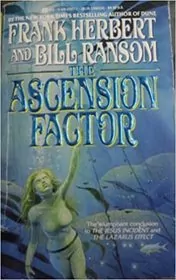
The Ascension Factor
by Frank Herbert
1988
A generation after The Lazarus Effect, Pandora is ruled by the authoritarian Raja Flattery, who exploits food shortages and memories of Ship to maintain control—until rebels, awakening kelp intelligence, and buried histories converge to challenge his grip on the planet.
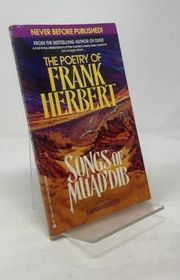
Songs of Muad'dib
by Frank Herbert
1992
This poetry collection brings together verse from Dune and Herbert’s other writings alongside previously unpublished poems. Songs of Arrakis, sandworms, and political or mystical struggle offer a different perspective on the imagined worlds and themes of his fiction.
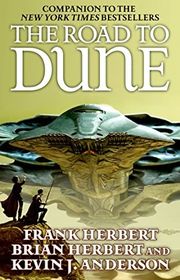
The Road to Dune
by Frank Herbert
2005
Unpublished scenes, correspondence, essays, and manuscripts trace the development of Dune and Dune Messiah. Alongside Herbert’s original material, an alternate novel based on his early outline explores how the familiar universe might have taken a different form.

Classic Science Fiction Stories
by Frank Herbert
2009
A compact ebook that gathers three early Herbert tales—“Missing Link,” “Operation Haystack,” and “Old Rambling House”—offering a quick taste of his galactic politics, first‑contact puzzles, and dark twists on seemingly ordinary domestic dreams.
Old Rambling House
by Frank Herbert
2010
Ted and Martha Graham trade their modest trailer for a strangely underpriced house, only to discover they’ve been drafted into an alien tax system and bound to a roving “rambling house” whose obligations may extend to their unborn child.
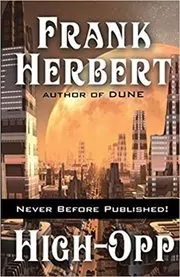
High-Opp
by Frank Herbert
2012
In a future where opinion polls determine social rank, Daniel Movius falls overnight from privileged High‑Opp to despised underclass. Thrown into the warrens, he encounters a brewing revolution that wants to turn the polling system—and Movius himself—into tools for overthrow.
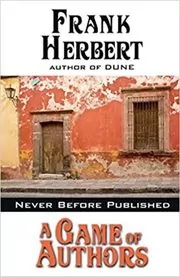
A Game of Authors
by Frank Herbert
2013
Journalist Hal Garson heads to Mexico to investigate rumors that a legendary, supposedly dead novelist is secretly alive. His search pulls him into a Cold War tangle of spies, propaganda, and a family that may not want the truth revealed.
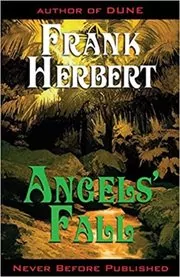
Angels' Fall
by Frank Herbert
2013
After his bush plane crashes in the Amazon rainforest, pilot Jeb Logan must lead a small band of passengers through hostile jungle, guerrilla fighters, and their own fraying nerves in a survival story written long before Herbert’s science‑fiction fame.
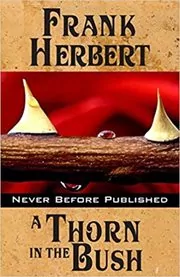
A Thorn in the Bush
by Frank Herbert
2014
Widowed American expatriate Mrs. Ross lives quietly in a Mexican village, guarding painful secrets, until a determined young painter arrives and starts prying. Her attempts to manage him—and protect her past—slide into a tense psychological cat‑and‑mouse game.

The Collected Stories of Frank Herbert
by Frank Herbert
2014
This definitive hardcover gathers nearly all of Herbert’s short fiction in chronological order, from early 1950s magazine pieces to later experiments, letting readers watch his obsessions with ecology, power, religion, and language develop over four decades.

Four Unpublished Novels
by Frank Herbert
2016
This omnibus volume gathers four early Herbert novels that went unpublished in his lifetime—High‑Opp, Angels’ Fall, A Game of Authors, and A Thorn in the Bush—showcasing his experiments with dystopian SF, jungle survival, Cold War intrigue, and quiet psychological suspense.
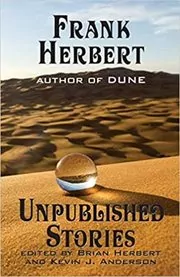
Frank Herbert: Unpublished Stories
by Frank Herbert
2016
This collection pulls together thirteen previously unpublished short stories from Herbert’s files, ranging from crime pieces and adventure tales to quiet domestic dramas, revealing how widely he experimented with genre while honing the voice that would later create Dune.
Where to start with Frank Herbert
If you want the core Dune saga: Dune → Dune Messiah → Children of Dune → God Emperor of Dune → Heretics of Dune → Chapterhouse: Dune.
If you like thoughtful space opera and AI: Destination Void → The Jesus Incident → The Lazarus Effect → The Ascension Factor.
If you prefer political SF thrillers without long series: The Dragon in the Sea → The Santaroga Barrier → Hellstrom's Hive → The White Plague.
If you enjoy strange galactic politics and aliens: Whipping Star → The Dosadi Experiment.
If you want deep cuts outside science fiction: Soul Catcher → A Game of Authors → A Thorn in the Bush.
Frank Herbert sub-series and character series
ConSentiency Universe books in order
Explore this seriesConSentiency Universe books in chronological order
The Pandora Sequence books in order
Explore this seriesThe Pandora Sequence books in chronological order
Frank Herbert collections, short stories, and related book types
Dune Collections
Short Story Collections
Short Stories/Novellas
Non-Fiction Books
Standalone Frank Herbert books
Author bio
Frank Herbert was born in 1920 in Tacoma, Washington, and grew up between that port city and the damp, wooded country of the Olympic and Kitsap Peninsulas. Money was scarce, the landscape was vivid, and he learned early to pay close attention to how people and environments shaped one another.
As a teenager he fell in love with cameras and newsrooms. By nineteen he had lied about his age to land a job at a small California paper, then cycled through reporting and photography posts in Oregon and Washington. During World War II he spent a brief, difficult stint in the U.S. Navy’s construction battalions as a photographer before a medical discharge sent him back to civilian life.
After the war Herbert attended the University of Washington on the GI Bill, but he was more interested in specific classes than in a diploma. In a creative writing course he met fellow student Beverly Stuart; they were the only two in the room who had already sold stories. They married in 1946 and built a life that mixed journalism, freelancing, and raising three children, with long stretches when Beverly’s steady copywriting income kept the household afloat so he could keep writing fiction.
For years Herbert worked the West Coast newspaper circuit: the Oregon Statesman, the Seattle Star, the Santa Rosa Press Democrat, and eventually the San Francisco Examiner’s Sunday magazine. He reported, edited, shot photos, and even wrote speeches for a U.S. senator. The work gave him a front‑row seat on politics, bureaucracy, and the way institutions quietly bend people’s lives. Those experiences would later surface in his obsessive interest in power systems, from galactic empires to tiny village councils.
He began selling pulp stories in the mid‑1940s and published his first novel, The Dragon in the Sea, in the 1950s—a tense submarine thriller about covert oil warfare and crew psychology. It didn’t make him rich, but it showed how he liked to work: take a technical problem, push people into a pressure cooker, and watch what the stress reveals about character and society.
The project that changed everything started as research on sand‑dune stabilization near Florence, Oregon. Herbert went out to write a magazine piece about the way wind and sand reshape a coast. The article never appeared because the material grew into something else: the desert world of Arrakis, the spice melange, the Fremen, and the feuding noble houses that power Dune. Serialized in a magazine and then published as a novel in 1965, it slowly built an audience, won major science‑fiction awards, and let him leave day‑job journalism behind.
Readers often come to Herbert through Dune, but his career sprawls far beyond that one story. Standalone novels like The Santaroga Barrier, Hellstrom’s Hive, The Green Brain, Soul Catcher, and The White Plague dig into themes he cared about: closed communities, ecological blowback, political fanaticism, and the thin line between necessary control and outright tyranny. Shorter works explore telepathy, bureaucrats, and odd corners of future history, often with a dry sense of humor.
He also built other linked universes. The Pandora Sequence—Destination: Void followed by three collaborations with poet Bill Ransom—follows a godlike starship AI and a struggling colony on the ocean planet Pandora. The ConSentiency stories, including Whipping Star and The Dosadi Experiment, revolve around a multi‑species galactic government and a “Bureau of Sabotage” whose job is to slow laws down before they become lethal.
In the 1970s and early 1980s Herbert became more vocal about ecology and systems thinking, speaking at the first Earth Day and writing essays on environmental limits, overpopulation, and technology. He and Beverly eventually settled near Port Townsend, Washington, where they gardened, entertained a circle of friends, and both kept writing. Beverly’s long illness and death in 1984 marked him deeply; he remarried the following year and kept working through his own health problems.
Herbert died in 1986 after surgery for pancreatic cancer, leaving the central Dune saga unfinished at six novels. His son Brian would later draw on his notes and outline to continue the series. Decades on, Herbert’s work still feels current: wary of messiahs, obsessed with ecology, fascinated by the way language and belief can steer entire civilizations.

%20-%20Nebula%20Awards%2C%20Book%2044.jpg)
%20-%20Nebula%20Awards%2C%20Book%2043.jpg)


Edited by
Software engineer whose passion for tracking book recommendations from podcasts inspired the creation of MRB.
Lead investor at 3one4 Capital whose startup expertise and love for books helped shape MRB and its growth.
Comments
Did we miss something? Have feedback?
Help us improve this page by sharing your thoughts