
Dune Books in Order
Part ofFrank Herbert Books in OrderExplore the Dune series by Frank Herbert in order, with book summaries, series background, key characters, and guidance on how to approach the wider Dune universe.
Last updated:
As an Amazon Associate, we earn from qualifying purchases (at no extra cost to you).

















Dune books in publication order
17 books

Dune
by Frank Herbert
1965
On the desert planet Arrakis, young Paul Atreides must survive betrayal, master the lethal ecology of the sandworms, and lead the Fremen in a struggle over the spice melange, a drug that underpins galactic power, prophecy, and trade.
Recommended by
4 people PewDiePie recommended this book
PewDiePie
"A badass space adventure." - PewDiePie
PewDiePie's recommendation of this book  Ryan Shea recommended this book
Ryan Shea
Ryan Shea recommended this book on his website.
Ryan Shea's recommendation of this book  Zack D'Aleo recommended this book
Zack D'Aleo
"Ti dicono che è uno Sci-fi. Mentono. È un fantasy profetico. È tipo la Bibbia." - Zac D'Aleo
Zack D'Aleo's recommendation of this book  Paul Krugman recommended this book
Paul Krugman
"As a teenager, I was a total Dune fanatic." - Paul Krugman
Paul Krugman's recommendation of this book

Dune Messiah
by Frank Herbert
1969
Now Emperor and messiah, Paul Atreides faces conspirators who want to end his reign and the bloody jihad waged in his name, forcing him to confront how much of the future he’s willing to sacrifice to keep humanity free.
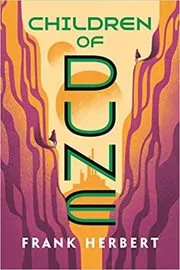
Children of Dune
by Frank Herbert
1976
Paul Atreides’ twin children, Leto II and Ghanima, become targets in a struggle over the future of Arrakis and the Imperium as religious fanatics, rival houses, and the Bene Gesserit all try to steer the next phase of humanity’s evolution.

God Emperor of Dune
by Frank Herbert
1981
Thousands of years after Children of Dune, Leto II has become the near‑immortal God Emperor, a human–sandworm hybrid who rules with iron control and long‑term vision, provoking conspiracies that test whether his brutal Golden Path is worth the cost.

Heretics of Dune
by Frank Herbert
1984
Centuries after Leto II’s death, a universe reshaped by his Golden Path faces new invaders, the ruthless Honored Matres, while the Bene Gesserit, Tleilaxu, Ixians, and scattered Atreides descendants fight to control revived sandworms, spice, and humanity’s next transformation.

Chapterhouse: Dune
by Frank Herbert
1985
The Bene Gesserit retreat to their stronghold Chapterhouse after Rakis is destroyed, nurturing the last sandworm and training new sisters while the Honored Matres’ onslaught forces them into risky alliances and experiments that could redefine power across the galaxy.
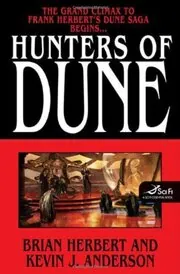
Hunters of Dune
by Kevin J Anderson
2006
Duncan Idaho, Sheeana and a ship of refugees flee into an uncharted galaxy as a mysterious Enemy threatens humanity. Reviving important figures from Dune's past may offer them the knowledge and strength needed to survive.
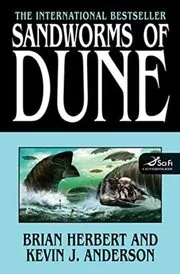
Sandworms of Dune
by Kevin J Anderson
2007
Duncan Idaho and the refugees aboard the Ithaca continue their search for a new home while evading a relentless Enemy. Their journey becomes part of a wider confrontation between humanity and the thinking machines that threaten its future.

Paul of Dune
by Kevin J Anderson
2008
Paul Atreides's victory on Arrakis begins a struggle to control an empire and the Fremen jihad spreading in his name. The story moves between his youth and early reign, tracing the conflicts behind his rise to power.
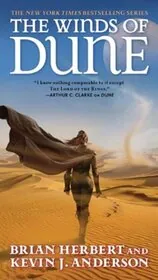
The Winds of Dune
by Kevin J Anderson
2009
With Paul Atreides absent, Alia struggles to hold the Imperial government together as opposition to their family grows. Jessica's return brings a mounting conflict between mother and daughter over the empire and Paul's legacy.

Sisterhood of Dune
by Kevin J Anderson
2011
Eighty years after the Battle of Corrin, the emerging Imperium sees the rise of the Bene Gesserit, Mentats, and spacefaring schools. A spreading movement against technology threatens the institutions taking shape after humanity's war with machines.
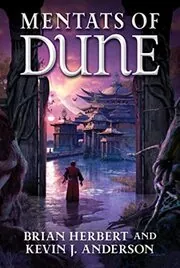
Mentats of Dune
by Kevin J Anderson
2014
Gilbertus Albans teaches humans the mental disciplines of thinking machines at his Mentat School. As Manford Torondo's anti-technology movement grows more dangerous, he must balance his convictions against compromises needed to keep the school alive.
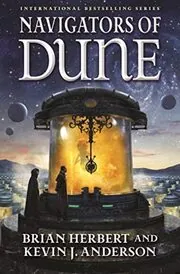
Navigators of Dune
by Kevin J Anderson
2016
The early Imperium faces a struggle between technological progress and anti-machine fanaticism. As the Bene Gesserit, Mentats and Navigators establish their institutions, political rivalries and competing visions of humanity's future threaten the fragile order.

Red Plague
by Kevin J Anderson
2016
A deadly plague spreads on Walgis, whose people follow an anti-technology movement. Vaccines arrive from Venport Holdings, but their leader treats accepting medical help as a test of faith, placing belief against the desperate need to survive.
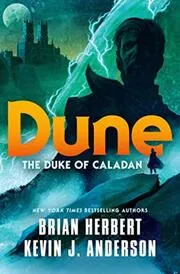
The Duke of Caladan
by Kevin J Anderson
2020
Duke Leto Atreides serves the Emperor with loyalty and patience, but his family's rising influence attracts powerful enemies. On Caladan, he must weigh duty and honor against the risks to Jessica, Paul and his own future.
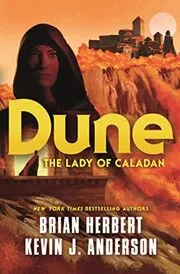
The Lady of Caladan
by Kevin J Anderson
2021
Lady Jessica must answer for betraying the Bene Gesserit and decide where her loyalty belongs. As events across the Imperium accelerate, her obligations to the Sisterhood threaten the family she has built with Duke Leto.
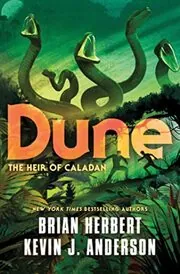
The Heir of Caladan
by Kevin J Anderson
2022
Fifteen-year-old Paul Atreides faces political turmoil on Caladan while his family comes apart. With Jessica pulled away by the Bene Gesserit and Leto undertaking a dangerous mission, Paul must shoulder responsibilities far beyond his years.
Dune books in chronological order
Series background & context
The Dune series is Frank Herbert’s best‑known creation, a far‑future epic about ecology, religion, and power centered on the desert planet Arrakis. At the heart of the saga is the spice melange, a drug that extends life, sharpens awareness, and makes interstellar travel possible. Control of that single commodity shapes an empire’s politics and the fates of noble houses, fanatical orders, and desert tribes.
The story begins in Dune, when House Atreides accepts control of Arrakis from its rivals, House Harkonnen. Young Paul Atreides arrives on a harsh world where giant sandworms guard the spice and the Fremen have learned to survive in extremes of heat and dryness. Betrayal shatters his family, pushing Paul into the desert. There he embraces Fremen culture, uncovers his own prescient abilities, and rides the tidal wave of messianic expectation that has been seeded across the galaxy for generations.
In Dune Messiah and Children of Dune, Herbert turns from the rise of the hero to the cost of hero‑worship. Paul’s jihad reshapes the universe, but it also locks humanity into a dangerous path built around his image. The second and third novels follow the political plots, religious movements, and family struggles that grow from that choice, especially through Paul’s children, Leto II and Ghanima, who inherit both his prescience and his burdens.
God Emperor of Dune jumps thousands of years forward. Leto II has transformed himself into a human–sandworm hybrid and rules as a near‑immortal tyrant. His brutal, tightly controlled empire is part of a vast, long‑term plan he calls the Golden Path—a forced evolution meant to break humanity’s dependence on single points of failure and on charismatic leaders.
The final two Herbert novels, Heretics of Dune and Chapterhouse: Dune, take place after Leto’s death, when his enforced stability finally shatters. Humanity has scattered across the universe and come storming back, bringing new enemies like the Honored Matres, a violent matriarchy bent on conquest. The Bene Gesserit, Tleilaxu, Ixians, and many smaller factions scramble to adapt, fight back, or seize the opening for themselves.
Throughout the series, readers can expect dense worldbuilding, invented cultures and religions, and long conversations about strategy and belief mixed with moments of sharp, strange action. The focus shifts from one generation to the next, but the underlying questions stay consistent: How do systems trap us? Can any single leader be trusted with the future? What happens when ecology pushes back against short‑term politics?
This series page lays out the original six novels in order, adds context for related short pieces and companion books, and offers suggestions on how to navigate the broader Dune universe if you decide to go beyond Herbert’s own work.













Edited by
Software engineer whose passion for tracking book recommendations from podcasts inspired the creation of MRB.
Lead investor at 3one4 Capital whose startup expertise and love for books helped shape MRB and its growth.
Comments
Did we miss something? Have feedback?
Help us improve this page by sharing your thoughts