
The Diary of Virginia Woolf Books in Order
Part ofVirginia Woolf Books in OrderBrowse The Diary of Virginia Woolf books in order by Virginia Woolf, with date ranges, volume notes, series background, and help choosing where to begin.
Last updated:
As an Amazon Associate, we earn from qualifying purchases (at no extra cost to you).
The Diary of Virginia Woolf books in publication order
5 books
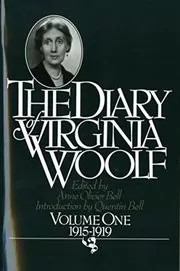
The Diary of Virginia Woolf, Volume One
by Virginia Woolf
1977
The first volume, covering 1915 to 1919, opens on marriage, illness, reading, and the uncertain early years of a career. It also records the beginnings of the Hogarth Press and life after *The Voyage Out*.
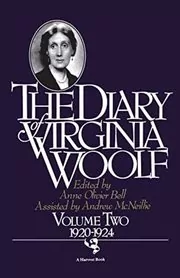
The Diary of Virginia Woolf, Volume Two
by Virginia Woolf
1978
Covering 1920 to 1924, this diary follows Woolf as she finds a newer, freer fictional method. You can watch the ground being prepared for *Jacob's Room* and the world of *Mrs. Dalloway*.
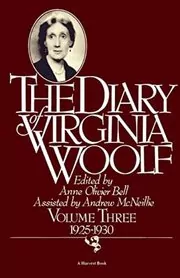
The Diary of Virginia Woolf, Volume Three
by Virginia Woolf
1980
This volume spans 1925 to 1930, one of Woolf's richest creative periods. It runs beside *Mrs. Dalloway*, *To the Lighthouse*, *Orlando*, and *A Room of One's Own*, with all the doubt and excitement behind them.
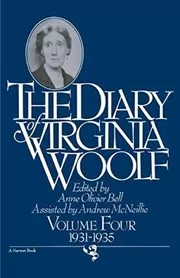
The Diary of Virginia Woolf, Volume Four
by Virginia Woolf
1982
Covering 1931 to 1935, this volume catches Woolf in the years of *The Waves*, *Flush*, and *Roger Fry*. It balances the daily business of writing with portraits of friends, reviews, and wider public anxieties.
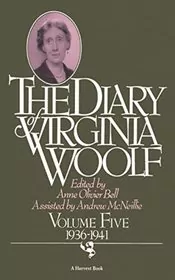
The Diary of Virginia Woolf, Volume Five
by Virginia Woolf
1984
The final diary volume covers 1936 to 1941, years darkened by war and mental strain. It is also full of work, including notes on *The Years*, *Roger Fry*, and the writing of *Between the Acts*.
The Diary of Virginia Woolf books in chronological order
Series background & context
The five volumes of The Diary of Virginia Woolf are the fullest published version of Woolf's diaries, covering 1915 to 1941. Edited by Anne Olivier Bell, they turn private notebooks into something much bigger than background material. You get the daily weather of a writing life: drafts begun and abandoned, lunch with friends, quarrels, gossip, money worries, reading notes, walks, illness, and the hard business of turning thought into sentences.
This is Woolf at work, almost day by day.
The diaries matter partly because they run alongside her major books. Volume One opens when she is still early in her marriage to Leonard Woolf and just publishing The Voyage Out. Later volumes move through the making of Mrs. Dalloway, To the Lighthouse, Orlando, The Waves, The Years, and Between the Acts. She records exhilaration, boredom, doubt, relief, and the strange half-chaotic state in which a new book first appears.
But the diaries are not only about literature. They are full of people. Bloomsbury friends and rivals drift in and out, London and Sussex change with the seasons, and public events press harder as the 1930s darken into war. Woolf is sharp about class, books, parties, servants, critics, politics, and her own moods. Some entries are almost finished essays. Others feel dashed off in a rush before dinner.
They're also very funny.
What links the five books is not a single plot so much as a voice. Woolf uses the diary as a testing ground. She tries out phrases, weighs up the reception of her books, sketches portraits of the people around her, and sometimes notices a scene that will later reappear transformed in fiction. That makes the series rewarding both for readers who already know the novels and for readers who want to see how a major writer actually thinks on the page when no final polish is required.
If you want the broadest introduction, Volume One is the natural starting point. If you already know the famous novels, Volume Three is especially rich, because it overlaps with Mrs. Dalloway, To the Lighthouse, Orlando, and A Room of One's Own. Read straight through, though, and the real pleasure is cumulative. You watch a mind at work across twenty-six crowded, difficult, brilliant years.











Edited by
Software engineer whose passion for tracking book recommendations from podcasts inspired the creation of MRB.
Lead investor at 3one4 Capital whose startup expertise and love for books helped shape MRB and its growth.
Comments
Did we miss something? Have feedback?
Help us improve this page by sharing your thoughts