
Samuel Shem Books in Order
Browse Samuel Shem books in order, with quick summaries, linked series, and simple advice on where to start, from The House of God and beyond.
Last updated:
As an Amazon Associate, we earn from qualifying purchases (at no extra cost to you).
Samuel Shem books in publication order
10 books
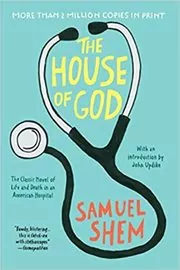
The House of God
by Samuel Shem
1978
Roy Basch starts his internship at a brutal Boston teaching hospital and quickly learns that idealism is no match for sleeplessness, bureaucracy, and death. Guided by the Fat Man's dark survival rules, he tries to stay sane without losing his conscience.
Recommended by
1 person Jordan Peterson recommended this book
Jordan Peterson
Recommended on Jordan Peterson's website.
Jordan Peterson's recommendation of this book
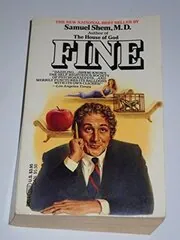
Fine
by Samuel Shem
1985
Dr. Fine is a young psychiatrist juggling memory research, psychoanalysis, marital chaos, and a mystery targeting Boston shrinks. Comic and searching, the novel asks what love is and whether people can really change.
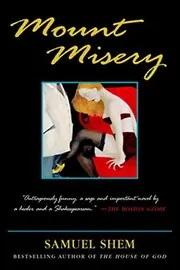
Mount Misery
by Samuel Shem
1997
Roy Basch begins psychiatric residency at Mount Misery and finds a world of rival theories, drug-heavy treatment, and damaged doctors. The black comedy widens into a sharp look at what passes for care, and what real healing might demand.
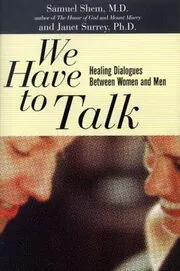
We Have To Talk
by Samuel Shem
1998
Samuel Shem and Janet Surrey draw on workshops and real conversations to show how men and women can move through anger, shame, and stalemate. It is part relationship guide, part practical toolkit for speaking and listening better.

Bill W. and Dr. Bob
by Samuel Shem
2000
This play follows Bill Wilson and Dr. Bob Smith as two alcoholics fighting for sobriety and forming the partnership that helped launch Alcoholics Anonymous. It keeps the history personal, showing how recovery reshaped friendships, marriages, and purpose.
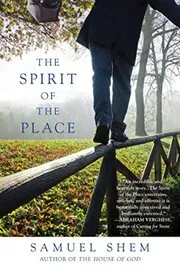
The Spirit of the Place
by Samuel Shem
2008
Orville Rose is living in Italy when his mother's death pulls him back to his Hudson Valley hometown. There he faces family ghosts, local power struggles, and the harder question of whether home can still heal him.
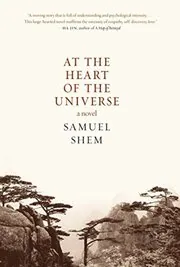
At the Heart of the Universe
by Samuel Shem
2015
Pep and Clio Macy take their adopted daughter Katie back to China and end up tracing the life of her birth mother, Xiao Lu. Their reunion opens a tender, tense story about family, loss, and belonging across cultures.
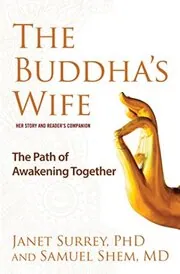
The Buddha's Wife
by Samuel Shem
2015
This retelling centers Yasodhara, the wife Siddhartha leaves behind, and imagines her own path toward insight. The book blends story and reflection, making room for grief, community, and a different model of spiritual growth.
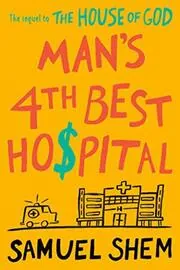
Man's 4th Best Hospital
by Samuel Shem
2019
Years after their internship, Roy Basch and the Fat Man reunite to train doctors more humanely at a declining hospital. Their fight is now against screens, billing systems, and corporate medicine as much as illness itself.

Our Hospital
by Samuel Shem
2023
During the COVID-19 pandemic, Roy Basch returns to his struggling upstate hometown hospital. Exhausted doctors and nurses battle the virus, shortages, and profit-driven management in a story that is angry, humane, and painfully close to real life.
Where to start with Samuel Shem
If you want the core medical satire: The House of God → Mount Misery → Man's 4th Best Hospital → Our Hospital
If you want the small-town homecoming novel: The Spirit of the Place
If you want the family story set in China: At the Heart of the Universe
If you want relationship-focused nonfiction: We Have To Talk
If you want the spiritual retelling: The Buddha's Wife
Samuel Shem sub-series and character series
Samuel Shem collections, short stories, and related book types
Non-Fiction
Plays
Standalone Samuel Shem books
Author bio
Samuel Shem is the pen name of Stephen Joseph Bergman, a doctor who spent much of his life trying to understand what medicine does to the people who practice it. He was born in 1944 and grew up in Hudson, New York, in a family that mixed public life and professional life, his father was a dentist and his mother helped found the local library. He went on to Harvard College, then to Balliol College, Oxford, as a Rhodes Scholar, earning a doctorate in physiology before finishing medical school at Harvard.
Then internship hit.
Bergman's year at Beth Israel Hospital in Boston changed everything. Like the young doctors in The House of God, he walked into training full of intelligence and drive, and found a system that could be brutal, sleepless, funny, cruel, and deeply confusing all at once. After that experience, he wrote fiction as a way to process what he had seen and felt, and he published it under the name Samuel Shem.
That first novel, The House of God, came out in 1978 and never really went away. It sold in the millions, got passed from one generation of medical trainees to the next, and became one of those books people press into a friend's hands with a half-laugh and a warning. Readers still come to it for the black humor, the Fat Man's survival rules, and Roy Basch's shock at how far real medicine can drift from the dream of helping people.
He stayed in medicine too.
After training in psychiatry, Bergman spent decades on the Harvard medical faculty and in private practice. That double life gave him a rich vein of material. Again and again, his work circles the same question: how do you stay human inside institutions that reward distance, speed, and certainty more than connection?
That question drives Mount Misery, which sends Roy Basch into psychiatric training, and later Man's 4th Best Hospital and Our Hospital, which take aim at corporate medicine, electronic records, burnout, and the chaos of the COVID-19 years. What readers tend to like in these books is not polish for its own sake. It is the mix of anger, tenderness, dirty jokes, and plain truth about work that is supposed to be noble but often feels impossible.
But medicine was never his only subject.
With his wife, psychologist Janet Surrey, he wrote We Have To Talk, a practical book about gender, disconnection, and how people can speak to each other with a little more honesty. Together they also wrote The Buddha's Wife, which retells the story of Yasodhara, the woman the Buddha left behind, and Bill W. and Dr. Bob, a play about the founding of Alcoholics Anonymous. Those books show another side of him, less hospital rage, more interest in relationship, recovery, and what healing can look like outside the clinic.
His fiction widened too. The Spirit of the Place brings him back, in transformed form, to the Hudson Valley world he knew as a boy, mixing homecoming, family conflict, and small-town life. At the Heart of the Universe, inspired in part by his experience as an adoptive father, follows an American family and a Chinese birth mother through questions of love, identity, and belonging.
These days, Bergman teaches at NYU Grossman School of Medicine, where he is an adjunct professor in medicine, and he has kept speaking and writing about humane care. That feels fitting. Across novels, essays, and plays, Samuel Shem has spent a long time asking what people owe one another when the pressure is high, the system is broken, and the easy answer is to shut down. He has never seemed very interested in the easy answer.






Edited by
Software engineer whose passion for tracking book recommendations from podcasts inspired the creation of MRB.
Lead investor at 3one4 Capital whose startup expertise and love for books helped shape MRB and its growth.
Comments
Did we miss something? Have feedback?
Help us improve this page by sharing your thoughts